NOMA’s larger-than-life Hulk lunchbox
I knew it from childhood. I owned an original. Then I found it recreated at human scale inside the New Orleans Museum of Art.
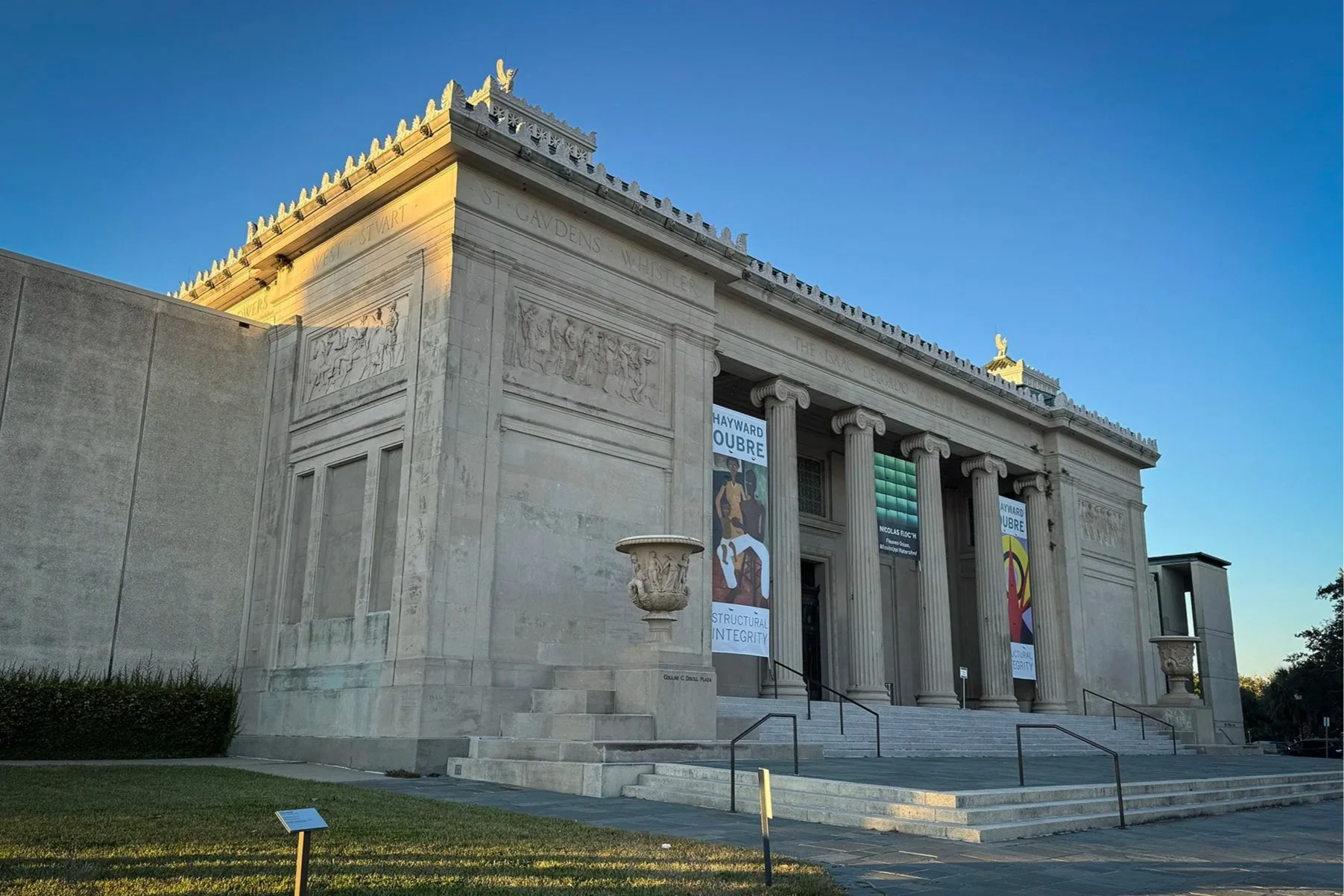
The New Orleans Museum of Art rises from the landscape of City Park, where generations of visitors have come for celebrated exhibitions, familiar favorites and the unexpected discoveries waiting inside its galleries.
Among the masters
At the end of a long avenue of live oaks, the New Orleans Museum of Art rises from the landscape of City Park. Streetcars rumble to the edge of the park, Bayou St. John runs nearby and the museum stands as one of those stately New Orleans institutions that can fill an afternoon without demanding an occasion.
NOMA has long been one of my places. I remember seeing the Muppets there as a kid and, decades later, returning for Dreams Come True: Art of the Classic Fairy Tales from the Walt Disney Studio. Special exhibitions have given me plenty of reasons to come back, but I know the permanent collection well enough to have favorites of my own. Free admission for Louisiana residents on Wednesdays makes it easy to spend an afternoon revisiting them or wandering until something new catches my attention.
Among the Rembrandts, the Monets and the Fabergé sits an oversized Incredible Hulk lunchbox, a monumental burst of Pop Art that turns an everyday object into something larger than life.
And...it’s a coffin.
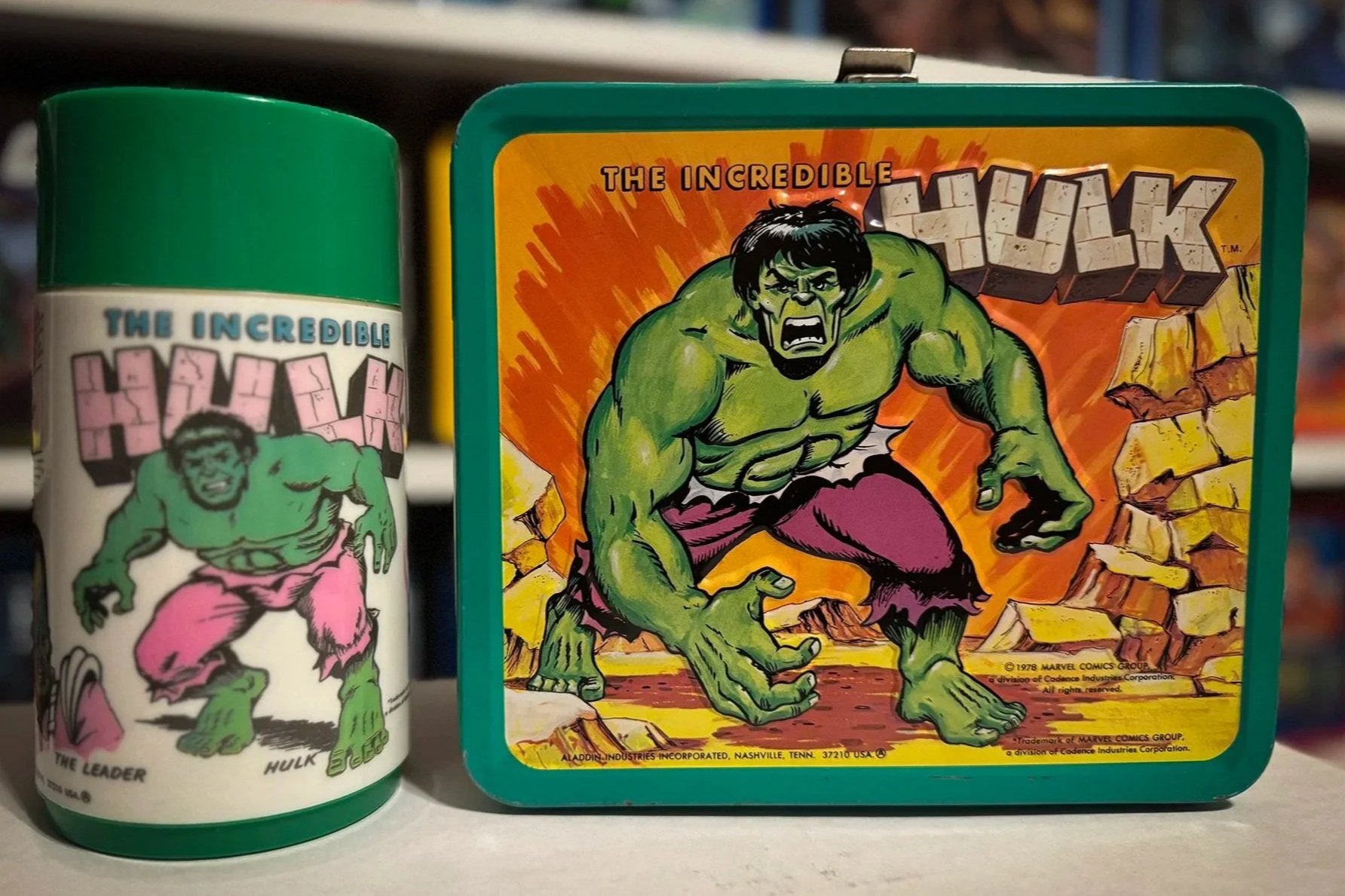
A 1978 Aladdin Incredible Hulk lunchbox and matching thermos from my collection. I remembered the artwork from childhood long before encountering it again at a scale I never expected.
You wouldn’t like me when I’m hungry
I grew up as a DC comics fan. Put me in front of a wall of lunchboxes at Kmart before the start of a new school year and I was going home with Superman. A kid in my class named Daniel had the Incredible Hulk lunchbox, though, and I remember thinking it was cool. Character lunchboxes were part utility and part declaration. Superman. Star Wars. The Muppets. The Six Million Dollar Man. What you carried told everyone what you were into, turning the school lunchbox into a canvas for pop culture.
The Hulk was everywhere by then. Bill Bixby played David Banner on television. Lou Ferrigno became the Hulk. The series brought Marvel’s green giant into homes across America and made the character part of my childhood, even if my allegiance remained firmly with DC.
The 1978 Aladdin Incredible Hulk box covered every side with comic-book action. The Hulk smashes through the lid with one enormous hand thrust toward the viewer while characters and scenes wrap around the rest of the box. I remembered Daniel’s well enough that years later, when I began collecting vintage lunchboxes, I added a high-grade example complete with its original thermos to my own collection. By the time I encountered the enormous version at NOMA, I knew those graphics from every angle. The image was instantly familiar. The scale was something else entirely.
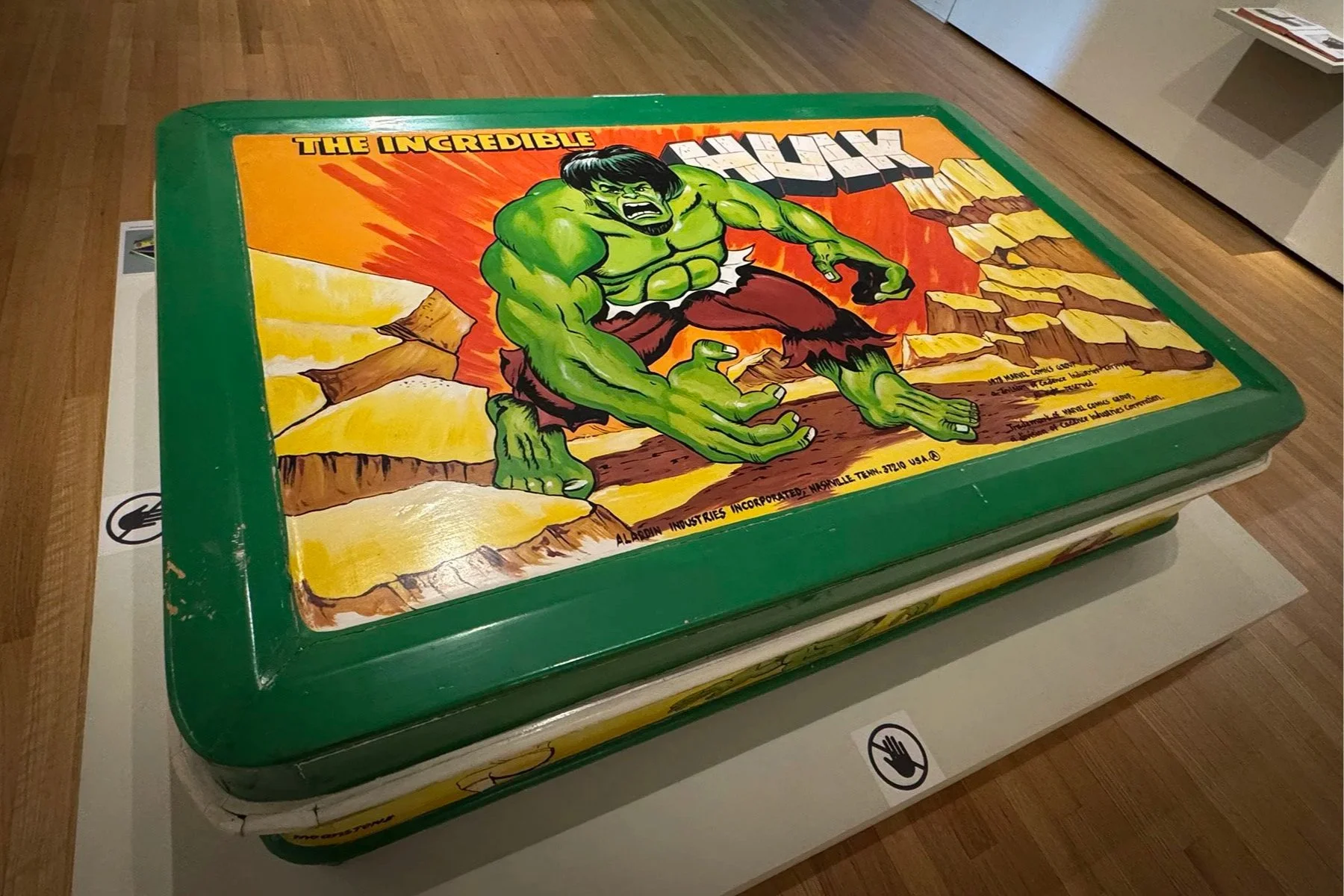
Theophilus Nii Anum Sowah’s 1995 Incredible Hulk Lunchbox Fantasy Coffin recreates the familiar 1978 Aladdin lunchbox at human scale, transforming a piece of American pop culture through Ghana’s figurative coffin tradition.
A different kind of transformation
Incredible Hulk Lunchbox Fantasy Coffin (abeduu adekai) was created in 1995 by Ghanaian coffin maker and artist Theophilus Nii Anum Sowah and probably painted by D.A. Jasper. Its story begins in Teshie, a coastal community near Accra, within a tradition that transformed the coffin itself into a final expression of identity.
Sowah learned his craft under Kane Kwei, one of the central figures in the development of modern Ghanaian figurative coffins. Born in 1968, Sowah eventually became Kwei’s chief apprentice, learning to construct elaborate forms from wood before establishing his own workshop after Kwei’s death in 1992.
Within the Ga tradition, these coffins could take the form of animals, vehicles, tools and other objects connected to the life, profession, status or aspirations of the person being buried. A fisherman might rest in a fish. A driver might have a car. A farmer could be buried in a fruit or vegetable associated with his livelihood. The coffin became one final way to tell the story of a life.
The work required more than carpentry. Each coffin had to function as a recognizable sculpture while remaining large enough to hold a human body. Builders studied familiar objects, translated them into wood and adapted their proportions to an entirely different scale and purpose. Painters then completed the surfaces, giving the finished coffin its color and detail.
By the time Sowah created the Hulk coffin in 1995, the tradition had also attracted international attention. Ghanaian figurative coffins had entered major exhibitions and private collections, allowing craftsmen trained in a working funerary practice to gain recognition as contemporary artists. Sowah stood directly at that intersection.
The Hulk coffin appears to have emerged from the international art side of his practice. No specific burial or deceased person has been connected to it, and its documented history instead follows the collector and gallery world. The choice of a 1978 American lunchbox as its subject pushed the tradition into an especially unexpected corner of pop culture.
Nearly three decades later, the coffin arrived in New Orleans. Ernest Wolfe IV gave the piece to the New Orleans Museum of Art in 2023, bringing a journey that began with a mass-produced American lunchbox through a Ghanaian coffin workshop and eventually into a gallery in City Park.
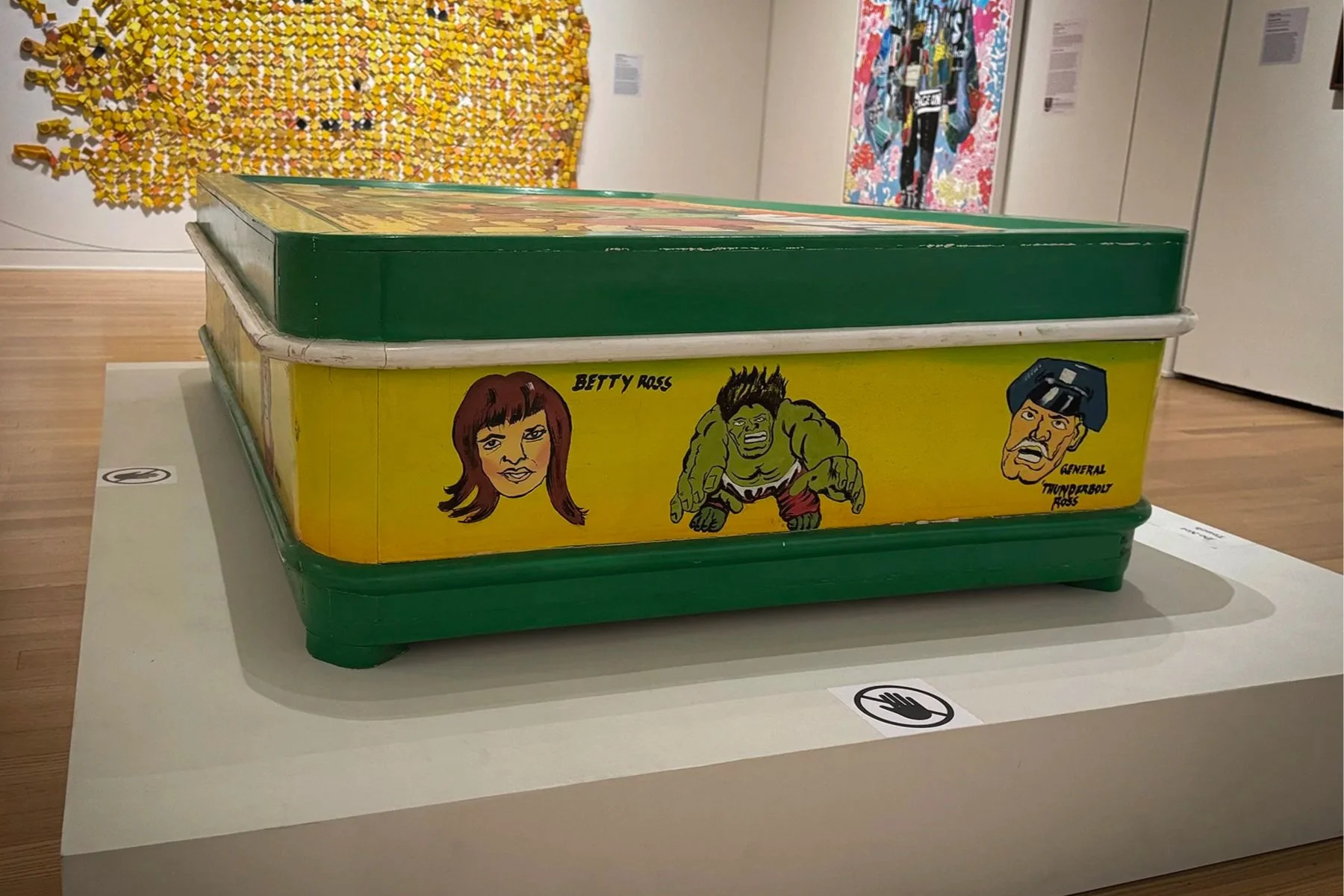
Hand-painted characters from the original Incredible Hulk lunchbox wrap around the side of Theophilus Nii Anum Sowah’s fantasy coffin, revealing the individual artistic decisions behind its transformation from commercial illustration to a singular work of art.
The human hand
From across the gallery, I knew exactly what I was seeing. The Hulk crashes through the composition with the same dramatic foreshortening, while the characters and action remain immediately recognizable. Up close, however, the hand of the artist emerges.
Someone recreated those images across an object large enough to hold a human body. The coffin has different proportions from the original metal lunchbox, yet the artwork carries across the altered form with remarkable fidelity. As an illustrator and graphic designer, I understood the challenge.
I know how I would approach it. I would photograph the original lunchbox, bring the artwork into Photoshop and find a way to project or transfer the image onto the larger surface. I would chase precision, trying to make every line and proportion match the original.
Here, you can see the individual decisions and the act of painting itself. An image created for commercial reproduction became something another artist had to study, understand and recreate by hand. The original Aladdin lunchbox was manufactured by the thousands. Sowah’s coffin carries those familiar graphics into another medium, another culture and another purpose while retaining the touch of the people who made it.
That is where the reproduction becomes art, and it may be what fascinates me most.
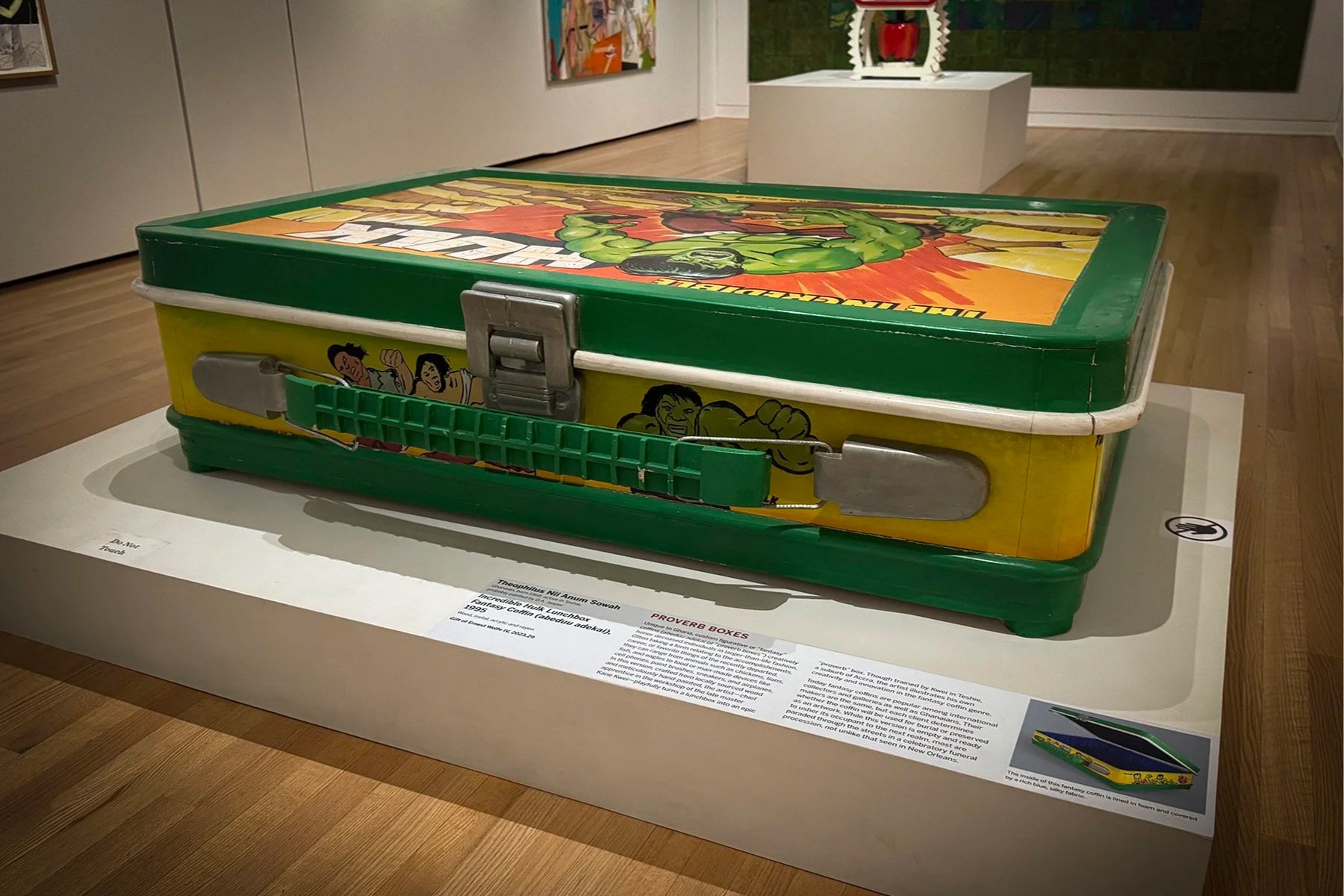
Viewed from the rear, the Incredible Hulk Lunchbox Fantasy Coffin reveals the oversized hardware, hand-painted artwork and unmistakable form of the 1978 Aladdin lunchbox that inspired it.
Larger Than Life
The metal lunchbox was designed to do a simple job, but time has given it another life. The boxes that once disappeared into school cafeterias now survive as snapshots of the characters, television shows and movies that defined generations of childhood. Collectors preserve them for their design, their place in pop culture and the memories attached to them. Like so many things once made for kids, the best examples have also become serious investments, with values that can make a mutual fund look downright boring.
There is an obvious irony in turning a child’s lunchbox into a coffin, but the tradition behind Sowah’s work suggests something more. These coffins took forms connected to a person’s life, identity and aspirations. Whether or not the Hulk coffin was ever intended for a particular burial, its form carries the same idea: the objects we surround ourselves with can become part of the story of who we are.
Maybe that is why the piece connected with me so quickly. I knew the lunchbox before I knew the art. I remembered it from childhood, added one to my own collection and then encountered it again in a form I never could have imagined.
The next time you find yourself in New Orleans, ride the streetcar toward City Park, walk beneath the live oaks and spend an afternoon exploring NOMA. Among the Rembrandts, the Monets and the Fabergé, you may find something that tells a story you already know in a completely different way.
Where to go next
See how an oversized Incredible Hulk lunchbox became part of NOMA’s collection alongside five millennia of art. Gallery installations can change, so contact the museum before visiting specifically to see the coffin.
New Orleans Museum of Art
One Collins C. Diboll Circle, City Park
New Orleans, LA 70124
(504) 658-4100
Museum hours:
Monday: Closed
Tuesday: 10 a.m.–5 p.m.
Wednesday: Noon–7 p.m.
Thursday–Sunday: 10 a.m.–5 p.m.
Louisiana residents receive free general admission on Wednesdays. Visitors ages 19 and younger are admitted free every day.