After more than 50 years at the easel, Brad Thompson has found his place on Royal Street, surrounded by the New Orleans scenes he has spent a lifetime painting.
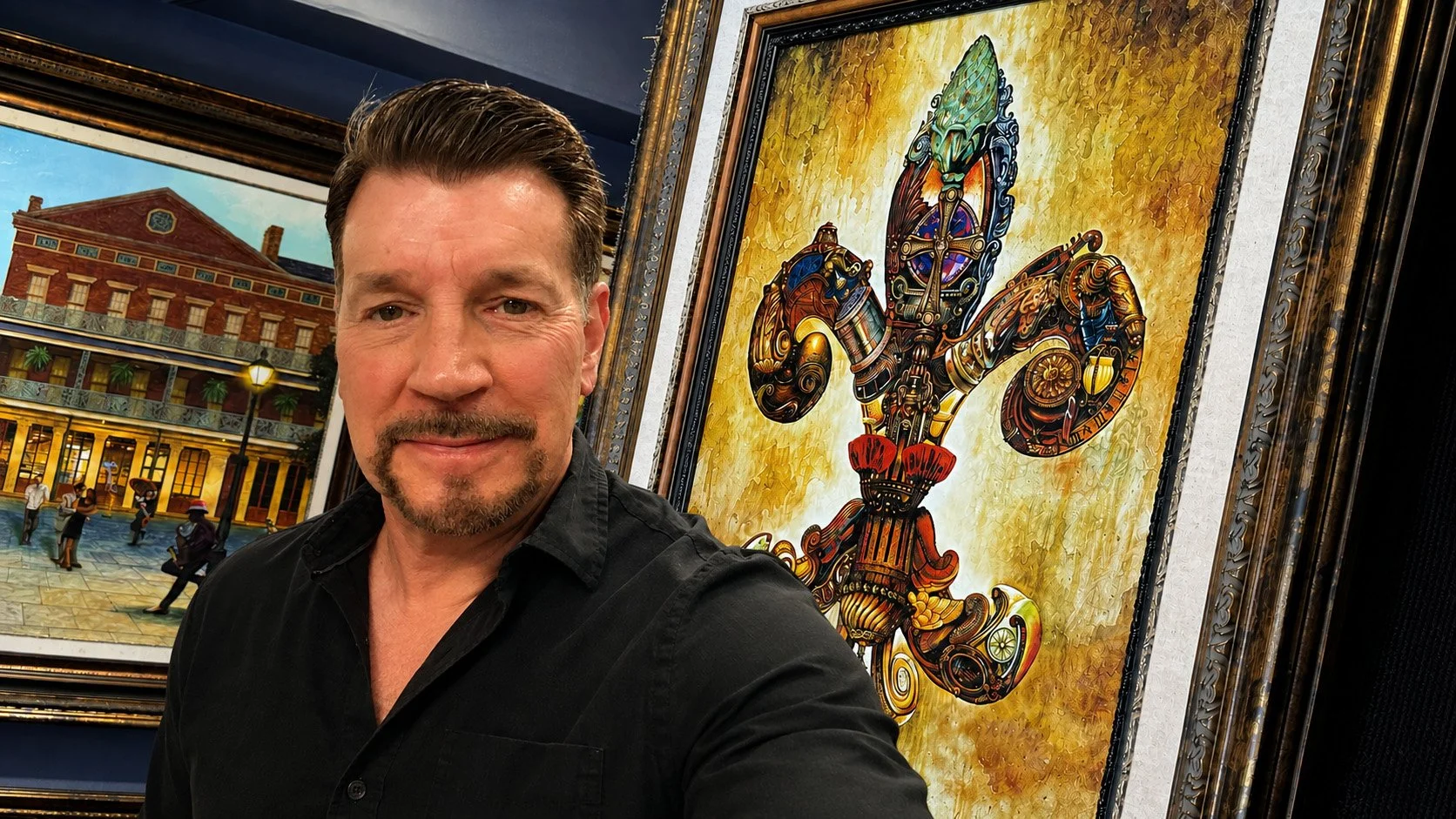
More than 50 years after his first high school painting, Brad Thompson has reached a destination he once imagined from afar: showing his work on Royal Street.
One detail at a time
Before Brad Thompson picked up a paintbrush, he carried golf clubs. His mother kept him active in football, baseball, basketball and track. By high school, golf had become his game, and he spent his free time playing for the school team. Drawing was never much of an interest.
Then an art teacher assigned him a painting. Thompson was 15 and convinced he had no idea what he was doing, yet he settled on St. Louis Cathedral for his subject—and decided to paint it big. “Why would I want to paint something like that?” he said, laughing at the ambition of his younger self. “But I thought it would be really awesome if I did this painting.”
He came up with a plan: Work on one detail at a time, take as long as necessary and refuse to quit. Three months later, he had surprised his parents, his teacher and himself. Around school, classmates began telling him he was an artist. “I said, ‘I’m not an artist. I just figured it out.’”
He painted another and then another. By the third one, Thompson thought his work looked like something that might sell in the French Quarter. When college approached, art seemed like the practical choice everyone else had already made for him, so he enrolled at the University of Southwestern Louisiana in Lafayette with the idea that he might eventually teach art in a high school.
A trip to the New Orleans Museum of Art changed his plans. Thompson found himself standing among the masters. “I was blown away by the realism,” he said. “I knew when I saw that, that’s what I wanted to do with my life. That’s the way I wanted to paint.”
Thompson earned his fine arts degree in 1976, but he considers much of his technique self-taught. Rather than studying how the old masters built their paintings, he developed his own approach to color, depth and detail.

50 years painting New Orleans
Now hear the story in Brad Thompson’s own words. Step inside his Royal Street gallery, see the paintings up close and follow the journey that brought him to the French Quarter. Watch on YouTube, then like, comment and subscribe to support more original POP Nakaro stories.
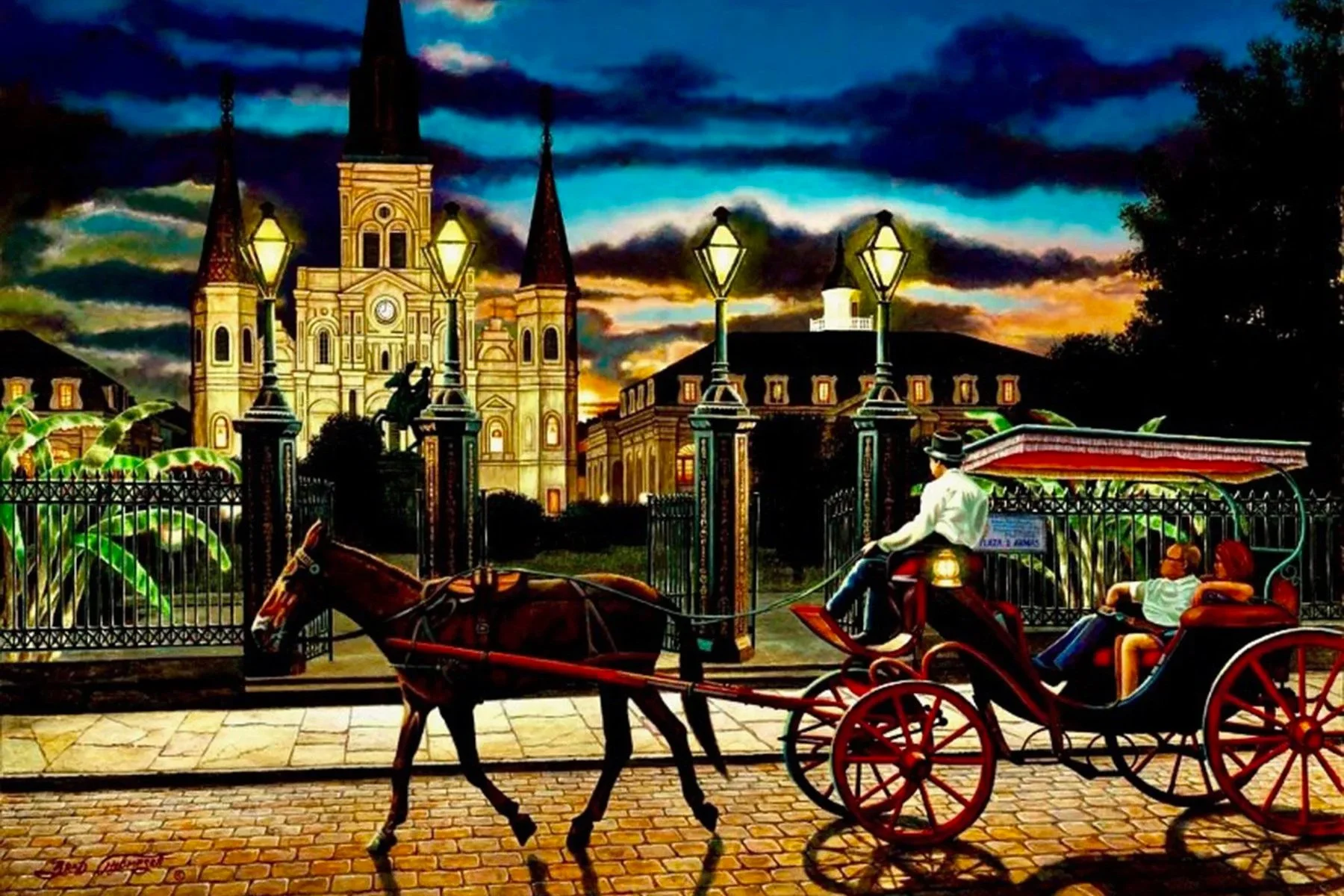
The streets and characters of New Orleans have supplied Thompson with subjects for decades, from landmark buildings to musicians and everyday scenes in the French Quarter.
The long road back
At 19, he joined several fraternity friends selling books for the summer. After a week of training, he was sent to Des Moines, Iowa, and discovered almost immediately that he was miserable.
One rainy day, Thompson sat in a deli fighting back tears and wanting to go home. Out of desperation, he prayed: “God, I will do anything but this.” He says he barely believed in God at the time, but the answer came quickly. He could take the sales training back to New Orleans and use it to sell paintings.
Thompson returned with two samples of his work, one of a plantation and the other of St. Louis Cathedral. Along the Lakefront in Metairie, he knocked on a homeowner’s door and offered to do a painting of the man’s house. Just like that, he got a commission, as did the next eight homeowners he approached. They all said yes.
All summer, Thompson painted eight to 10 hours a day. He returned to USL with enough money for his first car and far more experience than he could have gained in a classroom. As a sophomore, he entered three paintings in a university competition open to students from every grade level and won first place.
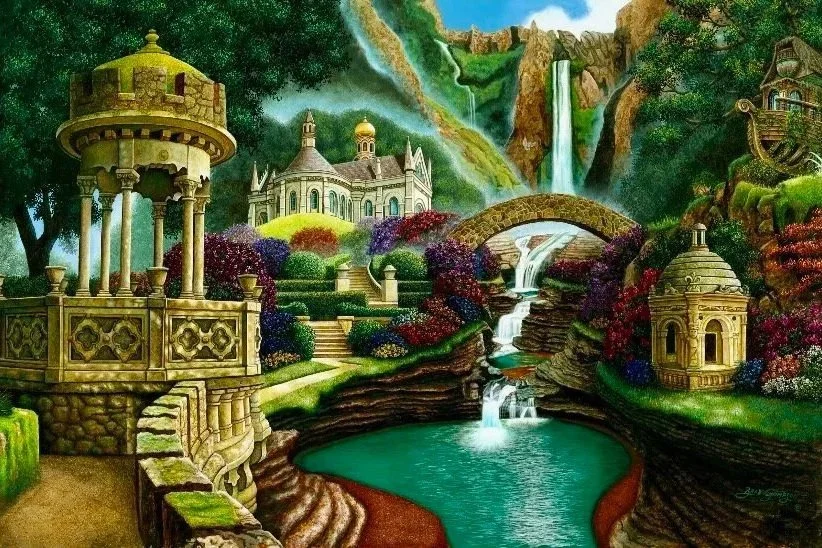
His largest early opportunity came through his mother, who heard that Chicago art dealer Merrill Chase was reviewing work by undiscovered artists at the Fairmont Roosevelt Hotel. Thompson made an appointment and arrived to find a long line of artists waiting for the same 8:30 time slot. Most went into the room and came right back out, but when Thompson’s turn came, a woman took one look at his paintings and brought him to Chase.
According to Thompson, Chase had reviewed the work of more than 500 artists and selected six for a national Bicentennial exhibition. Thompson made the cut. At 22, his work appeared in a show with established artists represented by Chase’s galleries, including Norman Rockwell and LeRoy Neiman. Chase bought about six of Thompson’s paintings and offered him a path into the national art market.
Thompson walked away from it. “I thought I could make more money,” he said. “I was a young man being foolish.” He returned to the house portraits he already knew how to sell, and for about six years, the commissions kept him busy. His prices rose along with his skill, but the number of homeowners willing to pay them eventually began to shrink.
Unable to see where the business was going, Thompson took a job selling cars at a dealership managed by a man from his church. Car sales came naturally, and for several months, he led a team of eight salespeople. Customers who saw photographs of his paintings regularly asked what he was doing selling cars.
After years alone at the easel, Thompson had lost some of the confidence that helped him land those first Lakefront commissions. A year on the showroom floor brought it back. One day, while looking at paintings hanging inside a bank, he prayed for a way to return to art. By the time he reached the dealership, he knew he was finished selling cars.
The manager encouraged Thompson to go, and he returned to painting with a better understanding of people, business and how to close a sale. This time, it worked.
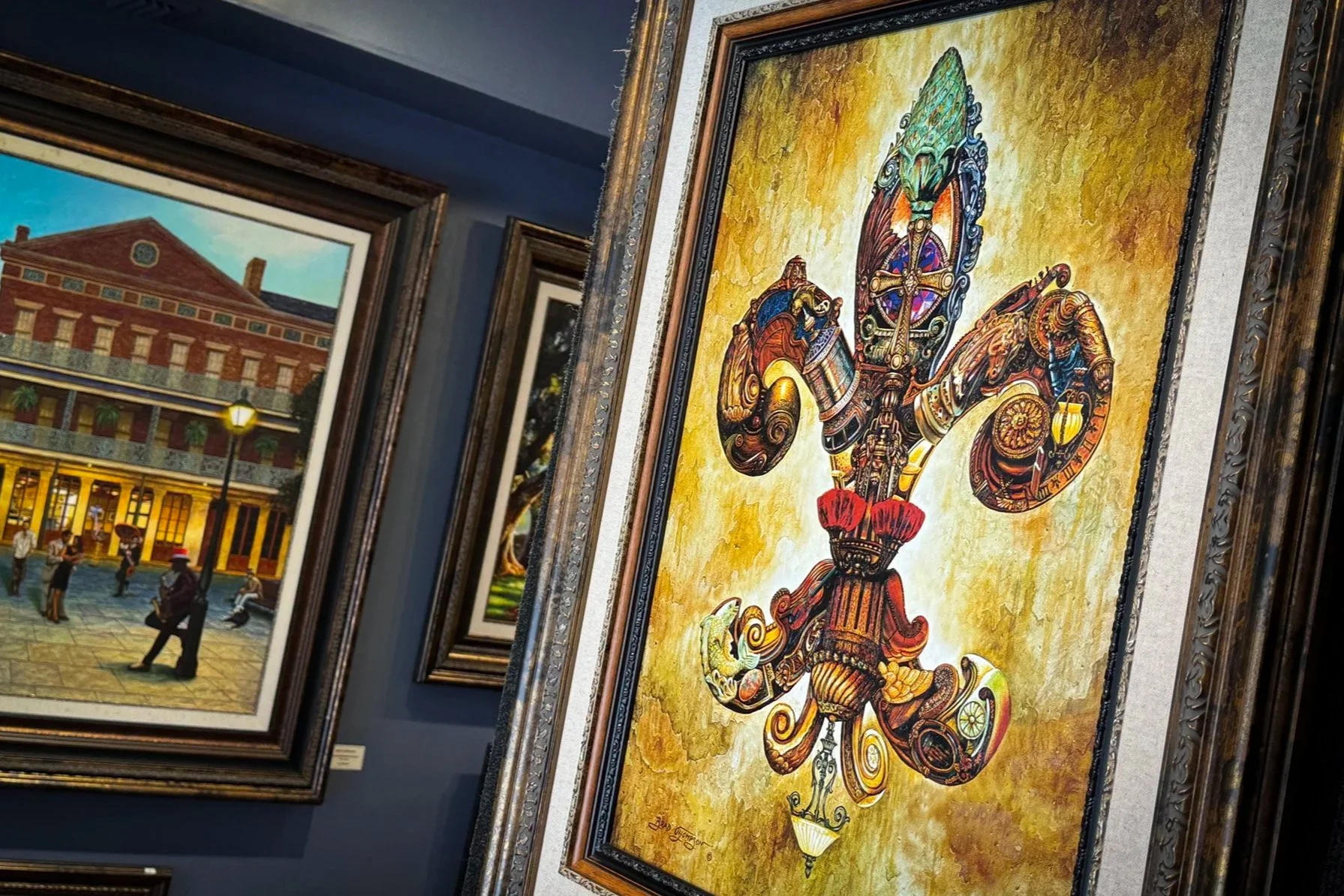
After Hurricane Katrina, Thompson transformed memories of discarded household belongings into a fleur-de-lis, turning the objects he saw piled along flooded streets into Jewel of the South.
After Katrina
By 2005, Thompson had built his life around painting. Hurricane Katrina put much of that work on hold when his Slidell home took on five feet of water. The flood damaged his house, framing equipment and the pieces of a business he had spent years building. Outside homes across the city, ruined furniture and personal belongings accumulated along the street.
“You’d see a beautiful lamp or a chair, and you knew that a lot of this was maybe family heirlooms,” Thompson said. “Things that brought beauty to people’s homes.” He wanted to paint what he was seeing, but a pile of storm debris hardly offered an obvious composition. The idea stayed with him as he repaired his home, rebuilt his frame shop and worked toward reopening his business.
Nearly a year later, Thompson was exhibiting at North Shore Mall in Slidell when a customer asked whether he had any fleur-de-lis paintings. He did not, but the question stayed with him after the man walked away. Thompson realized he could take the discarded objects he remembered from the roadside and arrange them into a fleur-de-lis.
The resulting painting, Jewel of the South, contains a mirror, chandelier, chair backs, sofa arms, handles, a chess piece, an urn, a sundial, a violin and other fragments arranged into the familiar Louisiana symbol. Customers began ordering prints before Thompson finished the original. That Christmas, he sold approximately 500 versions on paper and canvas, framed and unframed. Thompson says sales reached about $75,000 in one month, the largest month of his career at the time.
The fleur-de-lis had taken on renewed visibility across the New Orleans area after Katrina, appearing on homes, businesses, clothing and signs of recovery. Thompson’s painting spoke to people who could see their own losses within its pieces. The response led him to paint two more works in the series, but after considering a larger collection of fleur-de-lis designs assembled from furniture, jewelry and other objects, he stopped at three and returned to the wider range of Louisiana subjects that had defined his work.
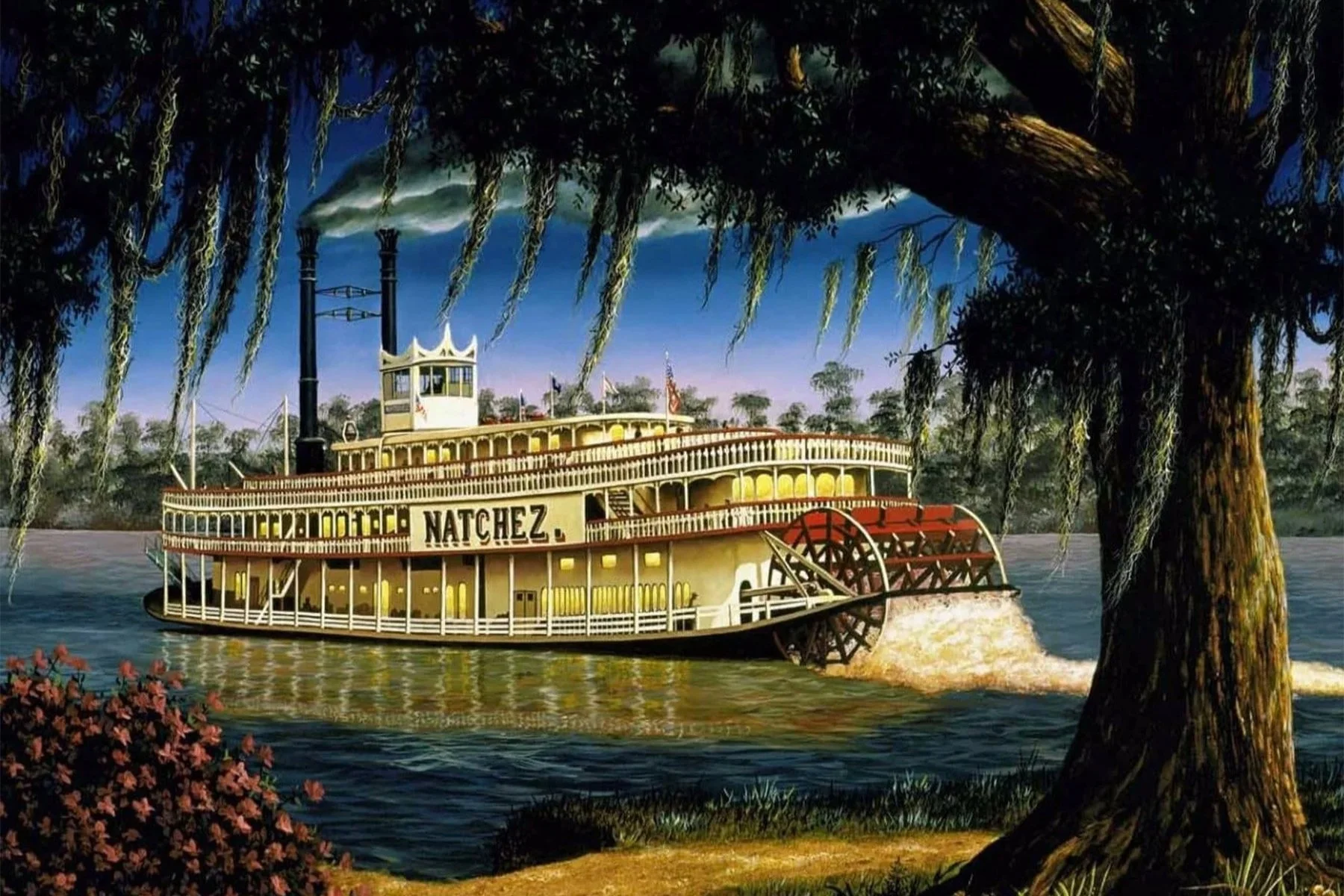
Thompson’s catalog reaches well beyond the French Quarter, preserving familiar Louisiana subjects that have helped define his work for generations of collectors.
A Louisiana collection
Over the years, Thompson has painted his way through a long list of familiar Louisiana places. His catalog includes Cafe du Monde, Jackson Square, streetcars, steamboats, hidden courtyards and the old sea lion cage at Audubon Zoo. He painted the City Park carousel and Pontchartrain Beach, preserving two attractions closely tied to childhood in New Orleans. Other works capture the Natchez, Pete Fountain’s Half-Fast Walking Club and the houses and gardens found across the city.
Historic properties became another major part of the collection. Thompson painted Oak Alley, Destrehan, Evergreen, Elmwood, Rosedown, Houmas House, San Francisco and Nottoway, along with Acadian cottages and Victorian homes. Wildlife carried his work in a different direction, earning him seven first-place awards in statewide competitions, according to his gallery biography, including Louisiana Ducks Unlimited Artist of the Year.
His commissions included an official painting and poster for the Louisiana Wildlife and Fisheries Museum, artwork for Pete Fountain’s walking club and an exclusive Nottoway Plantation image. More than 90 Thompson paintings have reportedly been issued as prints, with more than 100,000 prints sold. Signed editions from the 1980s and 1990s still turn up in galleries, antique stores and family collections, and a work by Thompson entered the holdings of The Historic New Orleans Collection through a 1983 donation.
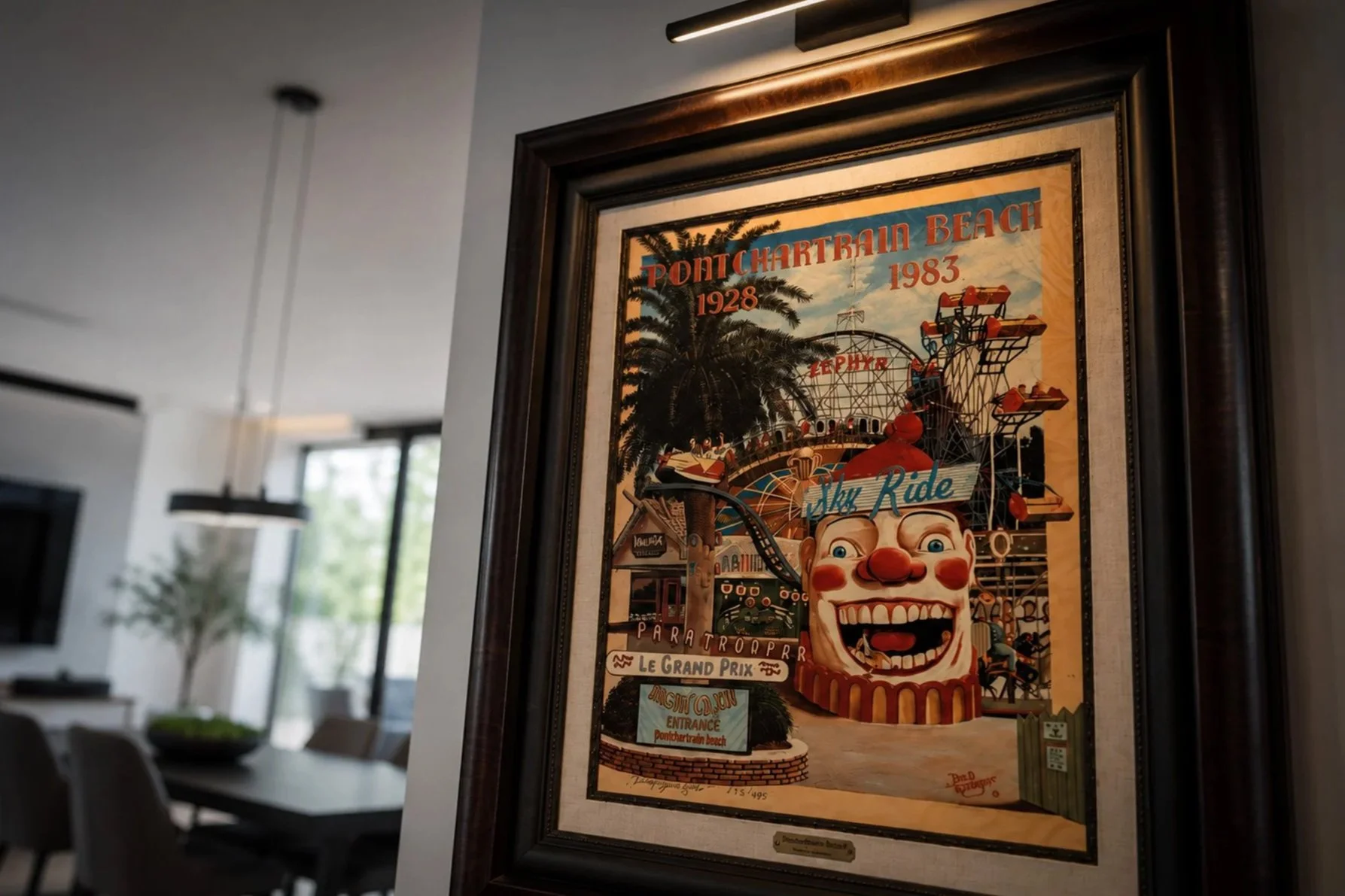
I know that reach firsthand. A canvas print of Thompson’s Pontchartrain Beach painting hangs in my own collection. Long before I met the artist, I knew his version of the midway, the Zephyr roller coaster and the lights of the amusement park that once stood along Lake Pontchartrain. That is how many people first encounter Thompson: They know one of his New Orleans scenes before they know the artist who painted it.
For years, his gallery operated inside Jax Brewery on Decatur Street. The move to 631 Royal St. placed Thompson and his collection along the French Quarter corridor he had dreamed of joining since he was young. Visitors now arrive from across the United States and around the world. “I’m on Royal Street,” he said, looking around the gallery. “It’s been my dream all of my life to be on this street.”
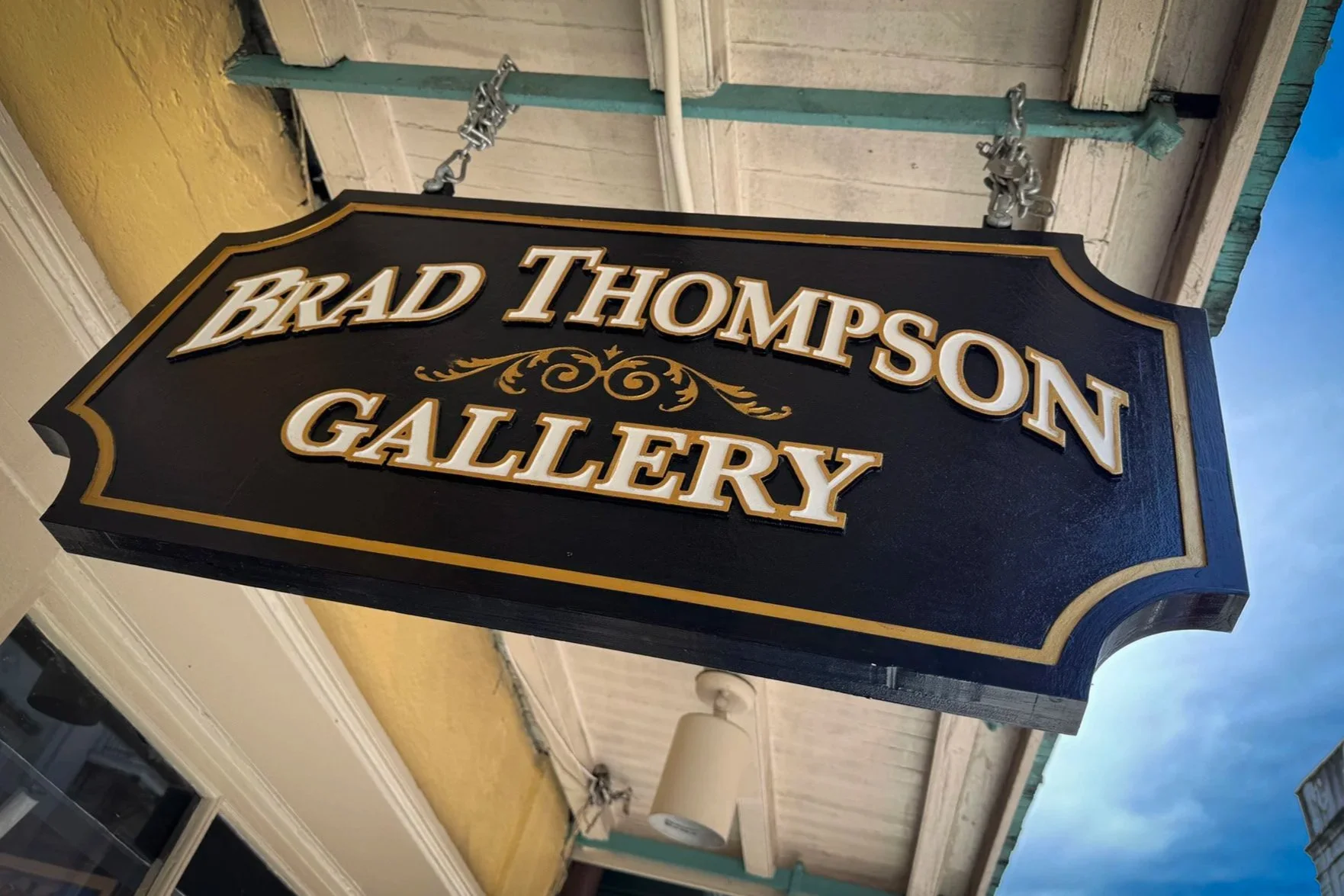
After decades of painting New Orleans from across the region, Thompson now has his name hanging on Royal Street, the destination he says he dreamed of reaching throughout his career.
At Royal and St. Peter
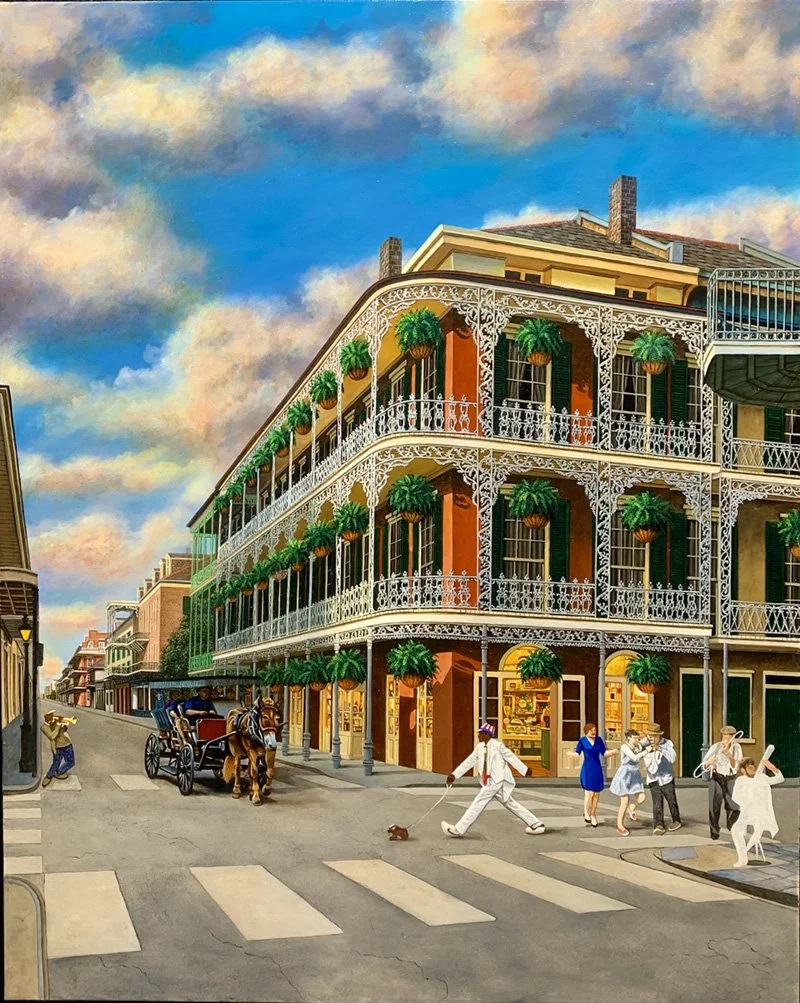
Near the end of the block from Thompson’s gallery, Royal Street meets St. Peter at one of the French Quarter’s most recognizable intersections. The LaBranche Buildings—a row of 11 brick townhouses constructed around 1840 for the widow of sugar planter Jean Baptiste LaBranche—frame the corner. Their cast-iron galleries were added beginning in 1850, with a different pattern adorning each building, and helped make the intersection one of the Quarter’s most photographed views.
That corner is the subject of Thompson’s next painting. He removed the pipes, barriers and equipment left by recent utility work, restoring the familiar architecture before filling the street with the people who give the French Quarter its character: tourists, musicians, pedestrians, a carriage driver and longtime living-statue performer Uncle Louie.
Uncle Louie had asked Thompson for years to include him in a painting. “I’m hoping that somebody will see him somewhere and let him know, ‘You’re in one of my paintings,’” Thompson said.
More than 50 years after first painting St. Louis Cathedral in a high school classroom, Thompson continues to preserve New Orleans on canvas. His latest work captures not only one of its most familiar corners, but the people who keep the French Quarter alive.

Where to go next
Brad Thompson Gallery brings more than 50 years of Louisiana paintings together on Royal Street, only a short walk from Jackson Square. Visitors can browse original paintings and framed works featuring the French Quarter, plantations, wildlife, gardens and other familiar Louisiana scenes.
Brad Thompson Gallery
631 Royal St.
New Orleans, LA 70130
(985) 640-2354
Gallery hours:
Daily: 10 a.m.–7 p.m.
Call ahead to confirm before making a special trip.
Website | Facebook | Instagram