I thought I understood Alice Cooper. Behind the makeup, snakes and nightmares was something I never expected to find.
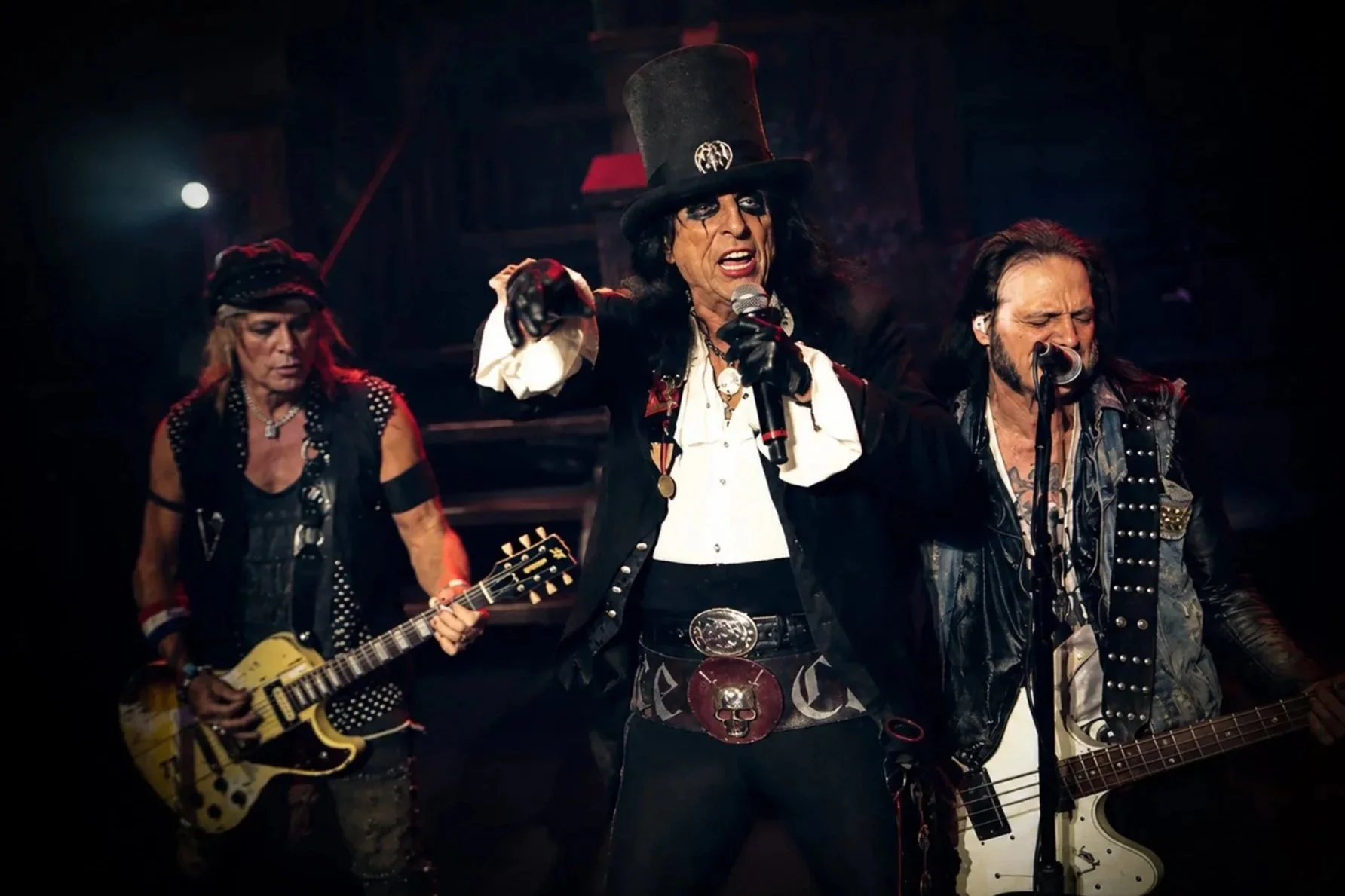
Alice Cooper has spent more than five decades blurring the line between rock music and theater. Behind the makeup and spectacle is a story I never expected to find.
Teenage Frankenstein
If you were a kid growing up in the 1980s, you probably didn't realize you were living through a horror renaissance. I certainly didn't. A few generations later, kids would have the Marvel Cinematic Universe. We had slashers. Freddy Krueger and Jason Voorhees kept returning to movie screens. Vampires, ghouls and zombies found new life. Fangoria filled magazine racks with monsters and special effects, while the rise of the neighborhood video store put row after row of horror movies within reach. I had no frame of reference for what had come before. To me, this wasn't a renaissance. It was simply part of growing up in the 1980s.
In that environment, Halloween took center stage. Maybe it was dressing up as a werewolf, walking through a local spook house or waiting for Morgus the Magnificent on Saturday night. We all had our own ways of putting on a mask, but no one knew how to put on the makeup quite like Alice Cooper.
With the black eyes, snakes, guillotines and theatrical stage shows, Alice looked like he belonged in that same strange corner of pop culture. By 1986, he was literally part of it, recording “He’s Back (The Man Behind the Mask)” for Friday the 13th Part VI: Jason Lives. My brother and I also knew Alice from another unmistakably 1980s corner of pop culture: professional wrestling. He accompanied Jake “The Snake” Roberts to the ring at WrestleMania III. Jake had a snake. Alice had a snake. Of course these two guys knew each other.
Alice Cooper was creepy. Alice Cooper was cool. Somewhere along the way, I started listening.
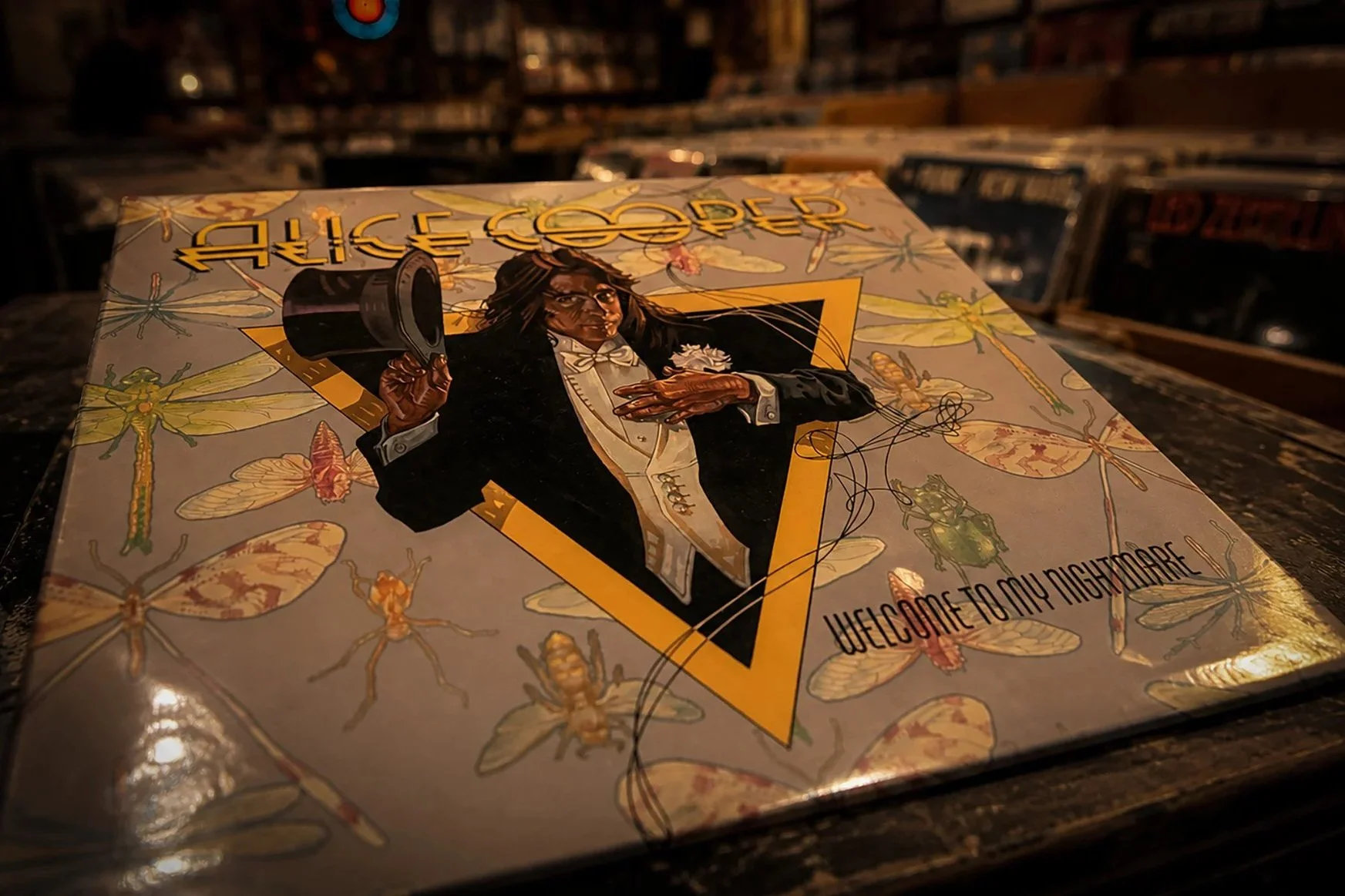
My Uncle James had owned this copy of Welcome to My Nightmare since he was a teenager. When he gave it to me, it became my first Alice Cooper LP and one of my first real rock albums.
Welcome to My Nightmare
My first Alice Cooper record came from my Uncle James. By then, Welcome to My Nightmare was already more than a decade old. Released in 1975, it was Alice Cooper’s first solo album after the original Alice Cooper band had come to an end. Alice Cooper had started as the name of the band before Vincent Furnier legally took the name for himself, and Welcome to My Nightmare helped establish the theatrical world he would carry forward for the next half-century.
None of that history mattered to me yet. My uncle knew I was getting into Alice Cooper, so he gave me his copy of the record. In retrospect, I'm not sure how easy it was for him to let it go. He had owned it since he was a teenager, and it had been part of his own story long before it became part of mine. For me, though, this was huge. Welcome to My Nightmare was my first Alice Cooper LP and really one of my first real rock albums. I thought it was cool. This was Alice Cooper, the nightmare guy, the snake guy, the performer who somehow existed in the same universe as Jason Voorhees and Jake “The Snake” Roberts. And now I had one of his records.
From there came more music. Cassettes. CDs. Trash. Hey Stoopid. Whatever I could get my hands on as Alice moved through another successful chapter of his career.
Around 1993, something changed. Not with Alice, but with me. I was going through a spiritual awakening of my own, reconnecting with my faith and asking more serious questions about who I wanted to be and what belonged in my life. For a season, that meant making a hard break with most secular music. I wasn't interested in putting things in a closet so I could quietly return to them later. If I believed something wasn't beneficial to the direction I was trying to go, I got rid of it.
Alice Cooper seemed like one of the easiest decisions. I mean, look at the guy. So out went the music. As far as I was concerned, that chapter was closed.
I just didn't know that I had completely misunderstood Alice Cooper.
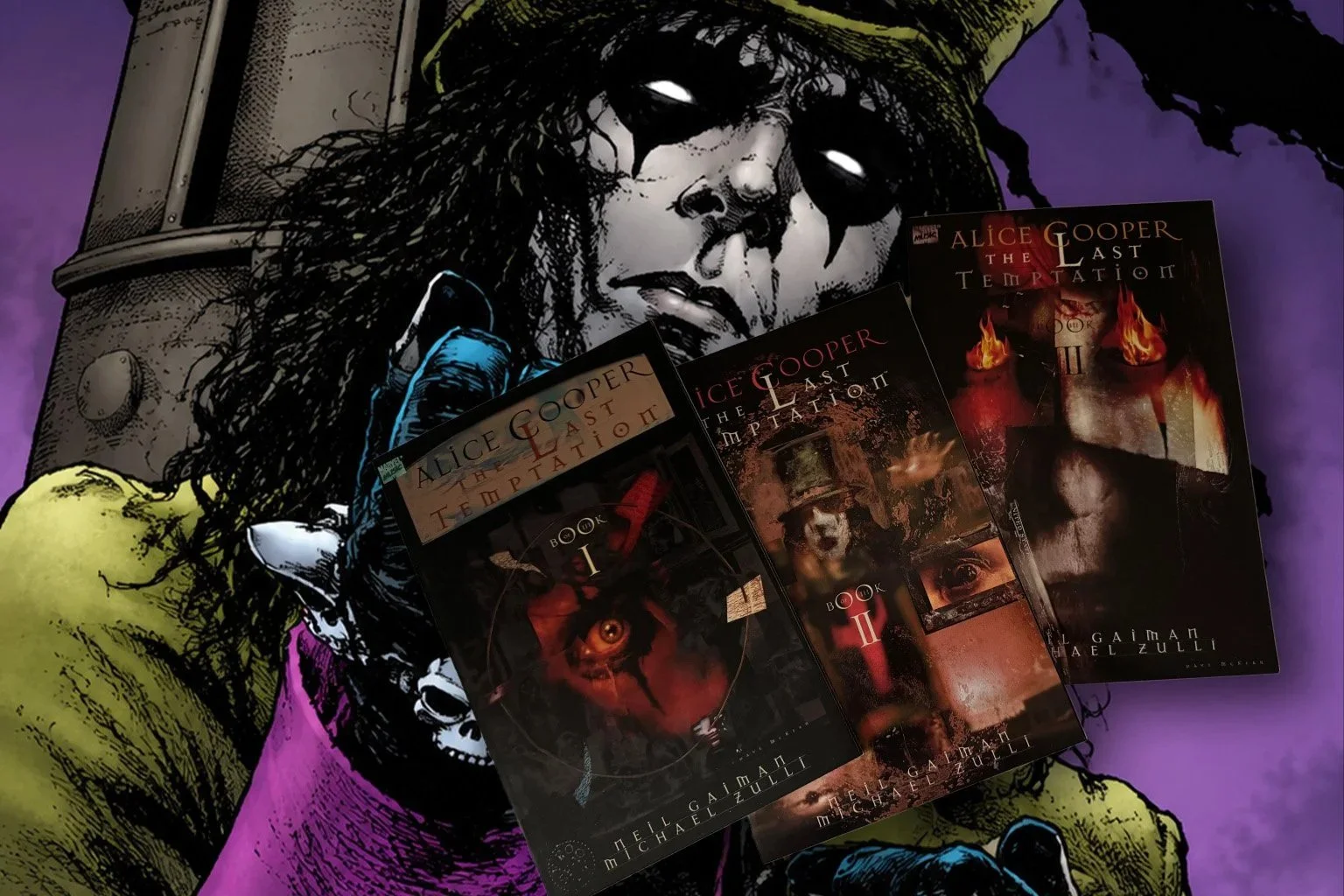
The mysterious Showman offers Steven an escape through his sinister theater, becoming the face of temptation and deception at the heart of The Last Temptation.
The Last Temptation
Not long afterward, I heard something that stopped me: Alice Cooper played golf with Billy Graham. I don't remember where I first heard the story or exactly what version reached me. I only remember thinking that something didn't add up. Then, in 1994, The Last Temptation came out, and Alice Cooper was showing up in Christian bookstores. Now I really had questions.
I had just gotten rid of his music the year before because I had decided I knew what Alice Cooper was all about. But here was a new record built around temptation, deception, prayer, spiritual struggle and redemption, and the Christian music world was paying attention. Maybe there was more to this man than the makeup, the snakes and everything I had assumed they represented. So I bought The Last Temptation at a Christian bookstore. In a strange way, seeing it there gave me permission to take another look. It became my first Alice Cooper album after I had gotten rid of everything else.
The Last Temptation tells the story of Steven, a young man confronted by a mysterious Showman who offers him escape through a sinister theater. The story also unfolded through a three-part Marvel comic book series written by Neil Gaiman and illustrated by Michael Zulli, extending the concept into another medium. Underneath all that horror imagery was a story about temptation, deception, choice and the struggle to recognize truth. Songs including “Stolen Prayer,” “Unholy War” and especially “Cleansed by Fire” made the spiritual questions running through the record increasingly difficult to miss.
The more I listened, the more I began to wonder whether Alice was the one I had gotten wrong. Maybe the darkness wasn't the message. Maybe it was the villain.
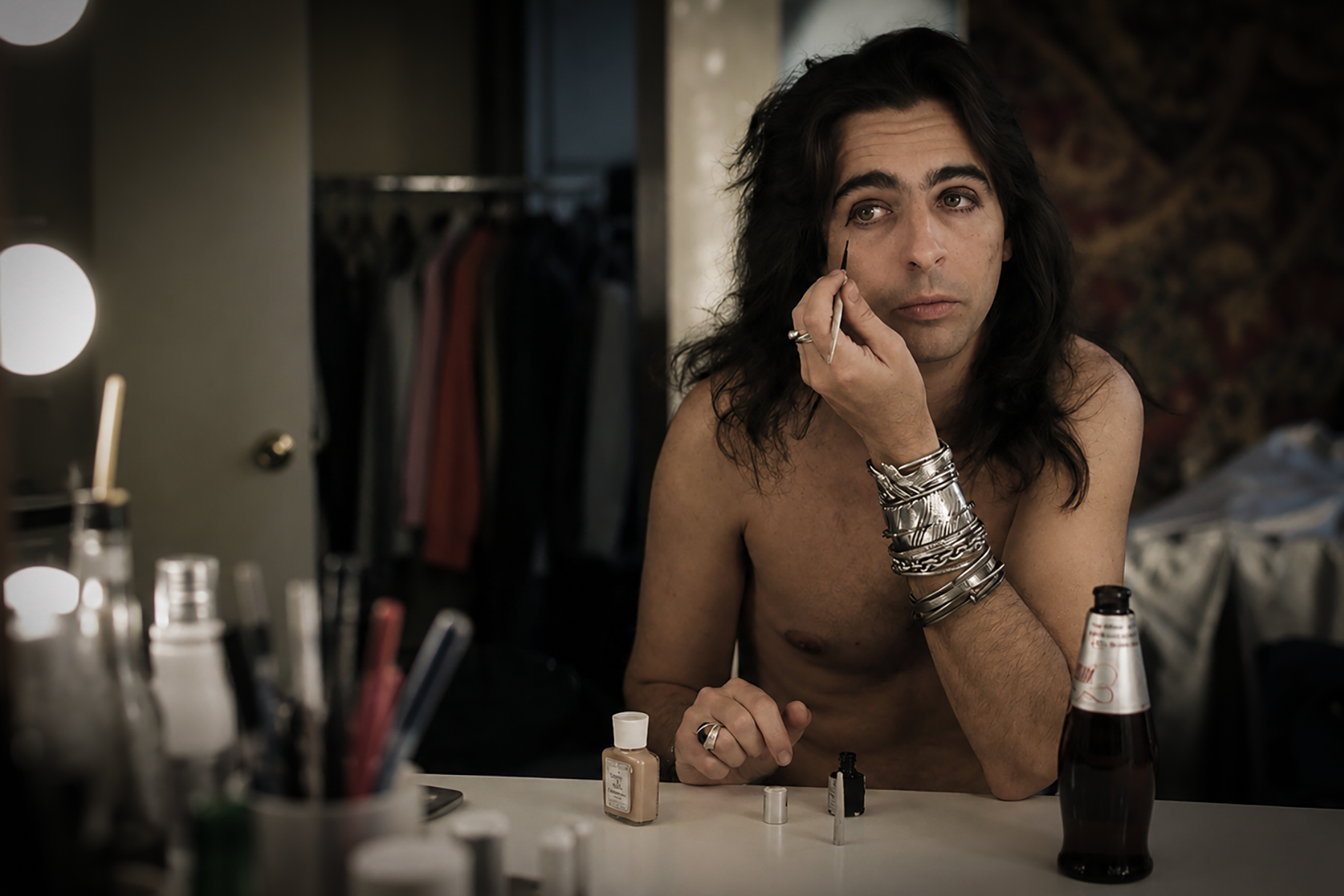
A young Vincent Furnier applies the black eye makeup that helped transform him into Alice Cooper, the character who would become one of rock’s most recognizable figures.
From the Inside
Alice Cooper was born Vincent Furnier into a family with deep roots in the church. His father was a pastor and evangelist. His grandfather was also a minister. Faith had been part of his life long before anyone knew the name Alice Cooper.
Then came the band, the records and the character. By the early 1970s, albums including Love It to Death, Killer, School's Out and Billion Dollar Babies had made Alice Cooper one of the biggest names in rock. The concerts became spectacles filled with electric chairs, gallows, guillotines, snakes and staged executions. As the character grew larger, so did the addictions. Alice entered treatment for alcoholism in the late 1970s and later descended into another devastating period of addiction. Cocaine and alcohol took a severe toll on his health and threatened his marriage. Eventually, the nightmare was no longer confined to the stage.
He returned to the faith that had been part of his childhood and left drugs and alcohol behind in the early 1980s. What followed became a life measured in decades of sobriety, marriage, service and faith. The same man who had built a reputation around rock-and-roll excess became known for reading the Bible, playing golf and going onstage at night to have his head cut off. That apparent contradiction was exactly what I had failed to understand.
As a younger man, I had assumed that portraying darkness meant celebrating it. Over time, I began to understand that storytelling doesn't work that way. The Bible itself contains temptation, violence, betrayal, demons, suffering and death. What matters is what the story says about them. Alice has often described the character he plays as a villain. Once I understood that, I began hearing the music differently. A song voiced by temptation does not endorse temptation. A story about evil does not celebrate evil. Sometimes the monster reveals the truth precisely because we recognize him as the monster.
The makeup hadn't changed. My ability to read it had.
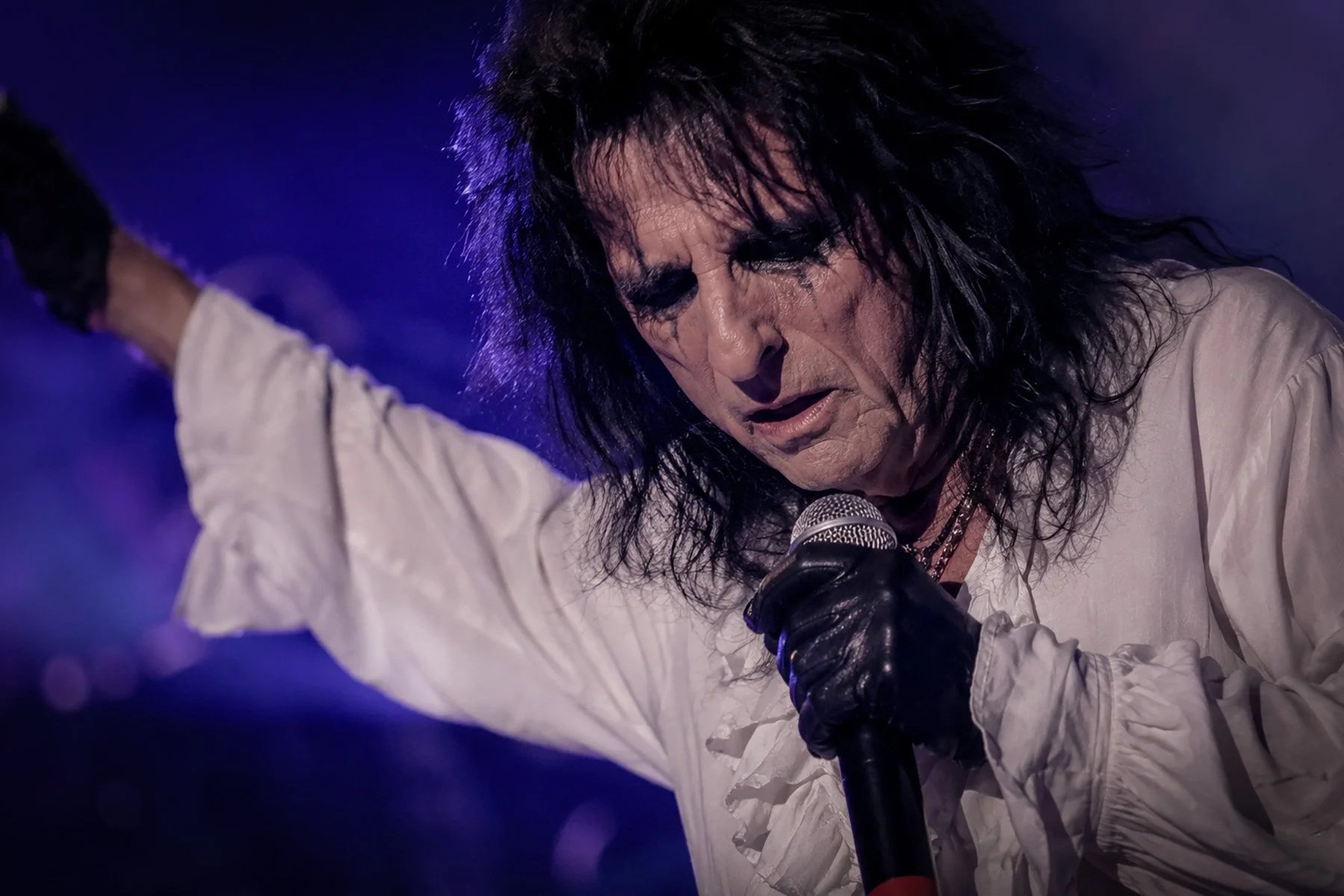
Alice Cooper’s journey from addiction to sobriety and renewed faith became more than a story of personal survival. It shaped the way he used the life he had been given back to serve others.
Salvation
In 1995, Alice and his wife, Sheryl, founded Solid Rock to serve young people in the Phoenix area. The work eventually grew into Alice Cooper’s Solid Rock Teen Centers, creating places where young people can participate in music, dance, art and other programs without charge. I remember seeing coverage of one of the centers and continuing to follow the work as Alice spoke more openly about his faith and the purpose behind it.
This part of his story connected with me in a different way. I understand the importance of ministry. I have participated in mission work and led Bible studies. But I am also a creative. Photography, design, writing and storytelling have been part of my life for decades.
Solid Rock brings those worlds together. Reaching someone can begin with a Bible study or a mission trip, but it can also begin with a guitar, a camera, a paintbrush or a microphone. Sometimes it begins by creating a place where a young person can walk through the door and discover that someone believes there is something inside them worth developing.
The same connection between faith and creativity continued to surface in Alice's music. The Last Temptation had opened that door for me, but it was only one part of a much longer journey. Across later albums, questions of temptation, sin, judgment, redemption and salvation appeared through the same theatrical language he had always used.
The villain still got a voice. The nightmare still got a stage. But once I knew where to look, I could see where the story was pointing.
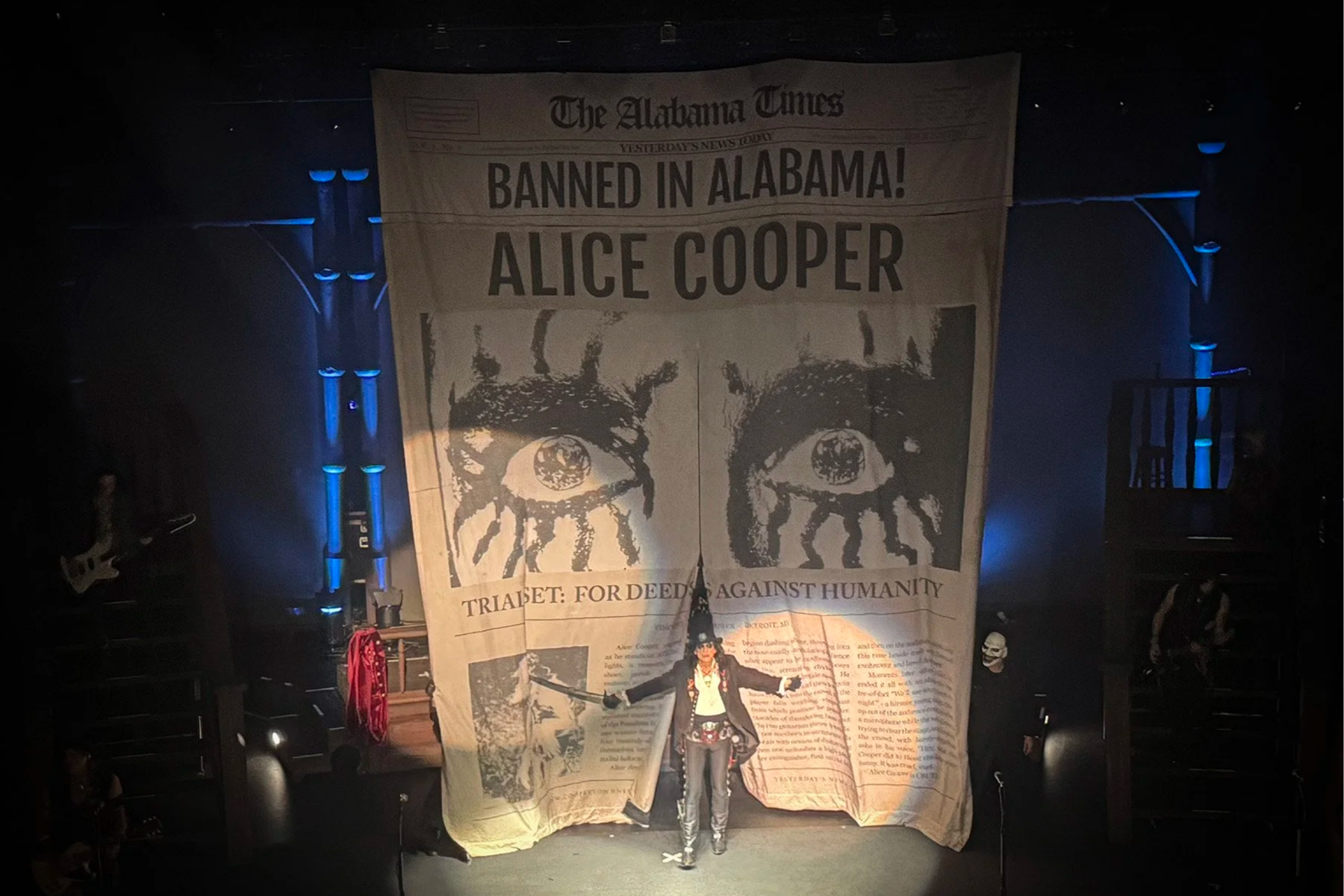
After decades of knowing Alice Cooper through records, comics and stories, I finally saw the spectacle unfold onstage at Mobile’s historic Saenger Theatre.
Welcome to the Show
Years later, another piece of Alice Cooper history found its way into my collection. Marvel Premiere #50, published in 1979, announced “Alice’s 1st Comic Book Appearance!” across the cover. The story was tied to From the Inside, the 1978 album inspired by Alice’s own experience in treatment for alcoholism. It was exactly the kind of intersection of comics, music and pop culture that appealed to me.
The concert had originally started as an idea for my brother, my sister and me to do something together. When I learned Alice Cooper was coming to the Saenger Theatre in Mobile, Alabama, I started looking into the show and the available VIP experience. Somewhere along the way, I bought a high-grade copy of Marvel Premiere #50 with a plan: meet Alice, have him sign the cover with a paint marker and eventually frame it. As a comic book collector, it was a piece I wanted in my collection anyway, and in retrospect, it almost feels like a prelude to The Last Temptation, bringing Alice Cooper into comics fifteen years before the album and Neil Gaiman series that would become such an important part of my own story.
The problem was that the VIP package seemed to promise a special-edition print, not an autograph on an item I brought with me. I tried to find out whether I could bring my own piece, but I never found enough certainty to justify the cost on the hope that I might leave with the comic signed. So I passed. Eventually, neither my brother nor my sister could make the trip either, but I decided to go anyway.
That decision brought me to Mobile on February 4, 2025, Alice Cooper’s 77th birthday, and a venue that could hardly have been more appropriate. The Saenger opened in 1927 as one of the grand movie palaces of its era. With its ornate plasterwork, soaring interior and old-world theatricality, the building felt closer to the world of The Phantom of the Opera than a modern arena. Before Alice Cooper ever walked onto the stage, the theater had already set the mood.
The makeup, costumes, monsters, theatrical violence, giant props and snake were all there. Inside that beautiful old theater, the production felt even more theatrical, as if Alice Cooper and the Saenger belonged together. The performer who had occupied some corner of my pop-culture life since childhood was suddenly there in front of me, and the show was everything I had hoped it would be.
Before the night was over, I wandered through the merchandise area and found something I wasn't expecting: a small stack of signed copies of The Last Temptation. My original copy was long gone. I had bought it at a Christian bookstore in the 1990s when I was beginning to reconsider everything I thought I knew about Alice Cooper. Hurricane Katrina took that copy along with so much else. Now, nearly thirty years later, another copy was sitting in front of me, signed by Alice Cooper.
I bought it.
The VIP experience never happened, and Marvel Premiere #50 stayed home unsigned. Instead, I left the Saenger after a concert that blew me away carrying a stuffed boa constrictor wearing a top hat and a signed copy of the album that had brought Alice Cooper back into my life. I'd say that was a pretty good consolation prize.
Today, that signed CD hangs on my wall.
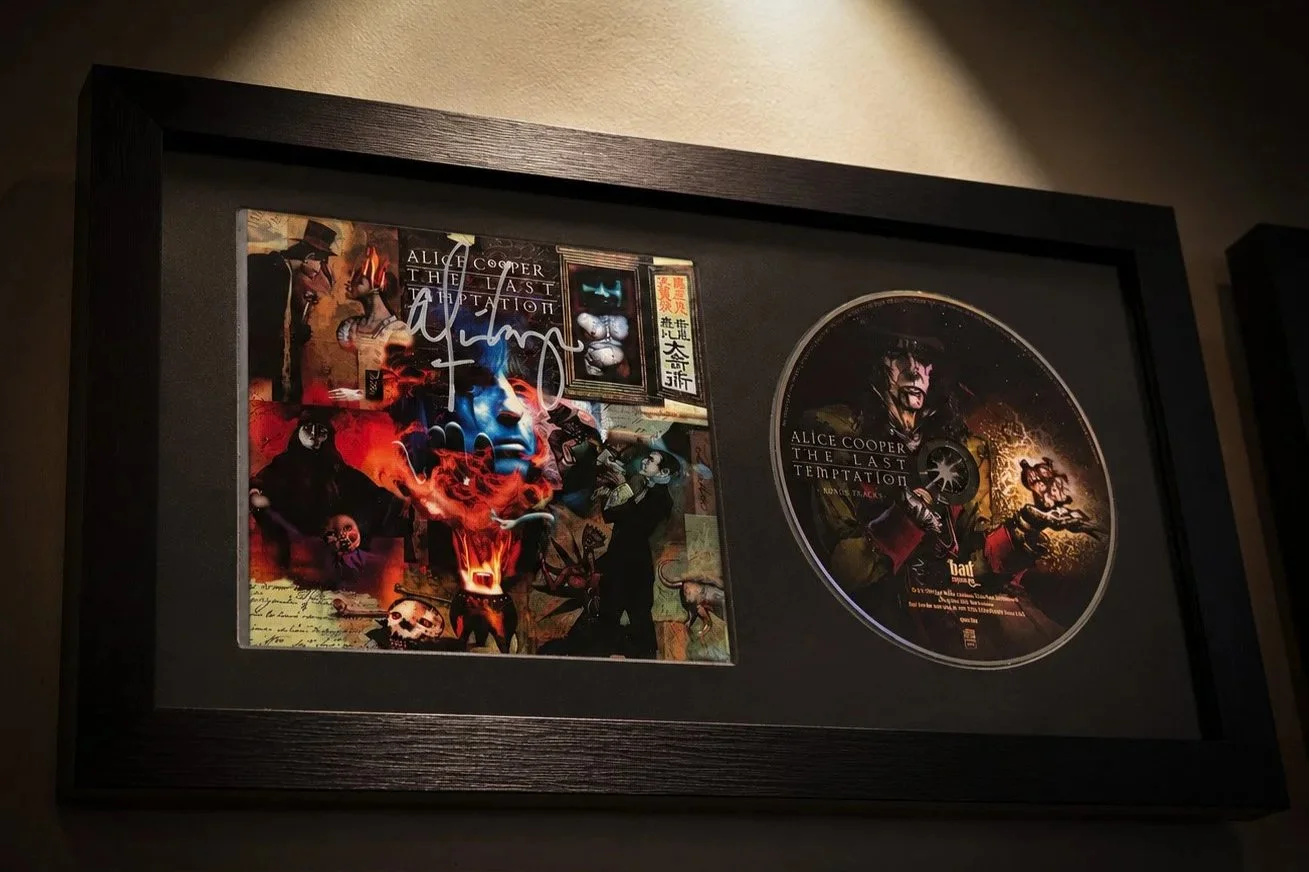
My first copy of The Last Temptation marked the beginning of a change in how I understood Alice Cooper. Nearly thirty years later, this signed copy became a reminder of where that journey had led.
Cleansed by Fire
Recovery was only part of Alice Cooper’s story. Over the decades that followed, his Christian faith increasingly shaped the way he spoke about his life and the way he reached out to others facing some of the same battles he had survived.
Alice once put it in terms that cut through everything I had once assumed about him: “Drinking beer is easy. Trashing your hotel room is easy. But being a Christian, that's a tough call. That's real rebellion.” That statement really hit home. Faith wasn't about retreating from the world or surrendering creativity. Sometimes it meant having the conviction to stand in the middle of your world and refuse to let it define you.
Alice lived that out in ways I never would have imagined when I first heard his music. In 1987, Megadeth opened for him on the Constrictor tour. Alice saw firsthand how deeply drugs and alcohol had taken hold of the band and stepped in, drawing from his own battle with addiction to urge them toward sobriety. That relationship grew into a lasting friendship with frontman Dave Mustaine, who would eventually call Alice his godfather.
There was something powerful about that. Alice had survived his own descent into addiction, found his way back to faith and then used those experiences to reach people who might never have listened to a preacher. The nightmare had given him a story to tell. What he chose to do with it told me far more about the man than the character ever could.

Where to go next
Alice Cooper's sobriety marked the beginning of a new chapter, and over the decades that followed, questions of temptation, sin, redemption and salvation continued to surface in his music. For anyone interested in exploring that side of his work, these songs offer a place to begin.
“Stolen Prayer” — The Last Temptation (1994)
A searching song about prayer, truth and spiritual confusion from the album that first changed the way I understood Alice Cooper.
“Cleansed by Fire” — The Last Temptation (1994)
The spiritual climax of the record, bringing its struggle with temptation and deception toward recognition, rejection and faith.
“Brutal Planet” — Brutal Planet (2000)
A bleak look at a fallen world that reaches back to Eden and the consequences of humanity's choices.
“Gimme” — Brutal Planet (2000)
Temptation gets its own voice, showing how Alice can use the villain to expose the danger of what the villain is offering.
“Salvation” — Along Came a Spider (2008)
Inside another dark concept album, the question turns toward whether someone who has done terrible things can still find redemption.
“I Am Made of You” — Welcome 2 My Nightmare (2011)
A later song that carries the spiritual thread into Alice's return to the world of his most famous nightmare.