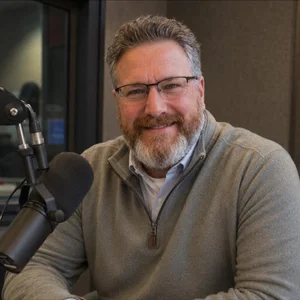
Seven months after watching the Beatles change American popular culture on television, my dad, then fifteen years old, found himself inside New Orleans’ City Park Stadium on the night Beatlemania spilled out of the stands.
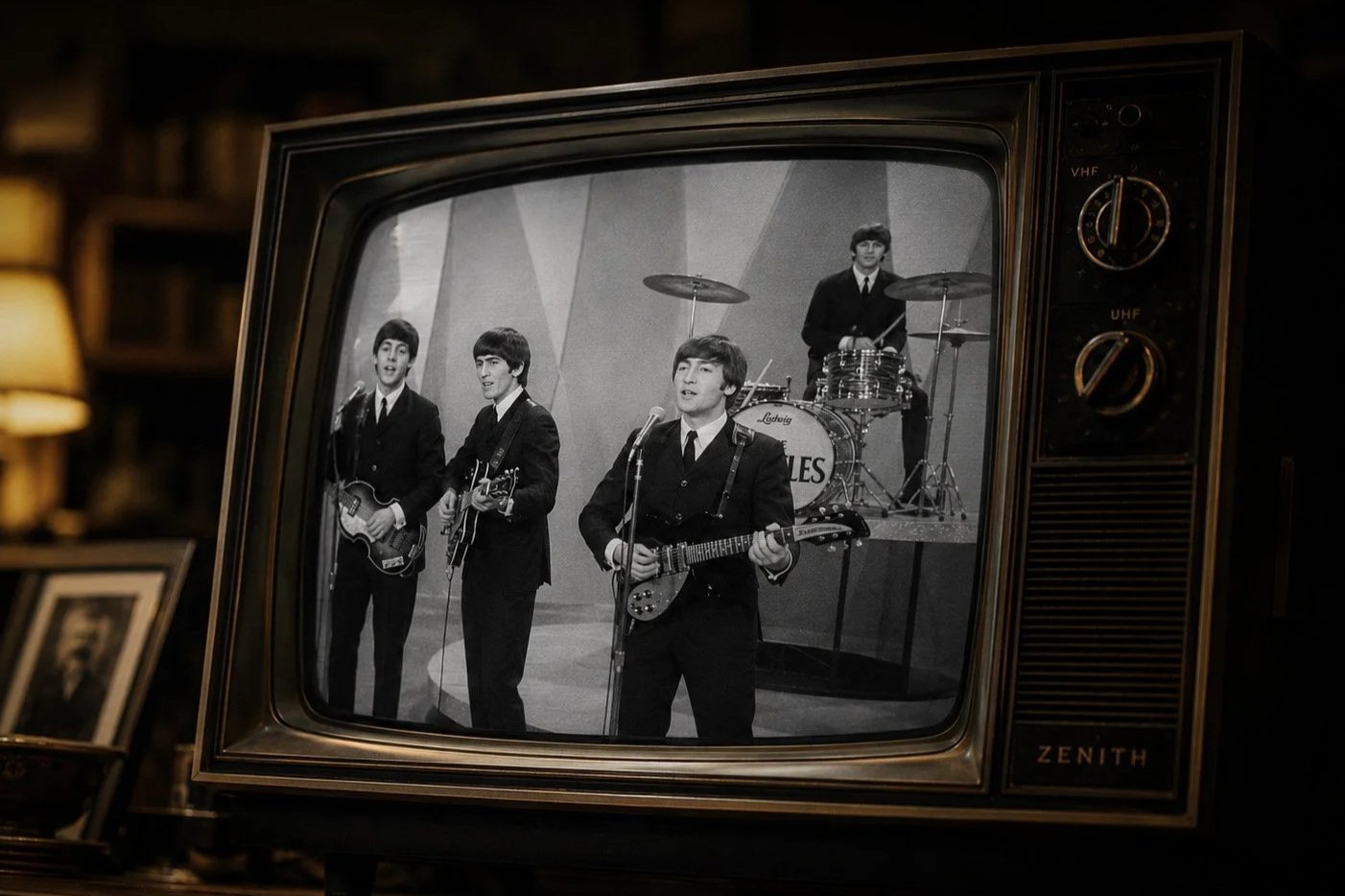
On February 9, 1964, The Beatles entered millions of American homes through The Ed Sullivan Show and helped ignite Beatlemania across the country.
I Saw Her Standing There
On Sunday night, February 9, 1964, Paul San Fillippo was a tenth-grader at Warren Easton High School living in Mid-City New Orleans. He gathered around the family television with his brother Don and their parents to watch The Ed Sullivan Show.
“I was looking forward to seeing the Beatles,” Dad said. “Their songs were already on the radio, and everybody was talking about them.”
When the band appeared on the family television in matching suits and mop-top haircuts, my grandfather took one look at them and called them “hippy dudes.”
“They didn’t have long hair,” Dad said, laughing. “Today, nobody would consider that long hair.”
In 1964, those haircuts were enough to mark a generational divide. By the next morning, the music, the screaming girls and the spectacle watched by 73 million people had followed Dad into the halls of Warren Easton. His classmates had watched the same broadcast, heard the same songs on the radio and arrived at school with the Beatles still fresh in their minds. For a generation of teenagers, Monday morning came with a new shared language.
“They were it,” Dad said. “The Beatles were the biggest thing in music.”
He wanted the record.
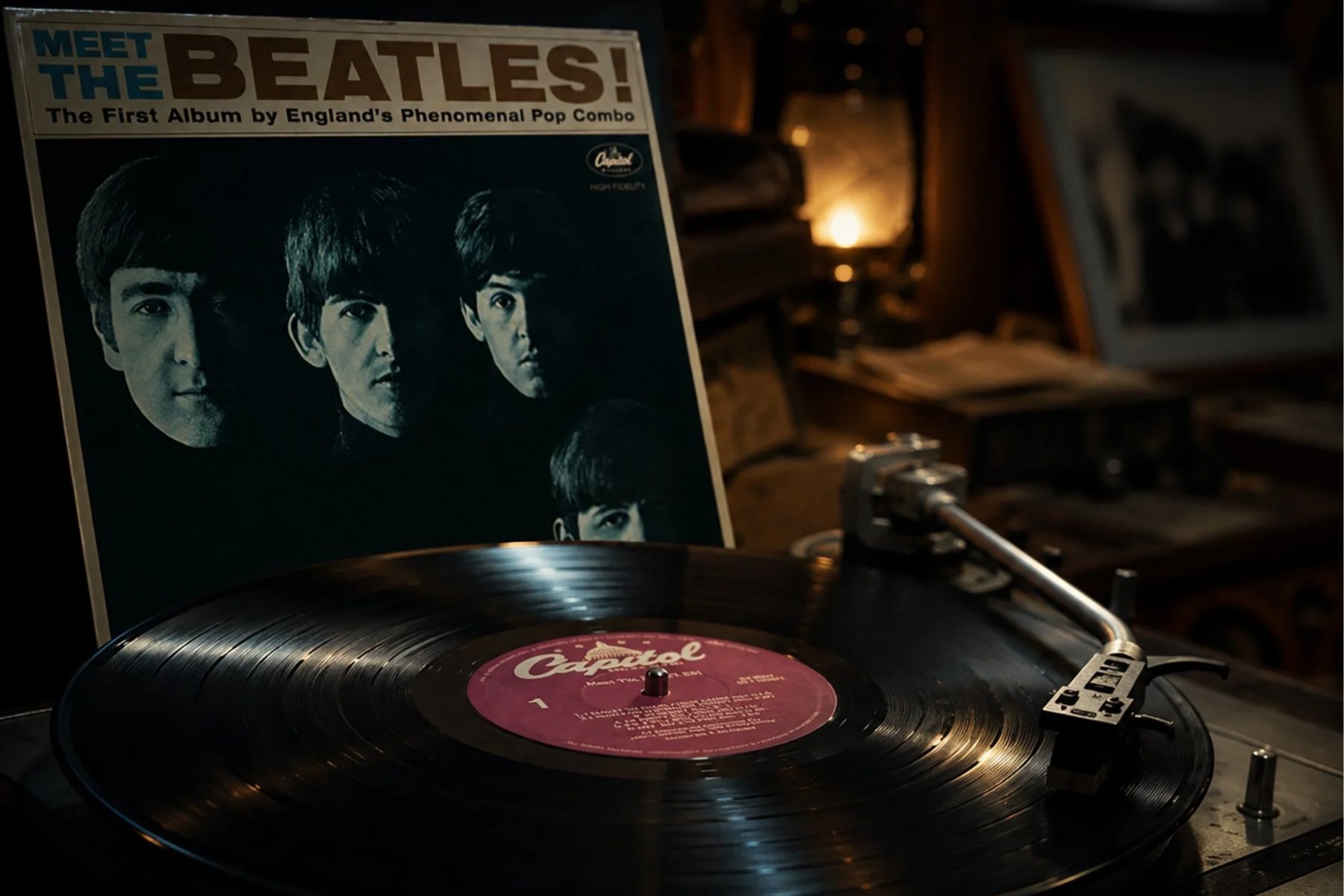
Meet the Beatles! became the first record my dad ever bought, ordered through the Capitol Record Club after Beatlemania arrived in America.
It Won’t Be Long
Record clubs offered generations of music fans the promise of building a collection through the mail. In 1964, Capitol advertised its club in major magazines, inviting members to choose albums in exchange for a commitment to continue buying more over the months that followed. Dad joined the Capitol Record Club and selected Meet the Beatles!, released on January 20, less than three weeks before the Ed Sullivan broadcast. He filled out the application, accepted the purchase commitment and dropped his order into the mail.
Then he waited.
Somewhere between the Capitol Record Club and 517 S. Pierce Street was the album he wanted. Each trip to the mailbox carried the possibility that it had arrived. Eventually, a package appeared, and the four shadowed faces from the album cover belonged to a record he could carry inside and spin on the turntable.
While Dad played Meet the Beatles!, Beatlemania kept growing. Through the spring and summer of 1964, the Beatles dominated records, radio and conversation. In New Orleans, that excitement surged through two Top 40 stations, WNOE and WTIX, whose rivalry divided young listeners into camps. WNOE secured official sponsorship of the Beatles’ New Orleans concert, while WTIX sent its Boss Jocks to City Park to distribute flyers and promote Beatles giveaways. New Orleans Beatles historian Bruce Spizer later recalled children arguing on playgrounds over which station they listened to.
By September, the excitement that had traveled through radio signals, television screens and the band was coming to New Orleans in person.
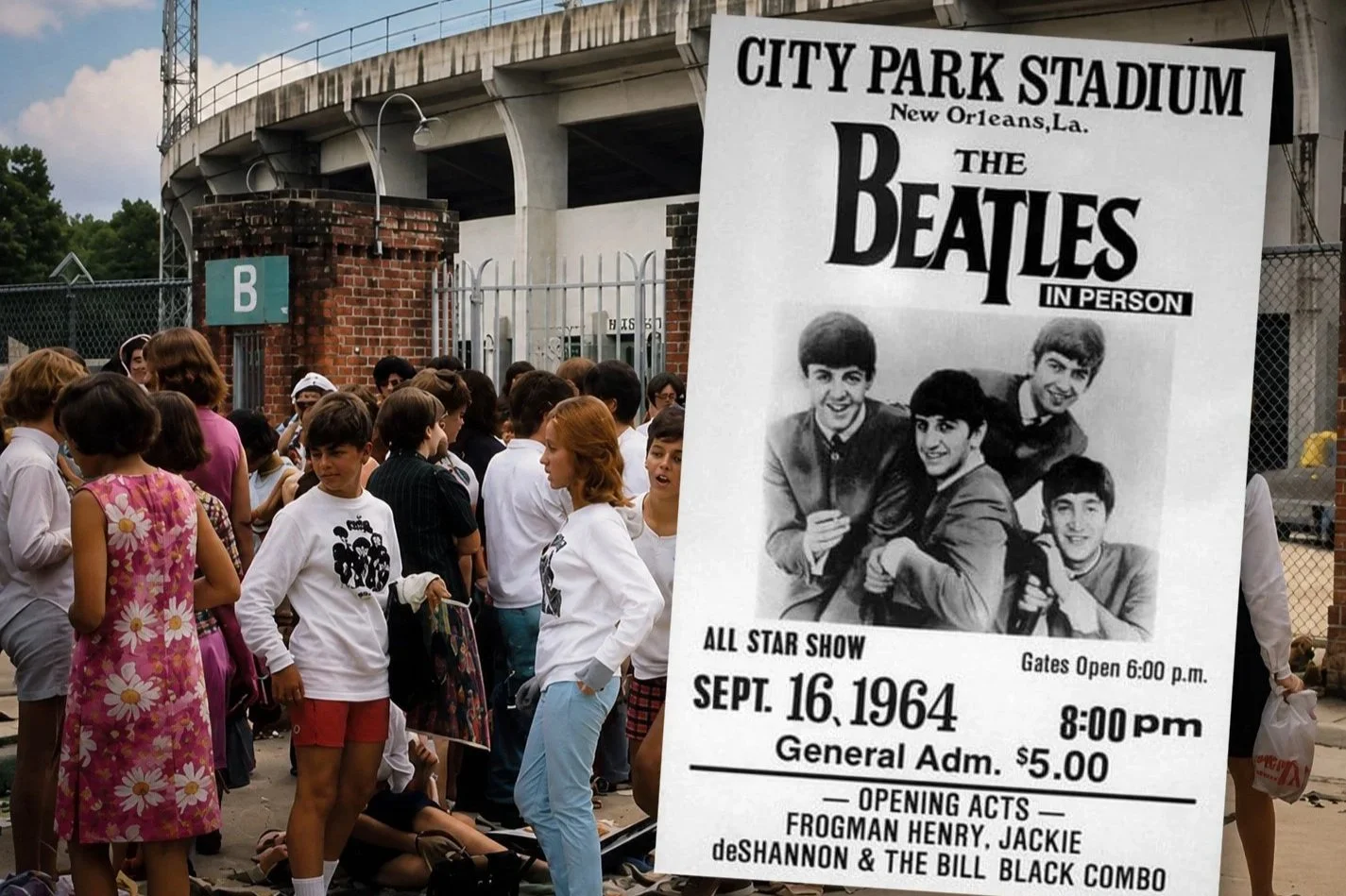
Fans gathered outside City Park Stadium on September 16, 1964, waiting for The Beatles to bring Beatlemania to New Orleans.
All My Loving
Their destination was City Park Stadium, the municipal sports venue known today as Tad Gormley Stadium. Built in 1937, the concrete stadium curved around a football field and running track beneath the trees of City Park. Generations of New Orleanians knew it as a place for football games, track meets and local athletics.
For Dad, it was practically his backyard. City Park Stadium sat only a few miles from the Mid-City home where he had watched the Beatles on television seven months earlier. The biggest band in the world had crossed the Atlantic, conquered America and somehow ended up playing on a football field just down the road from home.
About 12,000 people filled the stadium that night. The following summer, more than 55,000 would pack Shea Stadium for a concert that helped redefine the scale of live rock music. But on September 16, 1964, Beatlemania had come directly into Dad’s corner of New Orleans.
The geography of the stadium shaped the experience. The Beatles stood surrounded by open grass, the running track and barricades, while thousands of fans watched from the stands rising around them. For teenagers who had spent months hearing the Beatles on the radio and watching them on television, the four musicians were finally right there in City Park. They could see them across the field, but the distance between the stands and the stage remained tantalizingly wide.
Dad found his way inside by working. His ticket was a job selling soft drinks.
“I carried about 24 drinks in a metal tray with a strap around my neck,” he said. “The cups had ice in them, and I walked up and down the aisles selling Cokes and watching the concert.”
The carrier hung against his body as he worked his way through the rows, balancing the weight of two dozen drinks while stepping past knees and moving up and down the concrete aisles. He was part of the motion of the stadium, calling out to customers, stopping to make a sale and then moving again as the touring acts built toward the headliners.
When the Beatles finally took the stage, Dad kept working. He sold Cokes while “Twist and Shout” opened the set and continued moving through the stands as the band played songs including “All My Loving,” “She Loves You,” “Can’t Buy Me Love,” “I Want to Hold Your Hand” and “A Hard Day’s Night.” From the aisles, he could watch the concert unfolding across the field while thousands of fans around him screamed for the four figures on the distant platform.
Somewhere from the stands, a girl started running.
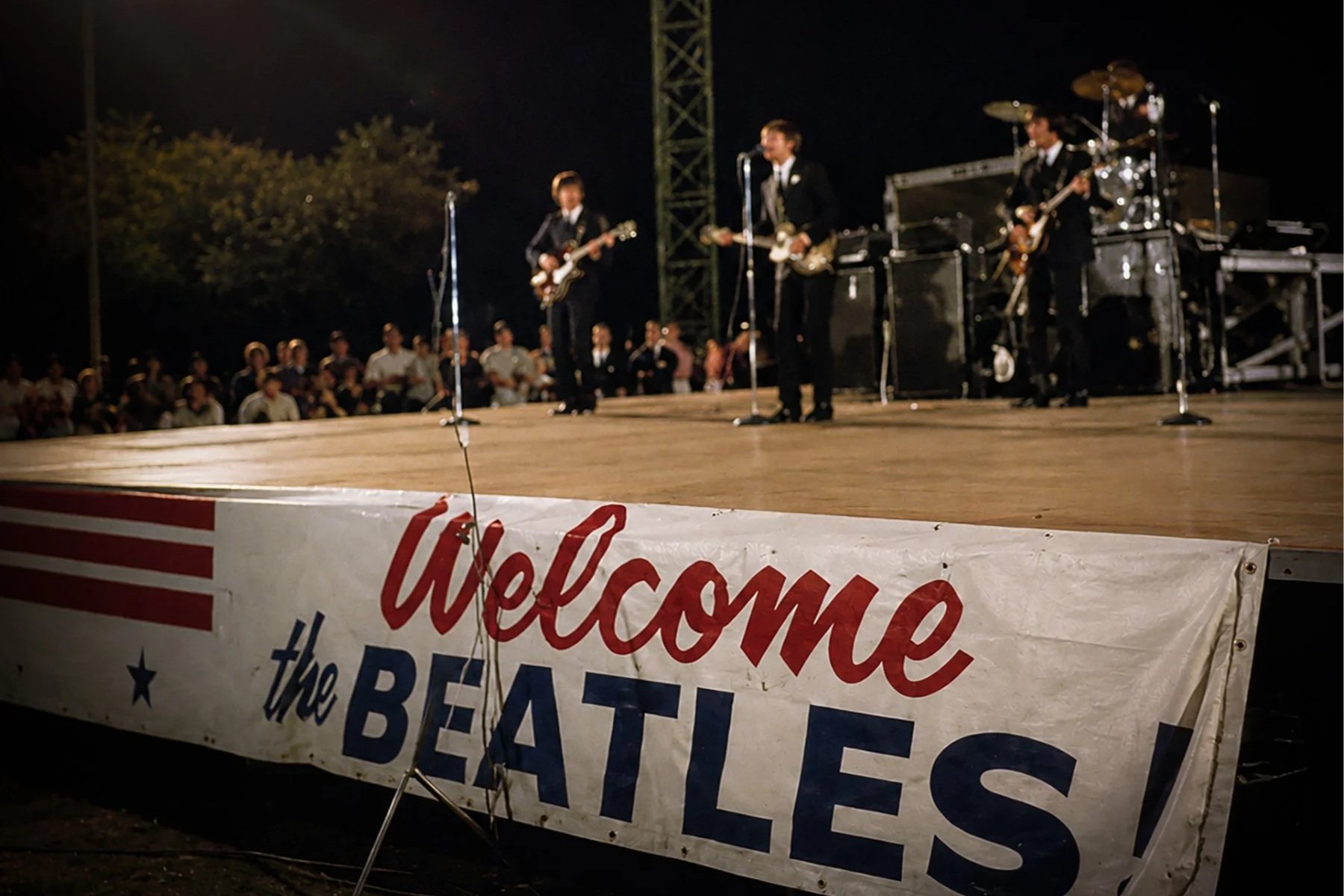
On September 16, 1964, The Beatles took the stage at New Orleans’ City Park Stadium as Beatlemania spilled out of the stands and onto the field.
Hold Me Tight
Dad saw her leave the stands and head across the football field toward the elevated stage. Another fan followed, then another.
“They weren’t trying to hurt the Beatles,” Dad said. “They just wanted to get closer.”
The opening widened. From his position in the aisles, Dad watched the seats begin to empty as fans poured onto the football field and police raced after them, catching and tackling some while others continued toward the stage. The scale of what he was witnessing was larger than he could have known in the moment: The Times-Picayune later reported that some 700 teenagers broke loose during the Beatles’ performance, with 225 New Orleans police officers and special patrol guards spending more than 20 minutes trying to restore order.
By the next morning, the scene Dad had watched from the aisles was front-page news. The New Orleans States-Item captured the chaos in the language of the stadium itself: “City Park Stadium will probably never see such inspired, broken field running nor such a determined defense.” The Times-Picayune headline read: “Beatles Just Too Much For Fans.”
The Beatles were watching from the stage too. They joked about the “football game” unfolding below, but the rush was serious enough that McCartney later called New Orleans “the closest we’ve come on the tour to getting worried.”
With the Coke carrier still hanging from his neck, Dad watched the same four musicians he had seen on television seven months earlier keep playing through the chaos. Local music history was unfolding right in front of him. Before the final number, McCartney thanked everyone for coming, including the “football players.” Then the band launched into “Long Tall Sally” before being hurried away.
More than sixty years later, Dad still vividly remembers that night in City Park: the first girl leaving the stands and the rush that followed. From where he stood with that tray of Cokes, he watched Beatlemania stop being something he heard on the radio or saw on television. For one night in New Orleans, it was all around him.
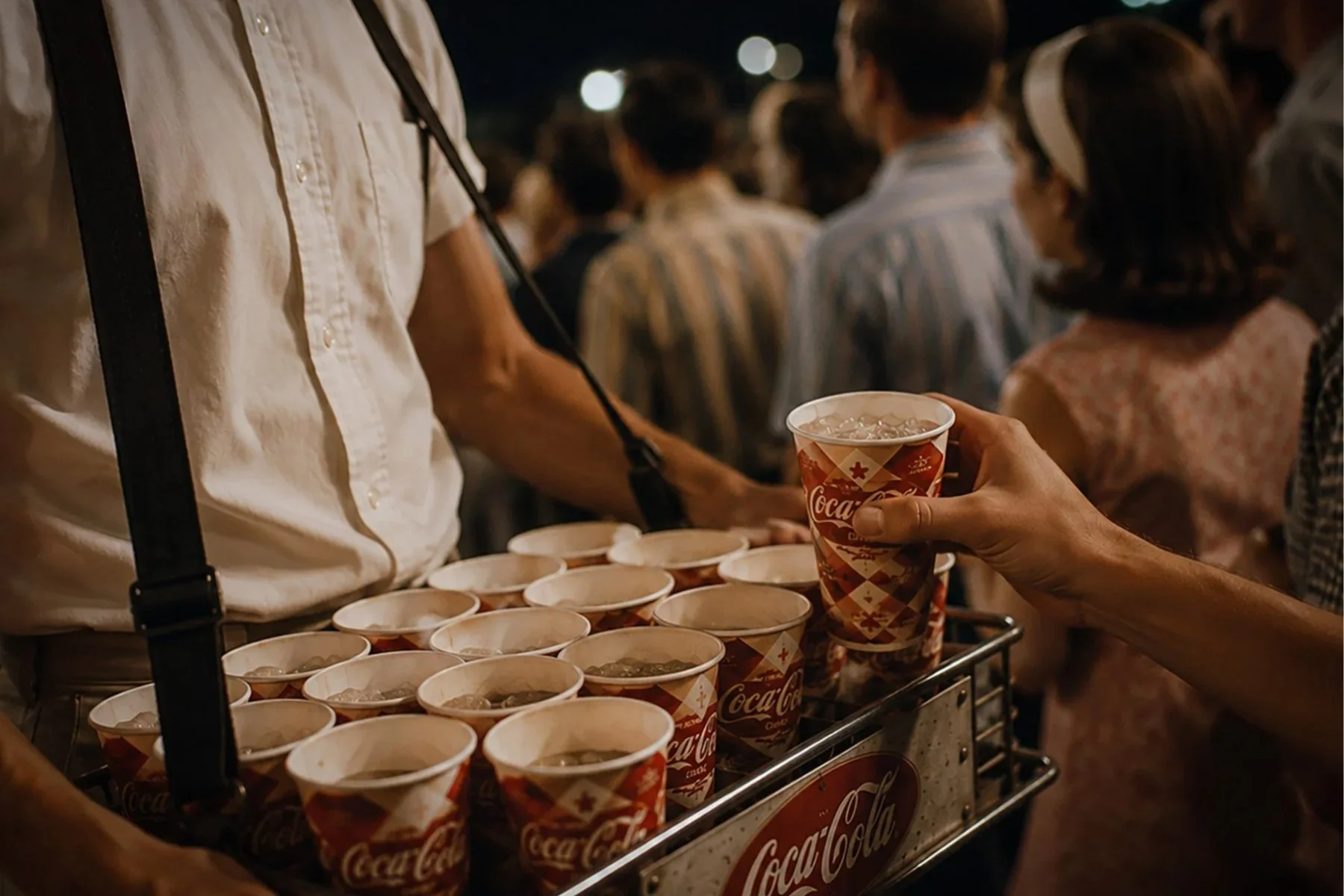
At sixteen, Dad worked the aisles of City Park Stadium selling Coca-Cola as 12,000 fans gathered to see The Beatles perform in New Orleans.
This Boy
Dad experienced the Beatles near the beginning of a story whose ending is now etched into rock history. Sgt. Pepper, Abbey Road, the rooftop concert and the breakup were still years away. He watched four lads from Liverpool arrive on American television, waited for Meet the Beatles! to arrive at 517 S. Pierce Street and saw them perform only a few miles from his neighborhood.
In 2005, Hurricane Katrina swept through New Orleans and took much of what our family treasured, including the record that had been with Dad since 1964.
The record is gone, but City Park is still part of my life. I have known that stadium for years and walked through its gates several times in the past few months. Now it is difficult to see those concrete stands and that football field without imagining them as Dad saw them that night: 12,000 screaming fans, the Beatles on a platform below and a fifteen-year-old boy moving through the aisles under the weight of two dozen Cokes.
I collect records, and in the crate sits my own copy of Meet the Beatles!, though I can’t help wishing I had his. Still, when I look at that cover, his story comes through just the same: the family television, the anticipation of waiting for the album, the familiar stadium in City Park and a night Dad still remembers more than sixty years later.
Where to go next
Stand outside the stadium where the Beatles played their only New Orleans concert and hundreds of fans rushed the field on September 16, 1964. Known then as City Park Stadium, Tad Gormley remains an active venue for football, track meets and other scheduled events.
Tad Gormley Stadium
5400 Stadium Drive
New Orleans, LA 70124
(504) 482-4888
Public access:
The stadium does not maintain regular sightseeing hours. Access is available during scheduled games and events, with gates generally opening one hour before kickoff.
Security screenings and a clear-bag policy apply during sporting events. Check City Park’s calendar before visiting if you want to enter the stadium.