After drifting away from the Teenage Mutant Ninja Turtles, Peter Laird’s return with TMNT Volume 4 pulled me back to Mirage and into the final chapter of its original universe.
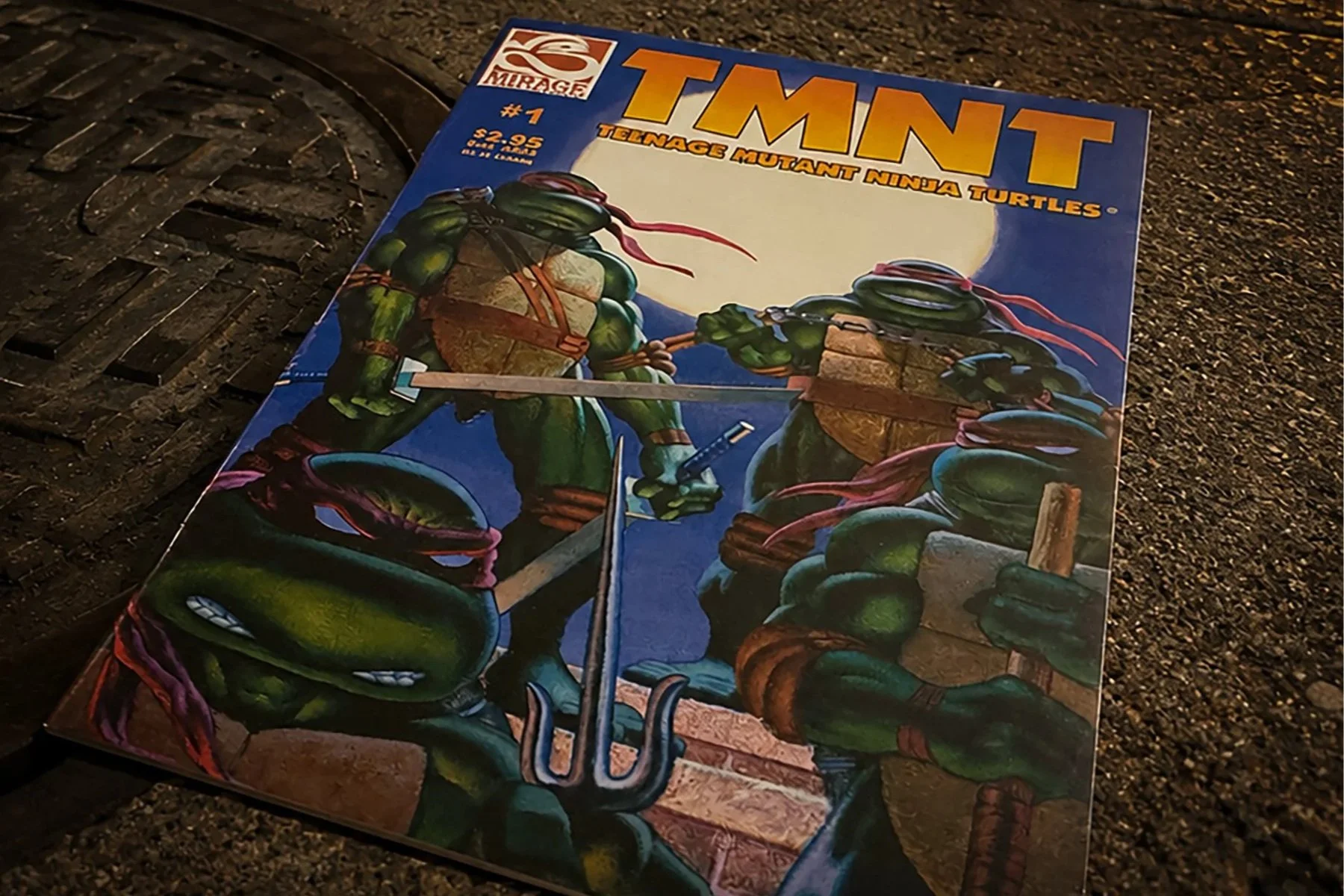
TMNT Volume 4 #1 marked Peter Laird’s return to the original Mirage universe in 2001, bringing the Turtles back to the world where their story began.
Cowabunga
I had no idea I was late to the party. As far as I knew, the Teenage Mutant Ninja Turtles were something new. I had started catching the animated series after school because, well, why not? Then the action figures began showing up in the hands of elementary school kids as Turtlemania started building around me.
The cartoon was fun and passed the time between coming home from school and dinner, but I was not exactly the target audience. My younger cousin Drew was closer to the right age, and because I knew the characters, the Turtles gave us something to talk about. Apparently, that was enough for my aunt to think I was more into them than I actually was.
Then Christmas 1988 arrived, and I found myself opening a group of Playmates Teenage Mutant Ninja Turtles figures. I remember being a little perplexed. I did not want to be rude or ungrateful. This side of the family usually nailed the Christmas gifts. But Teenage Mutant Ninja Turtles? Really? I was in eighth grade, getting older and becoming more interested in cars and girls, and suddenly I was receiving action figures for Christmas again.
I opened them anyway.
Before long, Leonardo, Donatello, Raphael and Michelangelo were joined by Splinter, Shredder, a Foot Soldier, Bebop and Rocksteady on top of my bedroom television. When my friend Steve eventually saw them, I half expected him to confirm what I had initially feared: I was getting too old for this stuff. Instead, he went in the complete opposite direction and sent me down a path I never really looked back from.
Steve was a couple of years ahead of me in high school and had already introduced me to Star Trek: The Next Generation. He also knew comics in a way I did not yet know them, going to bigger comic shops and conventions. The shop in town was still basically a baseball card store with a pull list. That would eventually change as comics gained momentum, but in 1990 it was a strange mix of worlds.
Sometime during my freshman year, we were in a comic shop when Steve spotted a new issue of Teenage Mutant Ninja Turtles on the shelf. It was issue #28 of the original Mirage series. He put it in my hand with a simple message: These were the Turtles I needed to be reading.
He was right.
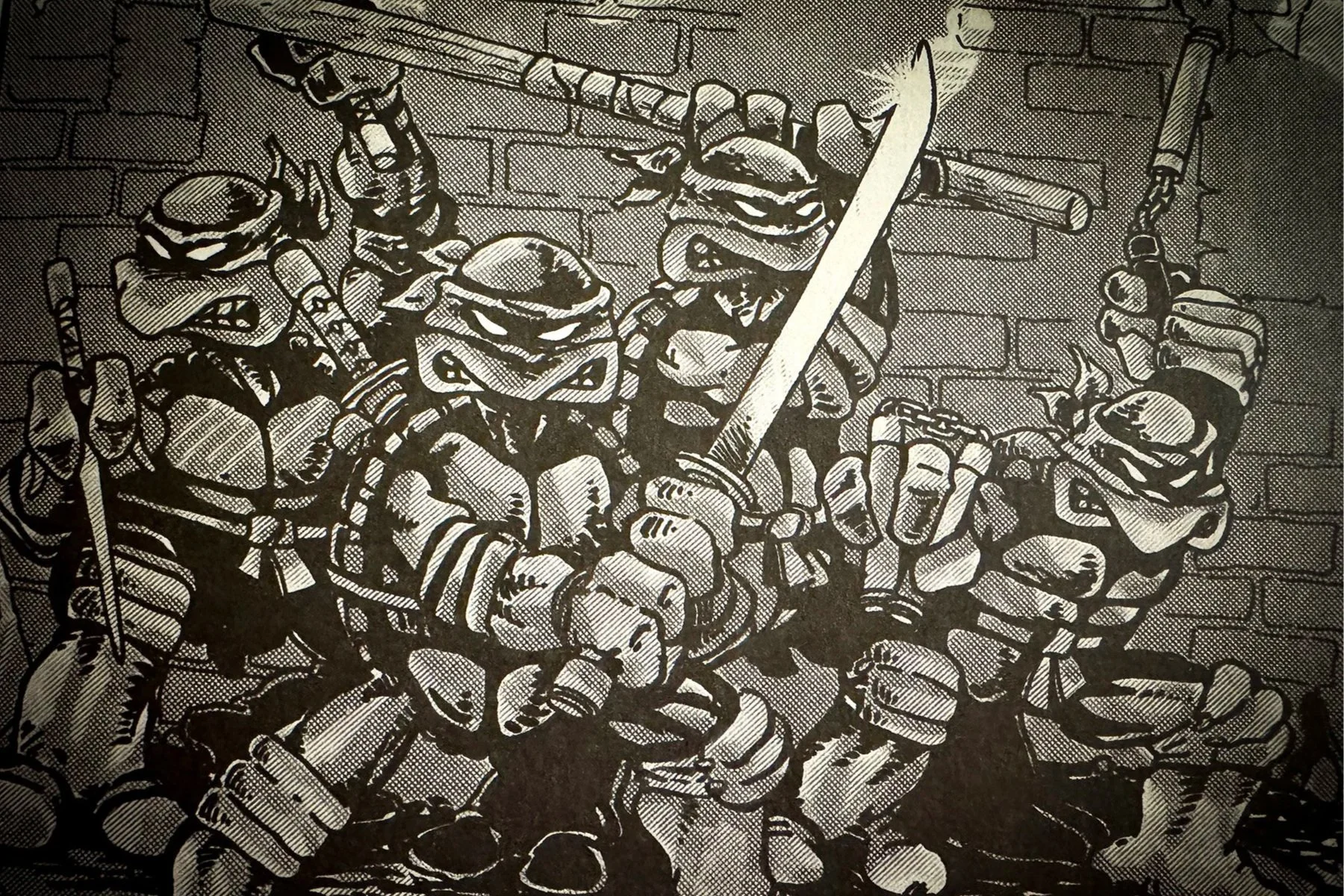
The original Mirage Turtles gathered together in the black-and-white style that defined their earliest adventures.
Turtles Prime
The Turtles I discovered in that comic were stranger, rougher and more mature than the ones I knew from television, with a history I had completely missed. Kevin Eastman and Peter Laird had created these characters years before the cartoon and toy line turned four mutated turtles into a global phenomenon.
I put the series on my pull list and began working backward. Comic shops and small conventions became opportunities to fill gaps and discover the stories, creators and relationships that defined the original Mirage universe. Even the Turtles’ origin differed from the version I knew from television, but what drew me in most was the tone. These stories could be funny and absurd while still carrying consequences, complicated relationships and a world that was more expansive than the cartoon I had been watching after school.
The first live-action movie only deepened that interest because it drew heavily from the Mirage comics, particularly in the importance it gave Casey Jones and his relationships with both the Turtles and April. The Mirage family extended well beyond Splinter and the four Turtles. April gave them a home when they needed one. Raphael and Casey became close friends, and when the Foot drove everyone from New York, Casey’s family farmhouse in Northampton became their refuge. April and Casey belonged at the center of that family, and those relationships became as important to me as the mythology surrounding the Turtles themselves.
I continued following the original series through City at War, which concluded in 1993, the same year I graduated from high school. A second Mirage volume followed, and in 1996 Erik Larsen helped bring the Turtles to Image Comics for Volume 3. Written by Gary Carlson and drawn by Frank Fosco, the black-and-white series pushed the characters into increasingly extreme territory, turning Donatello into a cyborg, taking one of Leonardo’s hands and eventually putting Raphael beneath the Shredder’s armor. At a time when comics were already filled with characters like Cable and teams like X-Force, it felt less like the independent Turtles I had followed and more like the excesses I was already seeing everywhere else.
For me, it was an easy pass.
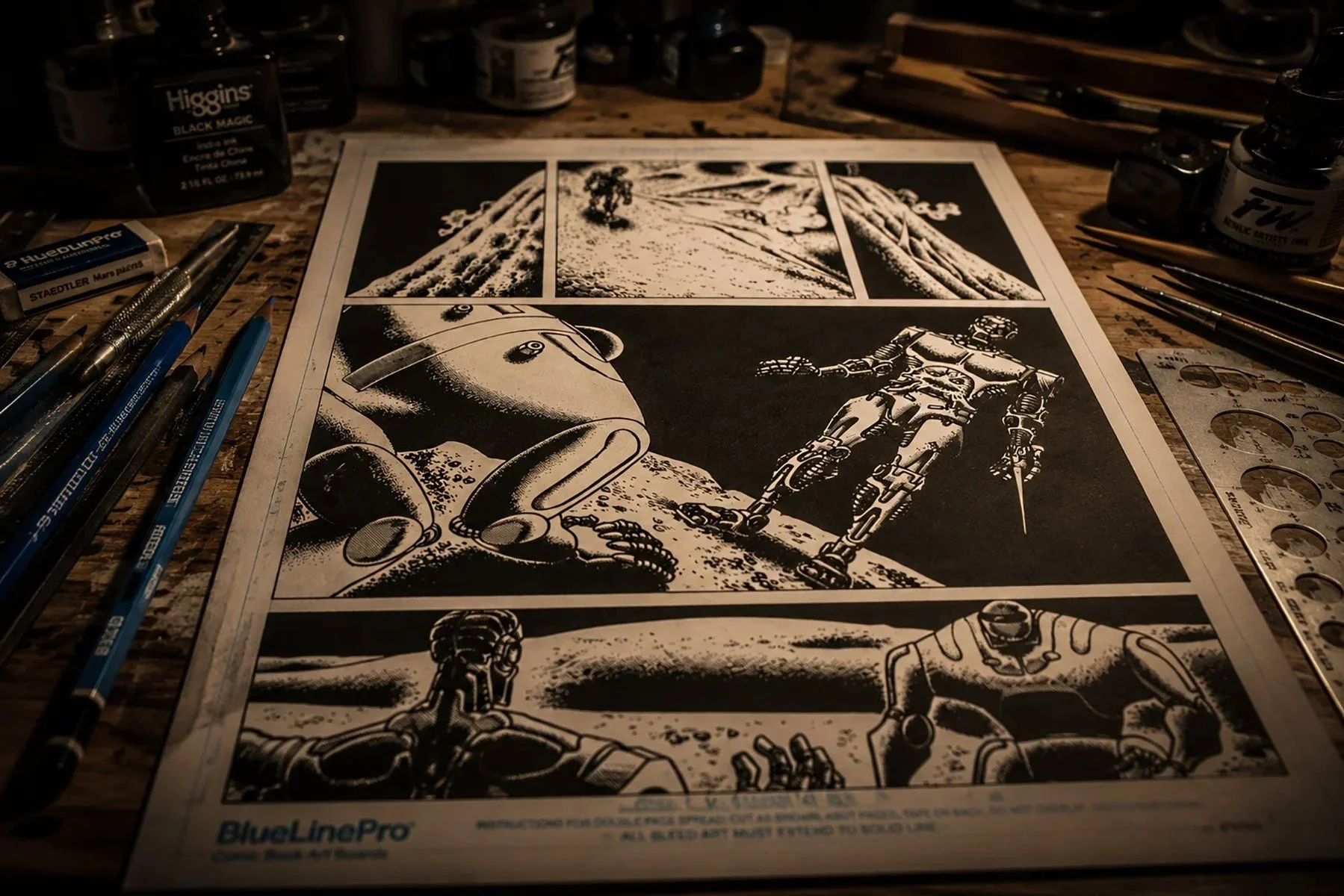
Jim Lawson’s pencils and Peter Laird’s inks brought Teenage Mutant Ninja Turtles Volume 4 to life in black and white.
Second Time Around
Just over two years after the Image series ended in 1999, Peter Laird returned to the Mirage universe with Teenage Mutant Ninja Turtles Volume 4 in December 2001. By then, the creative partnership that had launched the Turtles had changed dramatically. Kevin Eastman had sold his ownership interest to Peter and the Mirage Group in 2000, leaving Laird as the sole remaining co-creator actively guiding the property. For the first time, the original TMNT universe was moving forward with Peter as its defining creative voice.
That context matters because the series feels deeply personal to him. Peter was returning to characters he had co-created nearly two decades earlier with the freedom to decide what their world had become and where their lives would go next. Volume 4 jumped more than a decade beyond the earlier Mirage timeline, set aside the events of the Image run and found the characters at a different stage of their lives. The Turtles were older, April and Casey were married and the relationships I remembered were back at the heart of the story. Their world had changed, but it was still familiar. Aliens were now public knowledge and the Utroms had arrived openly on Earth.
Then, in 2003, a new animated series brought much of that same Mirage DNA back to television. It was still a kids’ Saturday morning cartoon, but the stories, characters and relationships felt much closer to the comics I had discovered years earlier. Casey Jones was once again an essential part of the family, the mythology felt much more familiar and the Turtles were moving in a direction that interested me again.
The series became the center of that return. It felt unmistakably like a Mirage comic: black and white, printed on good paper and wrapped in painted covers. Peter was writing, Jim Lawson was drawing and Peter’s hand extended well beyond the scripts. The back matter, commentary and occasional glimpses into his own life made his presence part of the experience.
I remember one issue featuring a photograph of Peter standing on a Segway. It was a small thing, but that was part of the charm. Volume 4 felt like a direct line to the person guiding the story. You knew who was on the other side of the book and, as the series continued, Peter’s voice became as much a part of the experience as the story itself.
In that sense, Volume 4 reminds me of the old Jim Shooter editorials I enjoyed reading in Valiant comics. The person shaping the book was present in its pages, giving it a personality that extended beyond the story itself. I was invested again, both in the Turtles and in following the singular vision Peter was bringing to their world.
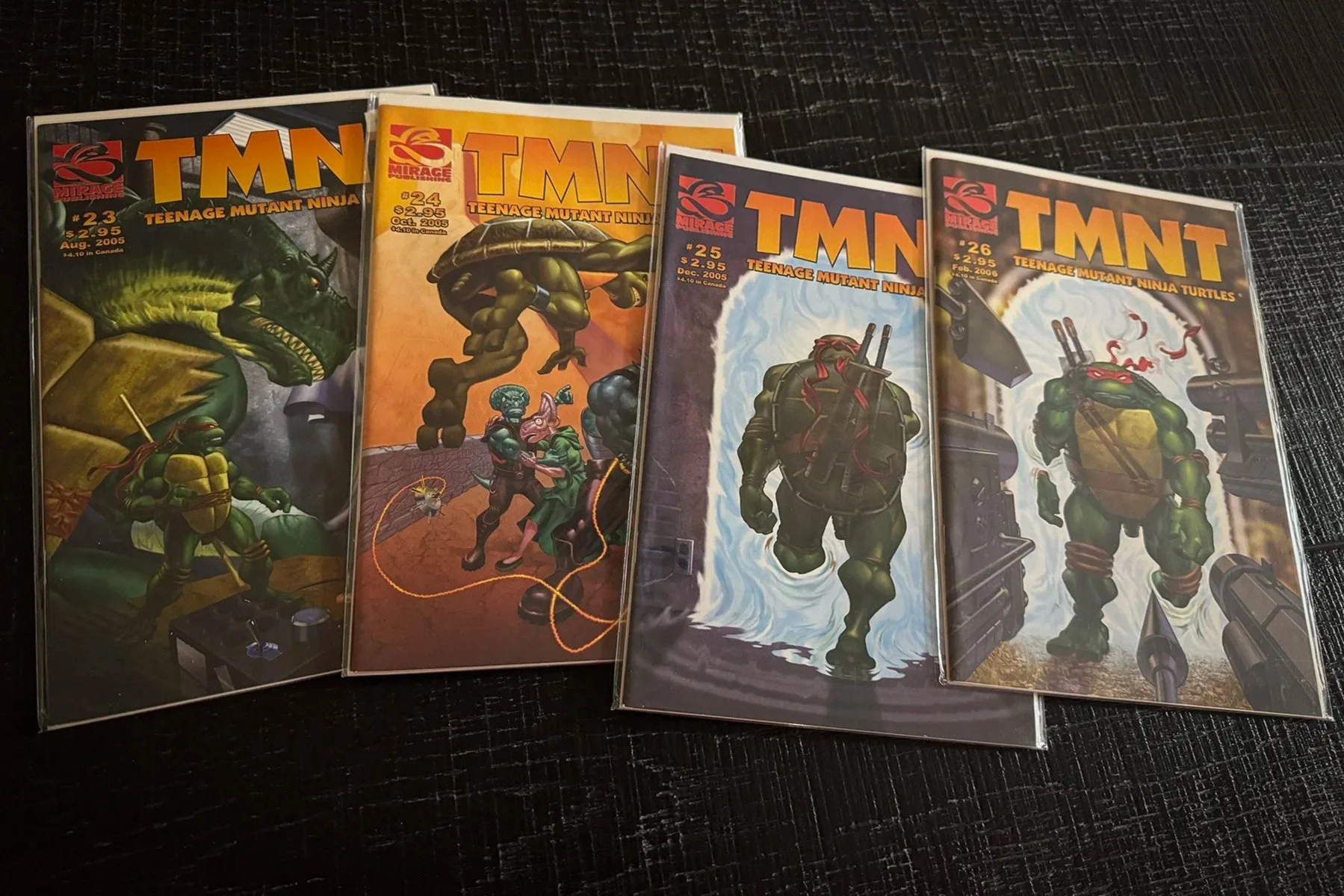
TMNT Volume 4 issues #23–26 were among the books I missed after Hurricane Katrina and later tracked down as back issues.
Shell Shock
When Hurricane Katrina approached southeast Louisiana in August 2005, I evacuated with as much of my Mirage Teenage Mutant Ninja Turtles collection as I could carry. That included the Volume 4 issues I had been actively reading, which remained safe and dry with my family in Baton Rouge.
Then the storm hit.
For the next several months, collecting comics was nowhere near the top of my priorities. I found myself back in St. Bernard Parish doing disaster relief work, helping coordinate the volunteers and resources pouring into the community after Katrina. The comic shop that had been ordering Turtles for me had taken roughly 14 feet of water. In a community where homes, businesses and entire neighborhoods had been devastated, worrying about the next issue of a comic book was kinda trivial.
The series kept moving anyway. Issue #23 arrived in August 2005, followed by #24 in October, #25 in December and #26 in February 2006. While I was focused on relief work and rebuilding my own life, I missed all four.
Finding them later proved much more difficult. Volume 4 was selling only a few thousand copies through the direct market, hardly the kind of book I could expect an unfamiliar comic shop to have ordered in quantity for the shelf. By the time I went back to fill the gap, I was hunting for back issues and paying roughly $15 apiece for comics with $2.95 cover prices.
That felt expensive, but had I waited much longer, those four issues might have ended the run for me entirely. Several would become genuinely scarce, eventually reaching prices I would never have paid to fill holes in a series I had once been reading new.
Catching up changed the way I followed the series. Rather than assuming I could find the next issue later, I began watching the Mirage website and ordering directly from the source. I bought new issues as they became available, and those orders gradually led to questions and occasional email exchanges with Peter Laird. What began as a practical way to keep up with an increasingly difficult run would soon give me the opportunity to add one very particular book to my collection.
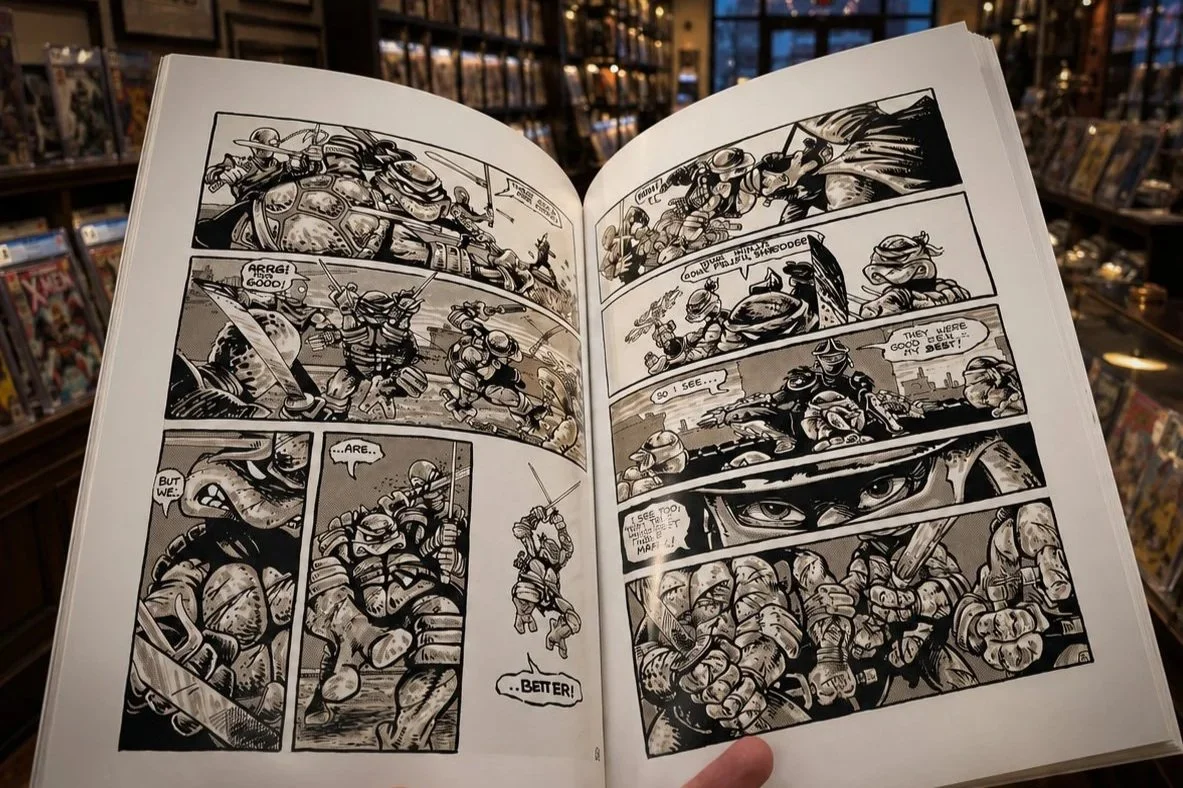
The oversized sixth printing of Teenage Mutant Ninja Turtles #1 preserves the Duo-Shade tones that gave Kevin Eastman and Peter Laird’s original artwork its distinctive texture.
True Stories
Eventually, Peter offered copies of the sixth printing of Teenage Mutant Ninja Turtles #1 through Mirage’s website. Published in 1992, the book was already more than a decade old when I came across it. As I remember, he had found a box of copies and made them available for sale.
I already owned other printings of Teenage Mutant Ninja Turtles #1, but the sixth printing was distinctive. It recreated the oversized dimensions of the original in a square-bound format on heavier paper, preserving the tones of the original artwork rather than reducing the pages to simple black and white. The Duo-Shade process Kevin Eastman and Peter had used created layers of gray and amber-toned hatching that gave the artwork a texture all its own. Years later, I would own an original page from Teenage Mutant Ninja Turtles #14 where those same tones remain visible in the artwork.
I wanted Peter’s signature, but asking if I could send him something to sign and then have him mail it back had always seemed like too much. This was different. The book was already coming directly from Mirage, and Peter appeared to be personally involved with fulfilling the orders. Why not ask? I did, and Peter replied that he would gladly sign my copy before shipping it out.
A few days later, a box arrived, packed well enough to withstand whatever abuse the USPS might throw at it. I opened it, pulled out the book and saw no signature. I was crushed. Surely he remembered my email. Had he forgotten? Had someone else fulfilled the order without knowing about his promise? Well, at least I had a nice variant to add to the collection. Then I opened the book. There, on the first page in black ballpoint pen, was Peter Laird’s unmistakable signature and a quick Turtle sketch.
The following year, Kevin Eastman came to Wizard World New Orleans. I brought the book and a ballpoint pen.
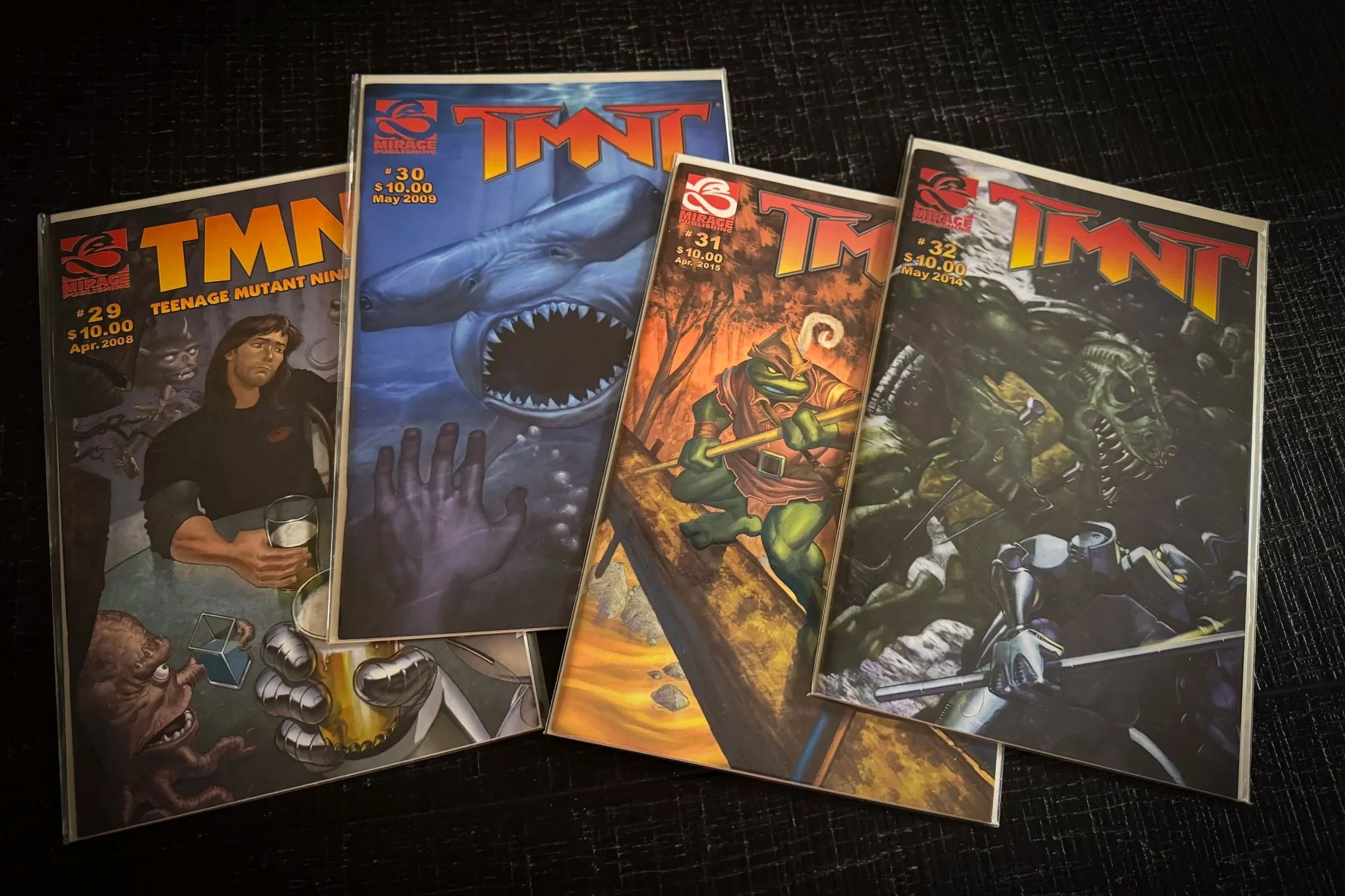
The final four issues of TMNT Volume 4 arrived across seven years, with #31 appearing in print only after #32. Following Mirage directly helped me complete the run as each issue became available.
Turtles Take Time
After Katrina, keeping up with TMNT Volume 4 became a challenge. Issue #29 arrived in 2008, nearly two years after #28, followed by #30 in 2009. By then, I was in graduate school and money was tight. Each issue was sold directly by Mirage for $10, plus shipping, with a print run of only 1,000 copies.
Those two comics would eventually become among the most difficult Turtles books to obtain, outside of the first printing of Teenage Mutant Ninja Turtles #1. I wish I had known then what I know now, but I was simply trying to keep up with the series and continue supporting Peter’s work.
From there, the publication history became even stranger. Issue #31 appeared digitally in 2010, but the physical series remained frozen at #30 until #32 arrived in 2014. Then, in 2015, #31 finally received a print edition. I bought two copies of each, finally completing the 32-issue run after following its increasingly unpredictable path for more than a decade.
Looking at those books today, I realize how easily I could have lost the series after Katrina. Following Mirage directly kept me close enough to know when those final issues appeared, but it also gave me something far more valuable than a complete run. What began as a practical way to keep up with an increasingly difficult comic eventually led to occasional emails with Peter Laird and a signed reissue of the book that started it all.
It’s crazy to think that a cartoon I started watching in eighth grade and an awkward Christmas gift would lead to more than three decades with four ninja brothers and the two men who created them. (And I haven’t forgotten. We still have that Kevin Eastman story to tell.)

Where to go next
The Teenage Mutant Ninja Turtles have been reinvented many times, with each version developing its own distinct fan base. These comics, books, games, animation and films are the works I most closely associate with Peter Laird, the original Mirage universe and the era that ended with the sale of the Turtles in 2009.
Mirage Comics
Teenage Mutant Ninja Turtles Vol. 1 #1–62 — The original Mirage series (1984–1993)
Raphael Micro-Series #1 — First of the original Turtle one-shots (1985)
Fugitoid #1 — Professor Honeycutt’s solo story, leading directly into the original TMNT series (1985)
Michaelangelo Micro-Series #1 — The Christmas-themed solo adventure (1985)
Donatello Micro-Series #1 — The Jack Kirby-inspired solo adventure (1986)
Leonardo Micro-Series #1 — Leads directly into the events of TMNT #10 (1986)
Tales of the Teenage Mutant Ninja Turtles Vol. 1 #1–7 — Companion series expanding the original Mirage universe (1987–1989)
Turtle Soup — Mirage anthology featuring TMNT stories and artwork from a wider range of creators
Anything Goes! #5 — Includes the Eastman and Laird TMNT story “The Road Trip”
Gizmo and the Fugitoid #1–2 — Peter Laird and Michael Dooney bring the Fugitoid into the world of Gizmo (1989)
Teenage Mutant Ninja Turtles: The Movie — Mirage adaptation of the first live-action film with Peter Laird directly involved (1990)
Plastron Cafe #1–2 — Mirage anthology featuring TMNT material, including Peter Laird’s “Old Times” (1992–1993)
Teenage Mutant Ninja Turtles Vol. 2 #1–13 — Full-color continuation of the original Mirage series (1993–1995)
Teenage Mutant Ninja Turtles Vol. 4 #1–32 — Peter Laird and Jim Lawson’s continuation of the original Mirage universe (2001–2015)
Tales of the TMNT Vol. 2 #1–70 — Companion series expanding the Mirage universe during the Volume 4 era (2004–2010)
Other Publishers
Teenage Mutant Ninja Turtles Adventures #1–3 — Archie’s original miniseries adapting episodes from the 1987 animated series (1988)
Teenage Mutant Ninja Turtles Adventures #1–72 — Ongoing Archie series that developed into its own distinct TMNT universe (1989–1995)
Teenage Mutant Ninja Turtles Vol. 3 #1–23 — Image Comics continuation of the Mirage Turtles (1996–1999)
Collected Editions
Teenage Mutant Ninja Turtles Books I–IV — First Publishing’s early color collections of the original Eastman and Laird stories (1986–1988)
Teenage Mutant Ninja Turtles Collected Books — Mirage’s own black-and-white collections of the original series and one-shots
The Collected Tales of the Teenage Mutant Ninja Turtles — Collection of the original seven-issue Tales series and additional material (1989)
Beyond the Comics
Teenage Mutant Ninja Turtles & Other Strangeness — Palladium Books tabletop role-playing game rooted in the imagination of the early Mirage era (1985)
How to Draw Eastman and Laird’s Teenage Mutant Ninja Turtles — Solson Publications drawing guide featuring sketches, pinups and instructional examples from Kevin Eastman and Peter Laird (1986)
Animation
Teenage Mutant Ninja Turtles — Animated series closely connected to the original Mirage comics, with Peter Laird directly involved (2003–2009)
Movies
Teenage Mutant Ninja Turtles — The first live-action film, deeply influenced by the original Mirage comics (1990)
TMNT — CGI animated film released during Peter Laird’s ownership of the franchise (2007)