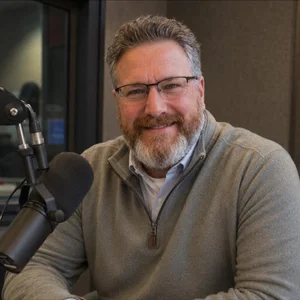
For 26 years, Chuck Raborn has watched the sports-card business rise, fall and reinvent itself. At Chuck’s Field of Dreams in Albany, today’s chase cards share space with Louisiana history and a family story embedded in the ground beneath the shop.
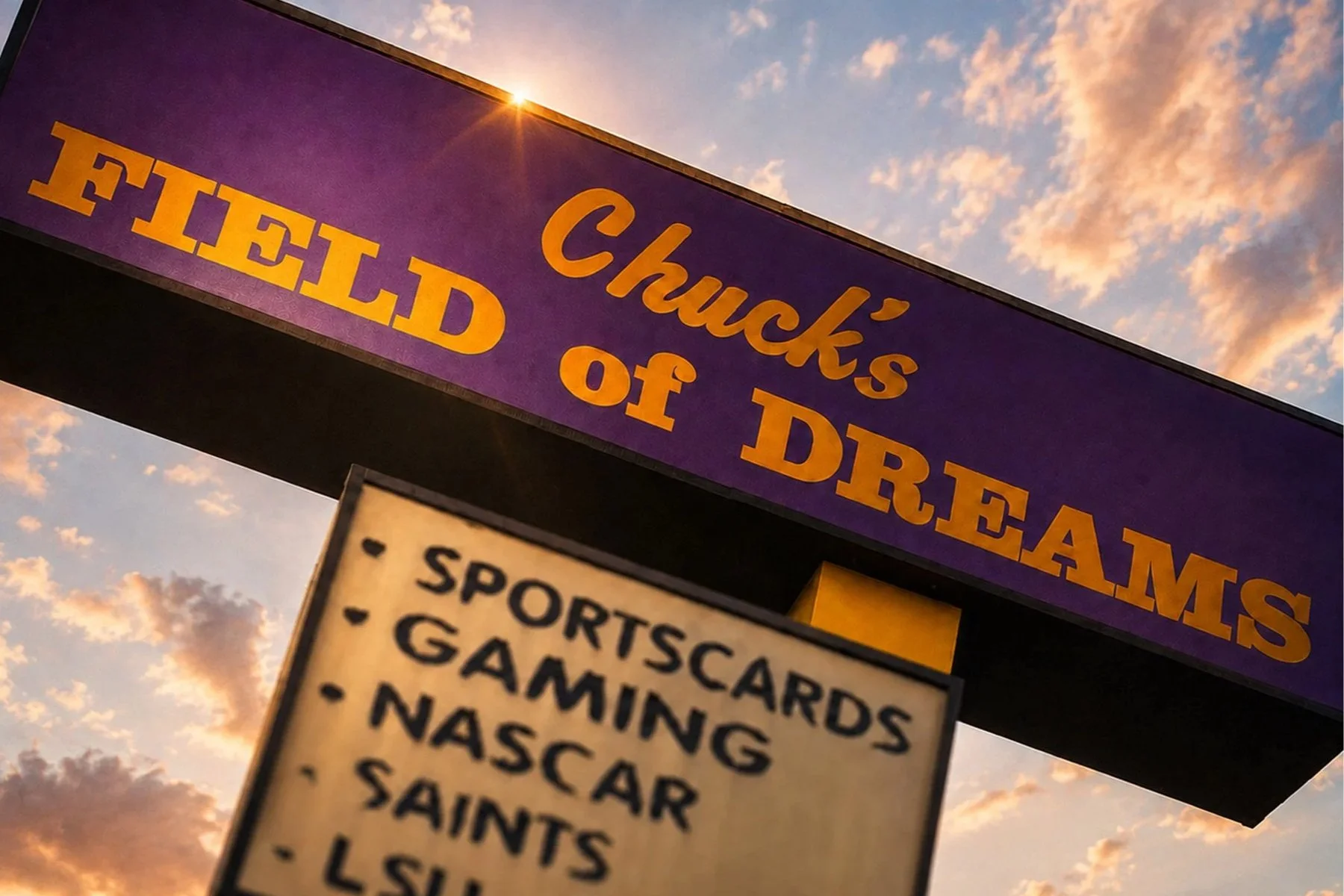
Chuck Raborn returned to his family’s Albany property in 2007, building the current Chuck’s Field of Dreams over the remains of his grandfather’s original store.
A family business from the beginning
Chuck Raborn can measure the age of his business by the age of his son. Jace was one month old when Raborn opened his first card shop in 2000. He is 27 now and, after graduating from college, has returned to work alongside his father.
“He’s been a godsend,” Raborn said. “Without him, it’d be tough with the way the market is nowadays.”
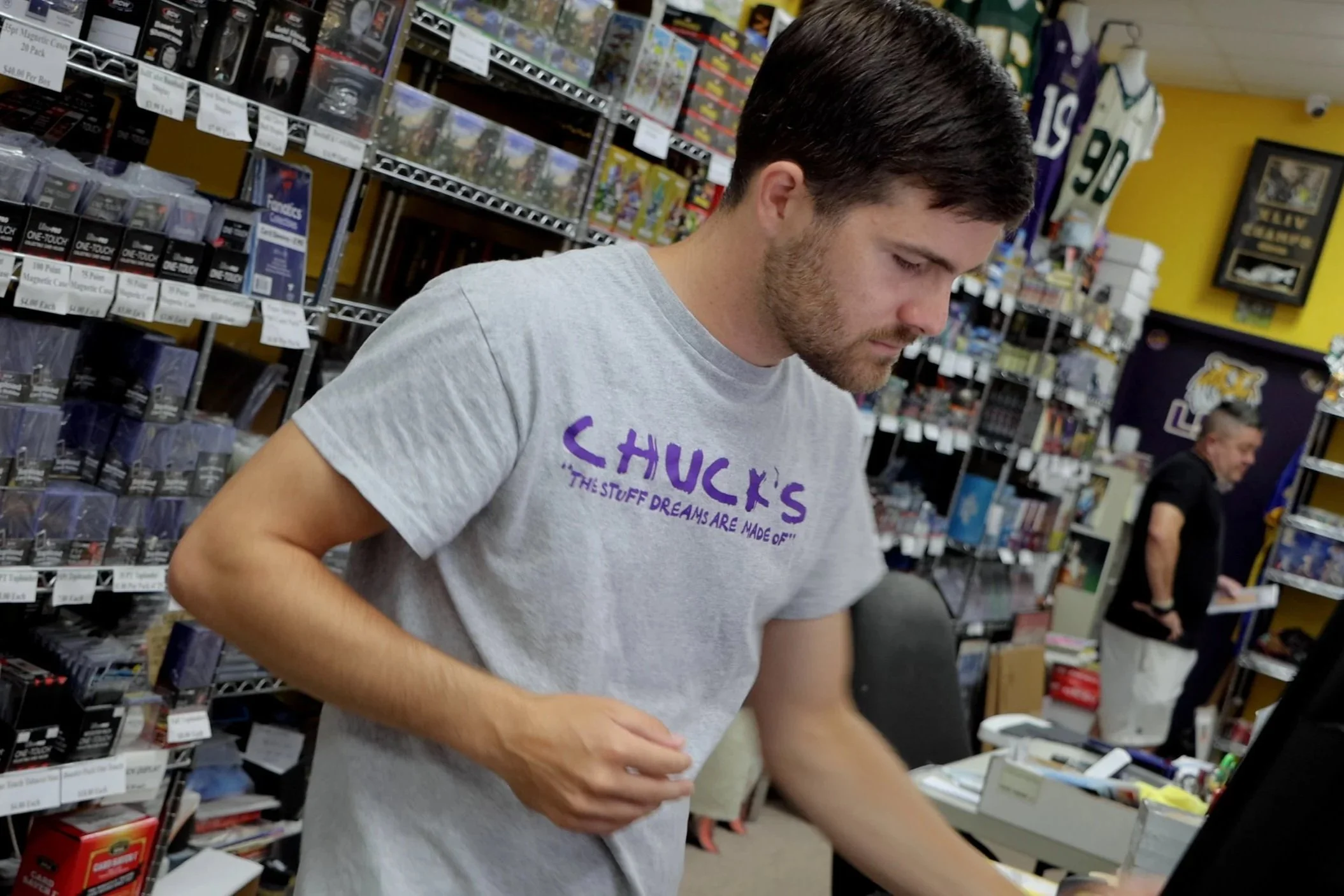
Raborn’s wife, Kristie, and their daughters also help with the shop, autograph signings and card shows. What began as a recent LSU graduate’s gamble has become a second-generation family business, although its roots stretch much further back. Raborn’s grandparents came through Ellis Island, spent time in New Jersey and eventually joined the Hungarian community near Albany. His grandfather operated a store on the family property during the 1930s and built another across the road after returning from military service. The earlier building was lost during a hurricane in the 1960s, but its concrete slab remained.
When Raborn built Chuck’s Field of Dreams in 2007, workers broke up that slab and poured the new foundation over it. “I always said one day I wanted to come back home,” he said. “I built this right on top of it.”

From wax packs to chase cards
Now hear the story in Chuck Raborn’s own words. Step inside Chuck’s Field of Dreams, explore his collection of Louisiana history and follow the hobby from 45-cent wax packs to million-dollar chase cards. Watch on YouTube, then like, comment and subscribe to support more original POP nakaro stories.
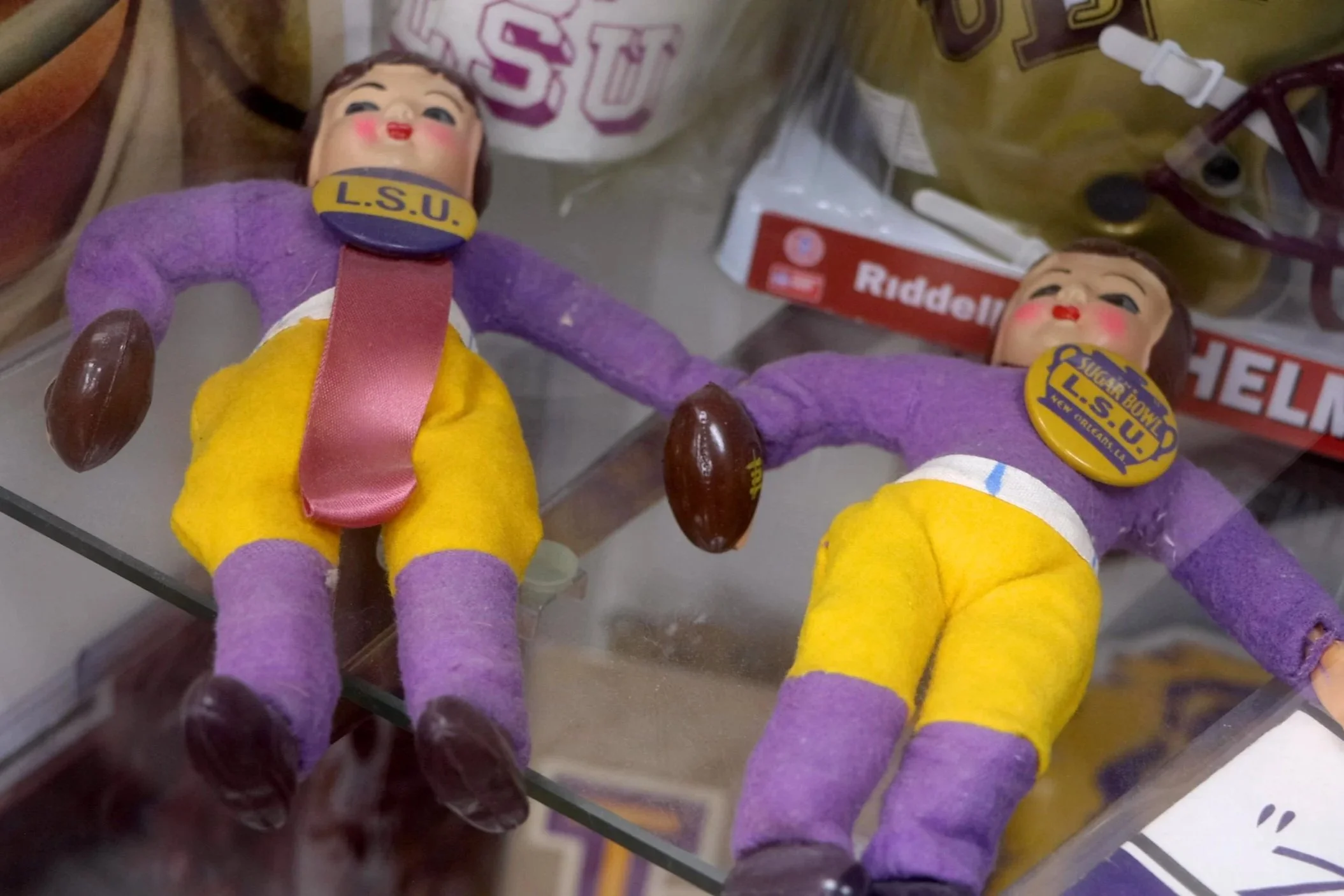
Vintage LSU pieces help turn the front of Raborn’s shop into a survey of Louisiana sports and popular culture assembled through years of searching.
A Louisiana collecting story
The property sits within a much older immigrant story. Hungarians began settling near present-day Albany in 1896, drawn initially by work at the Brackenridge Lumber Mill. They called the community Árpádhon, after Árpád, an early leader of the Hungarian tribes. By 1920, more than 200 Hungarian families lived there, many of them growing strawberries. It became the largest rural Hungarian settlement in the United States, a history now preserved at the Hungarian Settlement Museum.
Raborn’s path back to Albany began with baseball cards. He started collecting in 1986, when packs could still be found at gas stations for 40 or 45 cents. Topps was familiar, but he remembers Donruss and Fleer seeming expensive when he encountered them a year or two later at about 85 cents a pack.
“There weren’t really any card shops,” Raborn said.
That soon changed. By the collecting boom of the late 1980s and early ’90s, Hammond had four shops. Raborn worked at GameQuest near Winn-Dixie while he was in middle school and later at an athletic shop inside Hammond Square Mall. The boom did not last. Manufacturers printed enormous quantities of cards, buyers stocked them away as investments and supply overwhelmed demand. Much of the period is now known as the junk-wax era because so many of its cards remain plentiful.
As shops closed, collectors around Hammond again found themselves driving to Baton Rouge or New Orleans. Raborn graduated from LSU in 1999 and spent about a year working in the field connected to his degree before approaching his father with another idea: “Hey, Dad, I think I’m going to open a card shop.”
Chuck’s Field of Dreams opened in Times Square in Hammond before moving to Hammond Square Mall. When the original enclosed mall closed for redevelopment, Raborn was among its final tenants. The family property near the Albany-Springfield exit offered him a place to start again, although visiting athletes occasionally questioned the location.
“They’d get off the interstate and say, ‘Chuck, you’re in the middle of nowhere out here,’” Raborn said. “It was literally me, a funeral home and a gas station.”
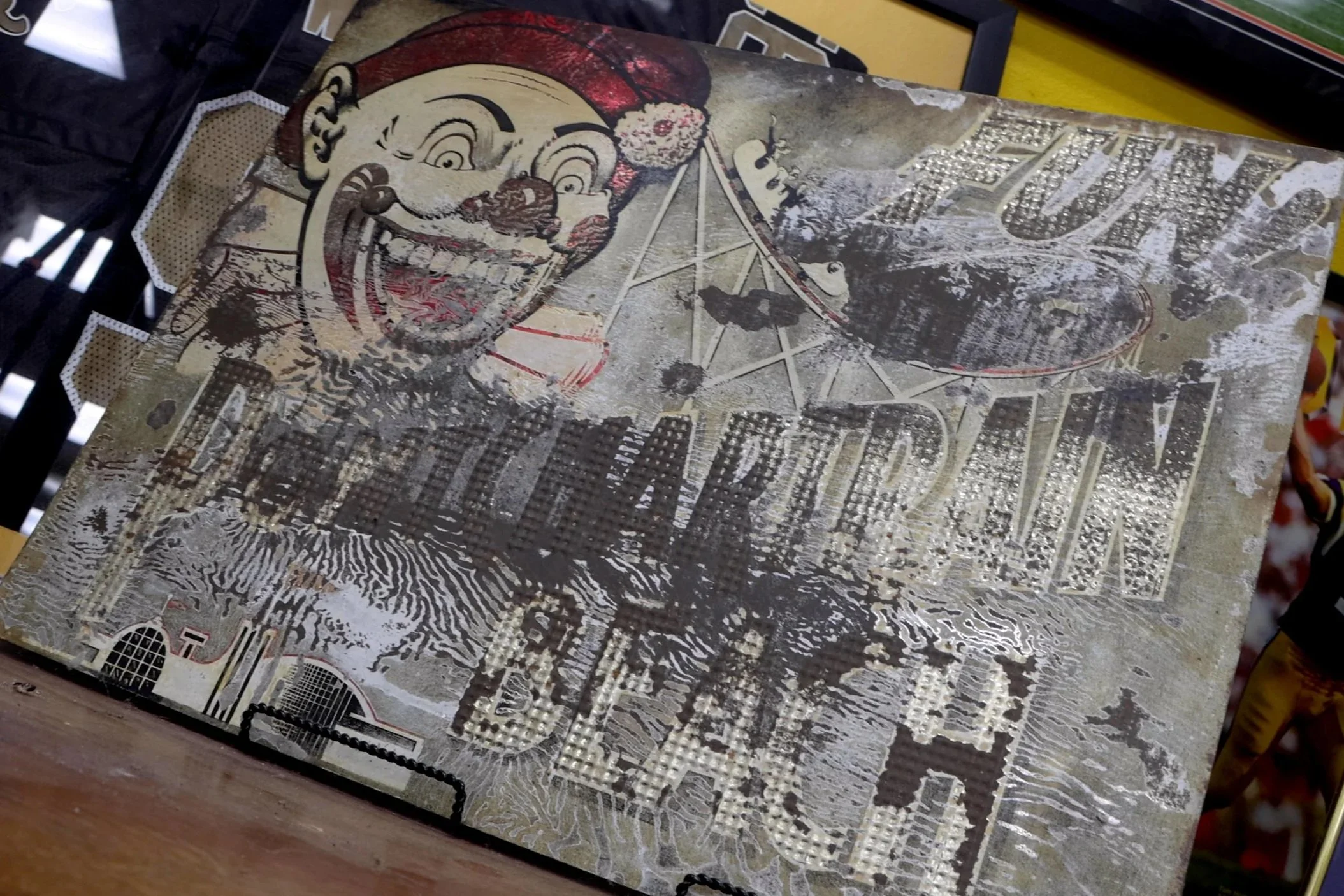
Weathered Pontchartrain Beach printing sign featuring the amusement park clown, Zephyr roller coaster and New Orleans imagery.
Cards, games and Louisiana history
The store has changed with the hobby. Sports cards fill the front, with sections for baseball, basketball and football. The inventory shifts toward Pokémon, Magic: The Gathering and One Piece farther inside. Supplies, autographs and sports memorabilia fill the cases and walls, while weekly games and trade nights keep the tables busy.
Near the entrance, Raborn has assembled a small museum. Pete Maravich and Billy Cannon lead a collection of LSU and Louisiana sports material, joined by pieces connected to the New Orleans Saints, Louis Armstrong and Pontchartrain Beach. Political memorabilia enters the mix as well.
“I collect everything Louisiana history,” Raborn said. “I collect music. I collect movies. I collect entertainment. It’s New Orleans. That’s the stuff I love.”
He points visitors toward objects they would be unlikely to see together anywhere else, including material from Maravich’s LSU career and his first season with the New Orleans Jazz, vintage Saints collectibles and pieces from the old Pontchartrain Beach amusement park. Some arrived only after years of searching. “Maravich stuff is getting exceedingly hard to find nowadays,” he said.
That Louisiana focus carried into the shop’s autograph signings. Raborn estimates that 23 members of the Saints’ Super Bowl XLIV championship team have appeared at the store, along with a long list of LSU players.
One of the shop’s largest events grew from a customer’s lucky pull. In 2010, regular customer Nathan Foster won the grand prize in Panini America’s NFL Player of the Day promotion. New Orleans Saints running back Pierre Thomas visited Foster’s home, rode with the family by limousine to Chuck’s Field of Dreams and spent an hour at the shop signing free autographs and posing for photographs. Panini expected at least 200 collectors to attend.
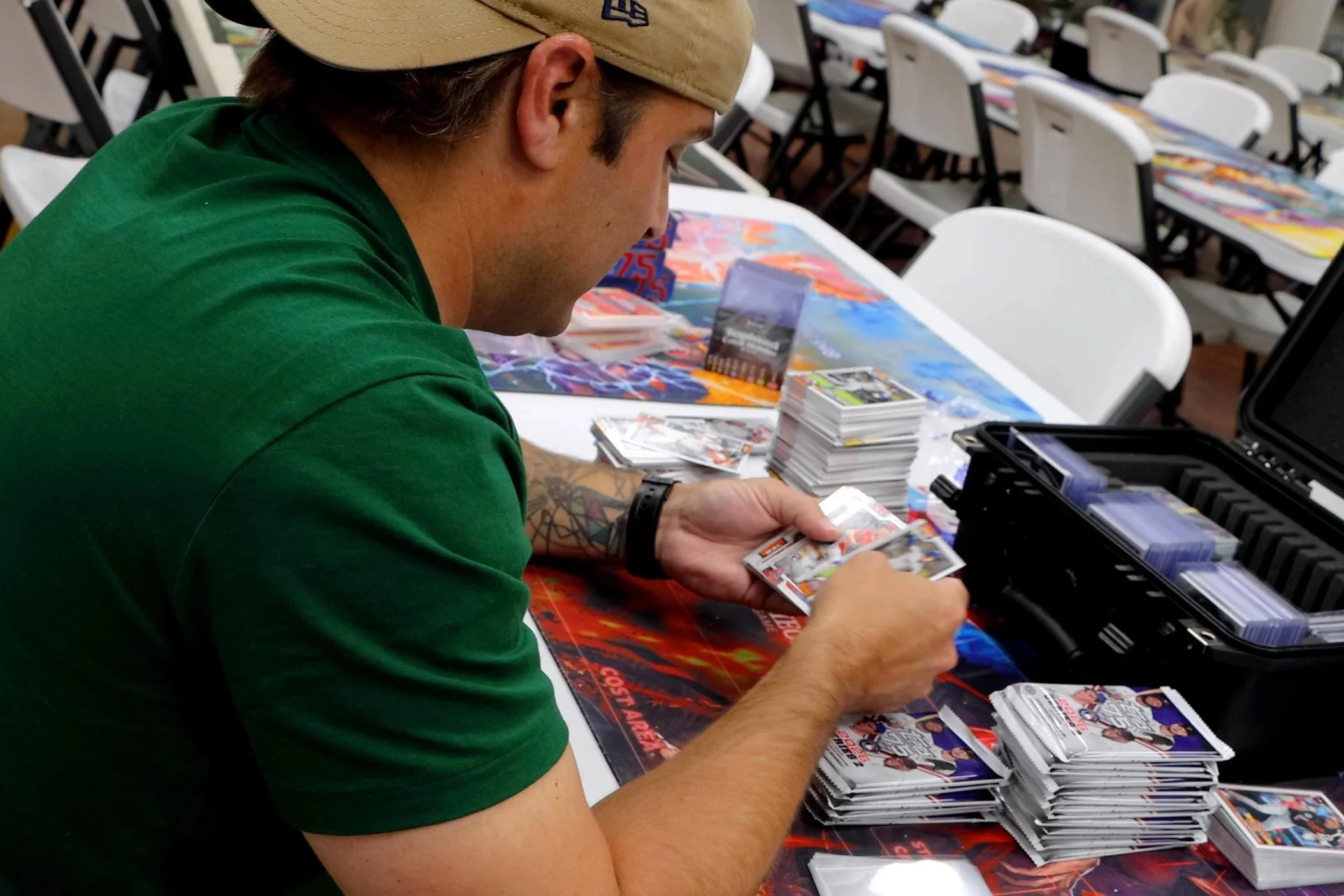
A collector settles in at one of Chuck’s tables, sorting cards and enjoying the kind of unhurried morning that keeps the hobby rooted in community.
From wax packs to one-of-ones
The packs Raborn sells today bear little resemblance to the ones he bought as a child. A collector in 1986 could open packs, sort the cards by number and work toward completing a set. Modern products may include base cards, colored parallels, short prints, autographs and cards containing pieces of game-used bats, jerseys or patches. Some are serial-numbered to 99 or 25. Others have only five copies, and the largest chase cards are one-of-ones.
“When I was in the mall, if you came in and bought every box on my shelf, pulling a $1,000 card would have been pretty tough,” Raborn said. “A $1,000 card now is pretty common.”
Memorabilia cards began gaining ground during the late 1990s. Upper Deck placed pieces of game-used jerseys into cards in 1997 and later cut a Babe Ruth bat into small pieces for its 1999 products. A collector opening a pack could suddenly find a piece of an artifact that would otherwise belong in a display case.
Today’s Logoman cards push that idea much further. Manufacturers take a league logo from a player-worn jersey, build it into a card and often add an autograph. The most coveted versions exist as a single copy.
In March 2026, a one-of-one Topps Chrome card featuring game-worn gold MLB logo patches and autographs from Shohei Ohtani and Aaron Judge sold for $2.16 million. The patches came from uniforms worn after the players won their respective leagues’ 2024 Most Valuable Player awards.
Another Ohtani one-of-one, featuring two Gold Logoman patches and signatures in English and Japanese kanji, was pulled from a box in Florida in July. It reportedly sold privately for $11 million.
Bounties announced before rare cards are even found add to the frenzy, while livestreamed group breaks allow customers to buy a team or player from boxes opened online. A major pull can reach collectors around the world within minutes. Chuck’s Field of Dreams participates in breaking, including a recent pull by one of the shop’s breakers of a one-of-one Ohtani Logoman patch autograph.
Raborn has also watched the market move in the opposite direction. “I have ridden the roller coaster for so many years,” he said. “Boxes would come out, and prices would plummet within a day or two.”
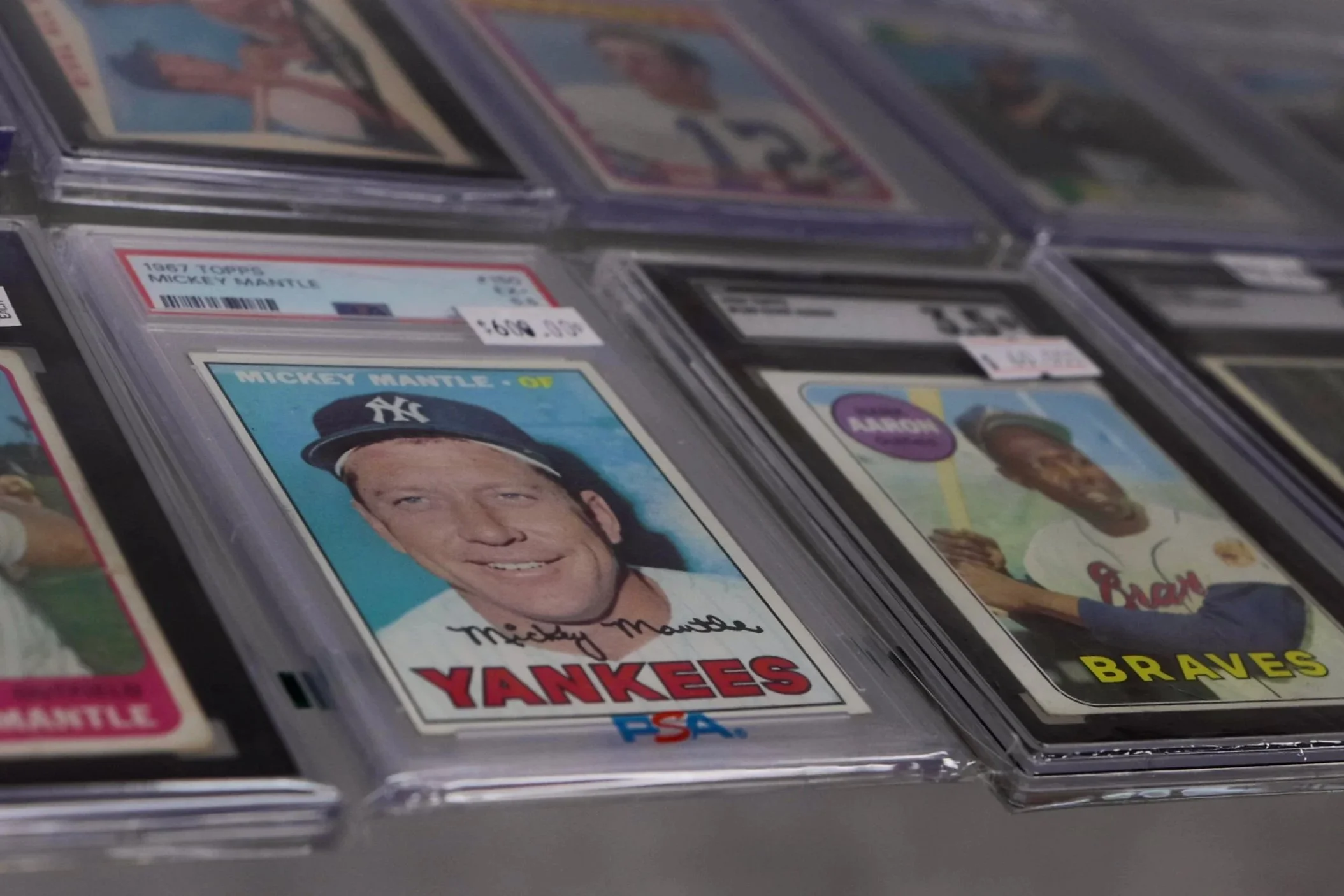
Iconic cards of Mickey Mantle, Hank Aaron and other all-time greats now attract collectors who value their imagery, scarcity and long-term investment potential.
Cards as art and investment
Demand is stronger now, fueled by social media, online breaks, investors and collectors entering from outside traditional sports circles. Raborn sees particular interest in what the hobby calls “GOAT cards”: important cards of Michael Jordan, Tom Brady, Kobe Bryant, Mickey Mantle, Babe Ruth and Lou Gehrig.
He understands why some buyers treat the cards as investments, especially when only a limited number of desirable older examples remain. Grading has also given collectors a common language for condition, separating an average copy from one preserved well enough to command a substantial premium.
Raborn also sees the cards as artwork. The 1933 Goudey Babe Ruth, 1952 Topps Mickey Mantle and 1989 Upper Deck Ken Griffey Jr. have become instantly recognizable images, even among people who have never built a set.
“People like to look at them just like you would hang a piece of art on your wall,” he said.
The same instincts extend beyond sports. Pokémon collectors chase Pikachu and Charizard cards, build complete sets and follow new releases. Magic players gather at the shop for weekly games while also searching for valuable vintage and modern cards. One Piece has developed a large following of its own. Some customers play, some collect the artwork and others watch the market for cards that may increase in value.
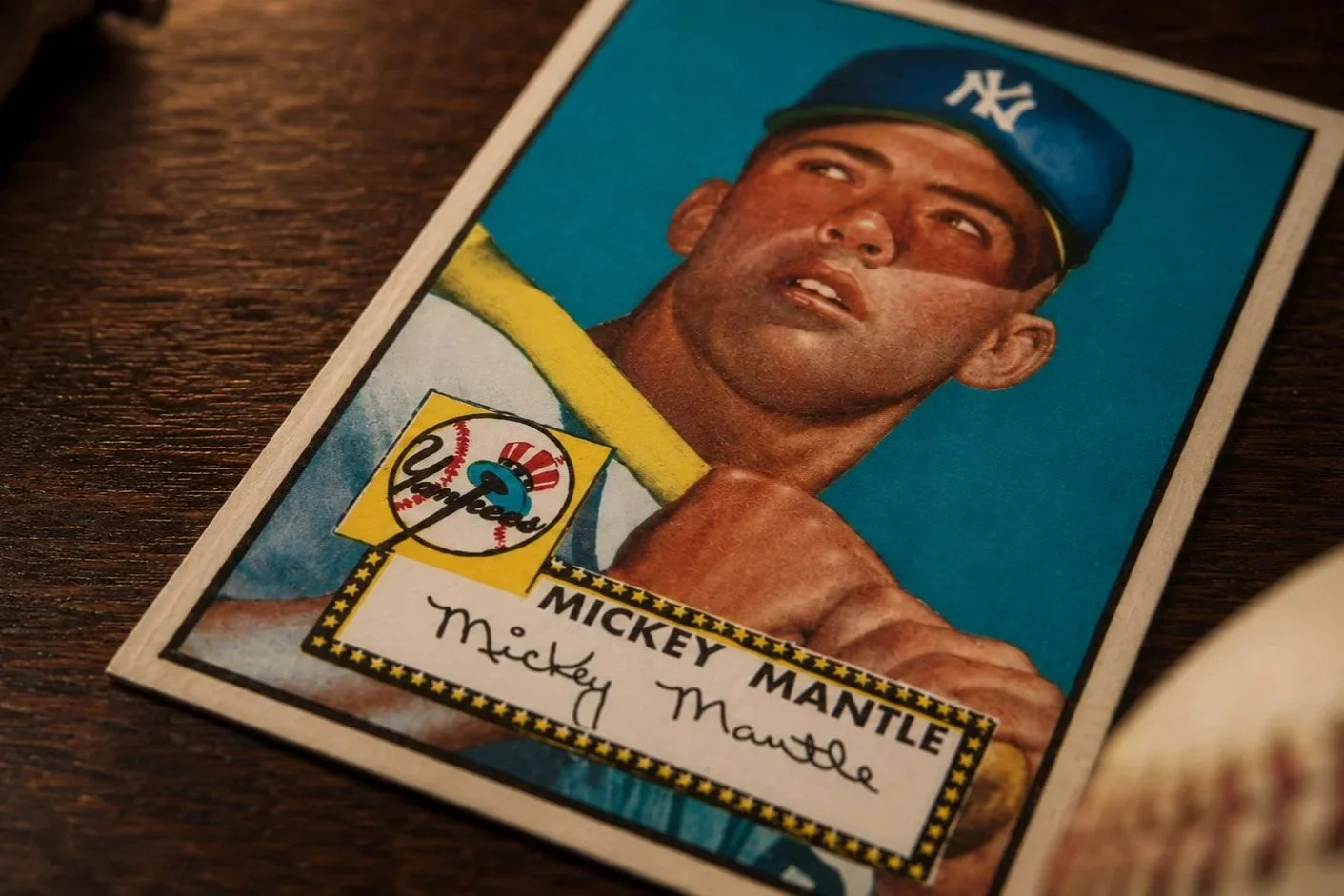
Few cards embody the hobby’s soaring values like the 1952 Topps Mickey Mantle, yet Raborn’s advice begins somewhere simpler: collect the players and cards you enjoy.
Collect what you enjoy
For all the attention paid to investment and million-dollar sales, Raborn’s advice to someone entering the hobby is simple: start with enjoyment. Pick a favorite player, work on a set, open a few packs or find the Pokémon character that first caught your attention. Learn the difference between a base card and a rare parallel before worrying about the next record-breaking sale.
Card shows have become another part of that invitation. Raborn returned to producing them as family events where longtime collectors, children and people just discovering the hobby can open packs, search for favorite players and meet others who share their interests.
“There’s a lot of fun to be had,” he said.
Raborn has spent 26 years adjusting the store to new products, new technology and dramatic shifts in the market. Through it all, his priorities have remained customer service, selection and finding the right item for the person who walks through the door.
“My customers are my number one priority,” Raborn said. “They’ve always taken care of us.”
Chuck’s Field of Dreams stands on the same family property where his grandfather once welcomed customers into a different store. The products have changed, and Albany no longer feels quite as far removed from the collecting world, but the Raborn family is still building a business on familiar ground.

Where to go next
Chuck’s Field of Dreams is worth the short drive off I-12 for sports cards, trading card games and a collection of Louisiana memorabilia that makes the shop part store and part museum. Check its Facebook page before visiting for current hours, game nights, trade nights and autograph events.
Chuck’s Field of Dreams
28550 LA Highway 43
Albany, LA 70711
(225) 567-9200
Website | Facebook | Instagram