Long after the last K&B Drugs store closed, one of the company's greatest gifts to New Orleans continues to inspire visitors at the Sydney and Walda Besthoff Sculpture Garden.
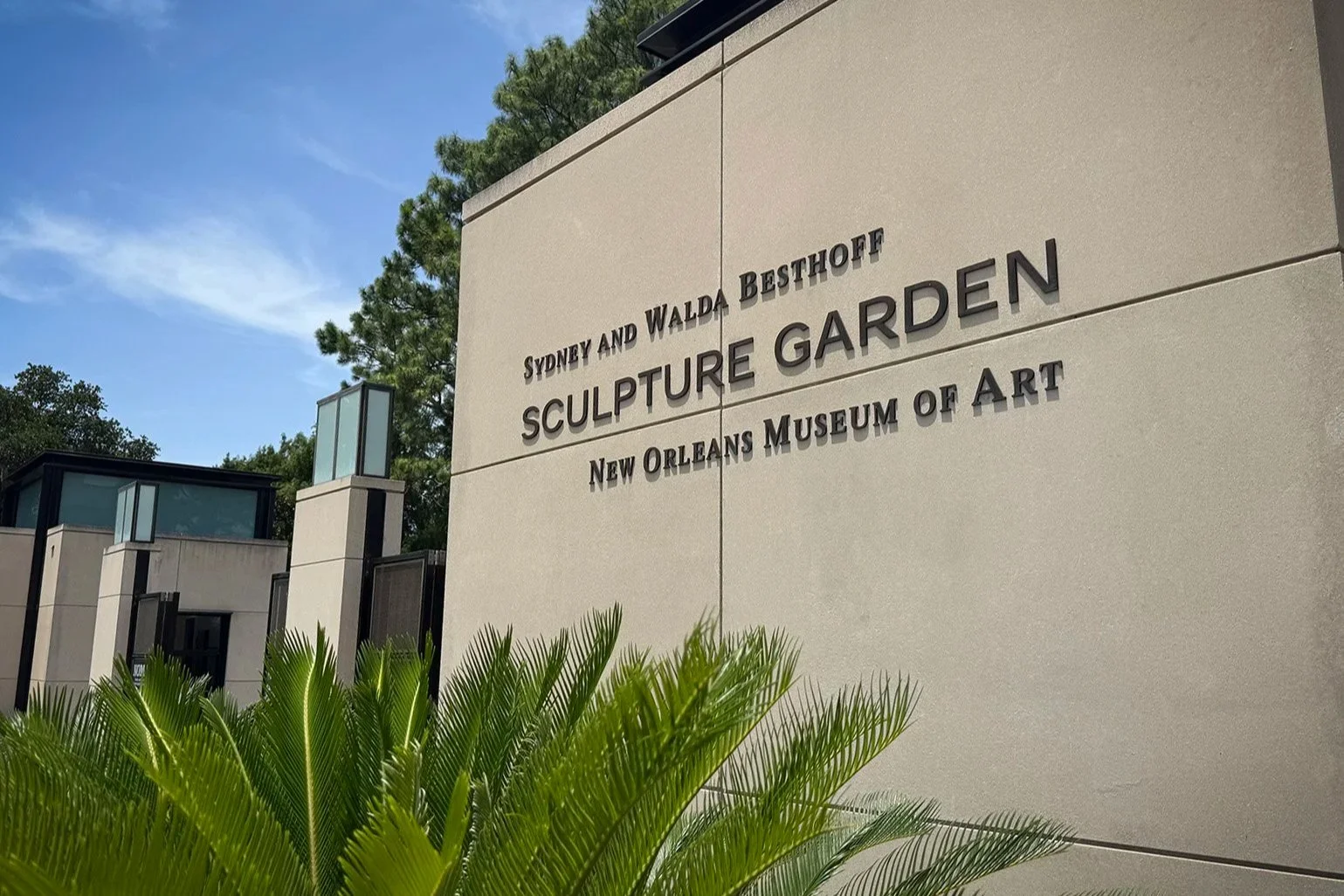
The Sydney and Walda Besthoff Sculpture Garden has grown into one of New Orleans' premier cultural destinations, blending world-class sculpture with the natural beauty of City Park.
If it's purple on the outside...
For generations of New Orleanians, K&B Purple was more than a corporate color. It was part of everyday life. Whether it appeared on storefronts, shopping bags, prescription bottles or store-brand products, that unmistakable shade became woven into the city's identity. Long after the neighborhood drugstores disappeared, the color continued to evoke memories of Saturday errands, ice cream counters and a company that seemed to have a place in nearly every community.
Like many people who grew up in southeast Louisiana, I remember seeing the K&B headquarters whenever we traveled into New Orleans. I knew the company. I knew the purple sign. I had no idea that behind those offices, Sydney and Walda Besthoff were quietly building one of the city's finest collections of modern sculpture.
Sydney Besthoff III, grandson of K&B co-founder Gustav Kohnstamm, helped grow the family business into one of the South's most successful regional pharmacy chains. He and his wife, Walda, also shared a passion for collecting contemporary art. Beginning in the 1970s, sculptures appeared throughout K&B Plaza near Lee Circle, creating an outdoor gallery where employees, visitors and pedestrians could experience world-class art without ever stepping inside a museum.
That philosophy grew beyond K&B itself. In 2003, the Besthoffs donated much of their collection to the New Orleans Museum of Art, along with the funding to establish the Sydney and Walda Besthoff Sculpture Garden. Expanded in 2019, the garden now stretches across 11 acres and features more than 90 works by internationally acclaimed artists.
I've returned to the sculpture garden countless times over the years. I've photographed engagement sessions there, wandered its paths with a camera and even used the setting for three Krewe du Who Doctor Who trading card sets. Every visit reminds me that great public art isn't something you simply observe. It changes as the light shifts, as the seasons change and as you discover another perspective.
No single article can introduce every artist represented here, but five sculptors demonstrate why the Besthoff Sculpture Garden has become one of New Orleans' cultural treasures. Each sees the world differently. Together, they invite us to do the same.
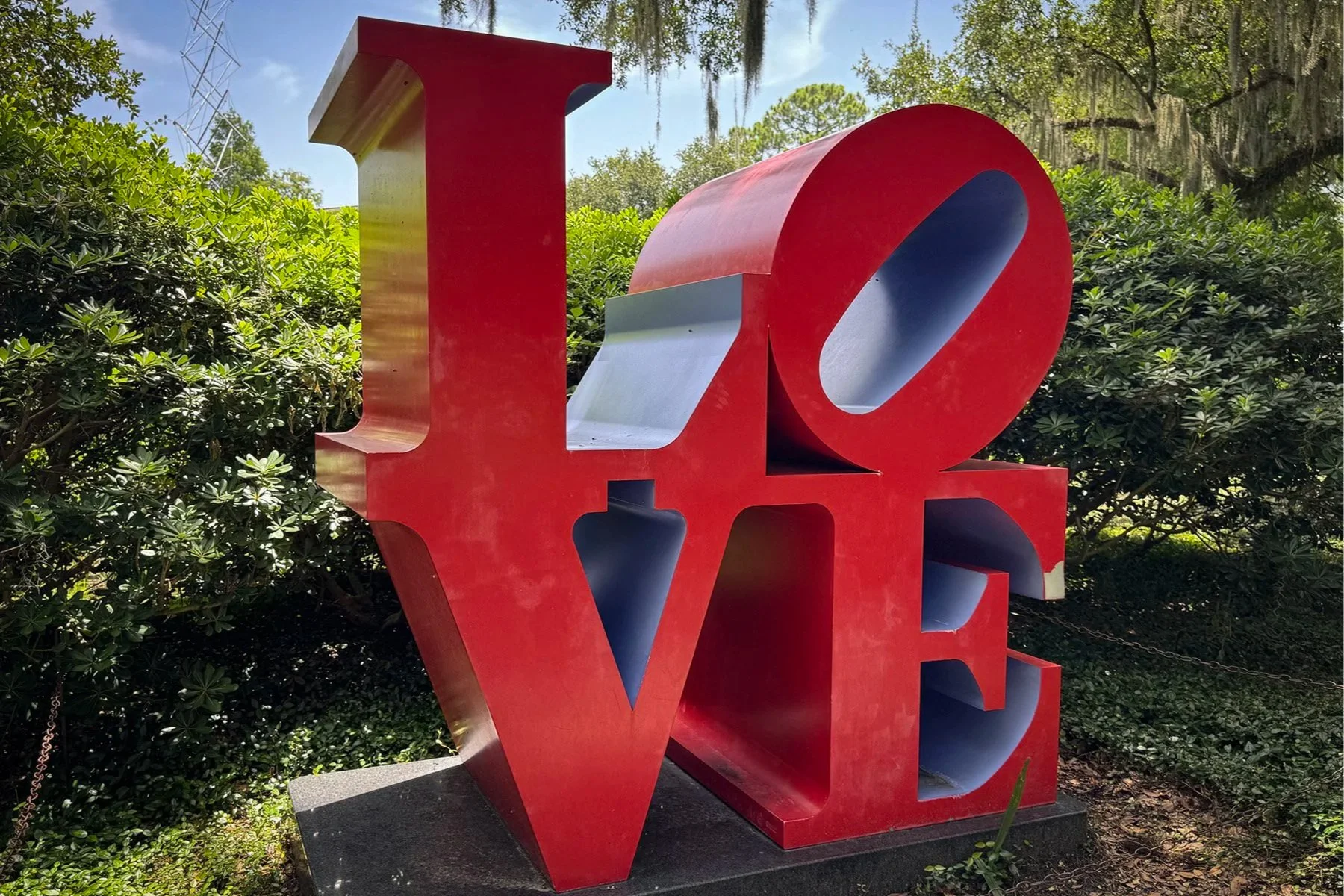
Robert Indiana's LOVE transformed four familiar letters into one of the most recognizable works of public art in the world.
Robert Indiana
Robert Indiana built his career around the visual power of words, numbers and familiar signs, becoming one of the leading figures of the Pop Art movement. His best-known creation, LOVE, first appeared in the mid-1960s before growing into one of the most recognizable works of modern art. What began as a simple graphic design has since been reproduced as paintings, prints and monumental sculptures in cities around the world.
The version at the Besthoff Sculpture Garden is a six-foot sculpture cast in aluminum and finished with acrylic polyurethane enamel. Its stacked letters and distinctive tilted "O" have become Indiana's signature, giving a familiar word an unmistakable visual identity. The design drew inspiration from the phrase "God is Love," which he remembered from childhood, and from the bold colors of the Phillips 66 signs that dotted the American landscape during his youth.
Few works of public art have become as universally recognized as LOVE. Indiana demonstrated that typography could carry the same emotional weight as a painting or sculpture, transforming four ordinary letters into an enduring symbol that continues to resonate with visitors nearly sixty years after its debut.
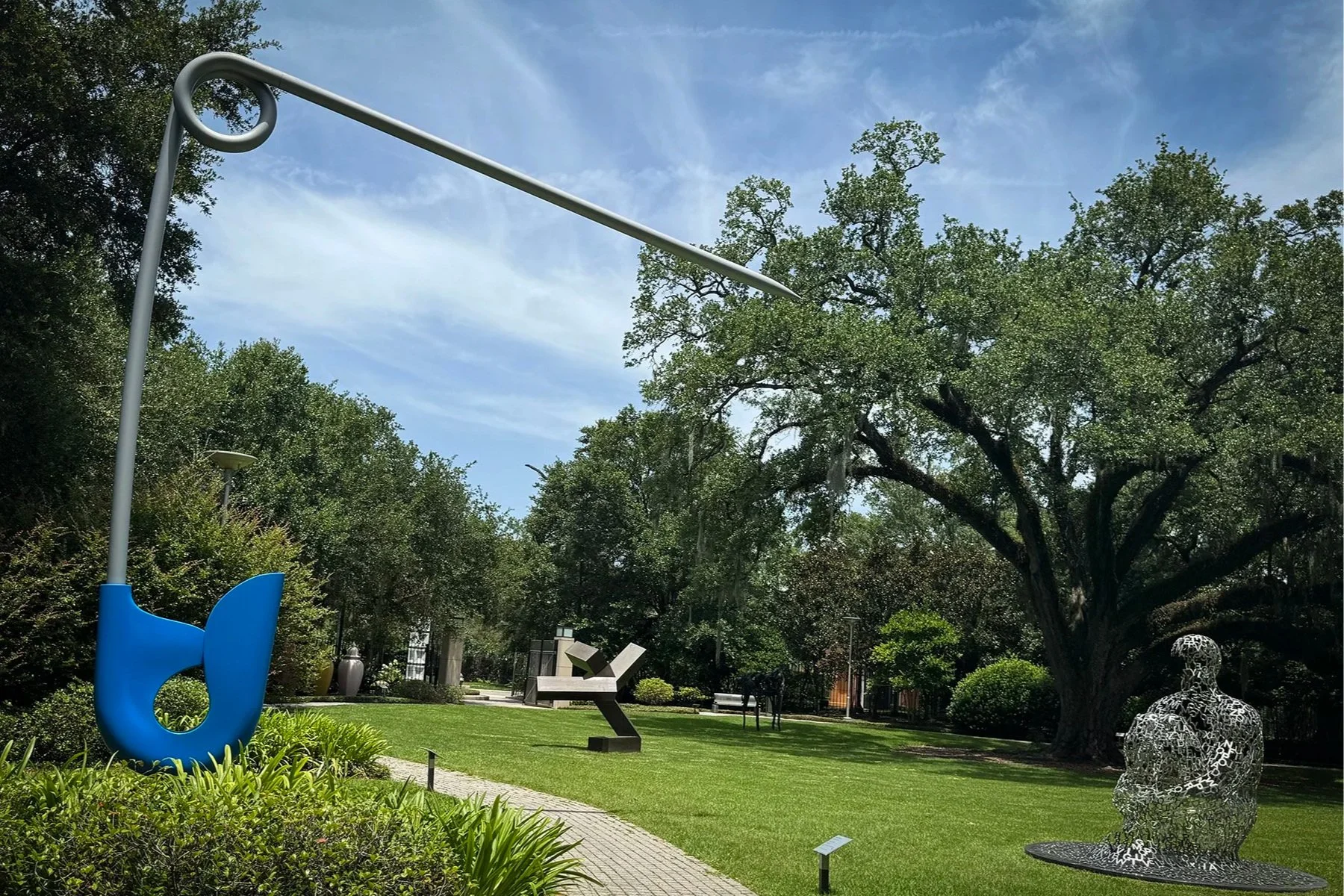
Corridor Pin, Blue demonstrates how Claes Oldenburg and Coosje van Bruggen elevated ordinary objects into monumental public art.
Claes Oldenburg and Coosje van Bruggen
Few artists changed the way people looked at everyday objects as dramatically as Claes Oldenburg and Coosje van Bruggen. Working together for more than 30 years, the husband-and-wife team transformed familiar items into monumental public sculptures, turning clothespins, shuttlecocks, spoons and safety pins into landmarks that invited people to see the ordinary in extraordinary ways.
Their sculpture, Corridor Pin, Blue, continues that tradition. Standing more than 20 feet tall and fabricated from painted steel, the oversized safety pin dominates its surroundings while remaining instantly recognizable. By enlarging such a commonplace object, Oldenburg and van Bruggen shifted the viewer's attention from its everyday function to its shape, color and presence in the landscape.
The sculpture reflects one of the central ideas behind Pop Art: familiar objects can become art when presented in a new context. Corridor Pin, Blue demonstrates how a change in scale can completely transform the way we experience something we've seen countless times before.
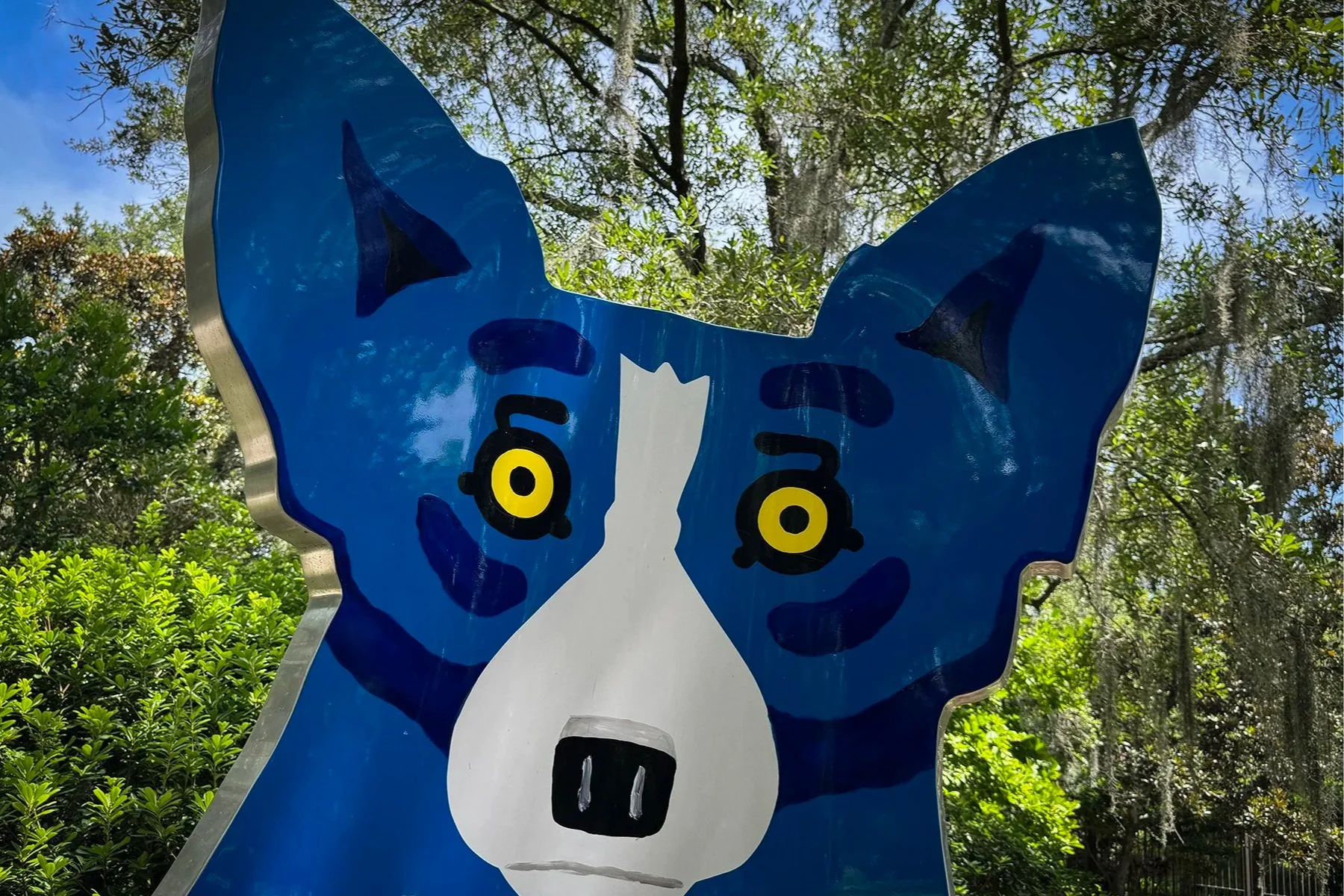
George Rodrigue brought his iconic Blue Dog into three dimensions with We Stand Together, celebrating one of Louisiana's most recognizable artistic creations.
George Rodrigue
George Rodrigue remains one of Louisiana's most celebrated artists, earning international recognition through his Blue Dog series while never losing sight of his Cajun roots. Inspired by the loup-garou, a legendary werewolf from Cajun folklore, Blue Dog evolved from a regional subject into a cultural icon recognized around the world.
Cast in bronze, We Stand Together brings Blue Dog into three dimensions while preserving the bold silhouette and expressive gaze that made the character famous. Installed in the Besthoff Sculpture Garden, the sculpture serves as a reminder that Louisiana's artistic traditions continue to influence audiences far beyond the state's borders.
Rodrigue often said Blue Dog became a way to communicate ideas that extended beyond the canvas. We Stand Together reflects that evolution, demonstrating how a character rooted in local folklore grew into one of the most recognizable images in contemporary American art.
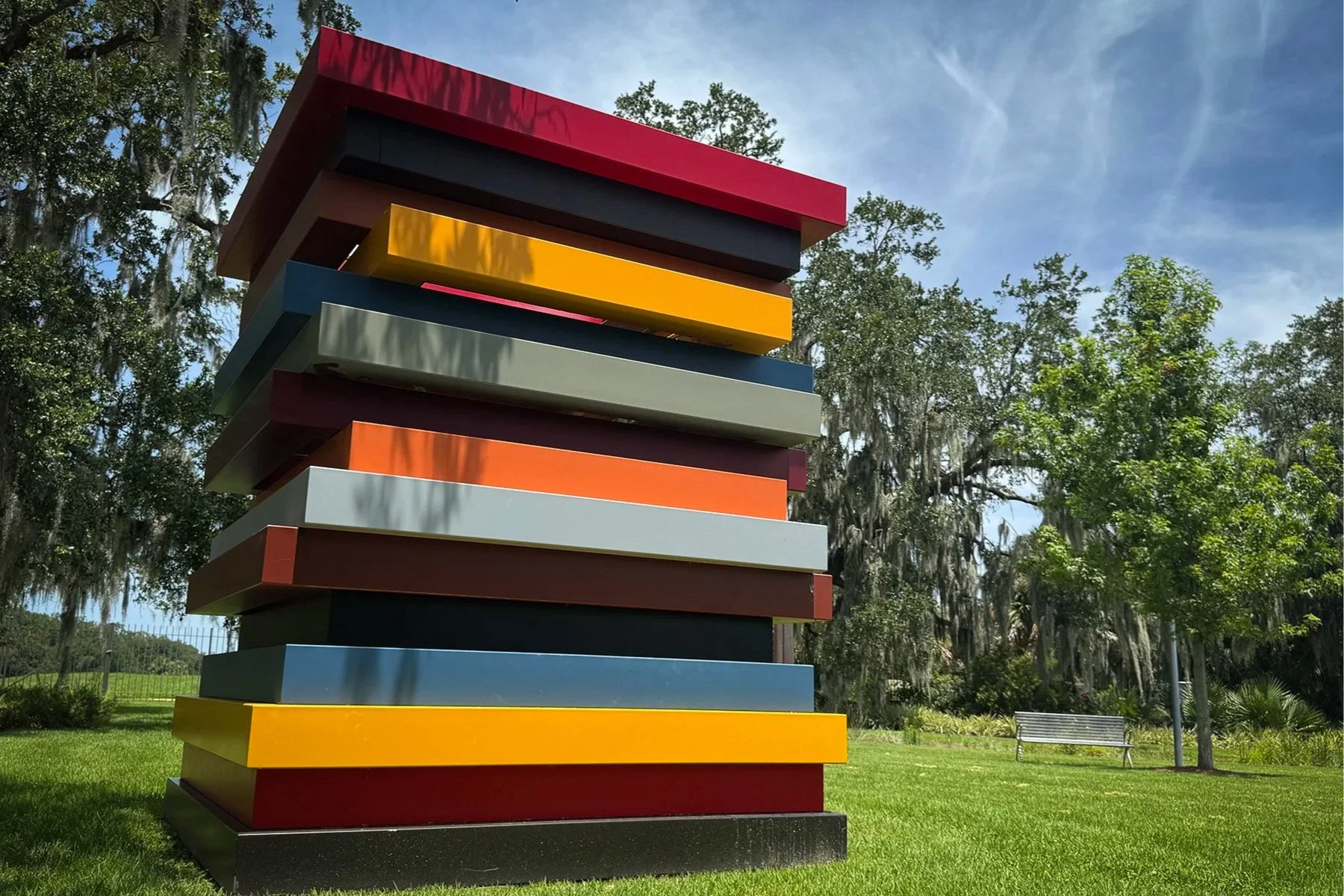
Sean Scully's Colored Stacked Frames explores color, geometry and perspective through intersecting painted steel forms.
Sean Scully
Sean Scully has spent his career demonstrating that abstraction can be every bit as expressive as realism. Born in Ireland and based in the United States, he is known for bold geometric forms and layered bands of color that explore rhythm, balance and emotion rather than depicting recognizable subjects.
His sculpture, Colored Stacked Frames, is constructed of painted steel and reflects the same visual language found throughout his paintings. Interlocking rectangular forms create shifting views as visitors move around the work, revealing new relationships between color, light and negative space from every angle.
Scully believes abstraction communicates through feeling rather than representation. Colored Stacked Frames encourages visitors to slow down, change their perspective and discover that a work of art doesn't have to portray a familiar object to create a lasting impression.
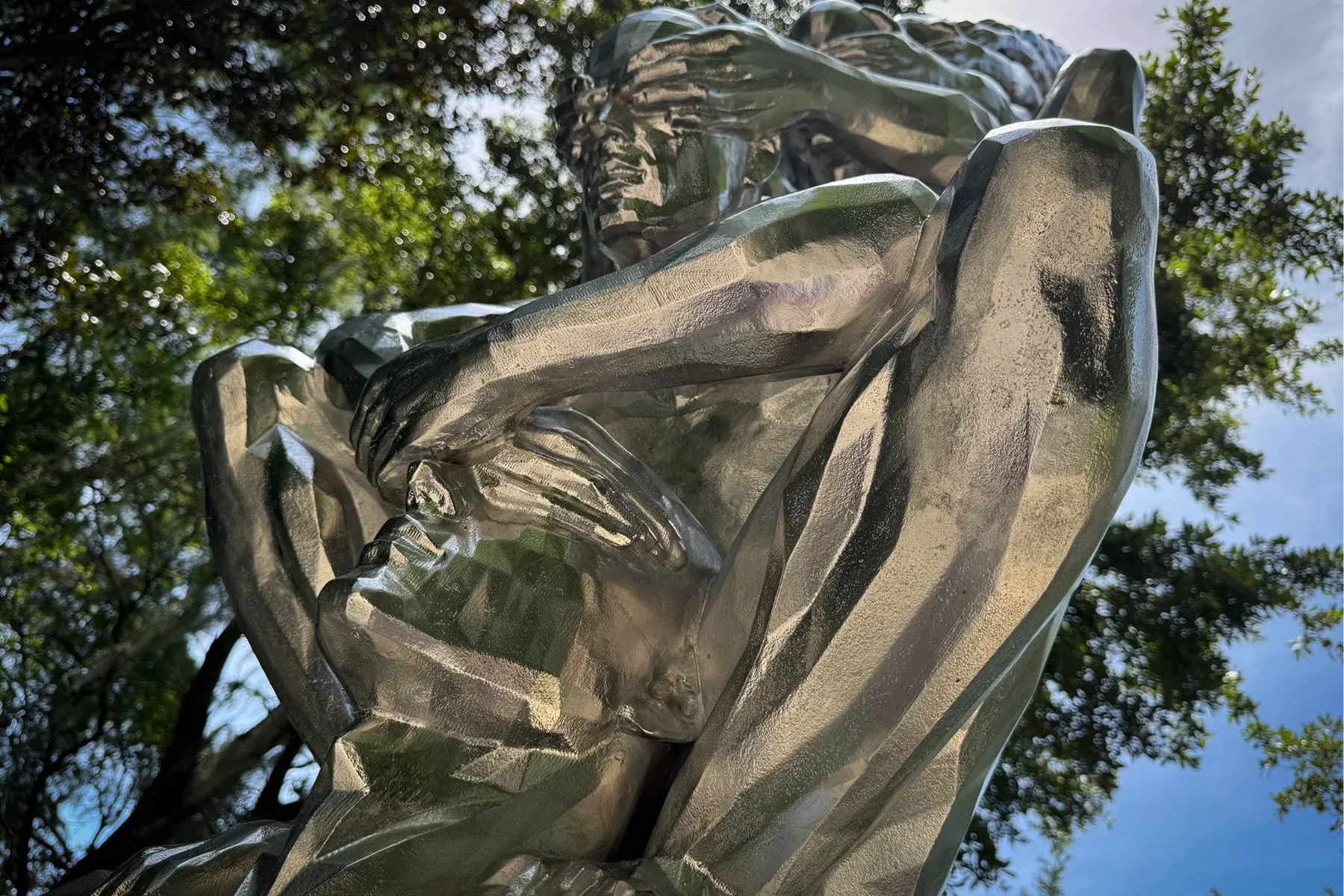
A closer look at Karma reveals dozens of interconnected figures supporting one another in a soaring stainless steel column.
Do Ho Suh
South Korean artist Do Ho Suh explores themes of identity, memory and belonging, often examining the relationships between individuals and the communities they create. His work draws upon personal experience while asking universal questions about connection, home and the ways people support one another throughout life.
Karma is a towering stainless steel sculpture composed of dozens of interconnected human figures stacked one upon another, rising nearly 24 feet into the air. Each figure depends on the one below it, creating a striking vertical composition that appears both delicate and remarkably strong.
The sculpture reflects the Buddhist concept of karma, where every action influences what follows. Rather than presenting a single individual, Do Ho Suh created a chain of lives linked across generations, illustrating how every person is shaped by those who came before and, in turn, helps support those who follow.
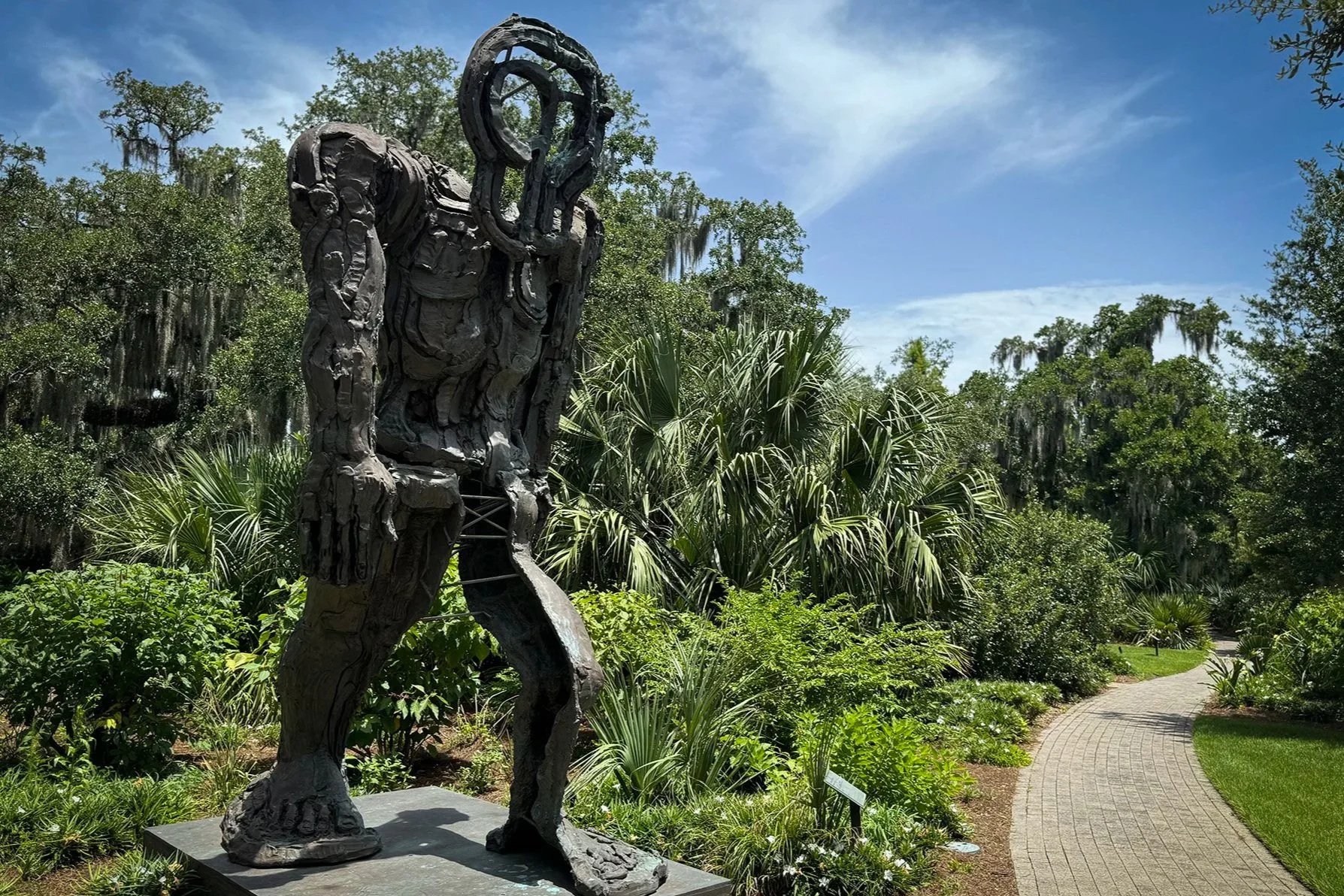
Thomas Houseago's Striding Figure (Rome I) preserves the expressive textures of the artist's original model, celebrating the energy of the creative process.
Thomas Houseago
British sculptor Thomas Houseago combines the monumentality of classical sculpture with the raw energy of contemporary art. Rather than concealing the marks left by modeling and construction, he leaves them visible, allowing the creative process to remain part of the finished work. The result is sculpture that feels both ancient and unmistakably modern.
Striding Figure (Rome I) is cast in bronze from an original plaster model, preserving the rough textures and expressive surfaces that define Houseago's style. The larger-than-life figure conveys movement and strength, yet its unfinished appearance reveals the artist's hand at every stage of its creation.
Houseago's work reminds us that sculpture is as much about process as the finished object. By preserving the evidence of its making, Striding Figure (Rome I) celebrates the energy of creation itself, demonstrating that expressive power often comes from what an artist chooses to leave visible rather than conceal.
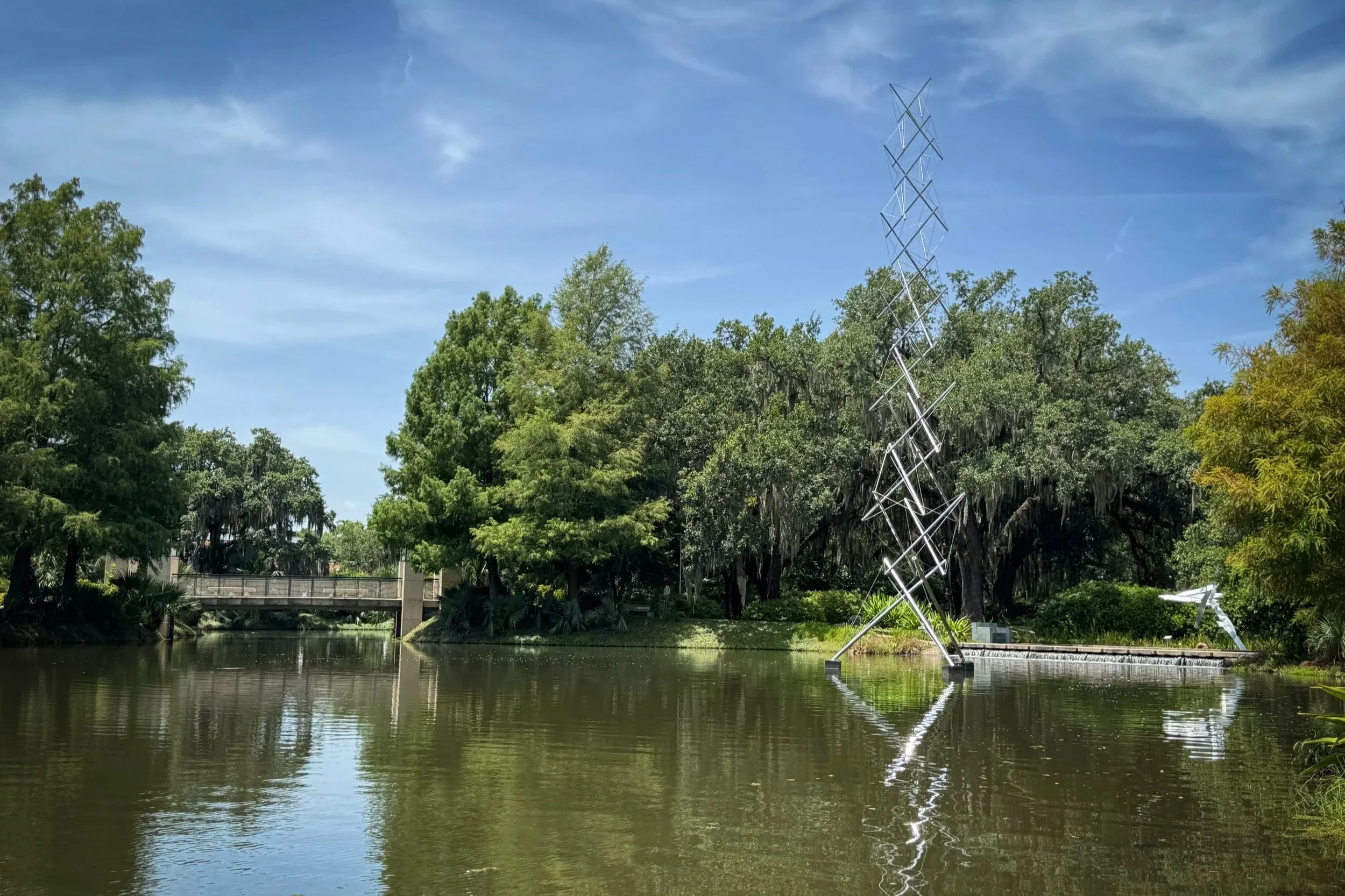
Large-scale sculpture and carefully designed landscapes come together throughout the Sydney and Walda Besthoff Sculpture Garden, creating an experience that rewards every turn along the path.
A lasting legacy
Every visit to the Besthoff Sculpture Garden reveals something new. Sometimes it's a sculpture I've walked past dozens of times before noticing a detail for the first time. Sometimes it's the way changing light transforms painted steel or bronze. Sometimes it's watching a child, a student or another photographer discover a favorite work for themselves.
That was Sydney and Walda Besthoff's vision from the beginning. Art wasn't meant to remain behind corporate walls or inside museum galleries. It belonged outdoors, where anyone could encounter it during an afternoon walk through City Park.
Robert Indiana teaches us that words can become powerful visual symbols. Claes Oldenburg and Coosje van Bruggen reveal the beauty hidden in ordinary objects. George Rodrigue proves that local stories can resonate around the world. Sean Scully encourages us to experience color, light and space without searching for familiar images. Thomas Houseago reminds us that humanity often shines brightest through imperfection.
Together, their work transforms the Besthoff Sculpture Garden into something greater than an outdoor museum. It becomes a place where curiosity is rewarded, where every path offers a different perspective and where visitors leave seeing the world just a little differently than when they arrived.
For many of us, K&B will always be remembered for its unmistakable purple. Thanks to the generosity of the Besthoff family, another legacy endures beneath the live oaks of City Park—a gift that continues to inspire New Orleanians and visitors alike, one sculpture at a time.
Where to go next
Walk among nearly 100 works of art set beneath live oaks and along the lagoons of New Orleans City Park. The Besthoff Sculpture Garden is free to visit and open seven days a week.
Sydney and Walda Besthoff Sculpture Garden
One Collins C. Diboll Circle, City Park
New Orleans, LA 70124
(504) 658-4100
Garden hours:
April–September: 10 a.m.–6 p.m.
October–March: 10 a.m.–5 p.m.
Admission is free.