More than forty years after Pontchartrain Beach closed, a surprising number of its landmarks still survive—if you know where to look.
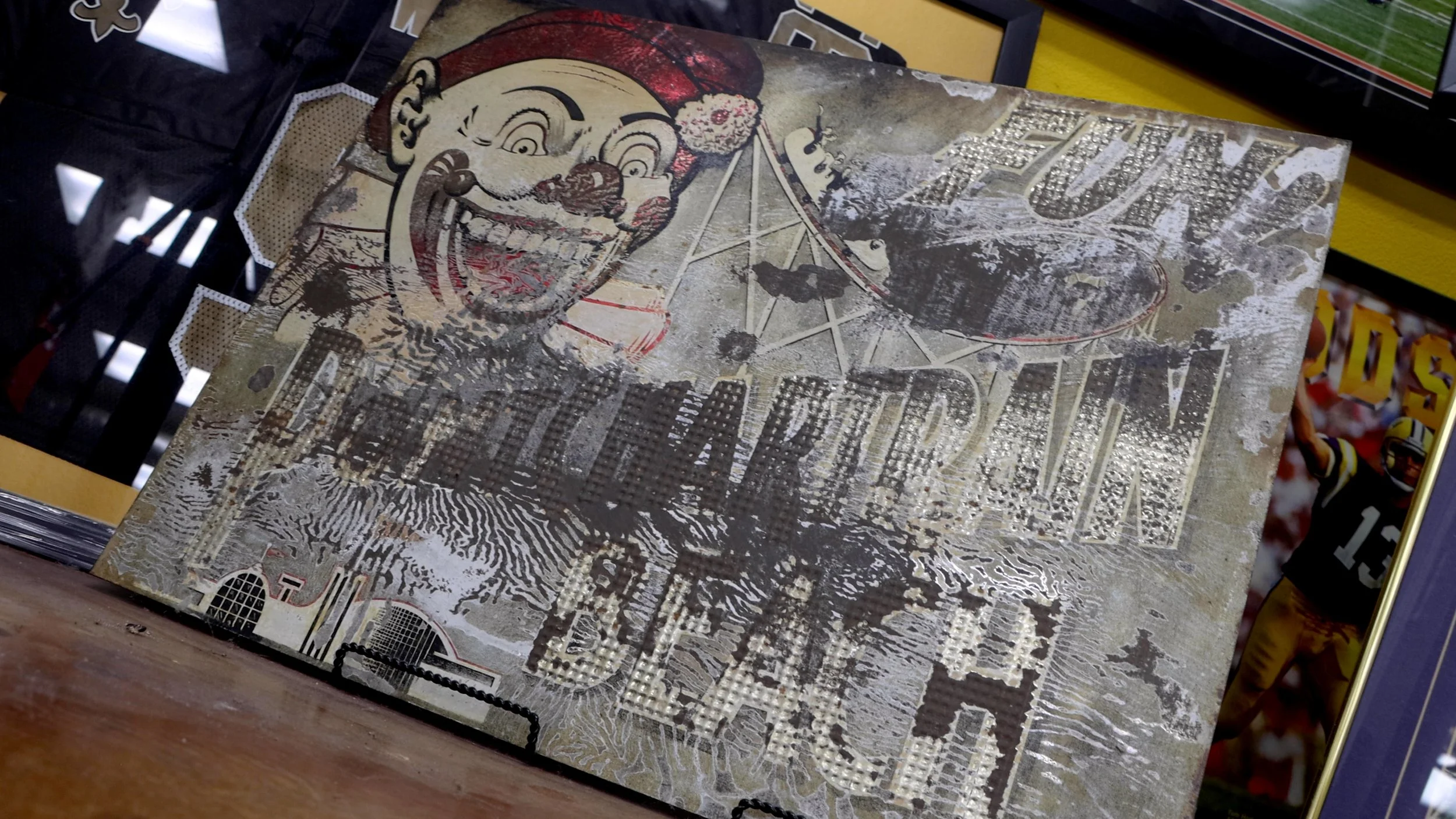
One of Pontchartrain Beach's classic advertising signs serves as a reminder that, although the midway disappeared after 1983, the park's familiar images never completely vanished. For many New Orleanians, they were the first clues that the search could still continue.
The search begins
Pontchartrain Beach closed after Labor Day weekend in 1983, but it never completely disappeared. While many of the rides were sold, relocated or dismantled, surprising pieces of New Orleans' favorite amusement park remained behind. Some eventually found homes in museums and historic collections. Others still exist in plain sight, scattered across the metropolitan area and often overlooked by the thousands of people who pass them every day.
After years of reading about Pontchartrain Beach, photographing reminders of the park and wondering what had become of the places I remembered as a child, I finally decided to stop wondering and start driving. Rather than chasing rides that now operate hundreds of miles from New Orleans, I wanted to follow a trail readers could experience for themselves—a route that would begin in Kenner before winding through Metairie, City Park and finally back to the Lake Pontchartrain shoreline where generations of families once spent their summers.
My first destination wasn't the former amusement park. It was Rivertown, where several of Pontchartrain Beach's most recognizable survivors eventually found a home after the park closed. They aren't presented as a recreation of the amusement park, and time has changed the way they're displayed, but together they remain the strongest public connection to Pontchartrain Beach that can still be experienced in the New Orleans area. If there was any logical place to begin the search, this was it.
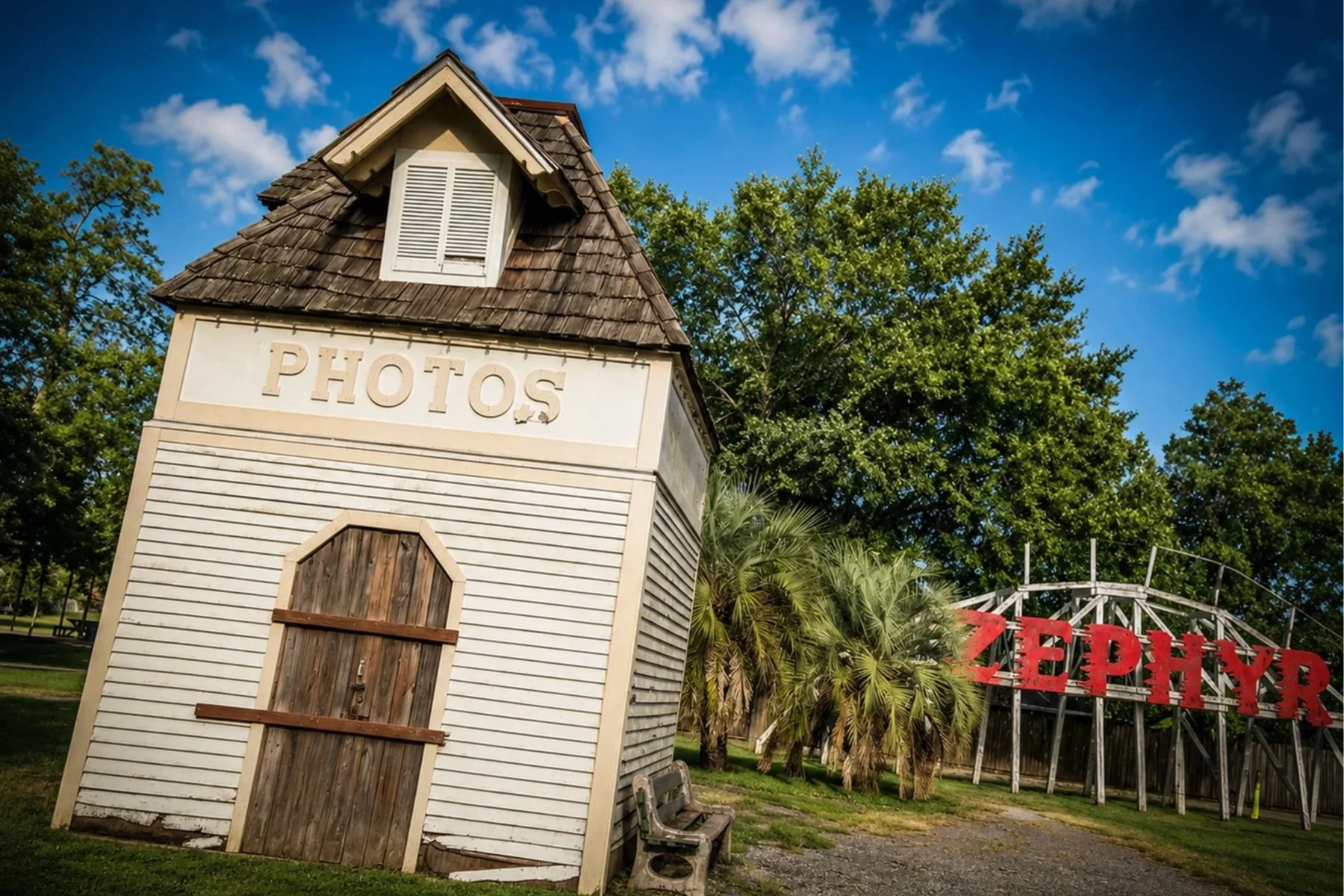
The old photo booth and the Zephyr's towering crest make an unlikely pair in Rivertown, but together they preserve one of the strongest public connections to Pontchartrain Beach and mark the first stop in the search for what still remains.
Rivertown keeps the memories alive
If someone had asked me where to begin looking for the park, Rivertown would have been one of my last guesses.
Pontchartrain Beach belonged on the shores of Lake Pontchartrain. Rivertown sits nearly 20 miles away along the Mississippi River in Kenner. For anyone who grew up in the New Orleans area, the distance feels even greater. By the time you reach Williams Boulevard, you're about as far west as metropolitan New Orleans extends before the landscape gives way to the interstate, the airport and the wetlands beyond. Finding remnants of New Orleans' most beloved amusement park here—beside an entirely different body of water—feels almost impossible.
Yet this is exactly where the search begins.
When Rivertown emerged as Kenner's historic district during the 1980s, someone had the foresight to preserve several pieces of Pontchartrain Beach. Exactly how they arrived here isn't especially well documented, nor have I been able to identify who made that decision. Whoever it was deserves more recognition than history has given them. Without that effort, many of these landmarks might have disappeared forever instead of remaining where anyone can experience them today.
The first thing I recognized was the Zephyr. Standing nearby, however, was a building marked PHOTOS that I honestly don't remember from my childhood visits. Looking at it as an adult, its purpose seemed obvious. Before digital cameras, preserving a family vacation required more than pressing a button. Film had to be purchased, protected and eventually developed before those memories could be relived. Whether visitors bought supplies, picked up prints or left rolls to be processed, a dedicated photography center would have been a practical part of the experience at one of the South's busiest amusement parks. It was the sort of detail I probably walked past a dozen times as a child without ever giving it a second thought.
Only a few steps away stood the landmark I had traveled from the Northshore to see.
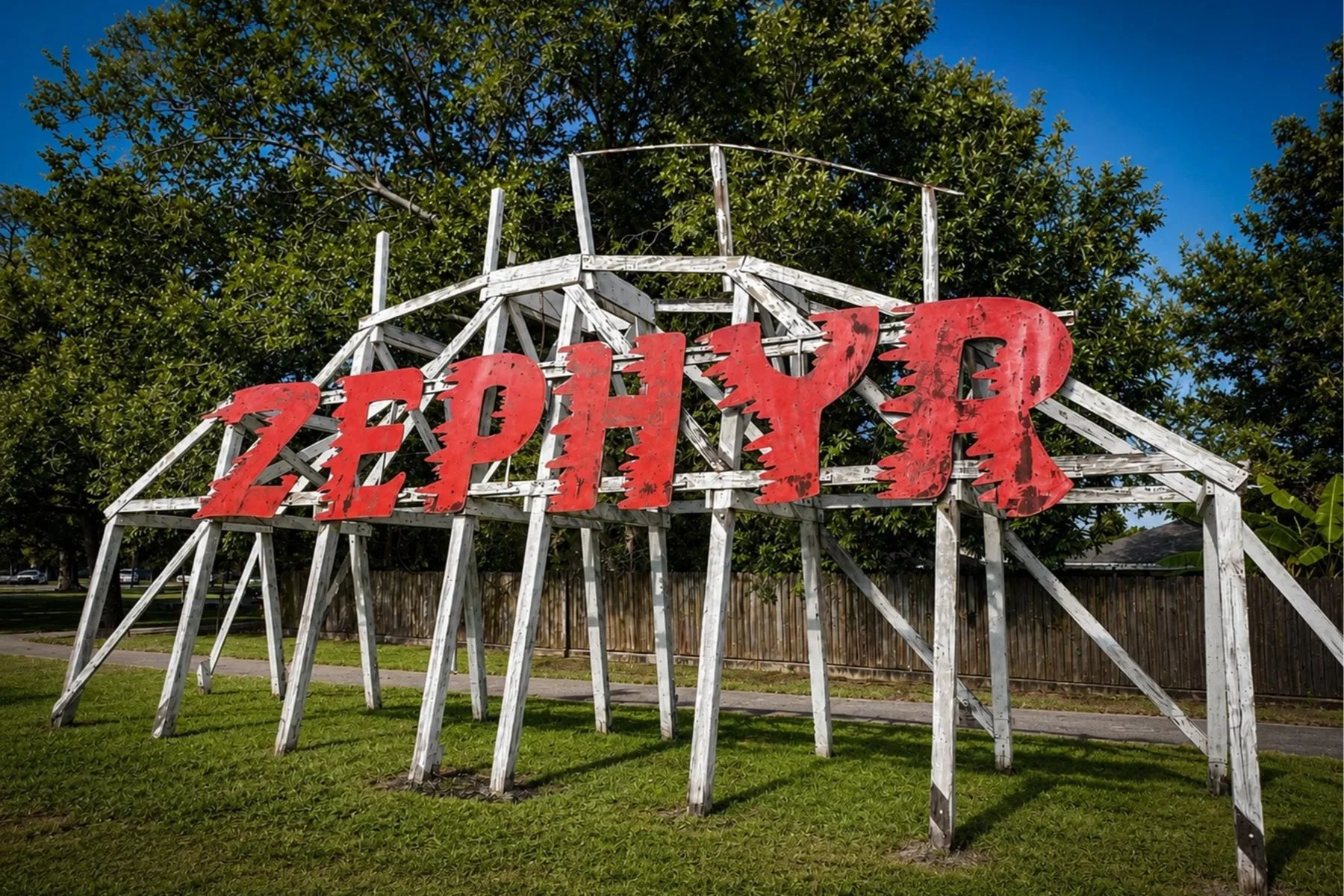
The original ZEPHYR letters once crowned the lift hill of Pontchartrain Beach's legendary wooden roller coaster. Viewing them more than forty years later brought back the excitement—and heartbreak—of my final ride during the park's closing weekend.
The king of the midway
For me, the Zephyr isn't just the most famous ride ever built at Pontchartrain Beach. It's where my memories begin.
One of my vivid memories of Pontchartrain Beach comes from its final weekend. Standing beside my Uncle Johnny, I waited in line for what would become both my first and my last ride aboard the famous Zephyr. I was eight years old and had already fallen in love with the park. I knew it was closing, and I remember being heartbroken. I just didn't realize that more than forty years later I'd still be chasing pieces of the place I thought I was saying goodbye to.
Harry Batt Sr., whose family owned and operated Pontchartrain Beach for generations, left little doubt about how he viewed roller coasters. In 1974, he said, "Rollercoasters were always the kings of the ride business; even the great theme parks had to bow to the king." At Pontchartrain Beach, there was never any question which attraction wore the crown.
When the Zephyr opened in 1939, it immediately became the park's signature attraction. Designed by Edward A. Vettel at a cost of $100,000, the 80-foot-tall coaster stretched 2,300 feet across the midway and reached speeds approaching 56 miles per hour. Built with nearly one million board feet of lumber, it dominated the skyline for more than four decades, becoming as recognizable as Pontchartrain Beach itself. Even visitors who never climbed aboard remember hearing the trains labor up the lift hill before plunging into the first dramatic drop.
When Jazzland opened in eastern New Orleans in 2000, its signature wooden roller coaster was named Mega Zeph, a tribute to the original Zephyr that had thrilled generations of Pontchartrain Beach visitors. The new coaster carried the name forward, even if the park itself enjoyed only a brief run before Hurricane Katrina brought its story to an abrupt end.
Standing in front of the original ZEPHYR letters from the crest of the lift hill, I found them weathered but beautiful. The wooden framework had aged. The familiar letters bore the scars of rust. Yet they looked every bit as magnificent to me as they had in 1983.
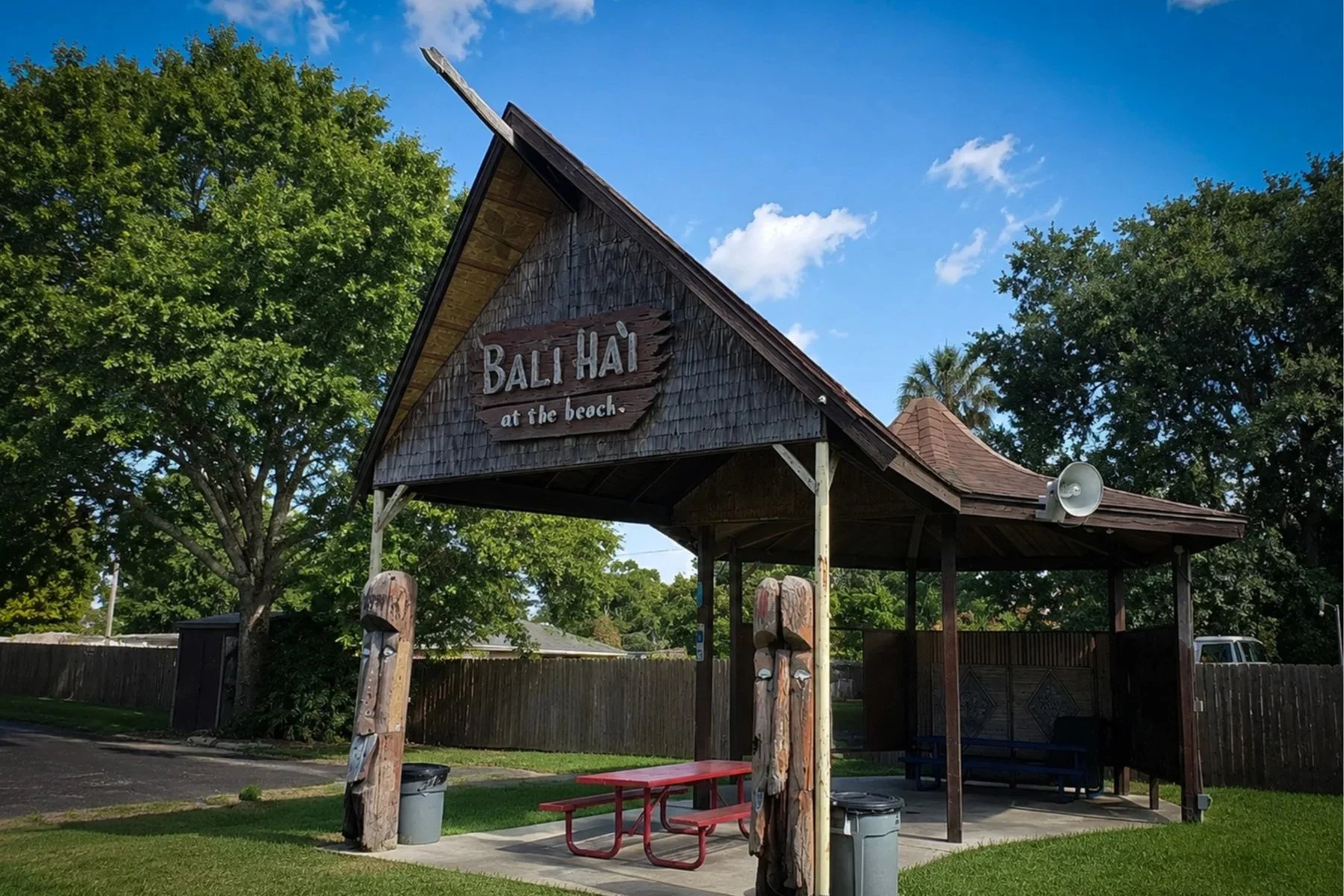
Bali Ha'i invited visitors to leave New Orleans behind for an afternoon in the South Pacific, offering an escape that became every bit as memorable as the rides themselves. Historic image digitally restored and enhanced by the author for publication.
A South Seas escape
Just beyond the Zephyr stands another reminder that Pontchartrain Beach was never just about rides.
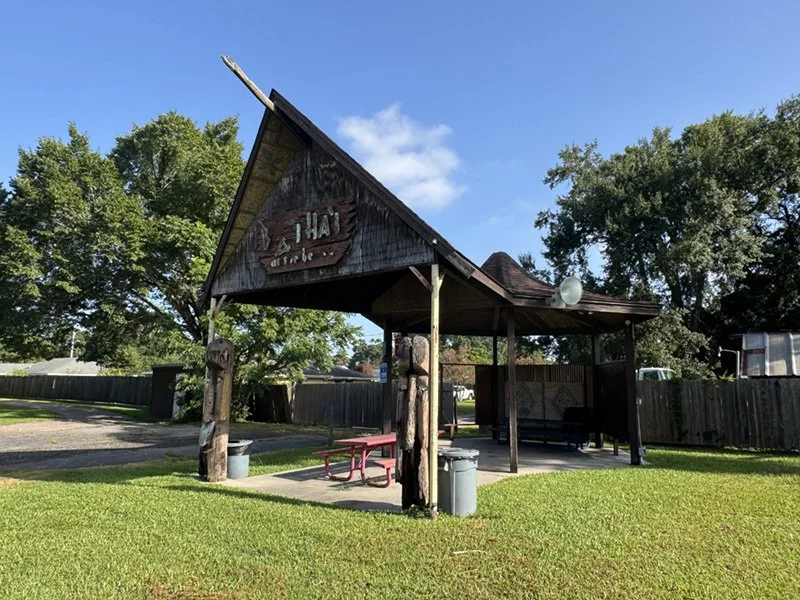
Harry Batt understood that successful amusement parks offered complete experiences, and nowhere was that philosophy more evident than Bali Ha'i. Inspired by America's fascination with Polynesian culture during the 1950s and 1960s, the restaurant transported visitors to an imagined South Pacific through dramatic architecture, carved tiki figures and tropical cocktails. It quickly became one of Pontchartrain Beach's most recognizable destinations, attracting visitors as much for its atmosphere as its menu. The restaurant even hosted New Orleans' celebration surrounding the release of Elvis Presley's Blue Hawaii, a fitting connection for a place built around the era's fascination with island culture.
Today, original Bali Ha'i tiki mugs remain highly collectible, regularly commanding impressive prices among New Orleans collectors and tiki enthusiasts. Long before they became collectibles, however, they were souvenirs from birthdays, anniversaries, first dates and family afternoons spent at Pontchartrain Beach.
Walking around the building, I found myself appreciating details I probably overlooked as a child. The sweeping roofline, carved accents and unmistakable silhouette still capture the spirit of Bali Ha'i. I couldn't tell you which pieces were original and which had been recreated over the years. In that moment, the distinction didn't matter. What mattered was that, for a few minutes, I wasn't standing in Rivertown. I was back at Pontchartrain Beach.
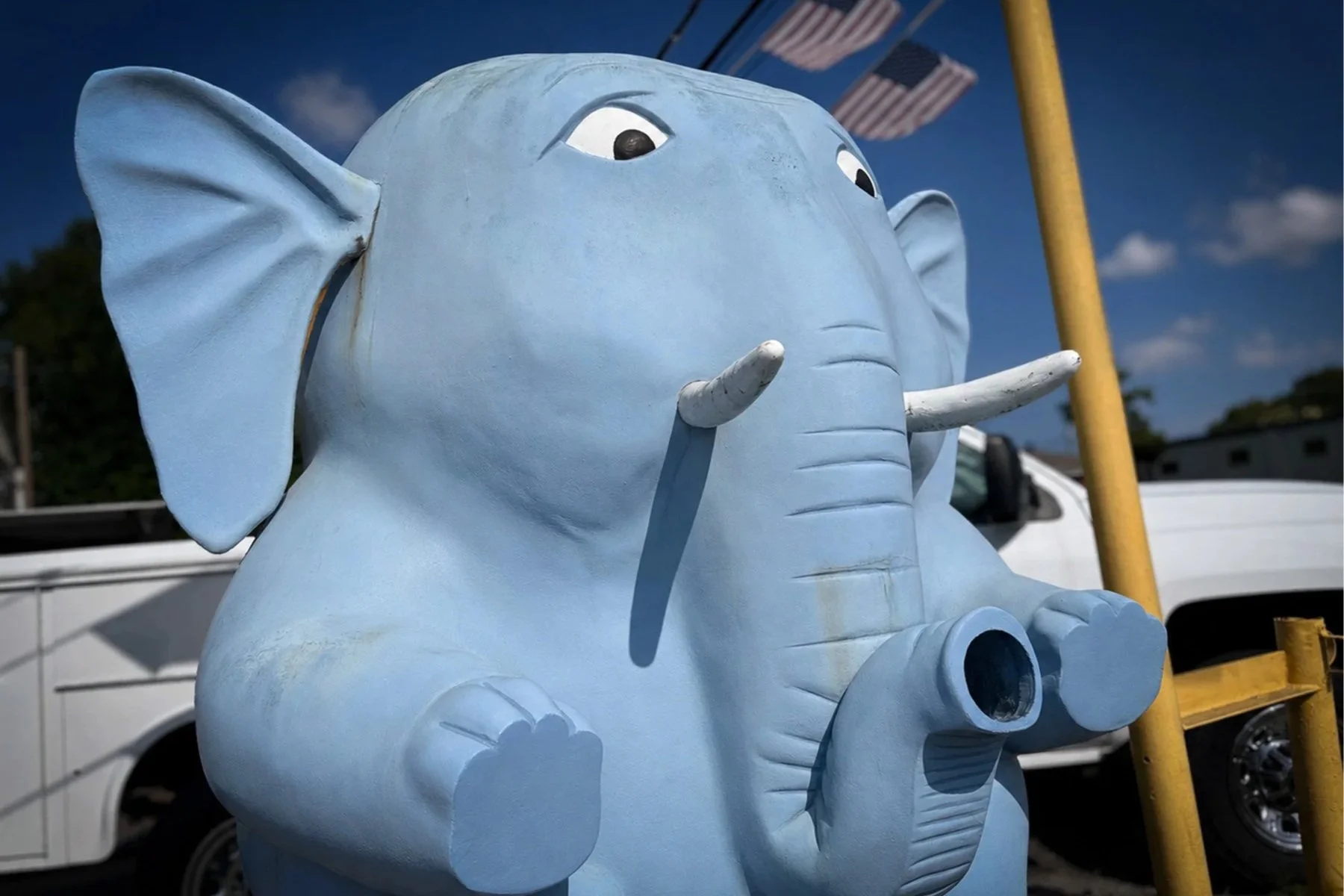
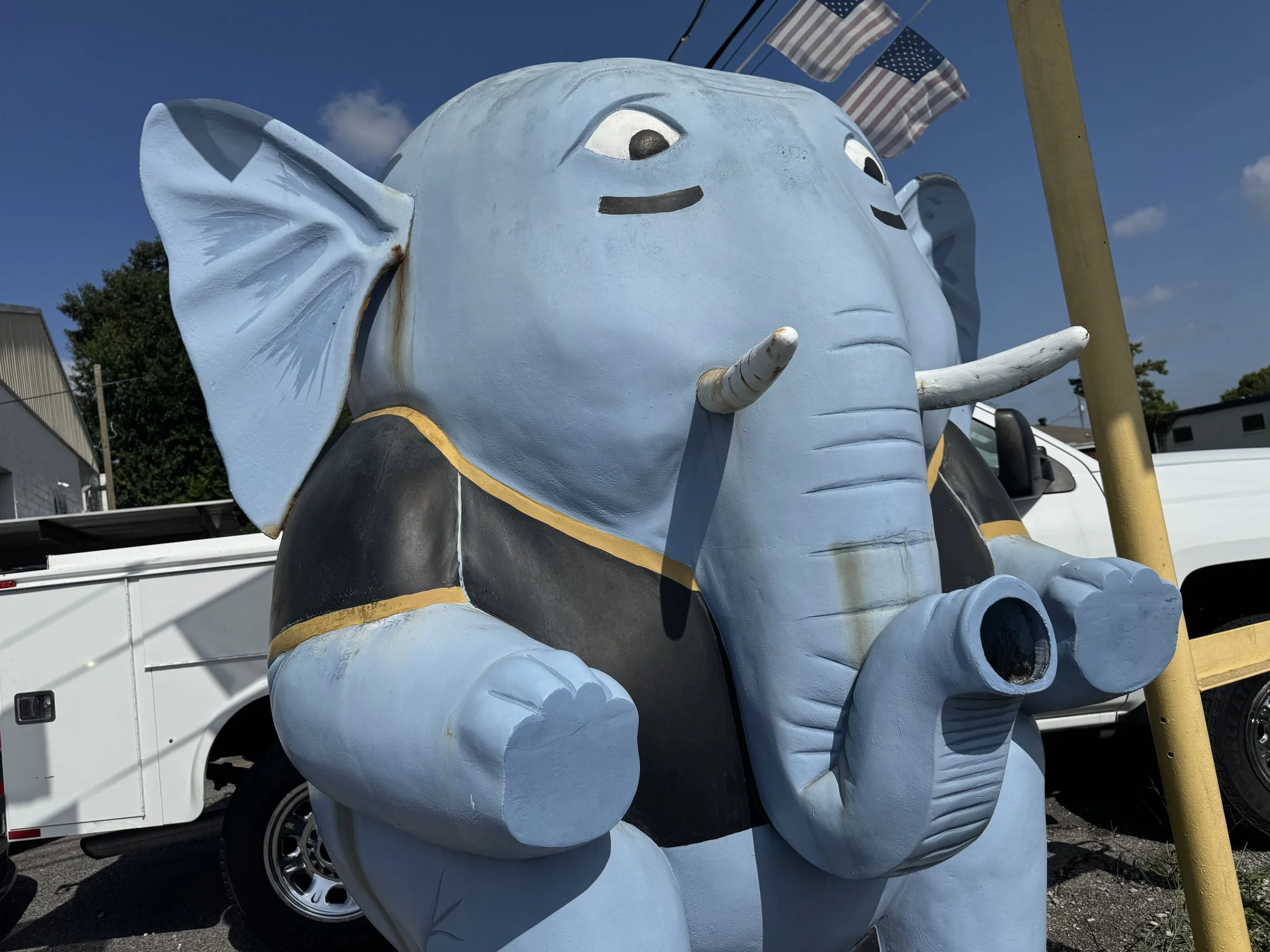
Harry Batt's blue elephant turned throwing away popcorn boxes, cups and candy wrappers into part of the fun. For many children, feeding the elephant became every bit as memorable as the rides themselves.
Feeding the animals
Leaving Rivertown, the trail turns toward Metairie, where one of Harry Batt's famous "paper eaters" still stands along North Causeway Boulevard. Like so many places we revisit as adults, it wasn't quite as large as I remembered. At eight years old, everything seemed a little bigger.
Harry Batt Sr. expected Pontchartrain Beach to be immaculate. In the 1950s, according to the Batt family, Walt Disney visited the park while planning Disneyland and came away impressed by its cleanliness. Batt believed every detail of an amusement park shaped the guest experience, including how visitors disposed of their trash.
His solution was unmistakably his own.
In 1964, Batt developed his patented vacuum-powered Paper Eaters, whimsical animal figures that encouraged children to throw away popcorn boxes, soft drink cups and candy wrappers by "feeding" them into an open mouth or trunk. Rather than treating litter as a chore, the machines turned cleaning up into another attraction. The idea proved so successful that Paper Eaters were marketed to amusement parks, zoos and attractions across the country. Children reportedly hunted for stray cups and wrappers simply for another chance to activate the machine, helping keep the midway clean while reducing maintenance costs.
Of course, none of us thought about patents, engineering or janitorial efficiency as children.
I never saw the elephant as a trash can. It was part of going to Pontchartrain Beach. Feeding the blue elephant—and the pink hippopotamus—was what you did. Decades later, I can still picture both of them as clearly as many of the rides themselves.
Time has changed the elephant. Years of repainting and well-intentioned embellishments have altered its appearance, but I had no trouble seeing the same blue elephant I remembered as a child. More than forty years later, it still made me smile.
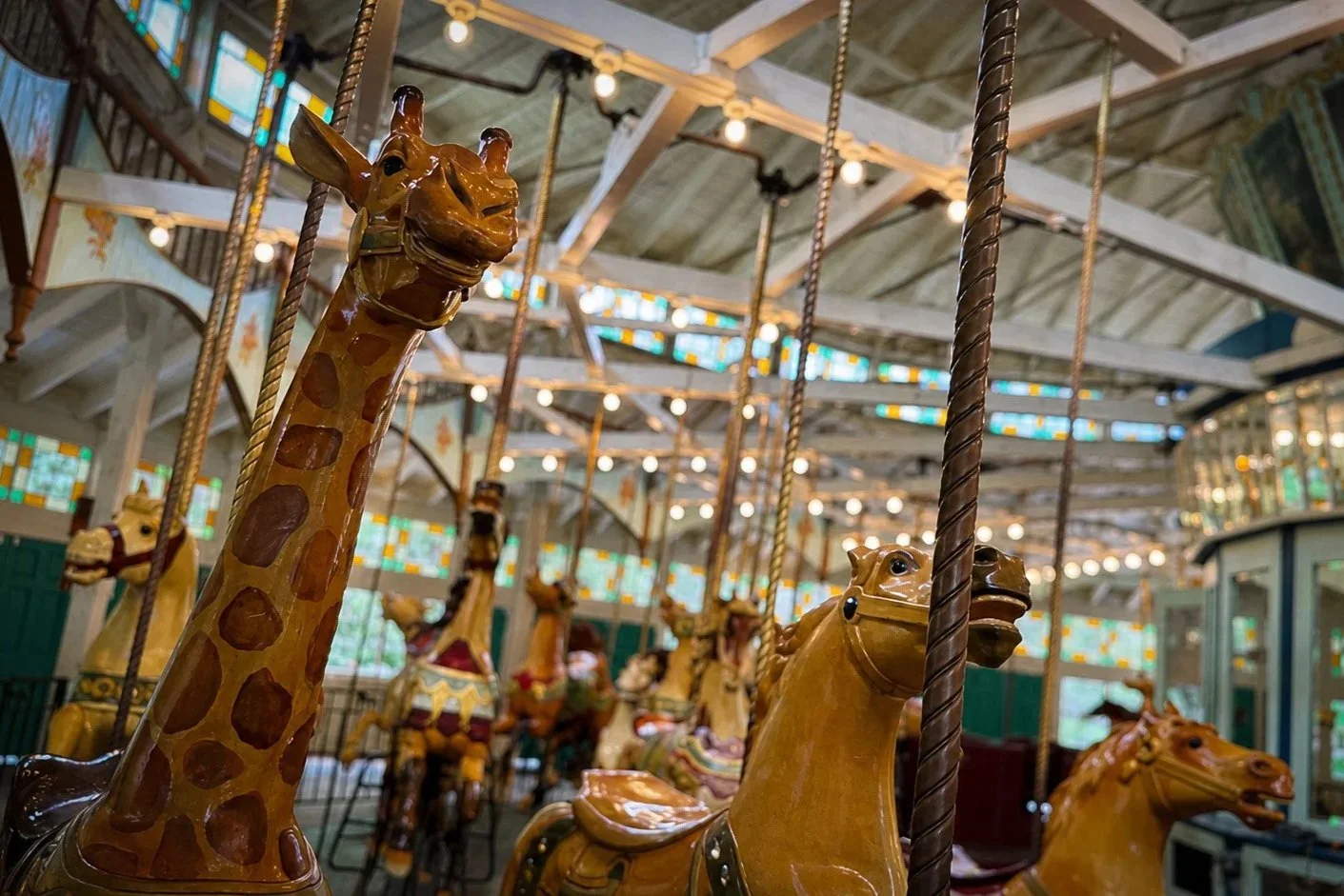
Built in 1906 by the Philadelphia Toboggan Company, the City Park carousel stands as a lasting reminder of the Batt family's broader influence on New Orleans amusement history. Though never part of Pontchartrain Beach, it provides an important connection to the family whose vision helped shape generations of childhood memories.
A worthwhile detour
A short detour to City Park adds another chapter to the Batt family's contribution to New Orleans amusement history.
By the time I reached Carousel Gardens, the amusement area was unusually quiet. After asking permission to photograph the historic carousel for this story, I was invited inside for a few minutes before the crowds arrived. The stillness made it possible to appreciate details that are often overlooked once the music starts and the carousel begins to turn.
Built by the Philadelphia Toboggan Company in 1906, the carousel's hand-carved wooden animals represent a level of craftsmanship rarely seen today. Although it was never part of Pontchartrain Beach, its story became intertwined with the Batt family through Harry Batt's operation of City Park's amusement attractions. That connection makes the carousel an important reminder that the family's influence on New Orleans recreation extended well beyond the lakefront.
Standing beside the carousel, I found myself thinking about the larger story. Through years of research, New Orleans journalist and author Mike Scott painstakingly documented what became of Pontchartrain Beach's rides after the park closed. His work shows that the Zephyr, Wild Maus, Looper and other attractions didn't simply disappear—they found new homes in amusement parks across the South, carrying pieces of New Orleans with them. The carousel represents something different. Rather than tracing the path of a former Pontchartrain Beach ride, it reflects the broader legacy of the family whose vision helped shape generations of childhood memories across the city.
My journey, however, still had one final stop: the shores of Lake Pontchartrain, where the park once stood.
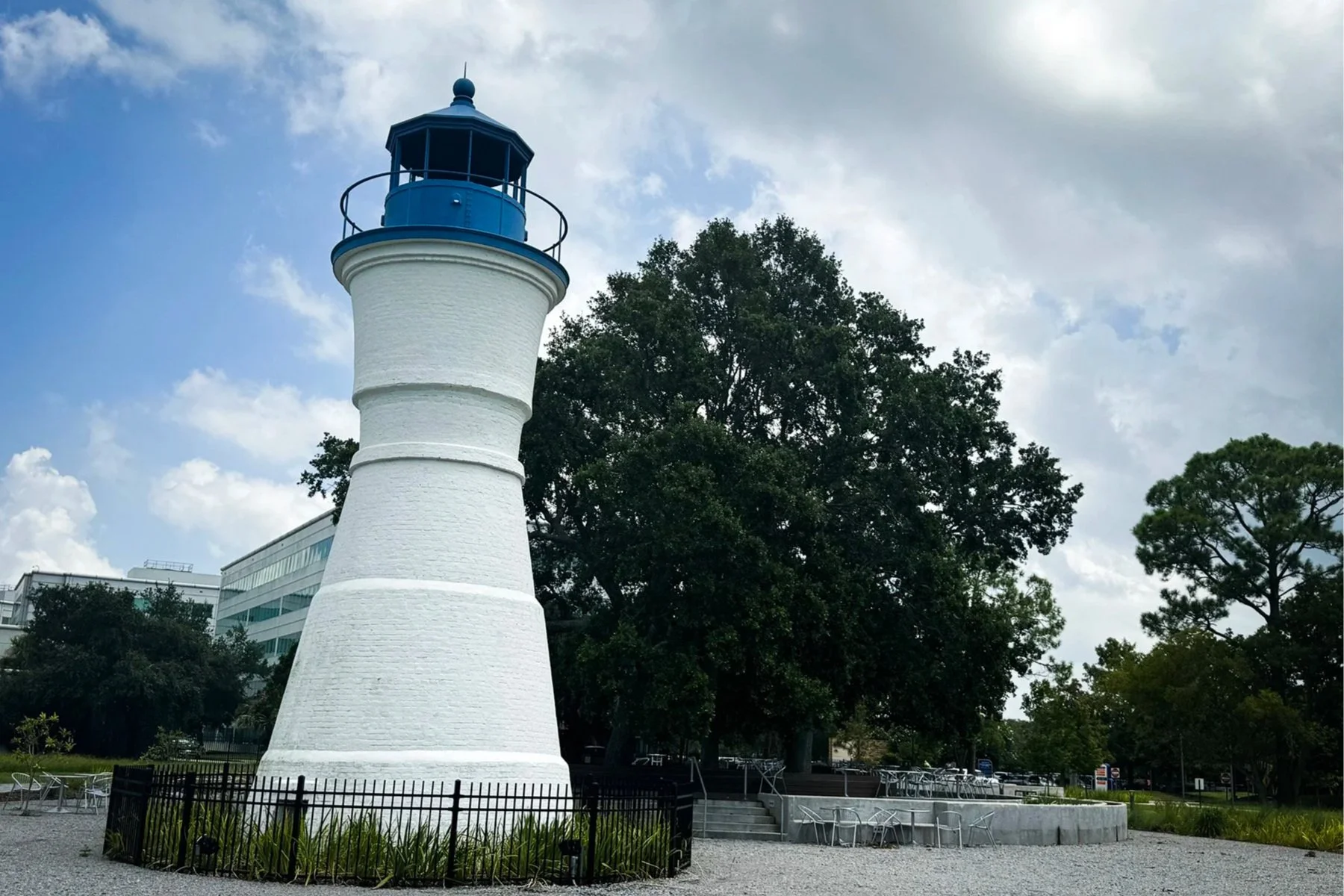
The Port Pontchartrain Lighthouse stood watch over generations of beachgoers long before the first roller coaster was built and remained after the midway disappeared. Returning to the lakefront brought the journey full circle.
Waiting by the lake
Crossing Leon C. Simon Boulevard, the day finally came into focus.
To my right stood my alma mater. During my years at the University of New Orleans, the former Pontchartrain Beach property was already beginning its next chapter as the Research and Technology Park. Today another chapter is unfolding as the familiar blue and silver of UNO gives way to the purple and gold branding of LSU New Orleans. As an alumnus, I've watched that transition with mixed emotions. The university I remember is changing, but its future is being secured.
By the time I reached the traffic circle and parked beside the Port Pontchartrain Lighthouse, I realized I'd spent the entire day seeing the same story repeated in different places.
Pontchartrain Beach became the Research and Technology Park. The carousel continues spinning in City Park. The Zephyr's towering letters found a home in Rivertown. Harry Batt's blue elephant still greets passing motorists in Metairie. Even my university is embracing a new identity while continuing the work it has always done.
Standing beneath the freshly restored lighthouse, surrounded by students, researchers and employees enjoying the shade of century-old live oaks, I found myself appreciating something I hadn't considered before.
History isn't preserved by standing still. It survives because every generation chooses what is worth carrying forward.
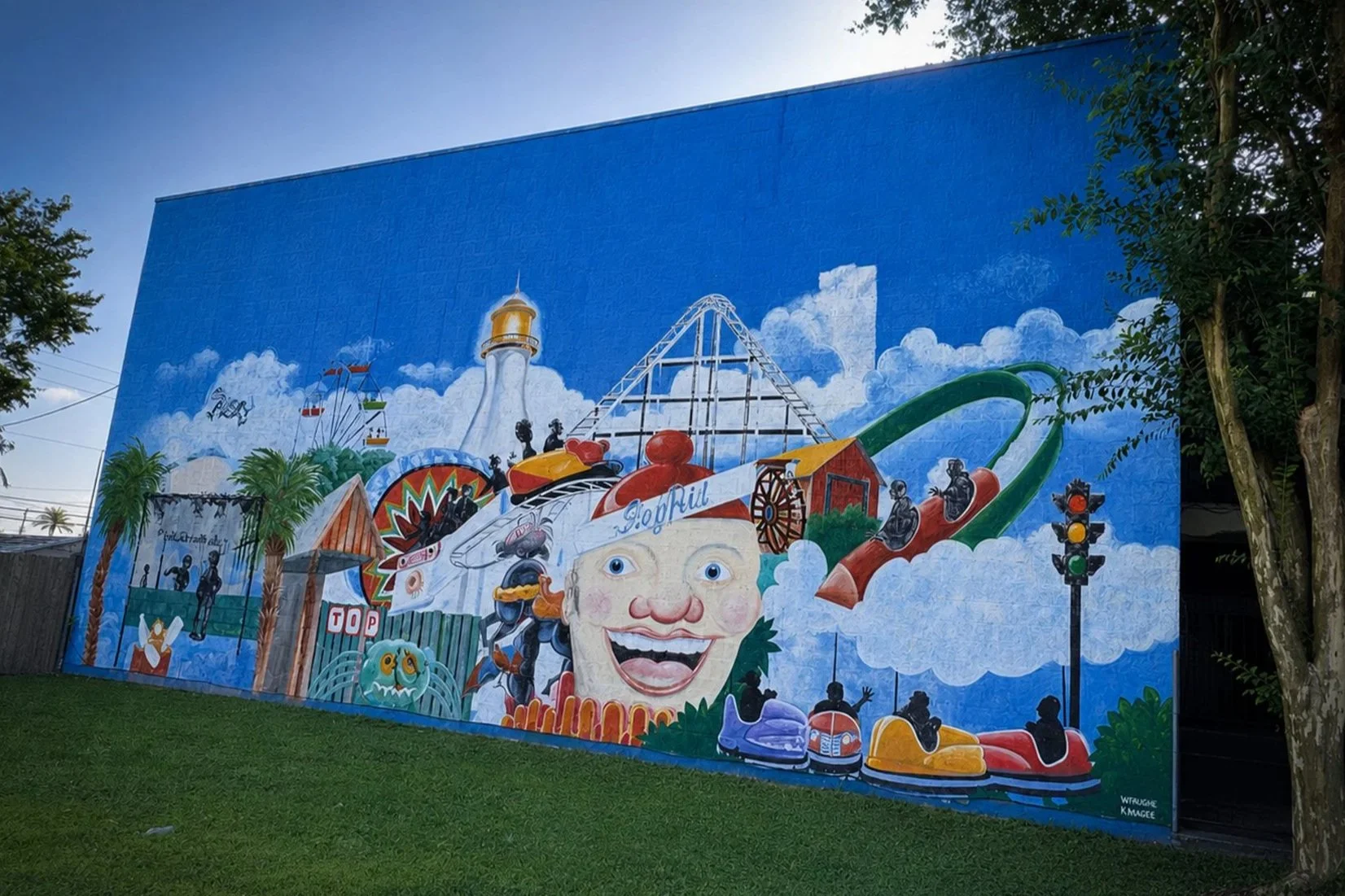
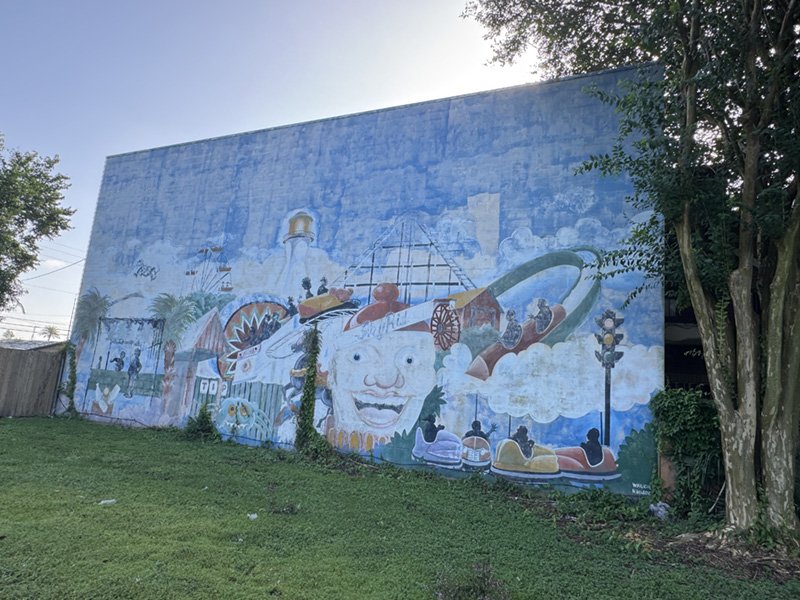
The search ends where it began—with memory. This Rivertown mural celebrates the rides, landmarks and experiences that continue to keep Pontchartrain Beach alive more than four decades after the midway fell silent.
The search isn't over
Once I left the lakefront, I found myself grateful for the journey. Grateful for the people who cared enough to preserve pieces of Pontchartrain Beach, for the researchers who devoted years to documenting its history, and for everyone who has shared photographs and memories that continue to keep the park alive. Mike Scott followed the rides after they left New Orleans. Bryan Batt and Katy Danos preserved the story of the family who built the park. My contribution was simply small step along the same path.
Standing in front of the original ZEPHYR letters, walking through Bali Ha'i pavilion, smiling at the blue elephant, admiring a century-old carousel and ending the day beside the Port Pontchartrain Lighthouse reminded me that places like this are remembered differently by everyone who experienced them. The memories that stayed with me may not be the ones someone else carried home, and that's exactly what makes them so valuable.
As I crossed back over the lake, I couldn't help but wonder what else might still be out there. Another landmark. Another artifact. Another story waiting to be rediscovered. If you know of another publicly accessible piece of Pontchartrain Beach, I'd like to hear about it. I'd happily get back in the car.
For me, this day wasn't about checking landmarks off a list. It was a chance to reconnect with a place that held tremendous personal value, to appreciate the people who have worked so hard to preserve its history and to spend a day revisiting memories that have stayed with me for more than forty years.
Those memories happen to be mine. I hope this journey encourages you to revisit a few of your own.
Editor's note
As with nearly every photograph published by POP nakaro, the images in this article received routine editorial adjustments, including color correction, exposure balancing and other standard photographic finishing intended to faithfully represent the scene as it was experienced.
This project presented a different challenge. Several of the surviving Pontchartrain Beach landmarks have weathered, deteriorated or been altered to the point that contemporary photographs no longer fully communicate their historical character. I found myself balancing two equally important goals: documenting these artifacts exactly as they exist today and illustrating the places generations of New Orleanians remember.
In that spirit, three photographs were digitally reinterpreted to restore details and remove later visual alterations while preserving the landmarks themselves. The restored images represent an editorial interpretation informed by historical research and first hand observation rather than a literal record of their present condition. For the sake of transparency, the original, unedited photographs appear below.
Those original photographs also tell an important story.
More than forty years after Pontchartrain Beach closed, some of its few surviving public artifacts are showing the effects of time, weather, neglect and later alterations. Once these landmarks are lost—or altered beyond recognition—they cannot be replaced. They are tangible pieces of New Orleans history, and their value extends well beyond nostalgia.
If this article reminded you what Pontchartrain Beach meant to our community, I hope it also encourages you to support the preservation of the places and artifacts that still connect us to that shared past. History is not preserved by accident. It endures because people recognize its value before it is too late.