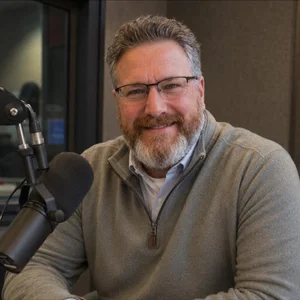
Remembering Sid Noel
From his laboratory above the Old City Ice House, Morgus the Magnificent became New Orleans’ favorite mad scientist.
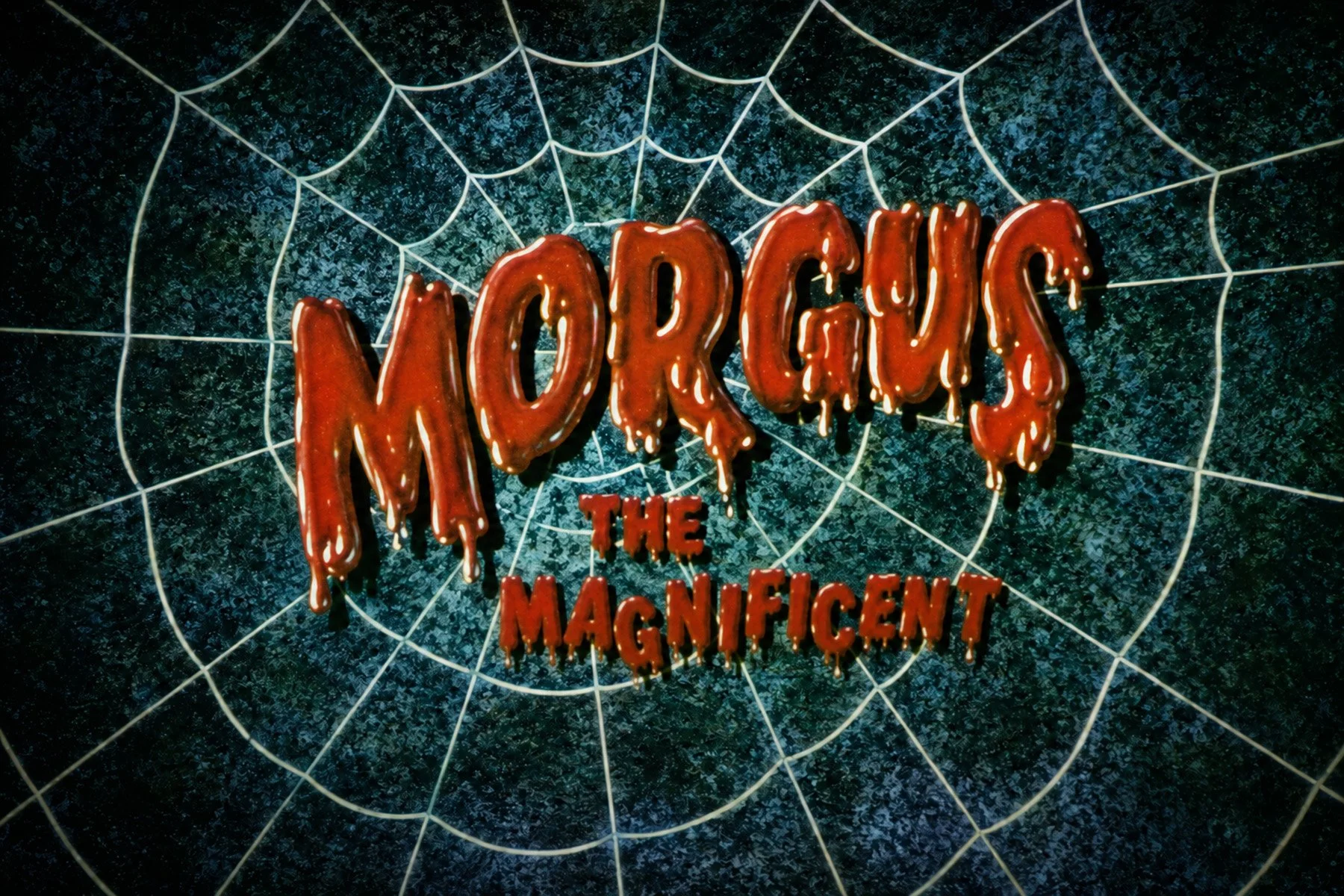
Morgus the Magnificent emerged from WWL-TV’s House of Shock in 1959, becoming one of the most enduring characters from New Orleans’ golden age of local television.
From the Old City Ice House
When my grandfather was a child, a large beer jug fell on his foot and damaged one of his toenails. It never grew back quite right. For as long as I can remember, that crooked nail was his Morgus toe. Like any child of a certain age, I took him seriously, never thinking he was speaking in hyperbole about Morgus the Magnificent, the wild-eyed mad scientist who presided over New Orleans during the city’s golden age of local television.
Morgus was the creation of New Orleans actor and broadcaster Sidney Noel Rideau, better known as Sid Noel. A WWL radio personality in the 1950s, Noel insisted that if he hosted the station’s new horror showcase, he would play it for laughs—and keep the identity of the man beneath the makeup a secret. Morgus the Magnificent first materialized on WWL-TV’s House of Shock on Jan. 3, 1959. Broadcasting from his laboratory above the Old City Ice House, Dr. Momus Alexander Morgus introduced horror movies while conducting ill-fated experiments intended to secure his place among the world’s greatest scientific minds. The experiments nearly always failed, but Morgus’s confidence never wavered.
As Sid Noel would often explain, “Morgus and Chopsley were Don Quixote and Sancho Panza. They really were.” Played by Tommy George, Chopsley tried to keep his boss on the straight and narrow while frequently becoming the test subject himself. E.R.I.C., the Eon Research Infinity Computer, began as a talking skull and was later connected to an Apple computer that contained all the knowledge in the universe.
Morgus pursued immortality, transplanted hair and attempted to eliminate crime. He built machines capable of manufacturing talent and providing vampires with synthetic blood. His experiments usually depended on homemade equipment, Chopsley’s cooperation and one final complication that denied Morgus the acclaim he believed he deserved.
New Orleans embraced him almost immediately. A group of young local musicians recorded “Morgus the Magnificent,” featuring Frankie Ford, Ronnie Barron and Jerry Byrne, with a guitar solo by Mac Rebennack years before he became Dr. John. In 1959, Maison Blanche sold a Morgus hand puppet for $1.98, complete with rooted hair that children could wash and comb.
Sid Noel soon began looking beyond the laboratory and the weekly horror movies. Morgus, he believed, could carry something bigger.
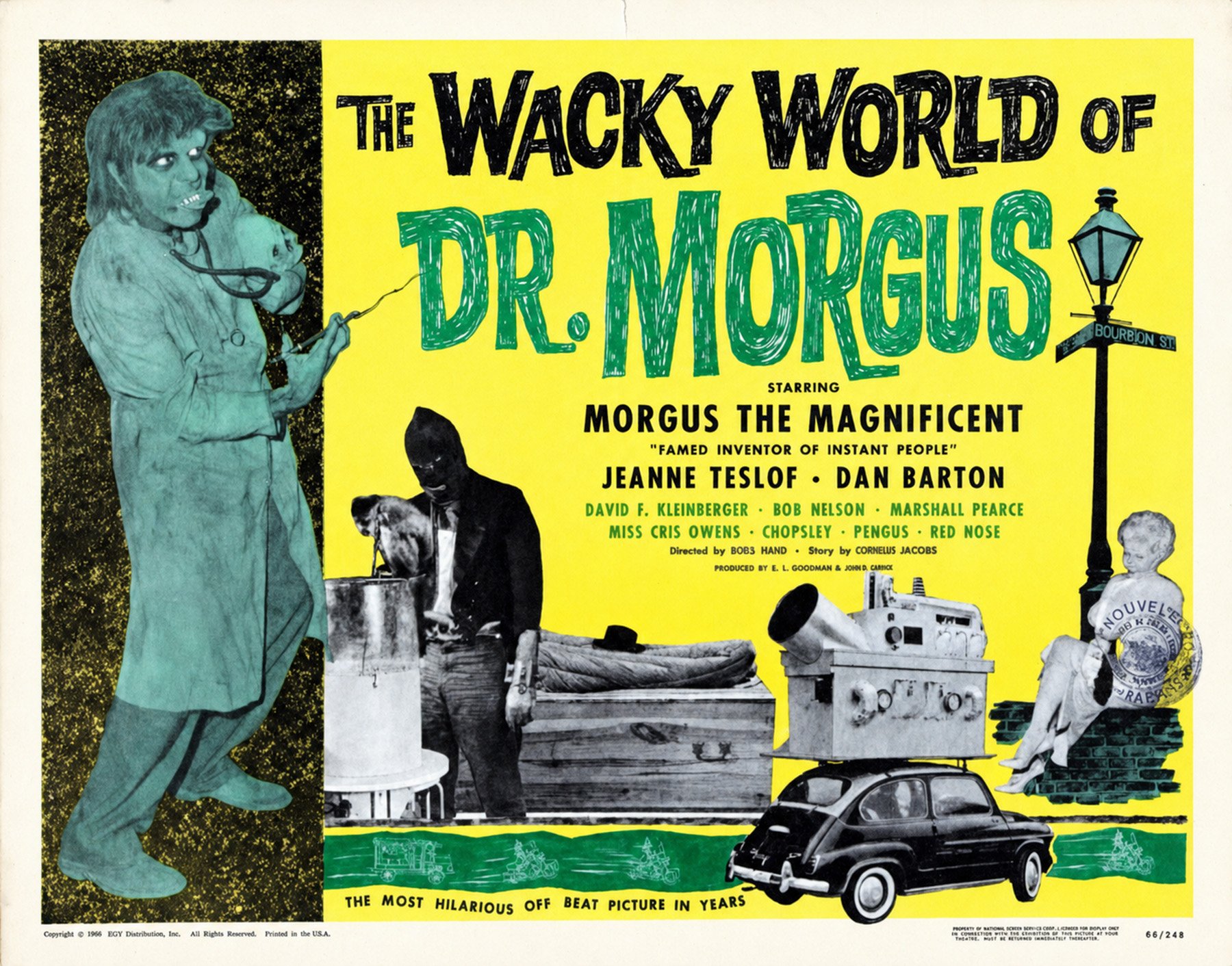
Released in 1962, The Wacky World of Dr. Morgus carried Sid Noel’s mad scientist beyond the Old City Ice House and into an independent feature filmed across New Orleans.
The Instant People Machine
In 1961, Noel and WWL parted after the station refused to release him to make a Morgus feature film. Noel moved forward without the station, giving the character a world beyond the Old City Ice House.
Filmed in 35 mm and produced outside the established studio system, The Wacky World of Dr. Morgus premiered in New Orleans on Nov. 1, 1962. The 83-minute horror comedy centers on the Instant People Machine, an invention capable of converting a human being into sand and restoring that person to life. Agents from the fictional nation of Microvania plan to enter the United States undetected by shipping themselves into the country in powdered form.
Their plan unravels when the powdered agents are mistaken for building material, mixed into concrete and poured into the newly dedicated People’s Highway—leaving them permanently embedded in American infrastructure.
The movie also preserves a remarkable amount of New Orleans as it appeared in the early 1960s. An antique hearse races along Canal Street and climbs the Claiborne Avenue Bridge. Other scenes move through Pirate’s Alley, the French Quarter and its rooftops, where Noel performed his own stunts. The former McFadden Mansion in City Park, then occupied by Christian Brothers School, stood in for Microvania. Additional filming took place in Kenner and Kiln, Mississippi, while nightclub performer Chris Owens made an early screen appearance.
The film received a limited Gulf Coast release before largely disappearing from view. Over time, however, it became a New Orleans cult classic, periodically returning for Halloween programs, film festivals and special engagements at independent theaters. I finally saw it on the big screen at Chalmette Movies. After driving to Chalmette and stopping at Rocky & Carlo’s, I settled in for 83 minutes of mad science, Cold War spies, slapstick and streets that belonged to another New Orleans.
By the time the film originally premiered, Noel was in New York pursuing wider opportunities as an actor. Morgus had carried him from local radio and late-night television to the movies, but Noel still imagined a much larger audience for the character.
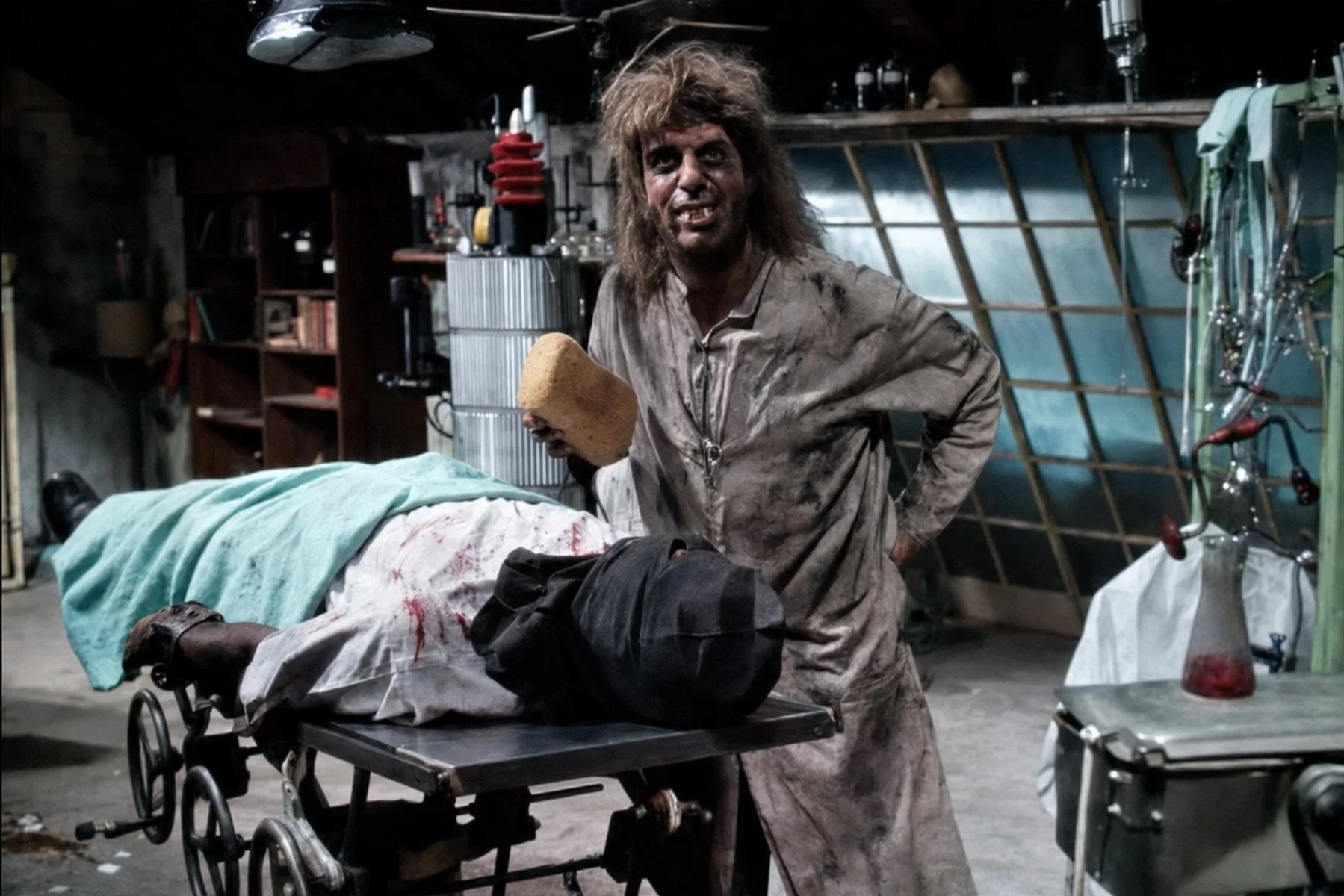
This rare color footage from Morgus’s 1961 “Artificial Heart” experiment preserves the original laboratory shortly before Sid Noel left New Orleans in pursuit of a larger audience.
Away and back again
Detroit offered Noel his first real chance to prove that Morgus could live beyond New Orleans. In January 1964, he revived the character at WJBK-TV, hosting horror movies at night and delivering five-minute weather reports during the week. The forecast was almost beside the point. Morgus spent most of each segment conducting an experiment before turning to a refrigerator-sized weather machine with blinking lights and a slot-machine display. After the machine groaned into action—and the camera shook to help sell the effect—it finally produced the forecast.
Noel recorded 120 of the black-and-white weather segments with national syndication in mind. Once again, he was reaching for a larger audience. American television’s rapid transition to color left the completed programs difficult to sell, however, and Noel’s Detroit experiment ended in 1965.
He returned to New Orleans that year and brought Morgus home to WWL television and radio. Looking back during his 2019 appearance at the Orpheum Theater, Noel described the homecoming plainly: “It was like coming back alive again.”
Morgus remained at WWL for another two years. By then, the character had become more than a television host. He belonged to the larger culture of New Orleans. In 1968, the Krewe of Alla placed Morgus and his skull-faced assistant E.R.I.C. on a Mardi Gras doubloon. In the early 1970s, he resurfaced at WDSU to introduce Star Trek reruns on Saturday afternoons, although golf frequently preempted the program.
Then Morgus disappeared again. By 1978, Noel sounded ready to leave the character behind for good. “I don’t think I could do it again if somebody offered me a million dollars,” he told The Times-Picayune. “I’ve been away from that life for so long. You could never recapture what it was.”
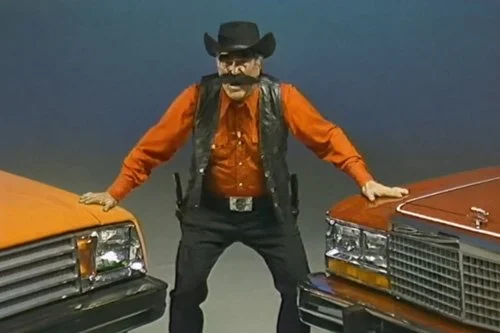
Around 1980, New Orleans viewers began seeing Noel beneath an enormous mustache and black cowboy hat as Wild Bill, the manic pitchman for Bill Watson Ford. The surviving commercials show him squeezed between automobiles, shouting about prices and absorbing the kind of punishment that came with being a cowboy driven mad by car deals. Noel never publicly framed Wild Bill as his escape from Morgus, but the timing places the commercials squarely within the years when he had declared that he was done with the character.
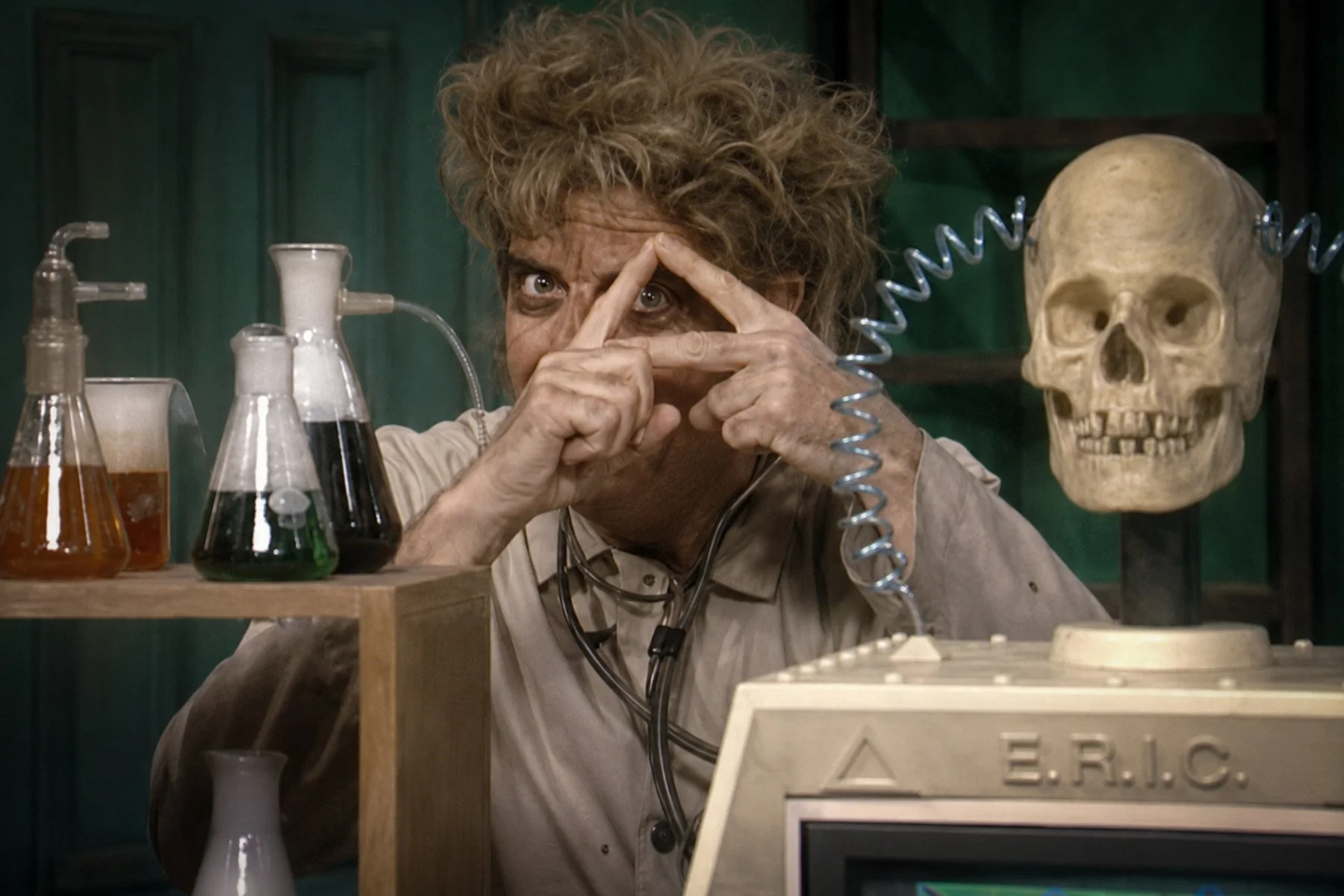
When Morgus Presents returned in 1987, E.R.I.C. had received an Apple II upgrade, placing all the knowledge in the universe at Morgus’s fingertips.
Back in the laboratory
Like so many vintage things from New Orleans’ past, the good stuff tends to come back: Mr. Bingle, streetcars on Canal Street and Morgus the Magnificent.
Whatever doubts Noel expressed in 1978, he eventually found his way back to the laboratory. WGNO announced the return in late 1986, and Morgus Presents premiered on Jan. 17, 1987, placing the doctor back in his original Saturday-night time slot. Some members of the original production crew returned with him, and longtime collaborator Paul Yacich directed all 52 episodes. James Guillot inherited Chopsley’s hood, while E.R.I.C. was now connected to an Apple II computer.
Noel said stepping onto the laboratory set again felt “like it never ended.” He nevertheless understood the risk of reviving a character New Orleans viewers had spent years remembering. “I’ve thrown so many opportunities away,” he told The Times-Picayune. “I want this to be right. I want to feel that it’s all falling into place.”
For me, it did. In 1987, I finally met Morgus for myself. Man, my grandfather was right about that toenail. He really did have a Morgus toe.
The new series retained the movie-host format but gave each broadcast a complete Morgus experiment inspired by the evening’s film. The segments were produced so other stations could pair them with movies from their own libraries, allowing Morgus to escape New Orleans television once again.
Noel again pursued the larger audience he had imagined since the character’s early days. Morgus Presents reached stations in New York City, Baltimore, Atlanta, Little Rock, Wichita and Albany. The series ended after its original 52 episodes, but those broadcasts gave Morgus another life—one that belonged as much to my generation as the original House of Shock had belonged to my family’s.
Those 52 episodes also gave Morgus plenty of room to practice his particular brand of science. He devised a rapid cure for baldness, preserved prominent citizens through cryogenics and developed electronics capable of turning a hardened criminal into a model citizen. He attempted to supply vampires with a new source of blood, treated lycanthropy and played his own version of The Dating Game in search of a bride. Pete Fountain even surrendered his musical ability to the Talent Machine so Morgus could determine whether genius could be transferred without all that tedious practice.
This was my Morgus, and I rarely missed a Saturday night. The character I had heard about all my life was suddenly there in full color—dirty lab coat, blackened eyes, broken teeth and complete confidence. It was awesome—every reason I needed to stay up late on Saturday nights.
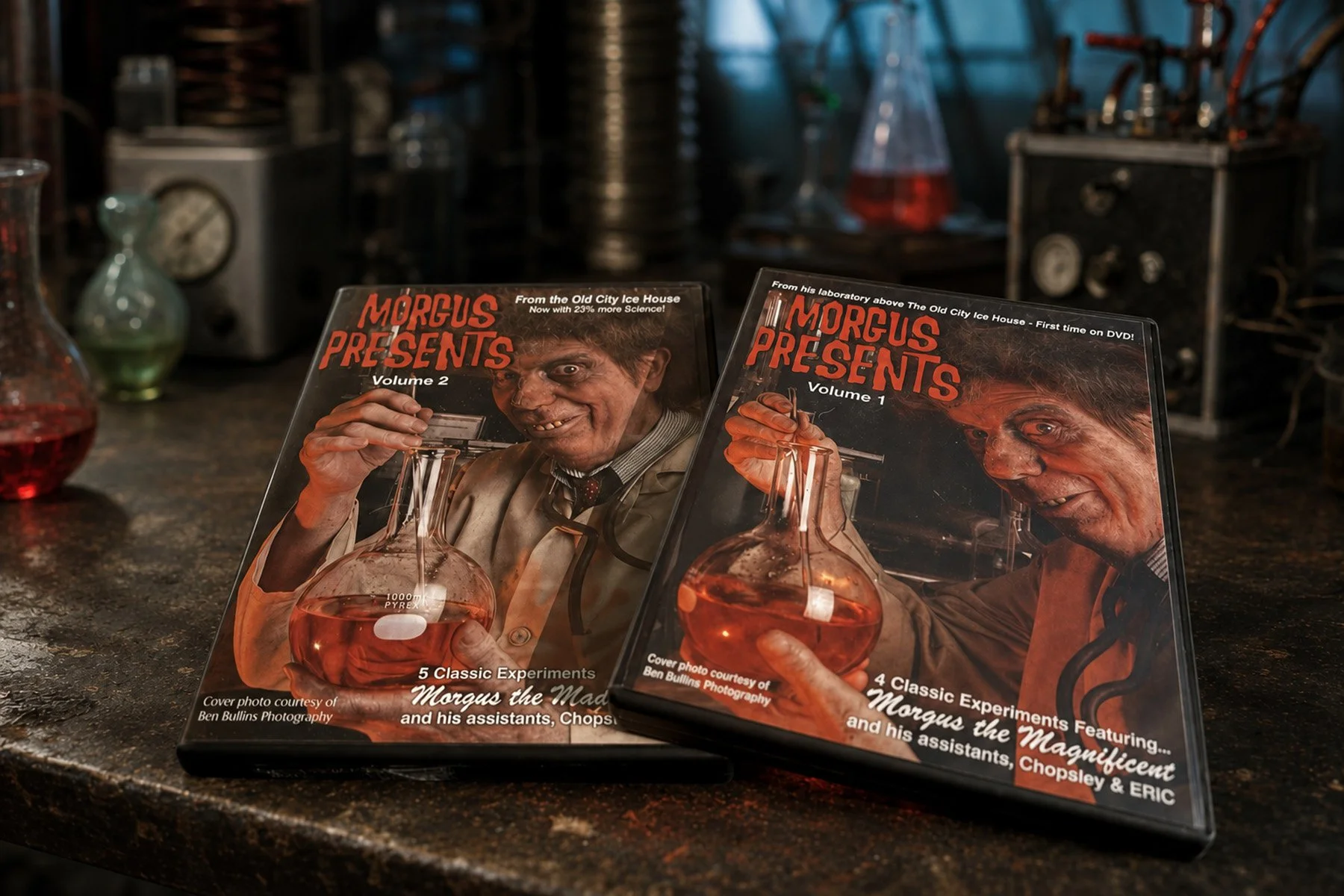
The two authorized Morgus Presents DVDs in my collection preserve nine experiments Lewis D’Aubin helped recover, clean and rebuild from surviving recordings.
The third audience
A friend, Lewis D’Aubin was watching that same revival. As a child, his parents would point to Wild Bill on television and tell him that the man beneath the disguise was really Morgus. When the doctor returned in 1987, Lewis became part of what he has called Morgus’s “third audience.”
Lewis tracked down surviving recordings—often aging analog copies rather than broadcast masters—and put in the painstaking work of transferring, cleaning and rebuilding them for a new format. He compared the available sources, repaired the picture and sound where possible, assembled the programs and helped shape the first authorized Morgus Presents DVD.
The work continued with the 2011 documentary The Mystery of Morgus, the restoration of the surviving 1961 color pilot and preparation of the second DVD collection. Lewis also gathered photographs, recordings and information from across Morgus’s career and produced promotional material for Noel’s 2019 Orpheum appearance.
If I can return to those Saturday nights now, Lewis is one of the reasons why. The two authorized Morgus Presents DVDs in my collection preserve nine of the experiments he helped bring back into view.
Lewis carried that influence into his own creative work. He fronts the Consortium of Genius—C.O.G.—as Dr. Milo Thaddeus Pinkerton III, leading a theatrical rock band populated by mad scientists, robots and aspiring supervillains. Since its 1996 debut at a New Orleans science-fiction convention, C.O.G. has combined music, costumes, projections, comedy and laboratory experimentation at conventions and fan gatherings. It is a fun show, with Morgus’s influence visible in Dr. Pinkerton’s mad-scientist DNA.
That blend of theater and technology extends well beyond the stage. Lewis is a programmer, audio and video producer, recording engineer and restorer of pinball and arcade machines. He brought those skills together in Escape from the Secret Lab, an interactive livestream that placed guest bands inside his Secret Lab studio. The musicians performed for their freedom while viewers supplied the power needed to save them. The series eventually passed 100 episodes.
“Morgus made every day like Mardi Gras,” Lewis once wrote. His work has helped carry that spirit into another generation of New Orleans fandom.
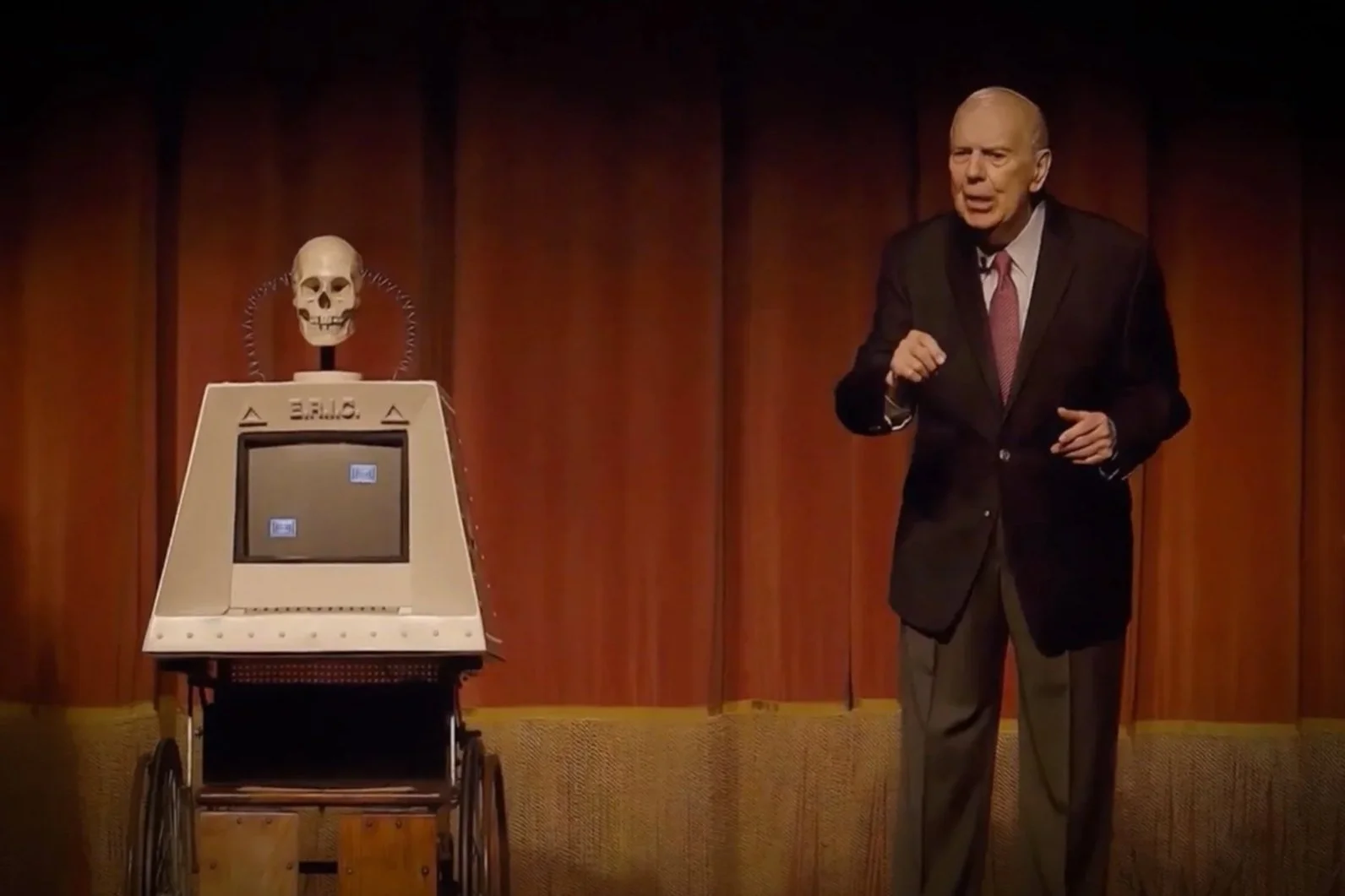
At 89, Sid Noel stepped out from behind Morgus for his first and only one-man show, sharing the Orpheum Theater stage with E.R.I.C. on Oct. 13, 2019.
The man behind the lab coat
Sid Noel began protecting Morgus’s identity before the character ever reached the air. “If I do this, I don’t want my name attached in any way,” he told WWL. He refused interviews and photographs out of character, insisting that Morgus be treated as a real scientist broadcasting from a laboratory above the Old City Ice House. Even after viewers learned who wore the makeup, Noel rarely stepped out from behind it.
That changed on Oct. 13, 2019. At 89, Noel walked onto the stage of a sold-out Orpheum Theater in a dark jacket, gray slacks and red tie, with E.R.I.C. beside him. For the first time, generations of viewers saw the man behind Morgus speak openly about the character he had spent most of his life protecting.
“Good evening, friends of science,” Noel began. “We have some history to cover tonight. By the way—if you don’t know the past, it’s so difficult to enjoy the future.”
An Evening with Sid Noel: Recollections of a Mad Scientist was Noel’s first and only one-man show. Net proceeds benefited the Alzheimer’s Association of Louisiana, while the performance was recorded for The Historic New Orleans Collection. Over nearly an hour, Noel revisited his years in radio and television, the creation of Morgus, the experiments, the missed opportunities and the character’s repeated returns.
“It will be a biography of two people,” Noel had said before the event. “Morgus and that clown behind him.”
Noel died on Aug. 27, 2020, at age 90, 61 years after Morgus first materialized on New Orleans television. He had spent those years protecting the character, pursuing larger stages, walking away and repeatedly finding his way back to the laboratory. By the end, even Noel could no longer say exactly where one stopped and the other began.
“Morgus has morphed into me—years ago, I morphed into Morgus.”
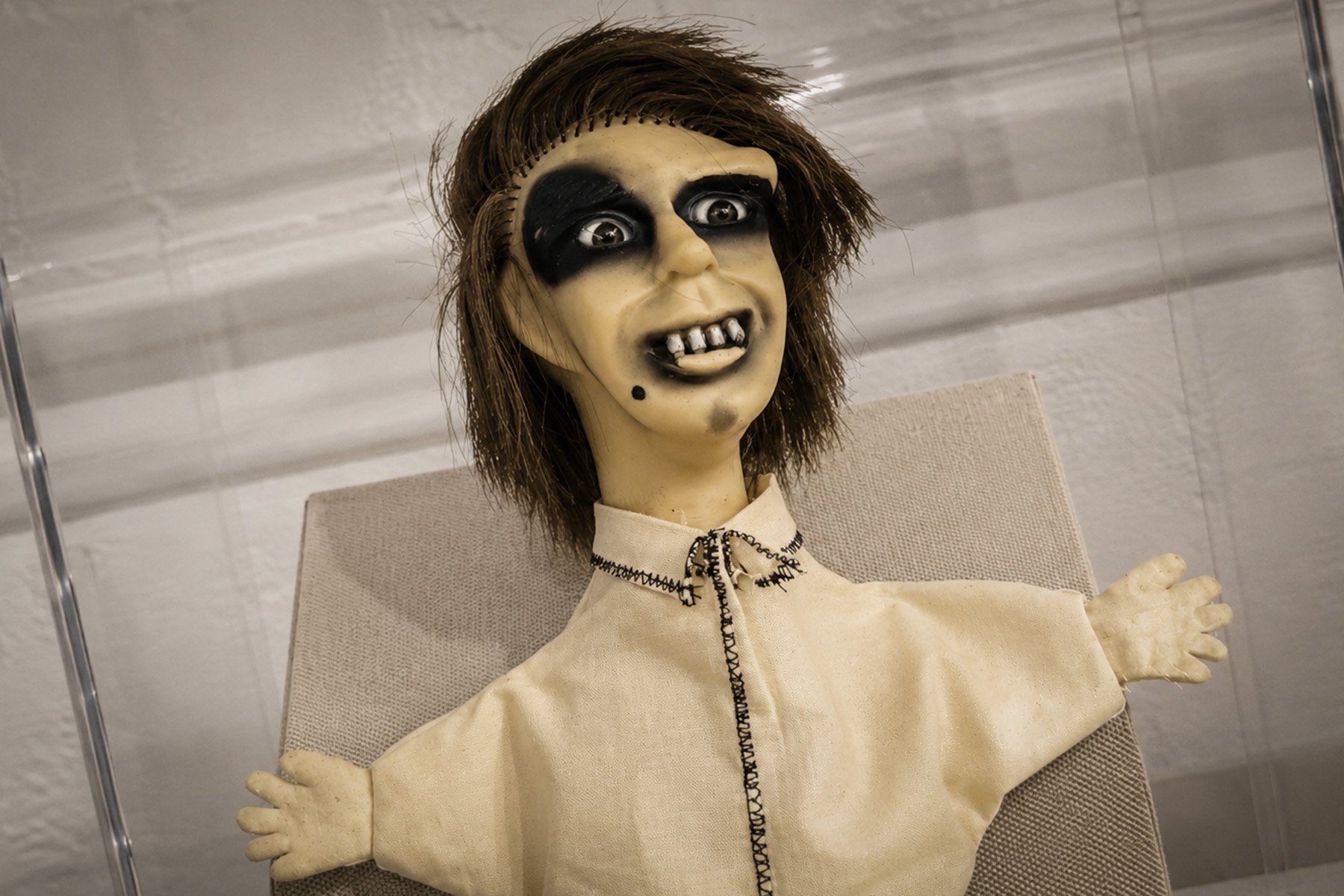
For $1.98, Maison Blanche offered young viewers a Morgus of their own in 1959, complete with rooted hair they could wash and comb into “many imaginative styles.”
Friends of the Higher Order
Sid Noel spent much of his career searching for a larger audience. In the end, that audience stretched across generations. My family knew Morgus first, then passed along the stories until the doctor returned in time to become part of my childhood.
In 2018, the puppet photographed here entered the Cabildo as part of We Love You, New Orleans!, an exhibition celebrating the people, places and objects that shaped the city. A hand puppet once sold at Maison Blanche for $1.98 had become part of New Orleans history.
Today, it is on permanent display at Chuck’s Field of Dreams in Albany, Louisiana. It is not for sale. I already asked.
Watching those experiments now brings back the glow of Saturday-night television, the dirty laboratory, Chopsley shuffling through another assignment and Morgus standing before the camera, certain that scientific history was about to be made. For a little while, those Saturday nights feel close again.
My grandfather gave me Morgus before I even knew who Morgus was. I still think about that crooked toenail and laugh. Somehow, it connects the New Orleans he knew to the one I inherited—and every time the laboratory lights come on, I am still one of Morgus’s Friends of Science.

Where to go next
Sid Noel’s work remains available through restored television experiments, his feature film and recordings that preserve the story behind Morgus.
The experiments
Morgus Presents: Volume 1 — Four restored experiments: “Hair Transplants,” “Talent Machine,” “Immortality” and “The End of Crime.”
Morgus Presents: Volume 2 — Five restored experiments: “Mosquitoes,” “Morgus Gets Married,” “Werewolf,” “Invisible Man” and “Frozen People.”
On the screen
The Wacky World of Dr. Morgus (1962) — Morgus brings the Instant People Machine to the big screen in his only feature film.
An Evening with Sid Noel: Recollections of a Mad Scientist (2019) — Noel recounts the creation of Morgus and six decades inside the laboratory.
From the laboratory
The official Morgus shop — Licensed shirts, stickers, patches, totes and artwork featuring Morgus, Chopsley and E.R.I.C.
Morgus.com — News, recordings, merchandise and additional material from the Old City Ice House.