Return of the Girl of Steel
Kara Zor-El gave her life to save Superman and the universe in Crisis on Infinite Earths. Nearly twenty years later, the Last Daughter of Krypton returned.
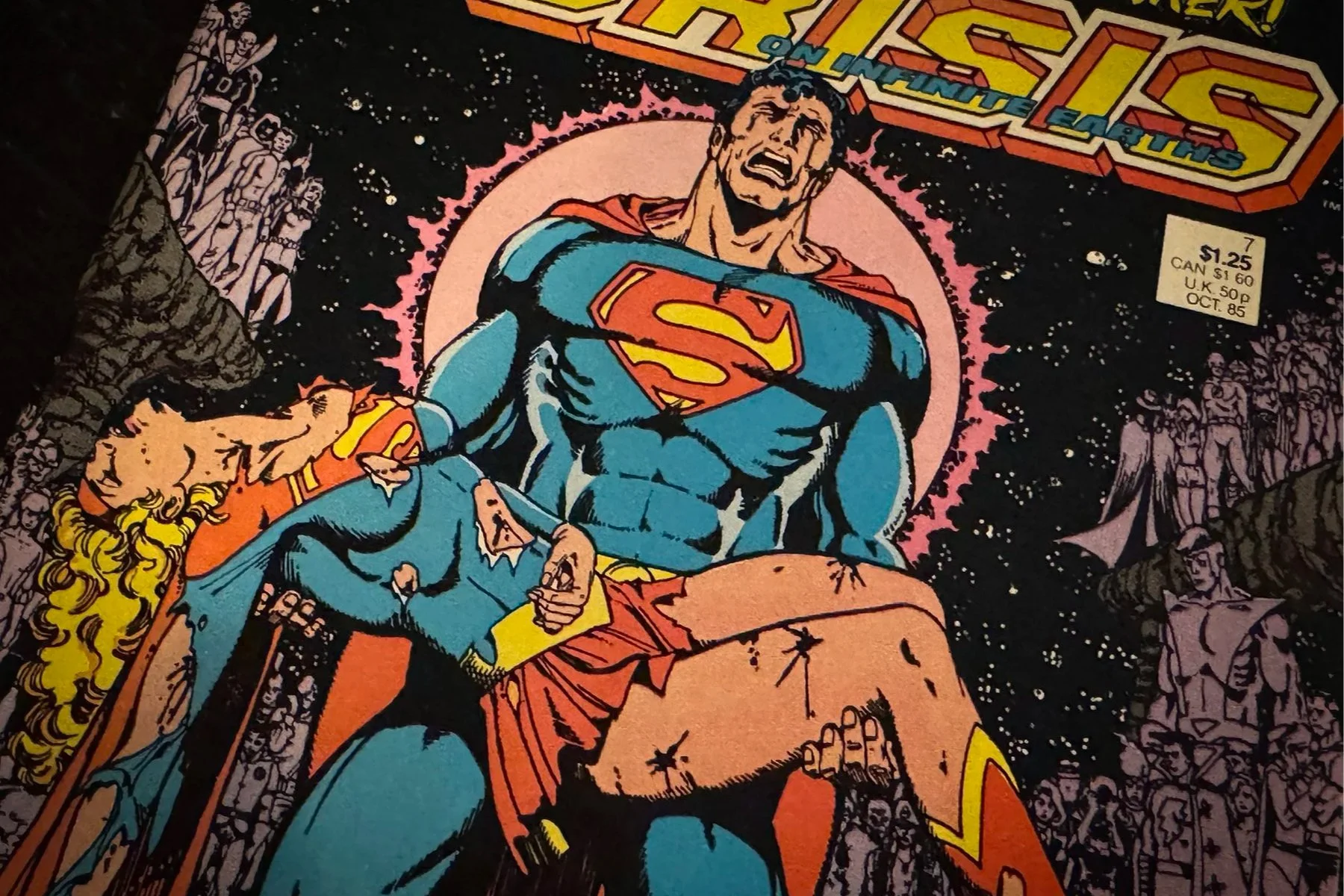
Superman carries Kara Zor-El’s body on the cover of Crisis on Infinite Earths #7, the 1985 issue that brought the original Supergirl’s story to a heroic end.
Making Sense of the DC Universe
There was a time when I was known as the DC guy.
The nickname came from Emmit, the owner of my local comic shop, Frank’s Baseball Cards and Comics in Chalmette, La. One look at my pull list probably would have convinced you he had a point. During the height of the 1990s comic boom, the shop attracted plenty of new readers trying to make sense of decades of continuity, and I became the person people looked to when they had a question about the DC Universe.
The truth is, I was no walking Who’s Who. I just had a two- or three-year head start on most of the other regulars and had already started working my way backward through some of DC’s more acclaimed storylines, including Crisis on Infinite Earths. But boy, did some of those conversations run deep.
Supergirl was a perfect example of how quickly those explanations could get complicated.
By the early 1980s, DC had accumulated nearly fifty years of stories, revisions, alternate Earths and overlapping continuities. The company was so determined to understand what it had built that researcher Peter Sanderson spent years working through decades of comics and documenting the characters and continuity generations of creators had created. That enormous history helped set the stage for Crisis on Infinite Earths, the twelve-issue event that reshaped the DC Universe beginning in 1985.
Kara Zor-El became one of its most significant casualties. Her death in Crisis on Infinite Earths #7 gave Supergirl a heroic farewell and cleared the way for a major rebuilding of the Superman mythology. As Crisis writer Marv Wolfman later explained, “Our goal was to make Superman unique. We went back to his origin and made Kal-El the only survivor of Krypton. That, sadly, was why Supergirl had to die.”
By the time I became a regular DC reader, that decision was already history. Kara Zor-El was gone.
Supergirl, however, was another matter.
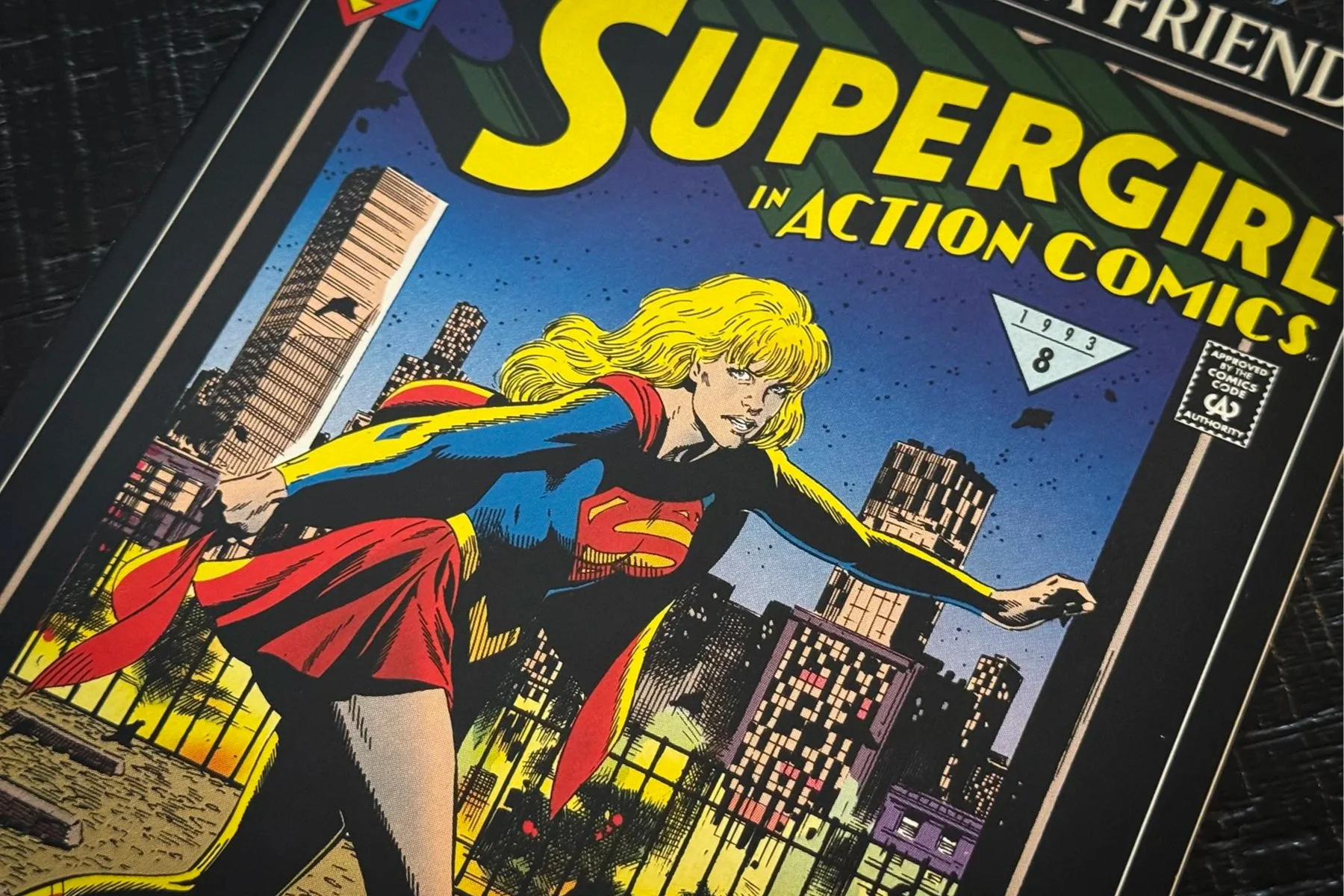
Matrix carried the Supergirl name into “Funeral for a Friend,” appearing in Action Comics #686 as the DC Universe mourned the death of Superman.
The girl who wasn't there
DC had become very intentional about simplifying Superman's mythology. When it came to Supergirl, however, I would argue that the solution eventually made his history even more complicated.
In 1988, John Byrne introduced Matrix, an artificial, shape-shifting being from a pocket universe who could carry the Supergirl name without breaking the Supereman rule. She later became involved with Lex Luthor II, who was actually the original Lex Luthor living in a younger cloned body and pretending to be his own son.
Matrix eventually merged with Linda Danvers, taking Supergirl in another direction. By the early 2000s, Cir-El arrived claiming to be the future daughter of Superman and Lois Lane.
Confused yet?
Each version had its own stories and fans, but the larger irony remained. DC had removed Kara Zor-El in part to simplify Superman's mythology, then spent nearly twenty years creating increasingly elaborate explanations for how a Supergirl could exist alongside him. In trying to avoid one complication, DC had painted itself into a corner and created several more.
By 2004, the answer was hiding in plain sight. While developing the Kryptonite asteroid storyline that launched the new Superman/Batman series, writer Jeph Loeb and Superman editor Eddie Berganza began talking about what might be inside it. First there was “something.” Then “someone.” As Loeb later recalled, neither initially said her name, but both knew who they meant: Kara Zor-El.
After nearly twenty years of finding ways to have a Supergirl without her, DC was ready to bring Superman's cousin back.
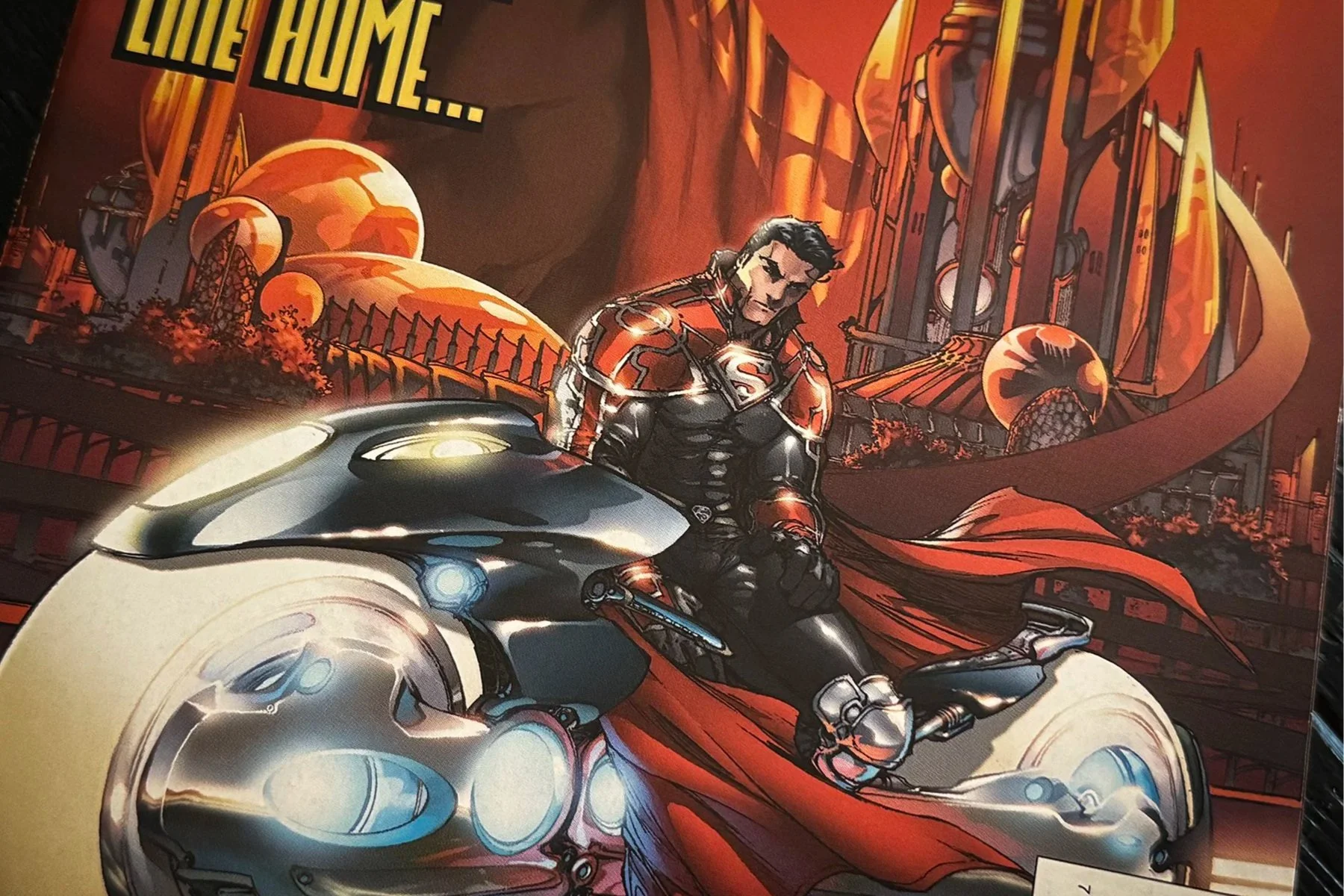
Michael Turner’s cover for Action Comics #812 opened “Godfall,” giving Superman’s world a bold new visual identity and putting Turner’s work on my radar.
The World's Finest
By the 1990s, I had become a solid Batfan. Superman remained on the periphery, always ready to pull me in when an interesting story came along. John Byrne’s The Man of Steel introduced me to the post-Crisis Superman, Dave Gibbons and Steve Rude’s three-issue World’s Finest prestige series brought Superman and Batman together, Dark Knight Over Metropolis crossed Batman into the Superman titles, Krisis of the Krimson Kryptonite stripped Superman of his powers and The Death of Superman became impossible for any comic reader to ignore.
So when DC reimagined the World’s Finest pairing as Superman/Batman in 2003, I was interested from the start. Jeph Loeb launched the series with Ed McGuinness on “Public Enemies.” I came aboard within the first few issues, filled in the ones I had missed and continued with the title.
Michael Turner gave me another reason to anticipate what came next. My best friend, Charles, was a Turner fan. Witchblade and Fathom were his books, and his enthusiasm put Godfall on my radar when the Superman crossover arrived in 2004. I gave the story a shot, really liked it and still have those issues in my collection today.
Then came Superman/Batman #8. Jeph Loeb would continue writing the series, Michael Turner would take over the artwork and their next story would restore Kara Zor-El to the DC Universe.
I was all in.
“The Supergirl from Krypton” began in the aftermath of “Public Enemies,” when Batman discovered a spacecraft buried beneath Gotham Harbor and followed a trail of destruction to a frightened young woman who spoke Kryptonian and possessed powers she could barely control. Superman quickly embraced Kara Zor-El as the daughter of his uncle and his first living connection to the family he had lost. Batman remained suspicious of her sudden arrival aboard the same Kryptonite asteroid that had nearly destroyed the planet.
Wonder Woman believed Kara needed to learn how to protect herself, bringing her to Themyscira to train with the Amazons and gain control of her abilities. Darkseid had plans of his own. After attacking the island with an army of Doomsday replicas, he abducted Kara and took her to Apokolips, intending to turn one of the most powerful beings on Earth into the new leader of his Female Furies.
Superman, Batman, Wonder Woman and Big Barda traveled to Apokolips to rescue her, only to find that Darkseid had turned Kara against Superman. The cousins were forced into battle before she could finally be freed from his control. Even then, Darkseid followed them back to Earth for one final confrontation.
Loeb and Turner gave Kara’s return the scale of a major DC event while building the story around a more personal journey. Everyone seemed to have an idea of who Kara should be.
Now she had to decide for herself.
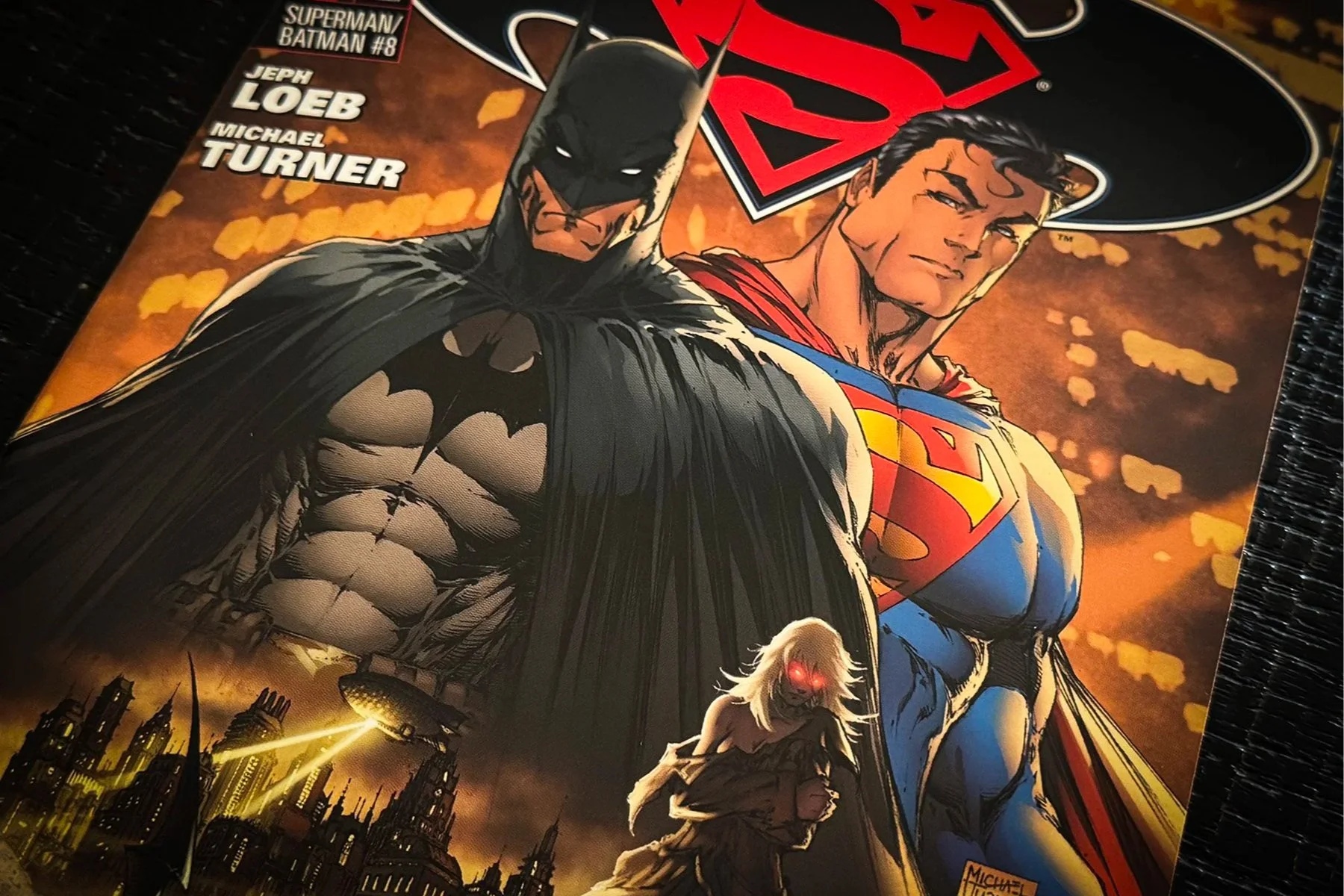
Michael Turner’s cover for Superman/Batman #8 introduced Kara Zor-El’s return as a mystery, with the newly arrived Kryptonian emerging beneath Superman and Batman.
Who are you going to become
Bringing Kara Zor-El back solved the question of who Supergirl was. It also opened a far more important question: Who would Kara become?
I have come to believe that may be one of the most fundamental questions any of us can ask. We enter the world carrying names, histories, relationships and expectations we did not choose. They shape us, but eventually each of us has to decide what we are going to do with what we have been given.
The original Supergirl had been created largely in Superman’s image. The Kara who returned in 2004 inherited that history, but she arrived in a different era. Being Superman’s cousin explained where she came from. Wearing the same shield connected her to something larger than herself. Neither could determine the person she would become.
That was what I enjoyed most about this version of Supergirl. Kara pushed back, acted impulsively and made mistakes. She had her own ideas about the people around her and the direction her life should take. Her story was no longer simply about living up to Superman. It was about deciding what the “S” meant when she wore it.
Maybe that is why I stayed with her from Superman/Batman into the solo Supergirl series. The excitement of seeing Kara Zor-El return gave way to something more personal. I was watching her wrestle with a question I have found myself asking more than once.
Who am I going to become?
And somewhere along the way, she became my Supergirl.
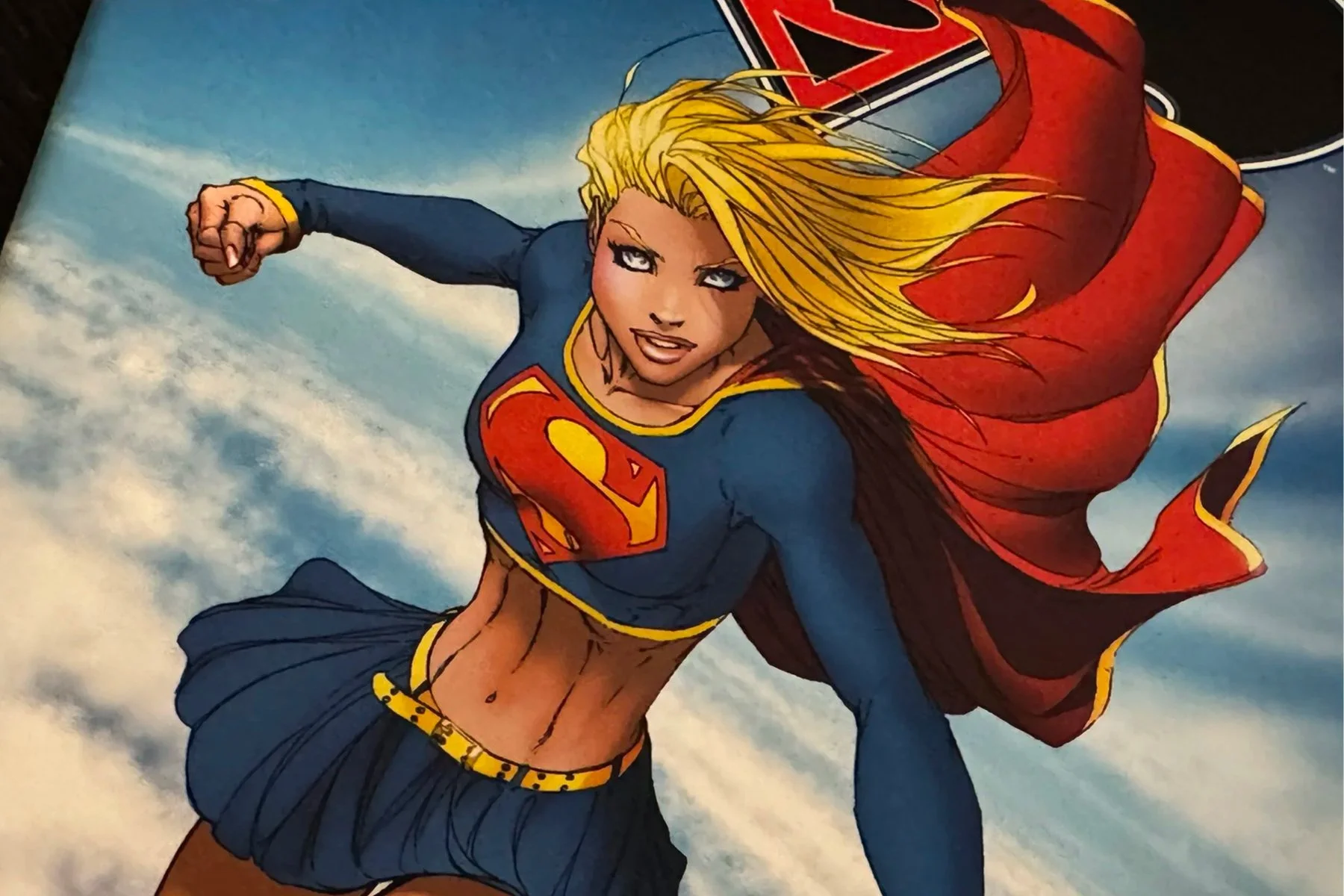
By Superman/Batman #13, the mystery was over. Michael Turner’s Kara Zor-El had claimed the “S” and begun a new chapter as Supergirl.
Remembering Michael Turner
In the years following “The Supergirl from Krypton,” Michael Turner’s star continued to rise. He had already co-created Witchblade, created Fathom and founded Aspen Comics. His work on Superman/Batman brought his unmistakable style to the DC Universe, while covers for Identity Crisis, Marvel’s Civil War and other major titles made his artwork increasingly difficult to miss.
At the same time, he was fighting chondrosarcoma, a rare form of bone cancer he had been diagnosed with in 2000. As the disease took its toll, the demanding work of drawing full sequential stories became increasingly difficult and his output shifted toward covers. As someone who has watched people I care about succumb to cancer, it was difficult to watch his battle unfold from a distance. His career was reaching new heights while cancer was steadily taking more from him.
On June 27, 2008, Michael Turner died from complications related to cancer. He was only 37, leaving behind a distinct body of work and the painful sense that there should have been decades more. Not too long after his death, I walked into a local comic shop and spotted a Dynamic Forces signed edition of Superman/Batman #8 hanging on the wall.
I never had the opportunity to meet Michael Turner. Taking that book home felt like a small way of saying thank you and, perhaps, one last chance to connect with him.
Where to go next
Kara Zor-El’s return in Superman/Batman opened a new chapter for Supergirl. If you want to follow the storyline and the version of Kara that grew from it, here’s where to go next.
The Original Story
Superman/Batman #8–13 (2004–2005) — “The Supergirl from Krypton,” the six-issue storyline that restored Kara Zor-El to the DC Universe.
Superman/Batman #19 (2005) — Jeph Loeb and Ian Churchill’s bridge into Kara’s solo series.
Supergirl #0 (2005) — Reprints the story originally published in Superman/Batman #19 and serves as the starting point for the new series.
The Ongoing Series
Superman/Batman #19 (2005) — A bridge from Kara’s return into her new solo series.
Supergirl #0–67 (2005–2011) — The ongoing series that followed Kara beyond her return and developed this version of Supergirl through the end of the pre-New 52 era.
Supergirl Annual #1–2 — Additional stories from the same series.
Animated Film
Superman/Batman: Apocalypse (2010) — The animated adaptation of “The Supergirl from Krypton,” bringing Kara’s return to the screen with Superman, Batman, Wonder Woman and Darkseid.