A run through history
After driving past Metairie Cemetery for most of my adult life, a 5K finally brought me through its gates and into a landscape shaped by horses, history, architecture and generations of New Orleans stories.
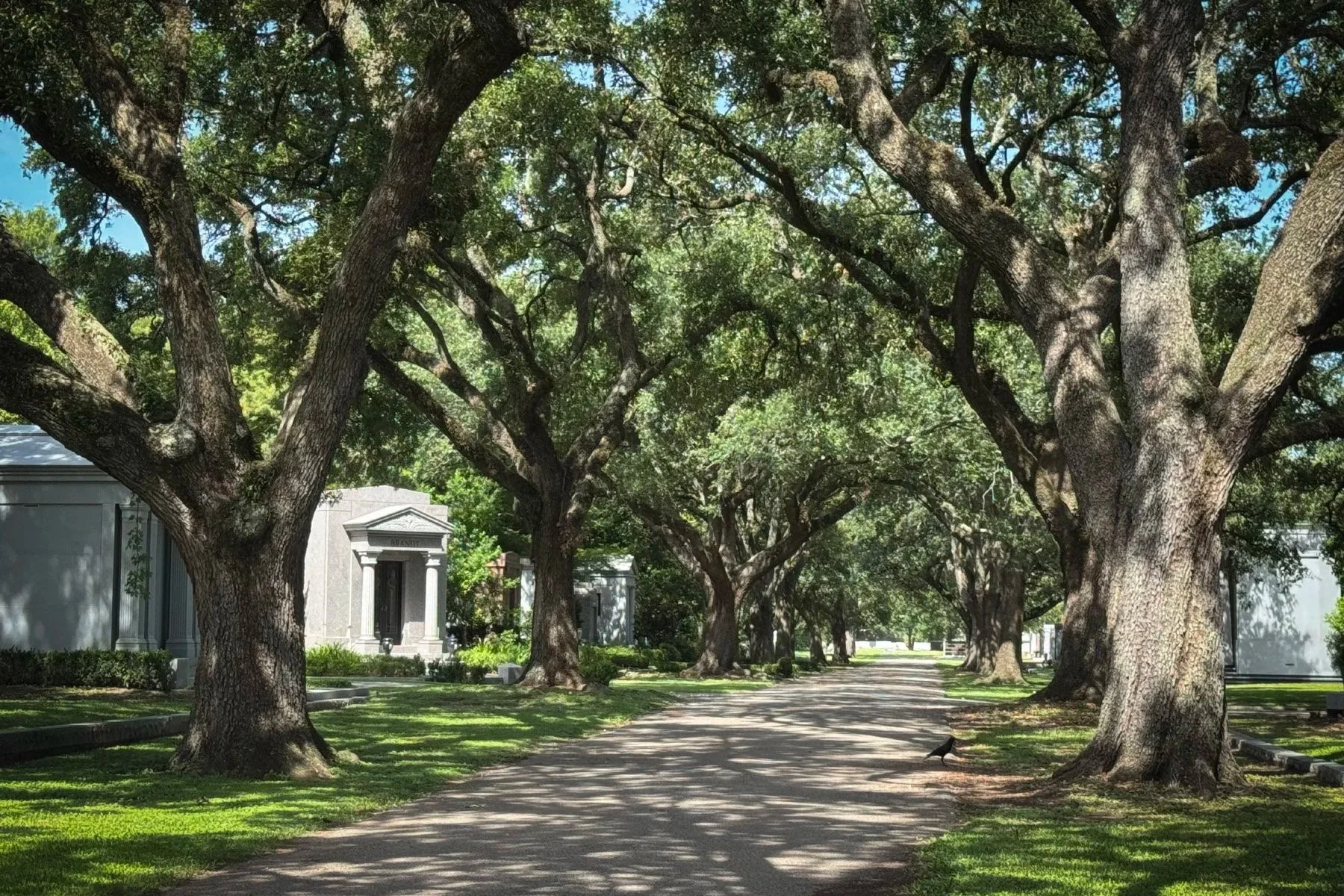
A canopy of mature live oaks shades one of the broad avenues winding through Metairie Cemetery.
Along the road into New Orleans
Metairie Cemetery is nearly impossible to miss.
Sitting just inside Orleans Parish near the Jefferson Parish line, it marks the drive into New Orleans: an immense landscape of tombs, monuments and mature trees spreading beside Interstate 10 and Metairie Road.
I have driven past it more times than I could count. As someone from the New Orleans area, I knew the sight of the cemetery appearing along the way. But that was about the extent of my relationship with it.
That is the peculiar power of a familiar landmark. Once you have seen something enough times, you can stop seeing it at all.
I had never really considered going inside.
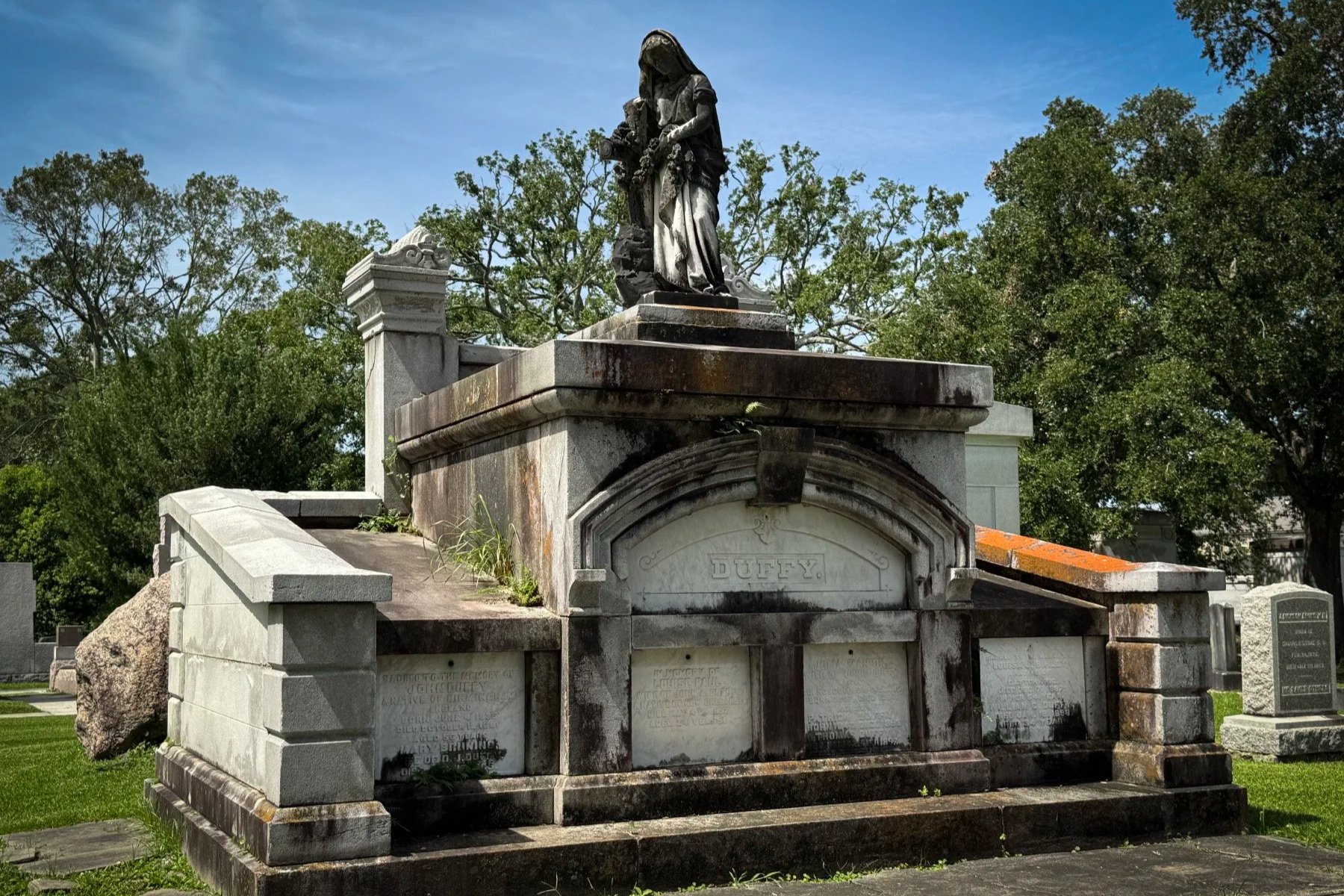
The weathered Duffy family tomb stands among the many distinctive monuments inside Metairie Cemetery.
A race that was never on my list
An avid runner, I was aware of the annual Run Through History 5K held inside Metairie Cemetery. The event benefits Save Our Cemeteries, supporting preservation and restoration work across New Orleans’ historic burial grounds. People described it as a fun event, but I never quite understood the appeal.
I imagined running lap after lap around nearly identical blocks of tombs to piece together three miles. It sounded repetitive and perhaps even a little macabre. The race simply never gave me a compelling reason to register.
That changed in 2025, when I set a goal of completing at least one organized race every month. It eventually took on a life of its own. By the end of the year, I had participated in somewhere around 25 events.
When race weekend arrived, the weather looked promising, a friend from work wanted to join me and I learned it would be Chuck George’s final time officially directing the event. Chuck had long been one of the most dedicated figures in the New Orleans running community, and we had developed a friendly relationship over the years. Having co-founded the Tangi Running Club, I also understood something of the work required to create these opportunities for other runners.
All at once, a race that had never been on my list became one I felt I should not miss.
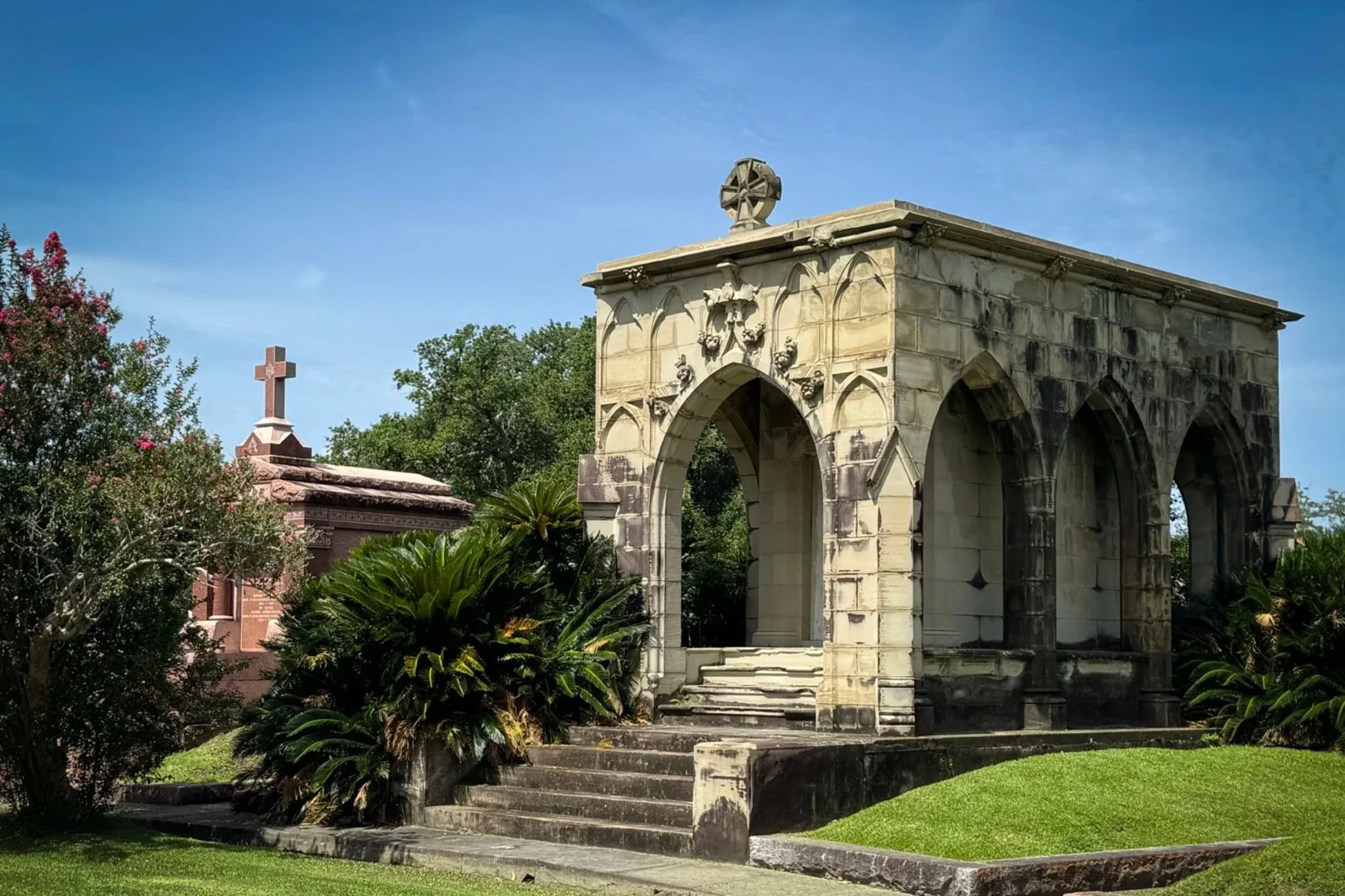
The Armant–Legendre family mausoleum offers a striking example of Gothic Revival architecture in Metairie Cemetery.
Through the gates
Almost immediately, my idea of the cemetery began to fall apart.
The course overturned the picture I had carried with me. Avenues curved as the landscape opened and narrowed. Monumental family tombs rose beside the roadway, followed by smaller chapels, obelisks, angels, pyramids and structures that seemed to borrow from several centuries of architecture at once.
The cemetery changed with nearly every turn.
Some sections felt grand and theatrical, filled with ornate stonework and structures large enough to be chapels. Others were quieter and more restrained. Sprawling live oaks shaded some roadways, while others opened into bright stretches of lawn and polished stone. It felt as though I were moving through different neighborhoods, each shaped by another generation and another idea of how memory should be preserved.
I found myself distracted in the best possible way. I wanted to slow down, read names, study the sculpture and understand what I was passing. The race kept pulling me forward, but the cemetery kept giving me reasons to stop.
After we finished, my friend and I grabbed some water and returned on foot. Without a clock or finish line directing our attention, we could finally look more closely. A casual walk became another journey through the cemetery.
By the time we left, the enormous landmark I had passed throughout my life no longer felt familiar.
It felt undiscovered.
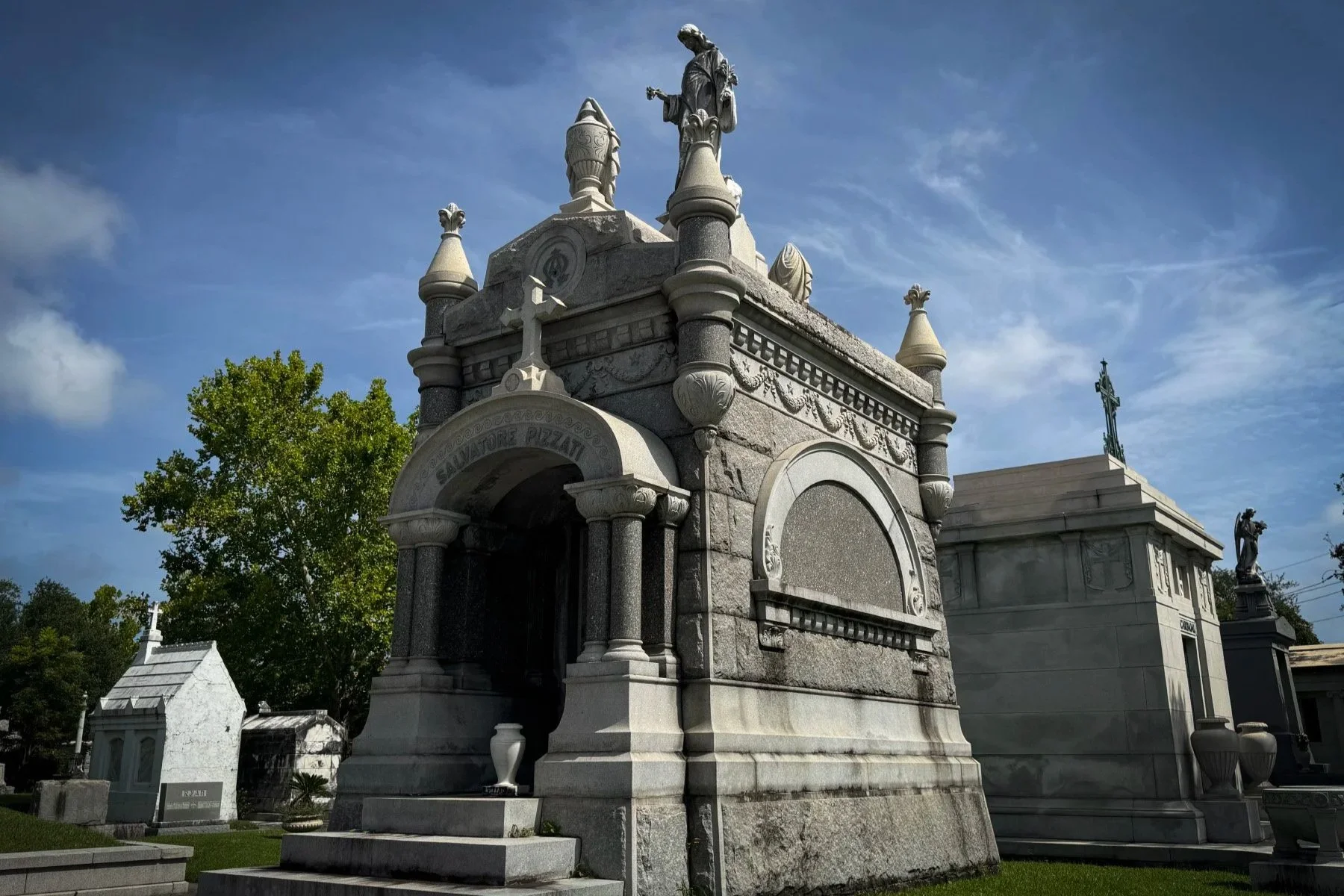
The elaborate Salvatore Pizzati Mausoleum stands on grounds once occupied by the Metairie Race Course.
Before the runners, there were horses
As it turns out, Metairie Cemetery has always been a place built around a course.
Long before runners followed its curving avenues, horses thundered around the Metairie Race Course. Founded in 1838, it had become one of the nation’s leading racetracks by the 1850s. The Civil War interrupted that success, and efforts to revive it afterward never fully restored its former stature.
In 1872, the newly chartered Metairie Cemetery Association purchased the property and began transforming it into a cemetery. The first burial followed in 1873. These details, along with the cemetery’s architectural history, are documented in its National Register of Historic Places nomination.
There is also a far more colorful version of the story.
Local legend holds that Charles T. Howard, who made his fortune through the Louisiana Lottery, was denied membership in the exclusive Metairie Jockey Club. Insulted, he supposedly vowed that he would one day turn the racecourse into a cemetery. The track eventually failed, Howard became one of the cemetery association’s founders, and he was later buried on the grounds.
It is a nearly perfect New Orleans story: money, social status, revenge and an ending carved in stone. The transformation of the racecourse is documented; Howard’s dramatic vow belongs to the lore that grew around it.
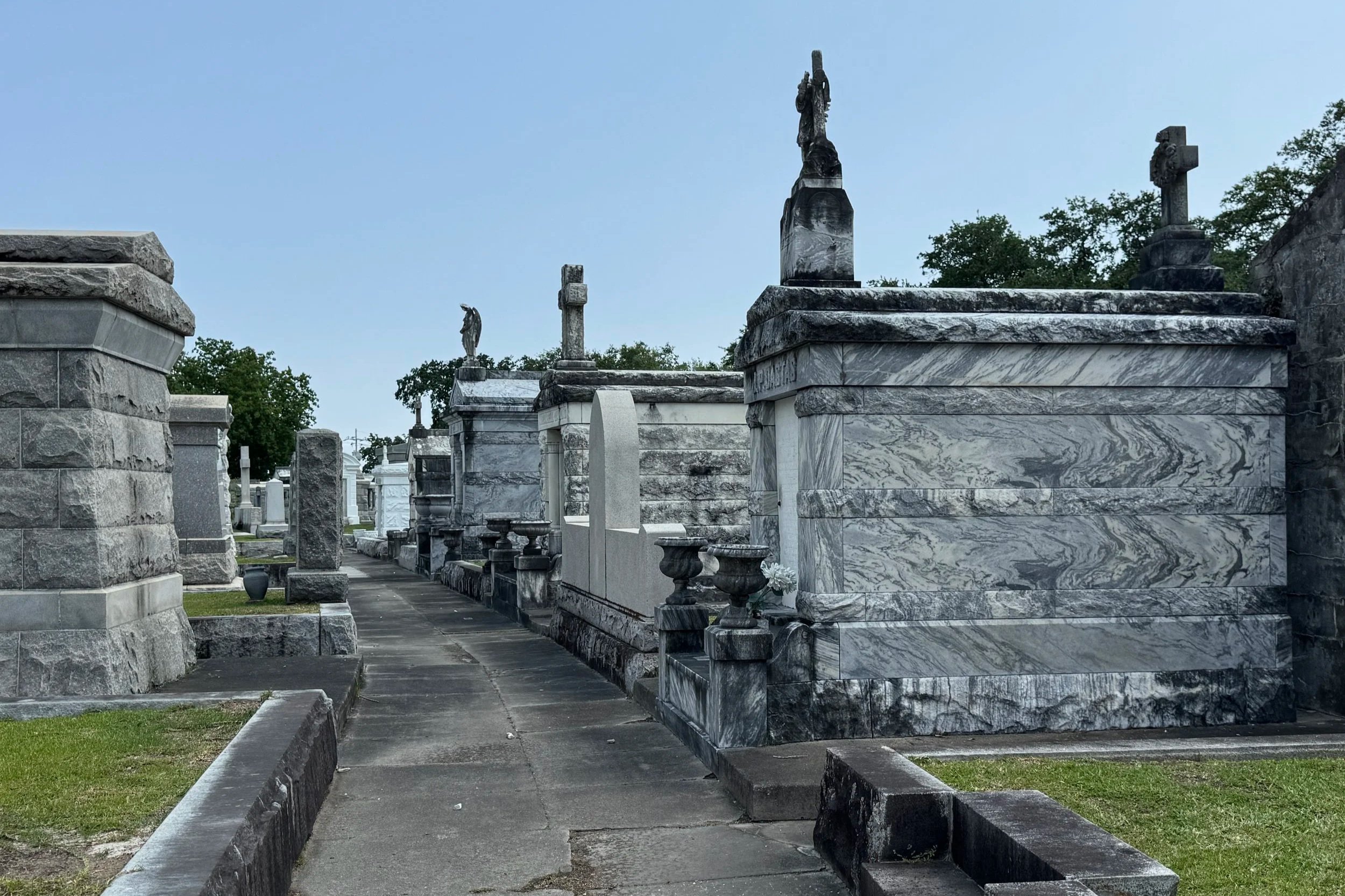
Older tombs follow one of Metairie Cemetery’s curving avenues, preserving the oval footprint of the former racecourse.
The track beneath the tombs
The old racecourse survives in the cemetery’s design.
Engineer Benjamin Morgan Harrod used its footprint as the foundation of his plan. Metairie Avenue, the principal roadway through the historic cemetery, follows the track’s broad oval. Within it, three smaller ellipses, cross avenues and diagonal roads created circles, triangles and prominent sites for monuments and landscaping.
That plan explains much of what surprised me during the race. The roads bend, intersect and redirect the eye, continually revealing new views. Metairie Cemetery was deliberately composed as a landscape, with broad avenues and room for ambitious monuments.
Even after the horses were gone, the oval continued to determine how people moved through the property. More than 150 years after the racecourse became a cemetery, it was still shaping my route.
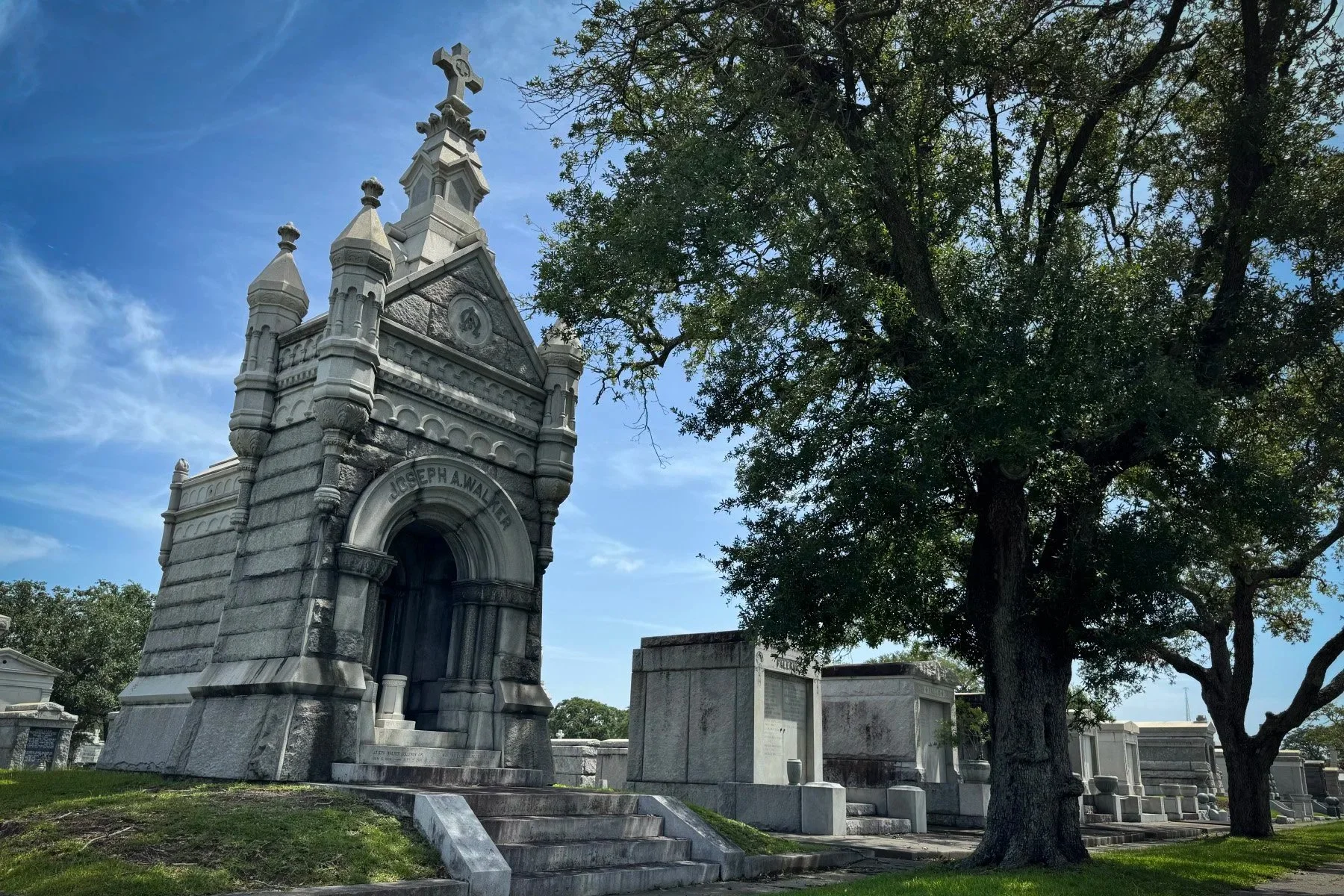
The Joseph A. Walker Mausoleum rises like a small chapel within one of Metairie Cemetery’s distinct architectural neighborhoods.
A city of many neighborhoods
Part of Metairie Cemetery’s impact comes from its size, although two figures are commonly used to describe it.
The original cemetery district documented by the National Register encompasses approximately 65 landscaped acres. Today, its operator describes Metairie Cemetery as a 127-acre property. Adjacent Lake Lawn Park and Mausoleum, established in 1949 and separated from the historic district by a lagoon, occupies another 25 acres.
That distinction helps explain why moving through the grounds can feel like traveling between different developments. Highly ornamented monuments give way to sections with wider lawns and more restrained designs. You can remain within the same larger setting while feeling as though you have entered another neighborhood entirely.
The 1991 National Register survey counted 2,243 resources considered substantial in size and scale. Nearly one-third of its historic contributing elements displayed a clearly defined architectural style, including Italianate, Gothic Revival, Classical Revival, Egyptian Revival and other exotic influences.
Those labels can sound academic until you stand among the monuments themselves.
Then you see a pyramid guarded by sculpture. A steep Gothic arch rises beyond more conventional family tombs. A Romanesque mausoleum appears almost fortress-like beneath the trees. Angels watch over polished marble. Chapels, temples, obelisks and stained-glass windows transform the cemetery into an open-air record of changing tastes, ambitions and beliefs about eternity.
Metairie Cemetery’s Gothic character rises from that scale: the contrast between bright Louisiana sunlight and deep shade, the procession of stone structures along curving avenues and the unmistakable effort families made to create something permanent in memory of those they had lost.
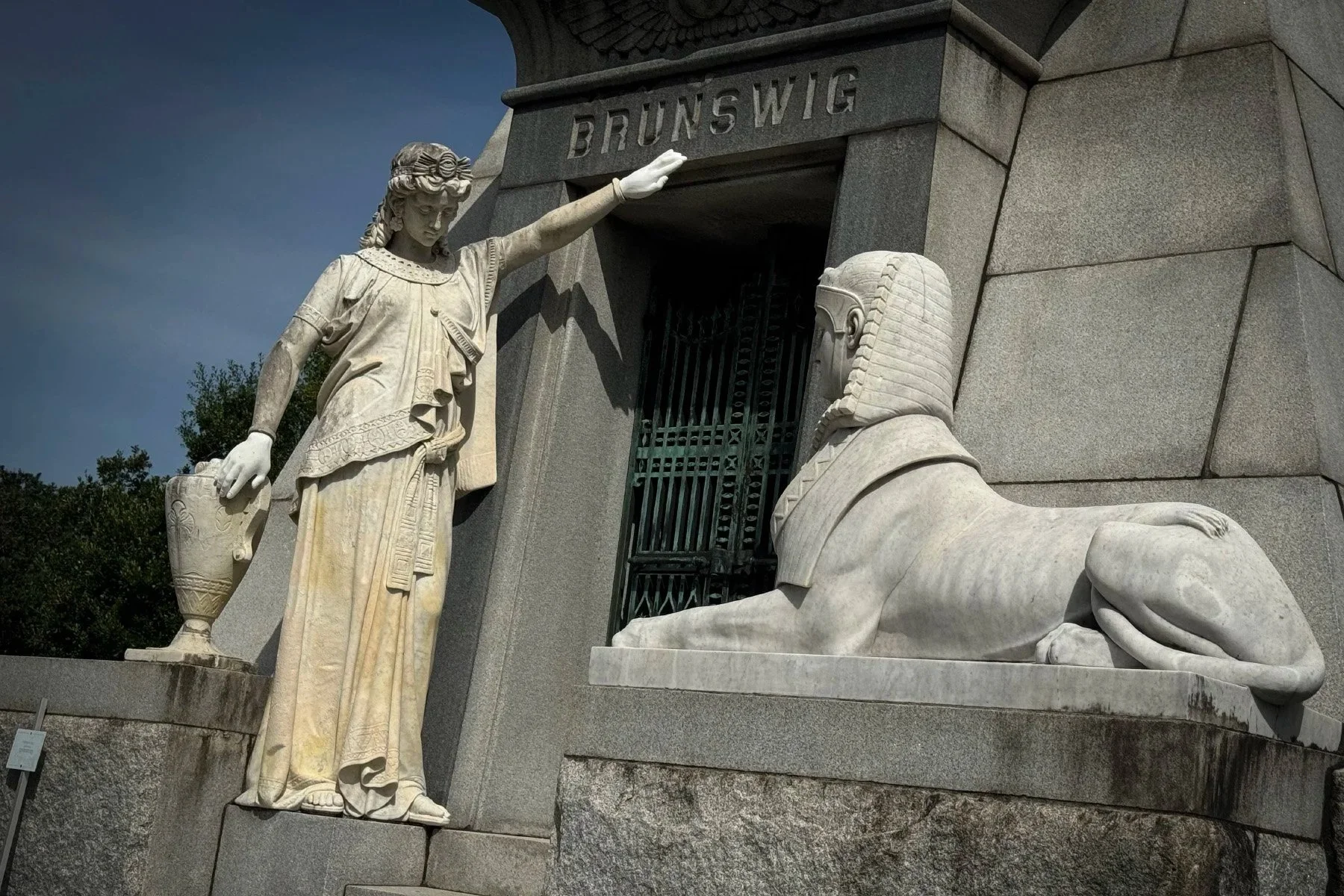
A sphinx and allegorical female figure guard the entrance to Lucien Brunswig’s pyramid tomb, one of Metairie Cemetery’s most distinctive monuments.
More history than one story can hold
The architecture alone would justify the visit, but the names engraved throughout Metairie Cemetery reveal how much Louisiana history is gathered within its avenues.
Governors and mayors rest alongside musicians, athletes, restaurateurs, industrialists, writers and civic leaders. Anne Rice, Louis Prima, Al Hirt, Pete Fountain, Mel Ott, Tom Benson, Al Copeland, Ruth Fertel, Andrew Higgins, P.B.S. Pinchback and Carlos Marcello represent only a small portion of its cultural reach.
According to the Preservation Resource Center of New Orleans, the cemetery is the resting place of nine Louisiana governors, 12 New Orleans mayors and six justices of the Louisiana Supreme Court. Those figures establish its scale. The real character emerges in the intersections: politics beside music, business beside sports, public service beside notoriety.
Some people are remembered through monuments that dominate the landscape; others rest behind comparatively modest stones. Together, they form a record of the city and state that extends far beyond any single definition of fame.
Its natural Gothic beauty makes Metairie Cemetery an instinctive October setting. The documented history supplies all the drama it needs—stranger, richer and more human than any story we could manufacture.
The race gave me my first real look at the grounds. The walk afterward showed me how little I had actually seen. It also gave me a greater appreciation for the preservation work supported by the event. Save Our Cemeteries helps protect the historic burial grounds that hold so much of New Orleans’ architecture, culture and collective memory.
Consider this article the beginning of the tour. In the stories ahead, we will return to these avenues to meet the cultural figures who shaped books, music, film and sports; the entrepreneurs and builders whose ambitions changed New Orleans; and the people whose fortunes produced some of the cemetery’s most extraordinary monuments.
Metairie Cemetery cannot be understood in a single visit—or contained within a single story.
Where to go next
The Run Through History 5K introduced me to Metairie Cemetery while supporting the organization helping preserve it. Save Our Cemeteries works to protect historic burial grounds throughout New Orleans through restoration, education, advocacy and traditional craft training. Its guided Metairie Cemetery tours offer another way to explore these avenues while supporting that work.
Visit Save Our Cemeteries to learn more about its preservation work, support the organization or book a guided tour.