Seven graves trace the entrepreneurs, merchants and civic leaders whose ambitions changed how New Orleans ate, shopped, learned and celebrated.
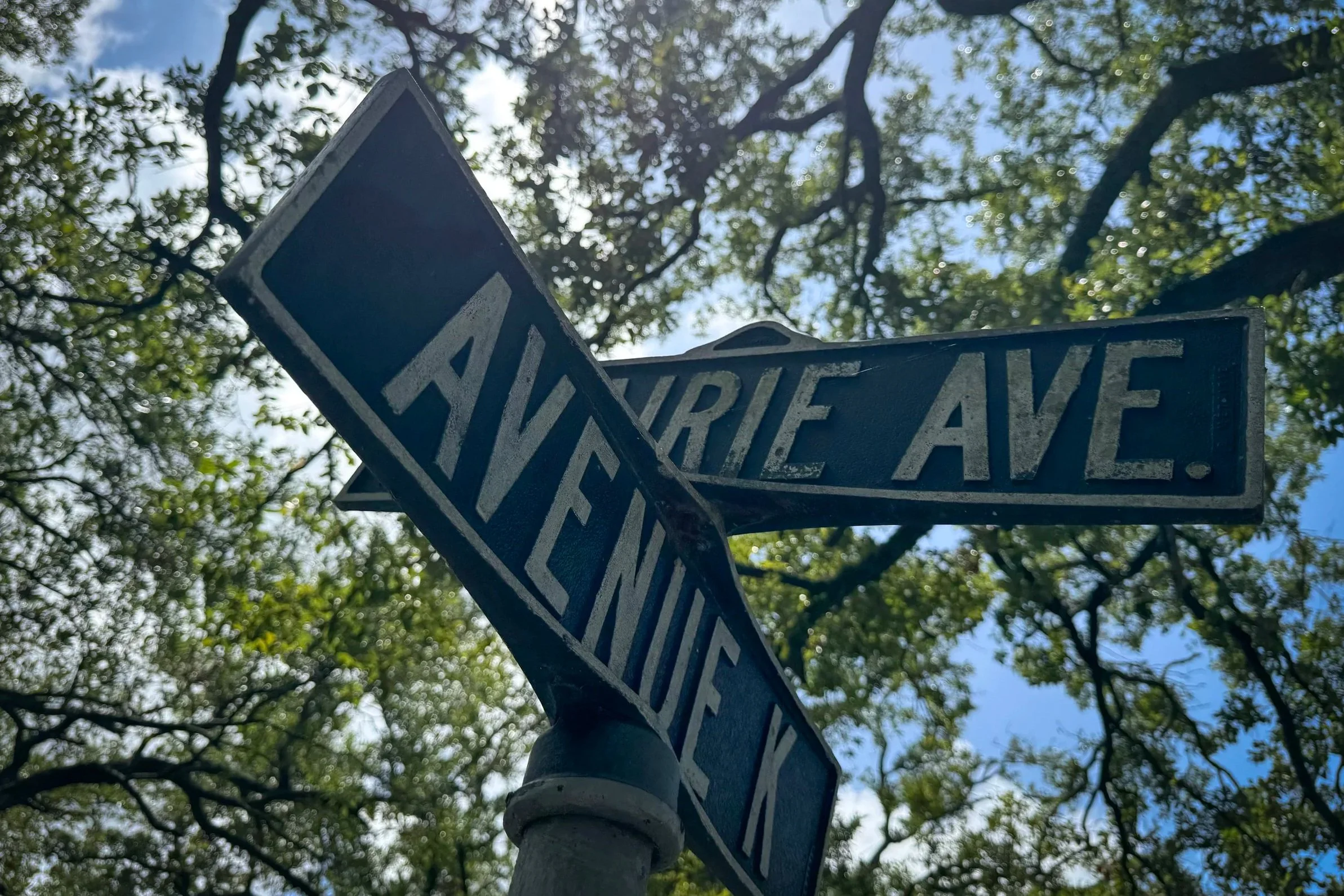
Metairie Cemetery’s avenues lead past the names of entrepreneurs whose businesses and institutions helped shape everyday life across New Orleans.
A search through the city’s business past
Metairie Cemetery preserves more than the political and cultural history of New Orleans. Its avenues also lead past the names of people who built restaurants, supermarkets, institutions and enterprises that became part of everyday life across the city.
I returned with seven of those names on my list. Some were immediately familiar because their businesses had been part of my own upbringing. Others began with curiosity about a monument or a name I had encountered elsewhere. Together, they offered a path through generations of New Orleans enterprise, from sugar and bananas to steaks, fried chicken, supermarkets, education and professional football.
That path began almost too easily. The first turn placed me near three of the most recognizable names on the list. Among them was Al Copeland, a fellow son of St. Bernard Parish whose ambitions carried a local fried chicken restaurant around the world.
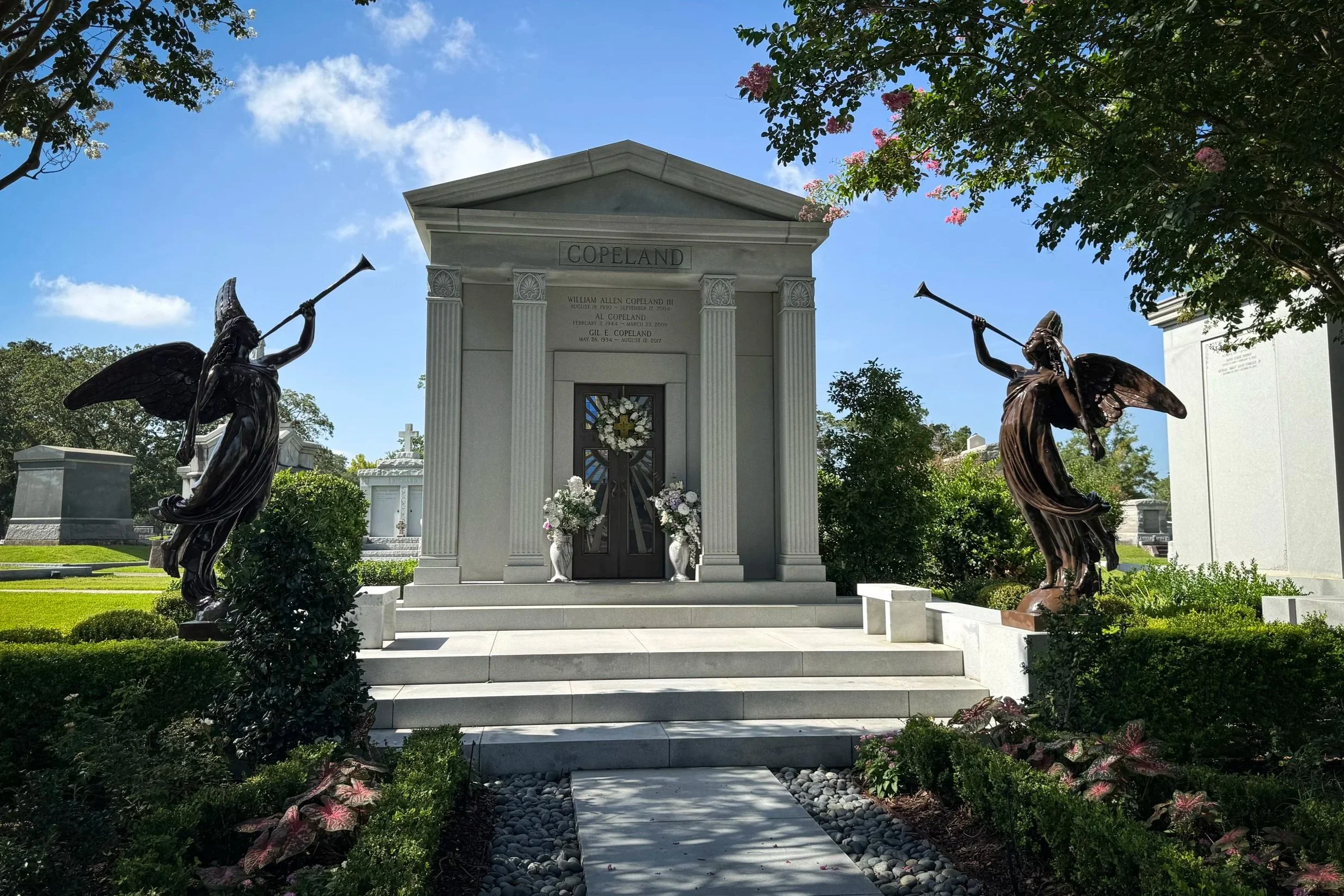
Al Copeland built Popeyes into an international brand, but his family mausoleum reflects the same unmistakable flair New Orleans knew as “Big Al.”
Al Copeland
The Popeyes restaurants of my childhood were unmistakable, with bright red roofs, lava-rock columns and glowing roadside signs. A box of Popeyes joined us on the neutral ground while we waited for Mardi Gras parades, and Popeye and Pals filled Saturday mornings. Mondays meant red beans and rice. My maternal grandfather, a member of the board of directors of a local savings and loan, treated the Popeyes drive-through like a standing appointment—as fixed as any commitment at the bank.
Al Copeland was part of New Orleans life beyond the restaurants. At Christmas, families lined up to see the enormous light display at his Metairie home. As I grew older, Copeland’s introduced me to a more refined dining experience. I knew his world long before I knew much about the man who created it.
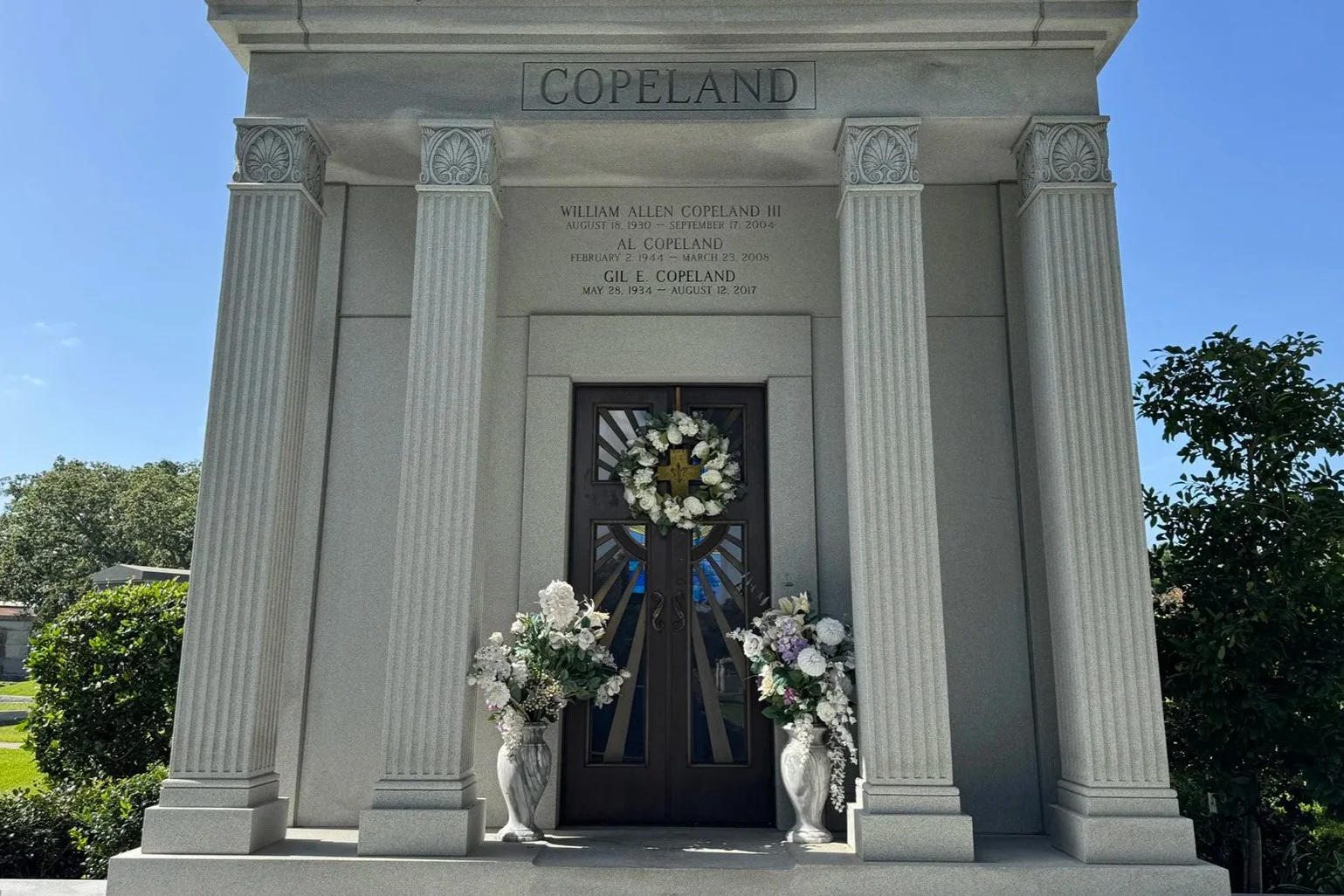
His family mausoleum is just as recognizable. White columns, decorative urns and a stained-glass door give it a theatrical presence suited to the entrepreneur New Orleans knew as “Big Al.”
Copeland entered the restaurant business with Tastee Donuts before opening Chicken on the Run in Arabi in 1972. When its traditional fried chicken failed to catch on, he returned with a spicy recipe and renamed the restaurant Popeyes after Popeye Doyle from The French Connection. A second location opened in Kenner the following year, and franchising carried the concept far beyond New Orleans.
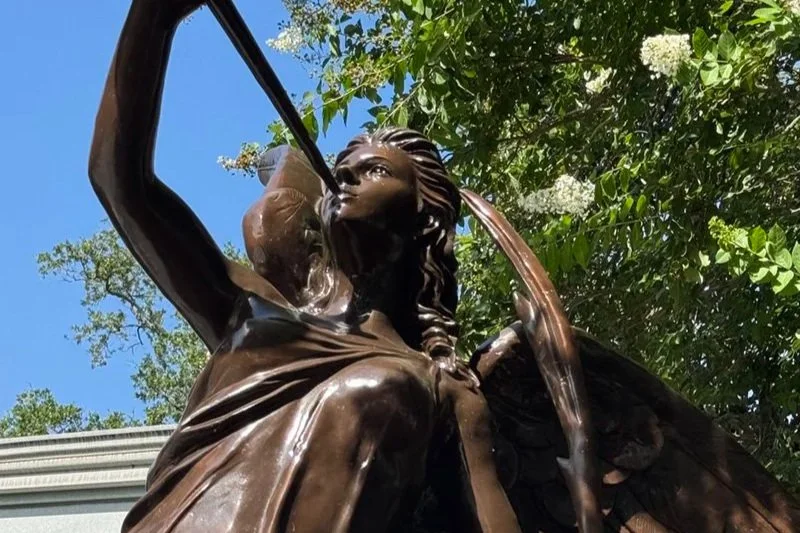
By 1985, Popeyes had grown to 500 restaurants. Its spicy chicken, Louisiana side dishes, Mardi Gras imagery and “Love that chicken from Popeyes” jingle gave the national chain a distinctly New Orleans identity.
Copeland’s ambition led him to purchase Church’s Chicken in 1989, bringing more than 2,000 restaurants under the two brands. The debt proved unsustainable, and he lost control of Popeyes during bankruptcy proceedings. He continued building through Copeland’s restaurants and Diversified Foods and Seasonings, which supplied products to the chicken chain he founded.
Restaurants were only part of his public persona. Copeland raced offshore powerboats, collected exotic cars and approached nearly everything with an appetite for spectacle. After his death from Merkel cell carcinoma in 2008, his family established the Al Copeland Foundation to support cancer research and patient care.
The mausoleum fits the man behind it: bold, recognizable and unmistakably New Orleans. Al Copeland created experiences that became part of how generations of New Orleanians ate, celebrated and grew up.
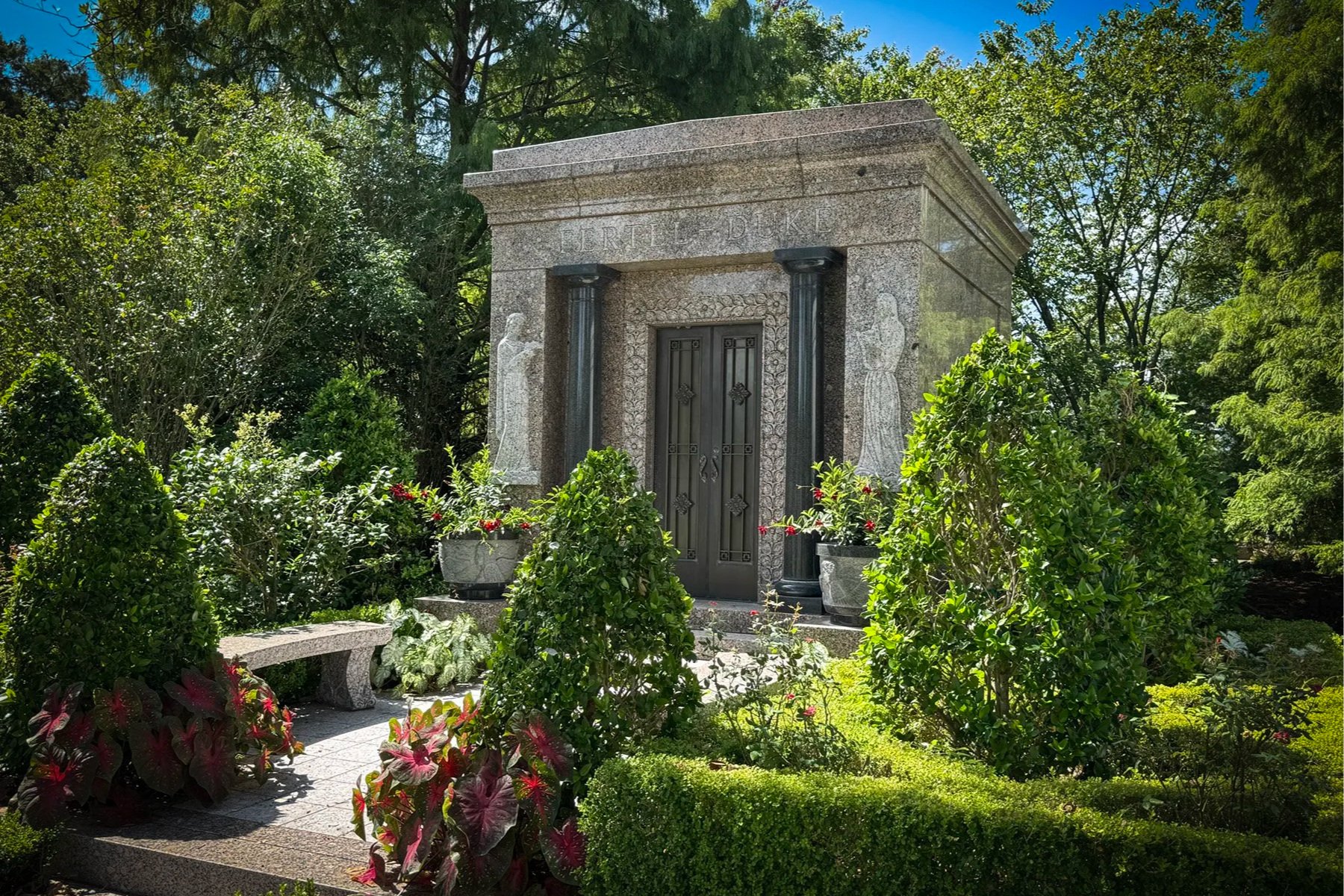
Ruth Fertel mortgaged her home to buy a small New Orleans steakhouse, transforming it into the international restaurant empire that still bears her name.
Ruth Fertel
Ruth Fertel’s mausoleum stands only a short walk from Al Copeland’s, placing two of New Orleans’ most successful restaurateurs within the same section of Metairie Cemetery. Black columns frame the granite structure, while stained-glass angels add color to a memorial shared by the Fertel and Duke families.
Born Ruth Ann Udstad in New Orleans in 1927, Fertel graduated from high school at 15 and earned degrees in chemistry and physics from LSU at 19. She taught briefly, became Louisiana’s first licensed female thoroughbred trainer and later worked as a laboratory technician at Tulane University School of Medicine.
By 1965, Fertel was divorced and raising two sons. Looking for a way to pay for their college education, she answered a newspaper advertisement for Chris Steak House, a 60-seat restaurant on North Broad Street. Her banker and attorney advised against the purchase, but Fertel mortgaged her home and bought the business for $18,000 despite having no restaurant experience.
She learned to butcher steaks by hand, worked the kitchen and assembled an all-female waitstaff that included other single mothers. When Hurricane Betsy struck only months after she opened, Fertel cooked the steaks in danger of spoiling and served them to relief workers and neighbors.
A fire destroyed Chris Steak House in 1976. Fertel reopened nearby within days, but the original sales agreement prevented her from using the name at another address. Her solution was Ruth’s Chris Steak House—a cumbersome name that became one of the most recognizable in fine dining.
The first franchise opened in Baton Rouge in 1977, followed by restaurants across the United States and overseas. Fertel remained closely involved as the company grew, visiting locations and judging them through the food, service and hospitality that had defined the original restaurant.
Fertel died from lung cancer in 2002 at 75. Her mausoleum reflects the scale of what she built, but the most striking part of her story began with a far greater risk: a single mother mortgaging her home to buy a neighborhood steak house and turning it into an international name.
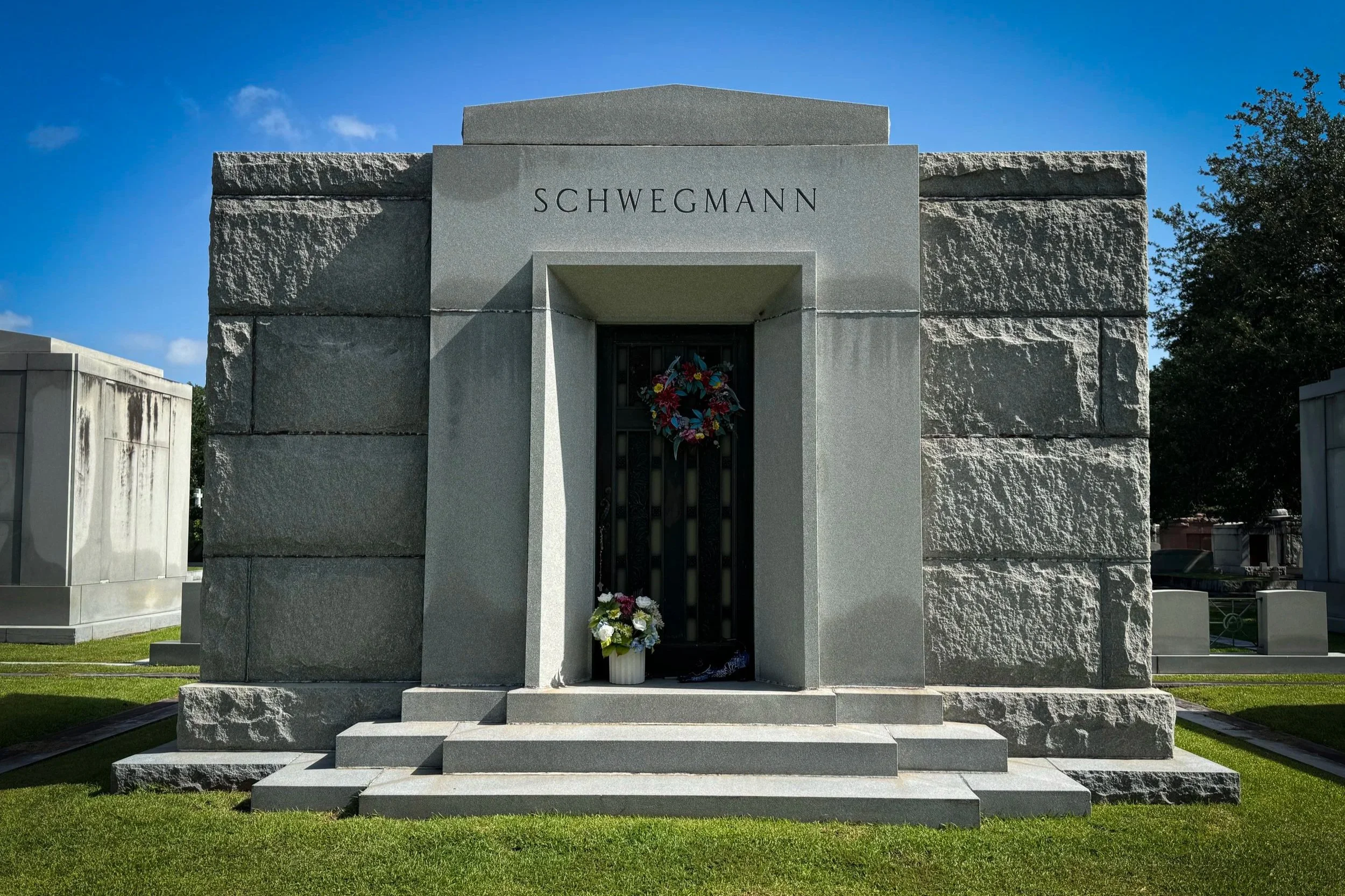
Just across Bell Street from Ruth Fertel’s elaborate mausoleum, the comparatively restrained Schwegmann family tomb carries one of the most familiar names in New Orleans grocery history.
John Schwegmann
Just across Bell Street from Ruth Fertel’s elaborate mausoleum, the Schwegmann family tomb is comparatively restrained. The name, however, carries me back to one of the largest landmarks of my childhood.
Trips to the Schwegmann store in Chalmette began with my mother. She could make groceries while I spent time at the comic shop in the adjoining strip mall. Friends later worked at Schwegmann, and I eventually saw the grocery business from another side while helping my father with store resets throughout metro New Orleans. The store became part of my life in different ways as I grew older.
Born above his father’s grocery store in 1911, John G. Schwegmann Jr. joined the family business in 1939. Seven years later, he and his brothers opened Schwegmann Brothers Giant Super Market on St. Claude Avenue, helping usher New Orleans into the era of large, self-service supermarkets.
The stores were destinations. Shoppers could buy groceries, appliances and records, visit the pharmacy or barbershop, then grab a beer and an oyster loaf. The enormous locations on Airline Highway and Old Gentilly Road brought nearly everything a family needed under one roof.
Schwegmann built his reputation on low prices and rapid turnover. When manufacturers and state regulators tried to dictate what retailers could charge, he fought them in court. A case bearing his name reached the U.S. Supreme Court in 1951 and helped weaken the “fair trade” laws that allowed manufacturers to establish minimum retail prices.
That fight for consumers carried Schwegmann into politics. He served in both houses of the Louisiana Legislature, ran for governor in 1971 and later served on the Louisiana Public Service Commission. His opinions appeared on the chain’s brown paper bags, placing his thoughts on business and politics directly into the hands of shoppers.
Schwegmann died in 1995, when the family chain had grown to 18 stores across the New Orleans area. Standing before the family tomb, I was reminded that Schwegmann was never just a name from the city’s business history. It was grocery trips with my mother, afternoons at the comic shop, friends behind the counter and days spent working beside my father.
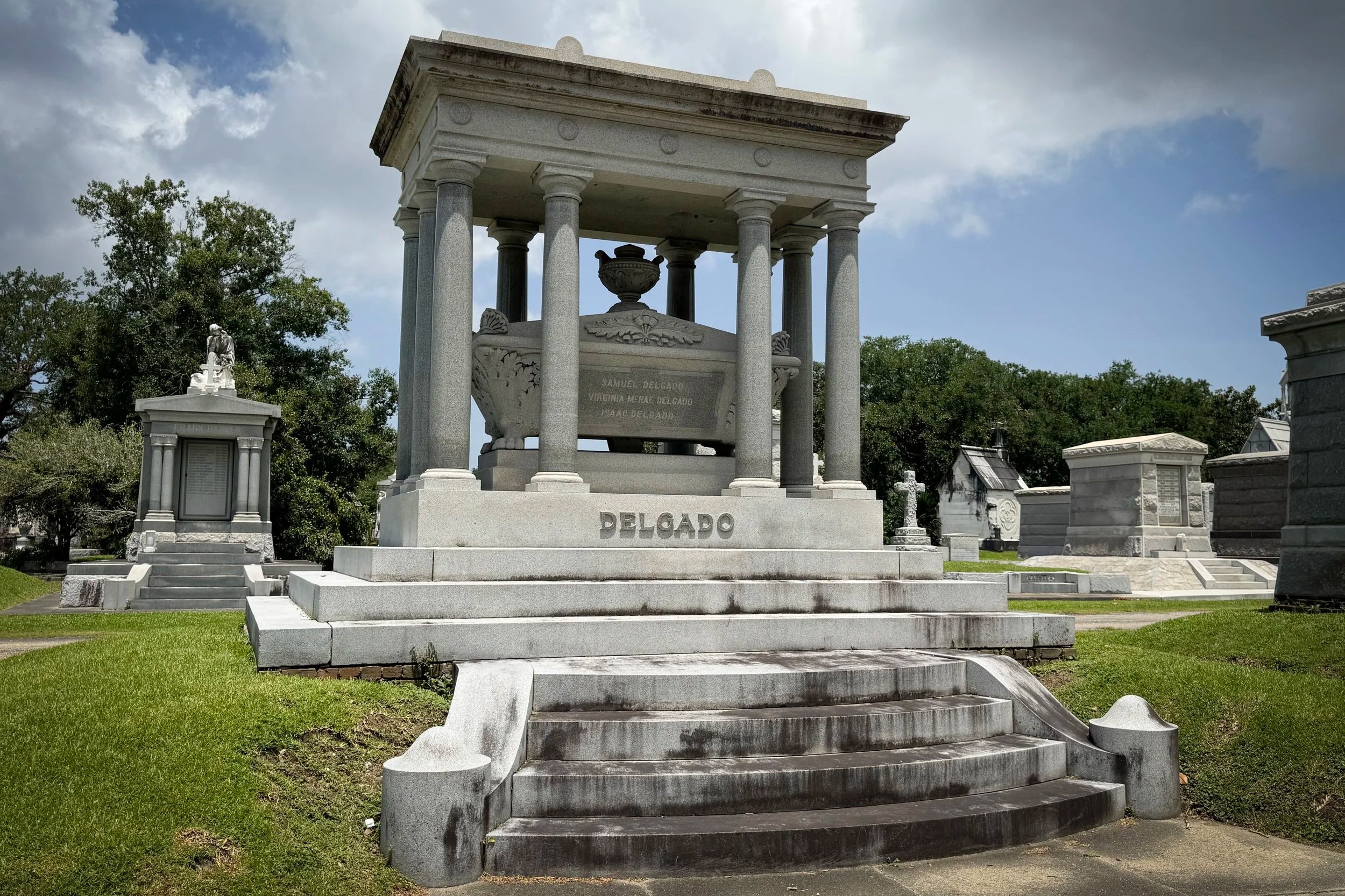
Isaac Delgado’s grand columned tomb prompted a closer look at the philanthropist whose legacy includes Delgado Community College and the museum now known as NOMA.
Isaac Delgado
Isaac Delgado was one of the surprises of the exploratory trip. His grand columned tomb commanded attention, and the unmistakable name warranted a closer look. I knew Delgado through the college, but the research led somewhere more personal. The New Orleans Museum of Art and City Park have become favorite POP nakaro settings, giving us stories about a Hulk lunchbox, the historic carousel and the Besthoff Sculpture Garden. I had been working within Delgado’s legacy without realizing how much of it began with him.
Born in Kingston, Jamaica, in 1839, Delgado came to New Orleans as a teenager and entered the sugar business with his uncle. He eventually made his fortune as a sugar broker and planter, becoming one of the city’s leading businessmen.
Delgado directed much of that wealth back into New Orleans. He supported Charity Hospital, funded a surgical facility and gave the city $150,000 to build an art museum in City Park. The Isaac Delgado Museum of Art opened in 1911 and later became the New Orleans Museum of Art.
His largest gift came through his estate. Delgado left the remainder of his fortune to establish a manual trade school for boys. The Isaac Delgado Central Trades School opened near City Park in 1921 and eventually developed into Delgado Community College.
Delgado died in 1912 at 72, only weeks after the museum opened. What began as an unexpected stop before a grand tomb revealed a legacy woven through New Orleans education, art and health care—and through several POP nakaro stories already waiting just beyond the cemetery gates.
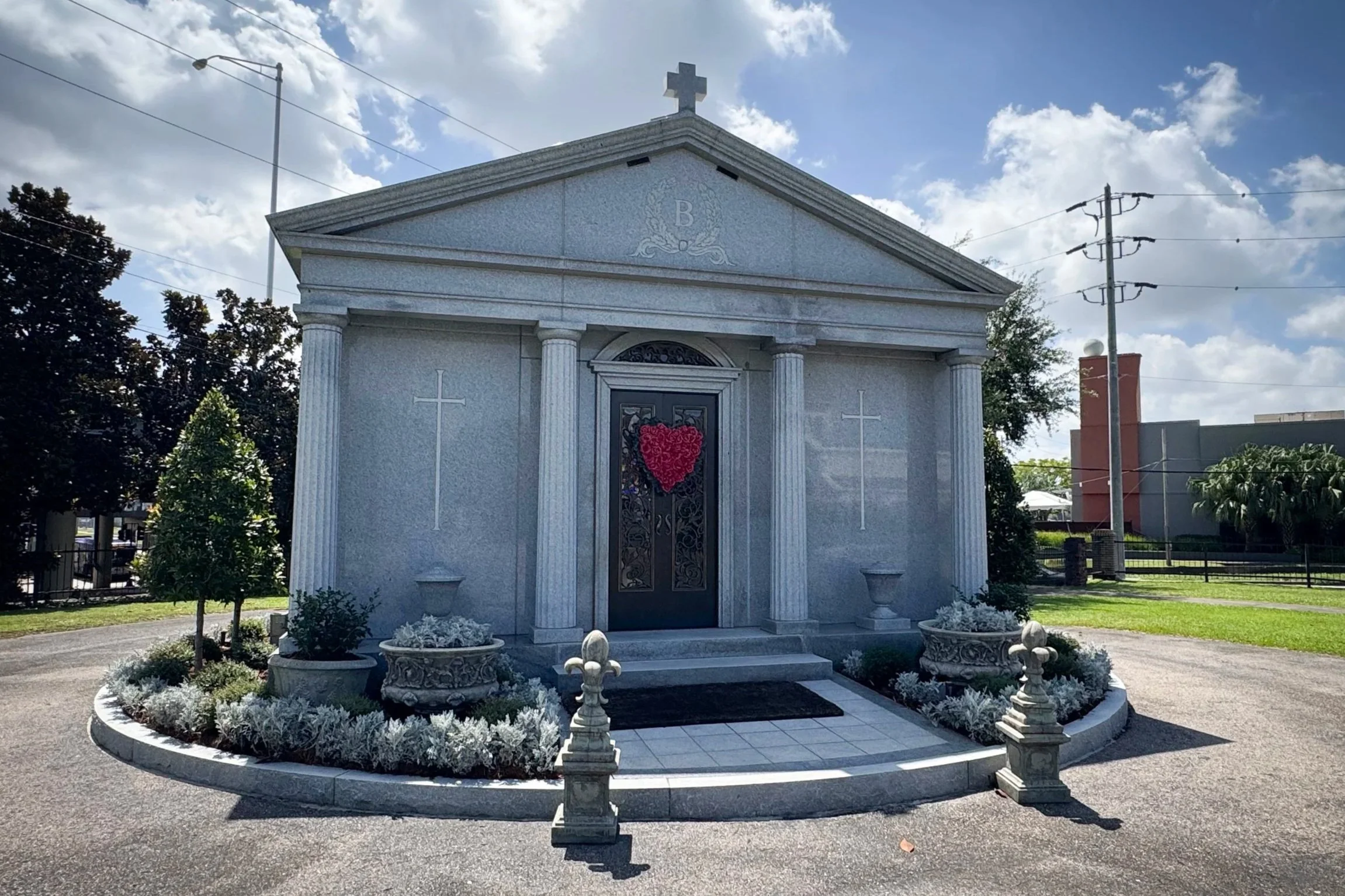
Tom Benson’s family mausoleum occupies the center of its own circular turnaround, creating a fitting “house that Tom built” within Metairie Cemetery.
Tom Benson
Tom Benson’s family mausoleum stands in the center of its own circular turnaround. Cars do not merely pass it; they drive around it. Among all the tombs I encountered in Metairie Cemetery, it was the only one that seemed to occupy its own cul-de-sac.
Four columns support a broad pediment, a cross rises above the roofline and a single B identifies the family. For a man whose name became inseparable from the Saints and the Superdome, even his final resting place feels like the house that Tom built.
Benson began his career as a bookkeeper at a Chevrolet dealership before building a network of automobile dealerships and banks across Louisiana and Texas. In 1985, he purchased the Saints amid concerns that the franchise might be sold and moved from New Orleans.
Two years later, the Saints recorded their first winning season and made their first playoff appearance. The team’s greatest chapter followed Hurricane Katrina, when its return to the Superdome became part of the city’s recovery. With Sean Payton and Drew Brees, the Saints completed that journey by winning Super Bowl XLIV. Benson’s umbrella dance became part of the celebration.
He strengthened his commitment to New Orleans sports by purchasing the Hornets in 2012. Renamed the Pelicans the following year, the team joined the Saints under local ownership.
In 2017, Tom and Gayle Benson purchased a majority interest in Dixie Brewing Company, another New Orleans institution displaced after Hurricane Katrina. They announced plans to return production to the city, a vision Gayle carried forward after his death when a new brewery opened in New Orleans East in 2020. The beer was later renamed Faubourg.
Benson also supported Catholic, educational and medical institutions throughout the region before his death in 2018. Standing in that circular drive, it was difficult to separate the monument from the memories attached to his name: Sunday football, the Superdome, Dixie Beer and the night the Saints finally brought a championship home. The house that Tom built may carry only a B, but every New Orleanian knows the name behind it.
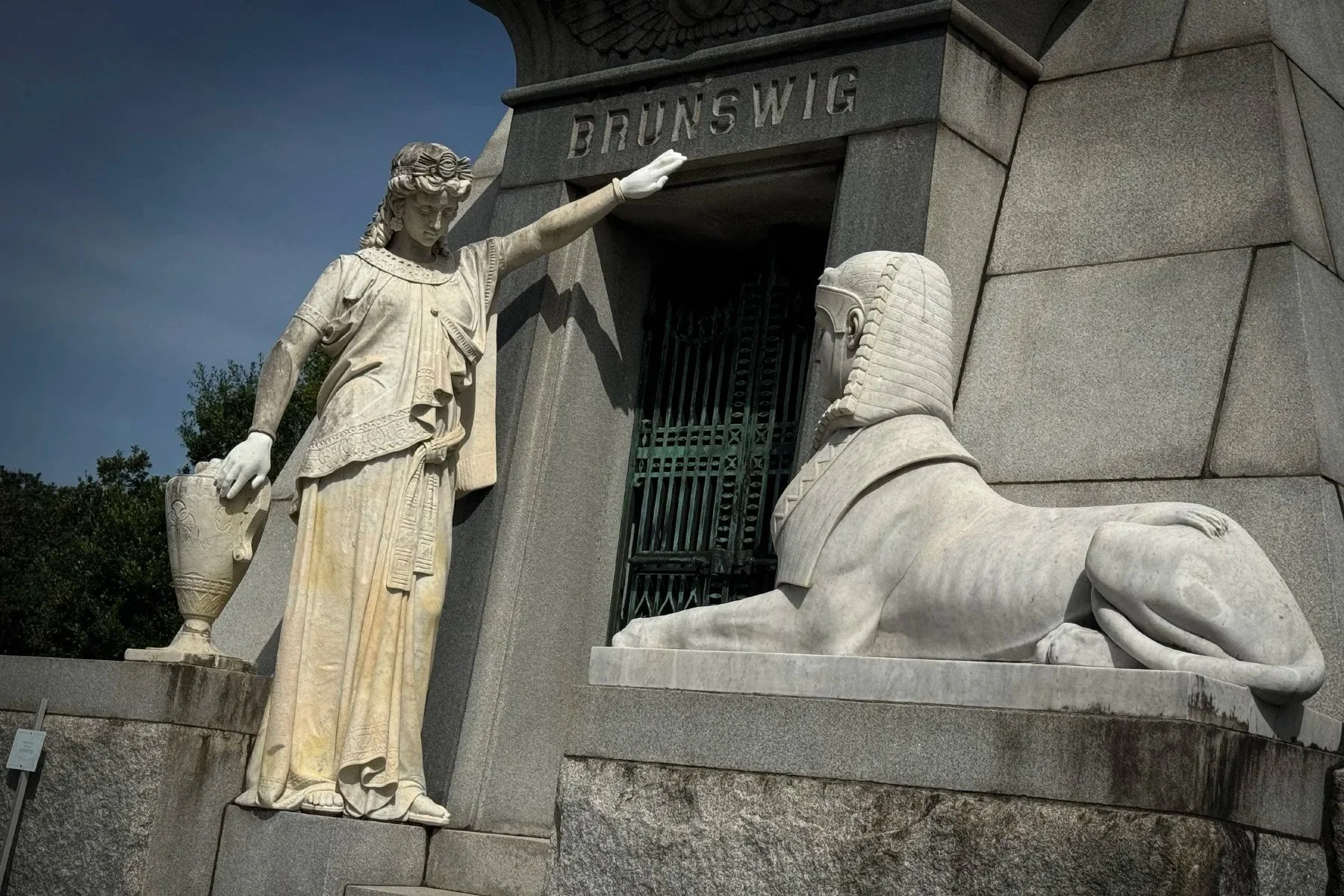
Guarded by a sphinx and a standing female figure, Lucien Brunswig’s pyramid is one of Metairie Cemetery’s most recognizable monuments—even if the man behind it is less familiar.
Lucien Brunswig
A pyramid in the middle of Metairie Cemetery? I could hardly believe my eyes when I rounded the turn and saw it along the three-mile course of the Run/Walk Through History.
The massive granite tomb rises above Millionaires’ Row, with a sphinx guarding its bronze doors and a standing female figure looking out from beside the entrance. It is one of the cemetery’s most recognizable monuments, yet Lucien Brunswig may be the least familiar name on this list. So who was he?
Born in Montmédy, France, in 1854, Brunswig immigrated to the United States as a teenager and trained as a pharmacist. He opened drugstores in Kansas and Texas before coming to New Orleans, where he entered the wholesale pharmaceutical business.
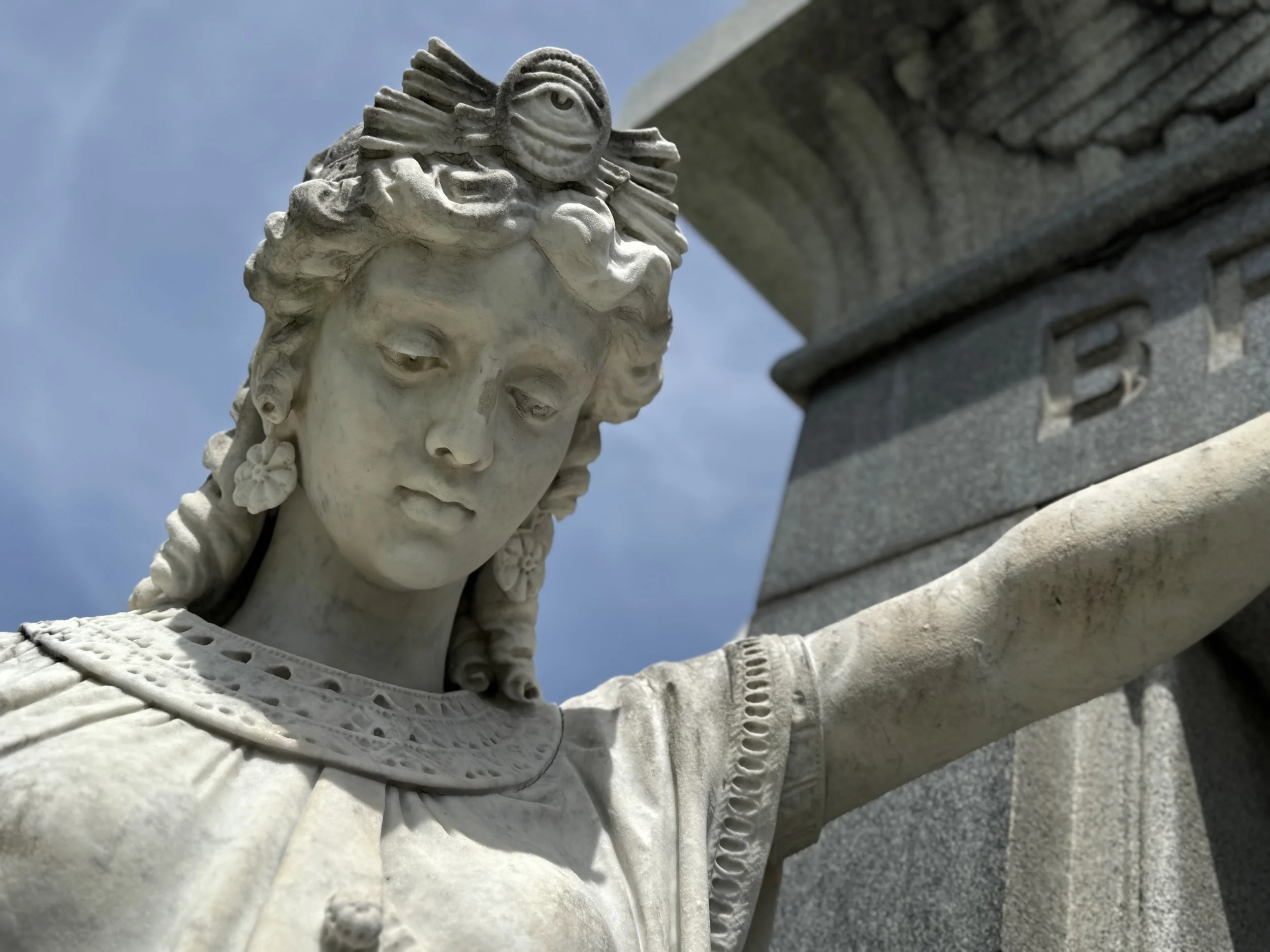
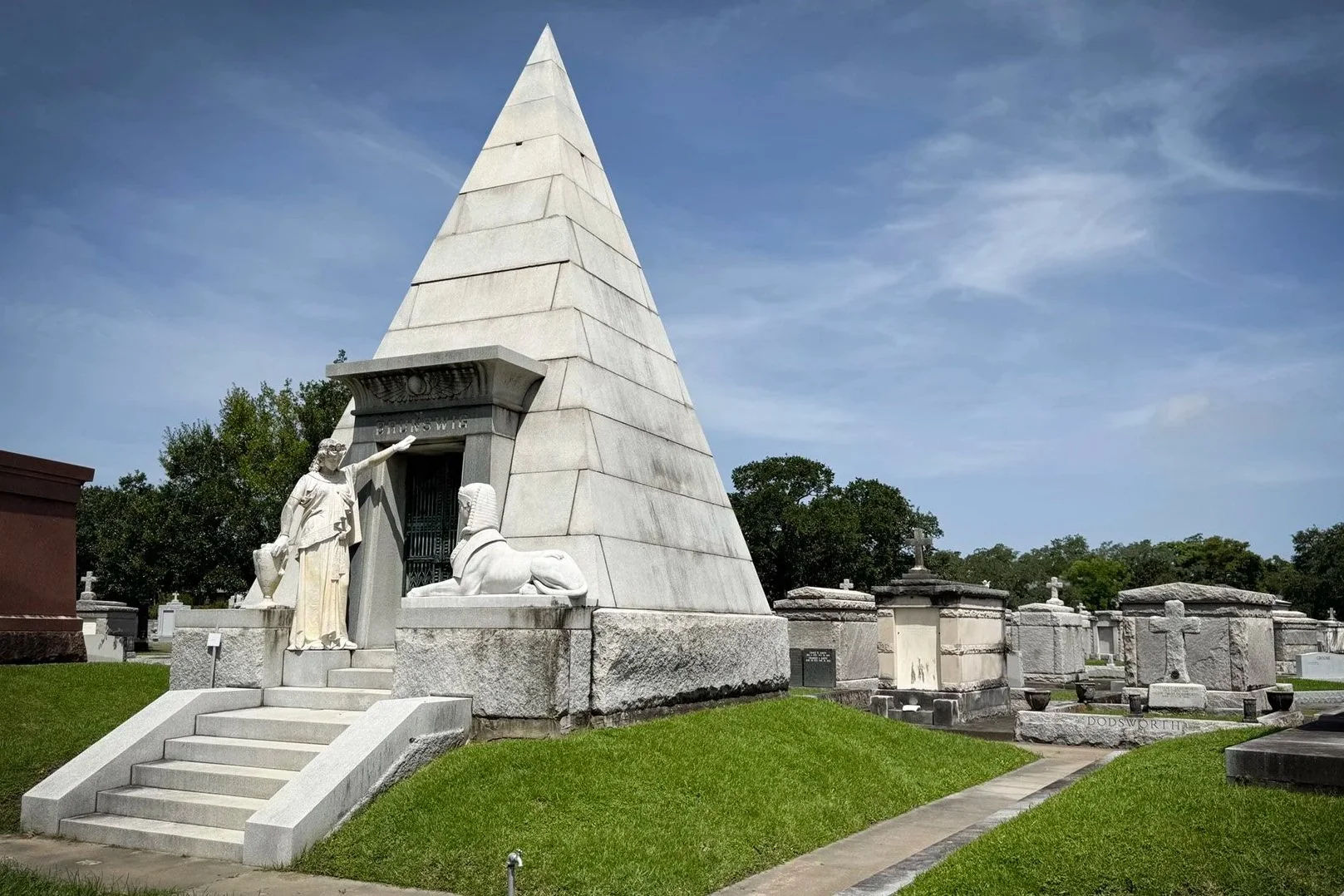
The story behind the pyramid begins with a devastating year for the Brunswig family. His son, Lucien Mercer, died shortly before his 10th birthday in 1892. Brunswig’s wife, Annie, died the following month. Their loss led to the creation of a family tomb unlike anything else in the cemetery.
Brunswig eventually moved to Los Angeles and became one of the most influential pharmaceutical distributors in the West. The Brunswig Drug Company expanded throughout Southern California and into Arizona, while his philanthropy helped advance pharmaceutical education at the University of Southern California.
He also maintained strong ties to his native France. During World War I, Brunswig returned there to support relief efforts and document the destruction left by the fighting. When he died in 1943 at 88, his remains were brought back to New Orleans and placed inside the pyramid with Annie and their son.
I remembered the pyramid long before I knew the name on its doors. Returning with a camera and taking that closer look transformed one of Metairie Cemetery’s greatest visual surprises into the story of the man who rests inside.
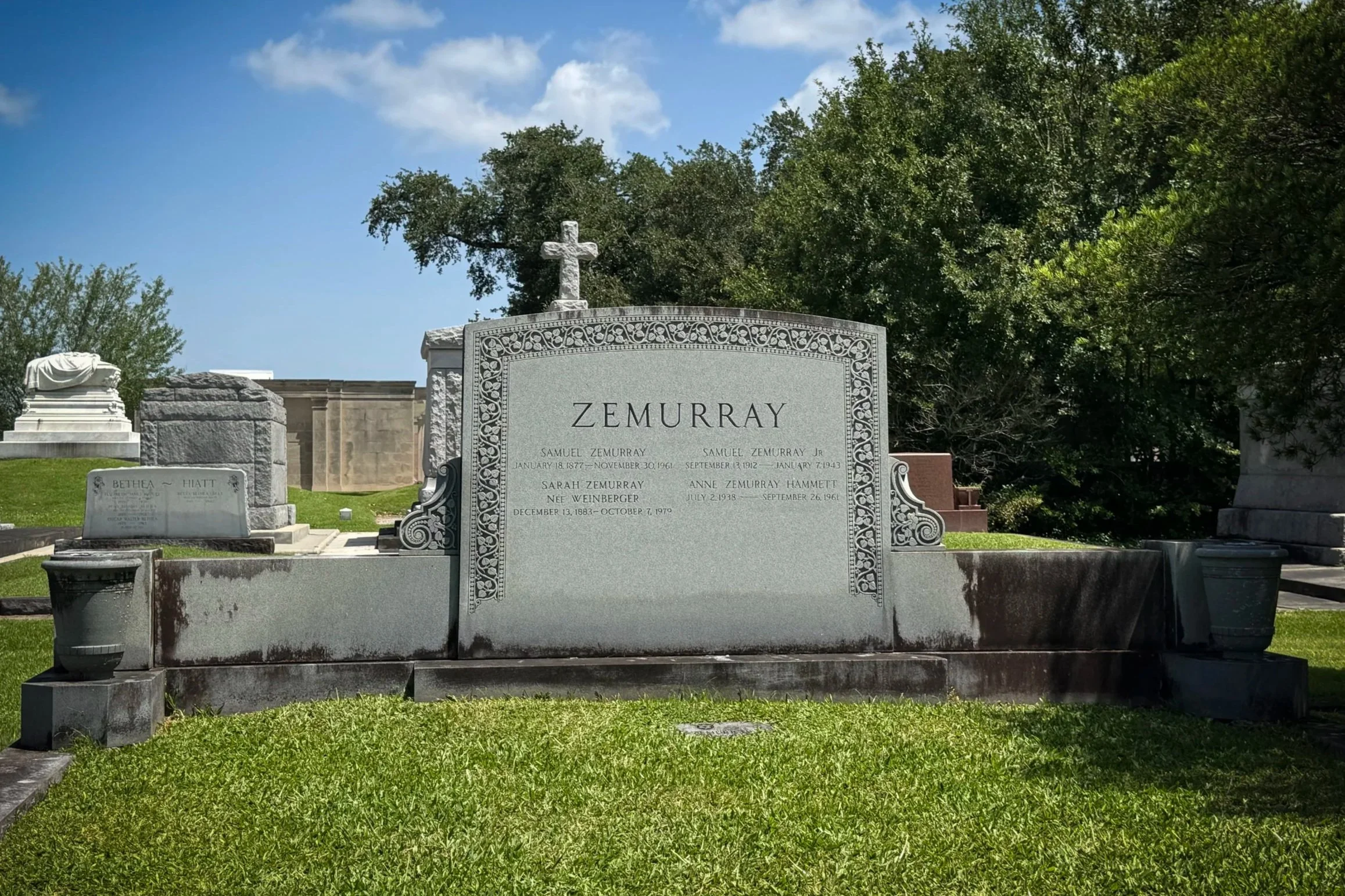
Samuel Zemurray built a fortune in the banana trade, leaving a complicated legacy that reaches from Central America to Zemurray Park in Hammond.
Samuel Zemurray
The Zemurray family plot sits along a broad stretch of lawn in Section 60. I knew the name through Zemurray Park, one of Hammond’s largest public parks and only a few miles from my home. Finding it in Metairie Cemetery connected a familiar part of my community to a far more complicated story.
Born in the Russian Empire in 1877, Samuel Zemurray arrived in the United States at 14. He entered the banana trade by purchasing fruit already ripening at the docks in Mobile and rushing it to market before it spoiled, earning the nickname “Sam the Banana Man.”
After moving to New Orleans, Zemurray built the Cuyamel Fruit Company through plantations, railroads and shipping operations in Honduras. His methods extended beyond business. In 1911, he helped finance an armed campaign that restored Manuel Bonilla to the Honduran presidency, securing favorable concessions in return.
Zemurray sold Cuyamel to United Fruit Company in 1929, then took control of United Fruit when it struggled during the Great Depression. He restored its profitability and helped make it one of the world’s most powerful agricultural corporations. That success came through a plantation system that exploited workers and gave American companies enormous influence over Central American governments.
His wealth also supported Tulane University and other Louisiana institutions. Near Hammond, Zemurray owned a 25,000-acre estate. After his son, Samuel Jr., was killed while serving as a pilot during World War II, Zemurray and Coryell McKinney donated 25 acres to the city for a park honoring the younger Zemurray and the crew lost with him.
I had known the Zemurray name through Hammond long before finding the family plot. Behind it was a legacy of immigrant ambition, immense wealth, philanthropy and political interference reaching far beyond Louisiana.

Where to go next
Save Our Cemeteries helps protect the tombs, monuments and burial grounds that preserve generations of New Orleans history. Its guided Metairie Cemetery tours support restoration, education and preservation work throughout the city.
Visit Save Our Cemeteries to learn more about its preservation work, support the organization or book a guided tour.
Find the graves
Use the GPS coordinates below to locate the builders featured in this story.
Al Copeland — Section 129A
Ruth Fertel — Section 129, Bell Street
John Schwegmann — Section 133
Isaac Delgado — Section 2, beside Metairie Road
Tom Benson — Benson family mausoleum
Lucien Brunswig — Pyramid tomb on Millionaires’ Row
Samuel Zemurray — Section 60
Next week, our journey through Metairie Cemetery concludes with six imposing tombs—including those of Frank B. Williams and Salvatore Pizzati—that reveal how fortunes were made in turn-of-the-century New Orleans.