Behind six of Metairie Cemetery’s most recognizable tombs lies the story of how fortunes were made in turn-of-the-century New Orleans.
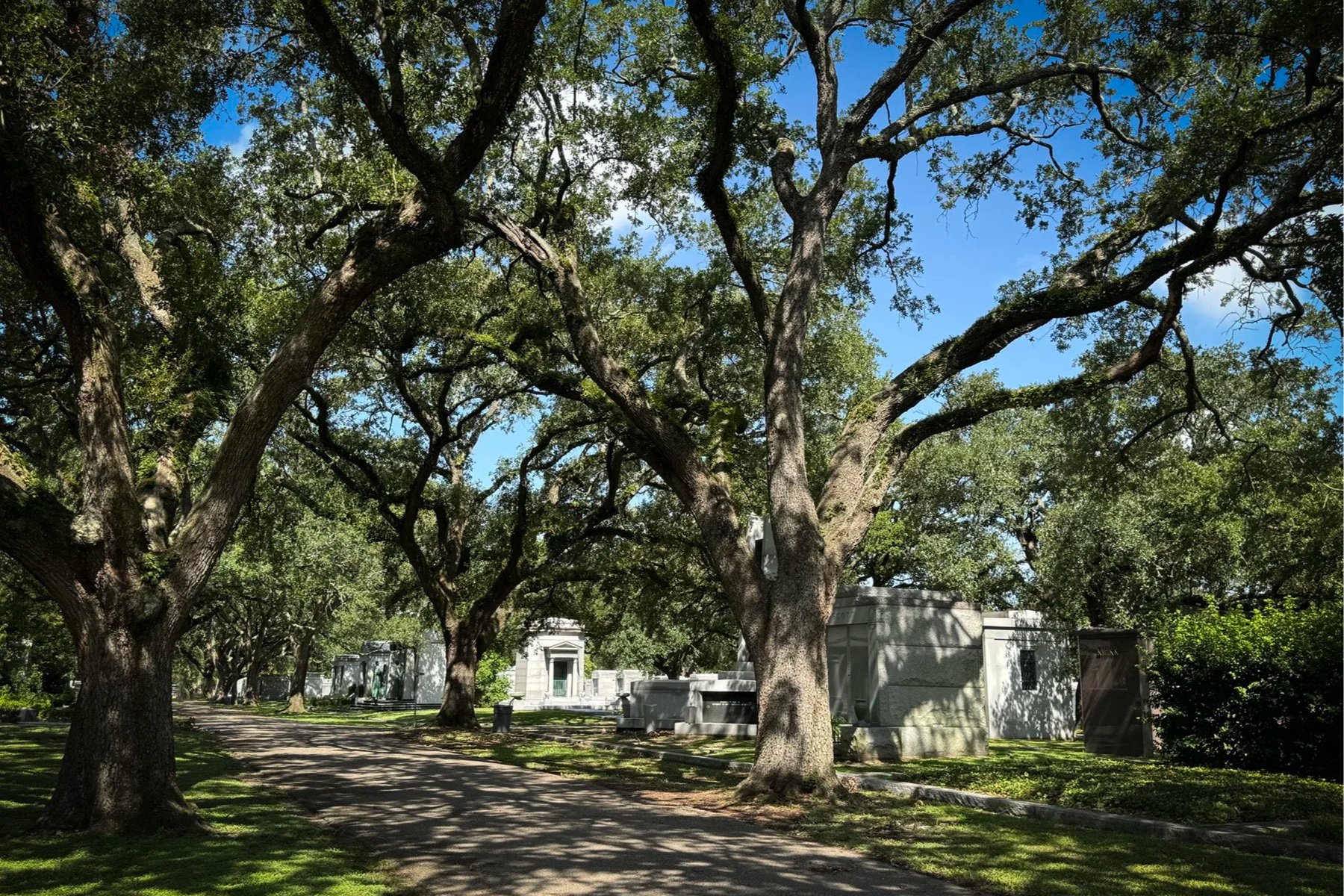
Beneath Metairie Cemetery’s live oaks, a search for seven familiar names opens a path through the city’s music, literature, film and sports history.
A search through the city’s cultural past
My first trip through Metairie Cemetery followed the path of a race and the history of the former Metairie Race Course. When I returned, I carried a list of 14 people whose lives had shaped New Orleans in very different ways. Seven belonged to the city’s cultural story: musicians, writers, actors and athletes whose names had traveled far beyond the cemetery gates.
Some had been familiar to me for most of my life. Others came through stories passed down by my family or through discoveries made while planning this search. Finding their graves added something a biography could not. The monuments, family tombs and personal offerings revealed how these celebrated lives had been folded back into the city that produced them.
The search began almost as soon as I entered the cemetery. One fortunate turn placed me within sight of several names on my list, including the first cultural figure I encountered: Anne Rice.
Anne Rice
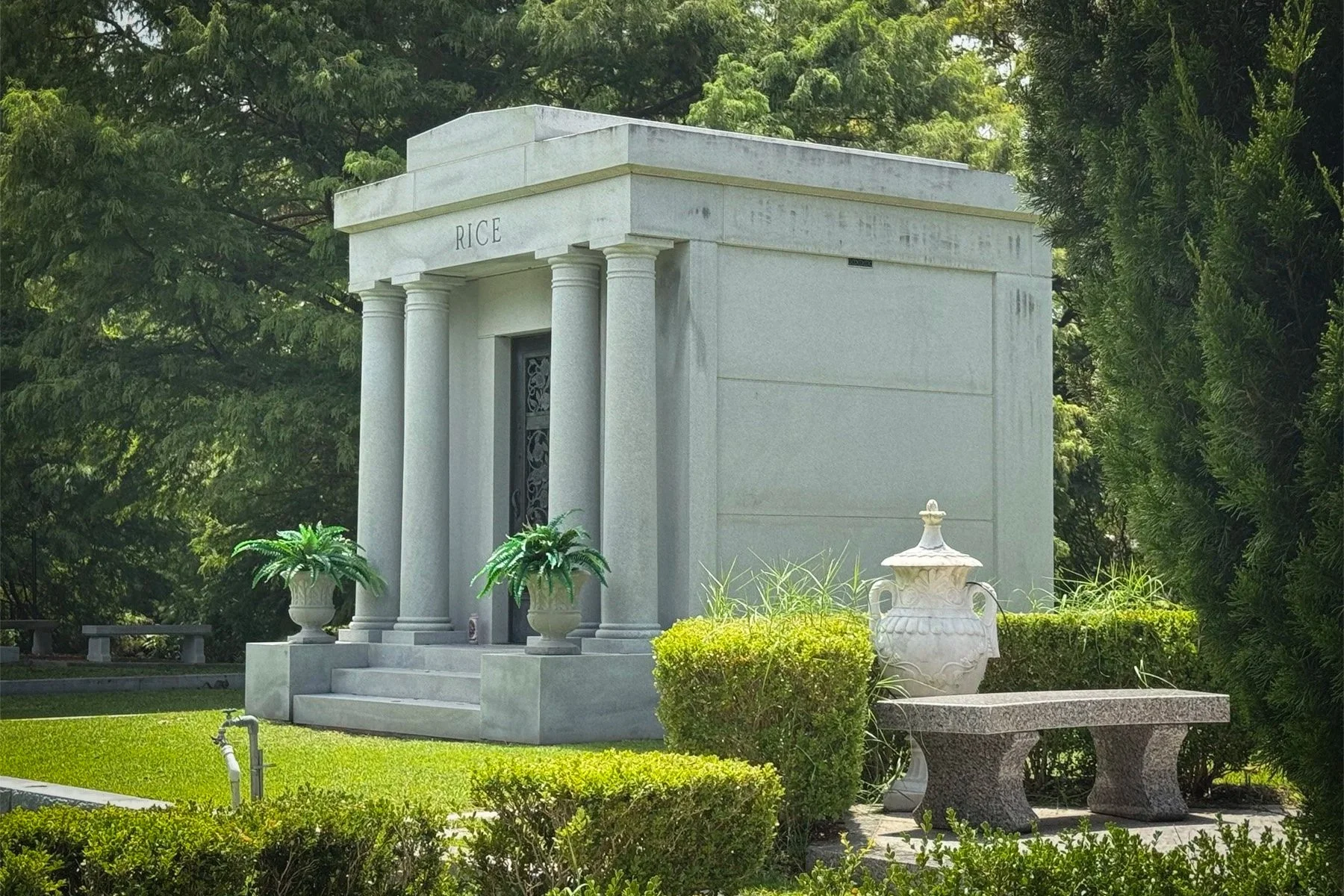
The Rice family tomb holds Anne Rice, whose novels transformed the streets, churches and history of New Orleans into a Gothic world recognized around the globe.
Anne Rice belonged to a particular time in my life. In the 1990s, I read Interview with the Vampire with The Cure and Depeche Mode playing through my headphones, coffee at Kaldi’s on Decatur Street and Doc Martens on my feet. My friends were reading it too. Rice was part of the culture we were already living.
Published in 1976, Interview with the Vampire introduced Louis, Lestat and Claudia and began a career that eventually encompassed 37 books and more than 150 million copies sold. Rice drew upon the architecture, family histories and Catholic traditions of her hometown to create a New Orleans filled with beauty, desire, death and characters wrestling with good, evil and redemption.
The 1994 film brought that world even closer. Tom Cruise, Brad Pitt and Kirsten Dunst carried Rice’s characters onto the screen, while part of the production took place at Jackson Barracks in Arabi, only a few miles from where I grew up in St. Bernard Parish. This was no distant Hollywood version of the Gothic South. Rice’s New Orleans occupied streets, churches and neighborhoods I recognized.
Years later, I encountered her from a different direction through her 2008 memoir, Called Out of Darkness: A Spiritual Confession. Rice devoted much of the book to her childhood in the deeply Catholic New Orleans of the 1940s and 1950s. She remembered the churches, saints, rituals, Latin Masses and religious instruction that once gave structure to nearly every part of her life.
She also wrote candidly about leaving the church at 18 and spending 38 years as an atheist. During those years, she married Stan Rice, lost their daughter Michele to leukemia, raised their son Christopher and built her career writing about vampires and other outsiders searching for meaning in a world where God appeared absent. The memoir revealed how closely that search was connected to the themes running through her fiction.
Rice returned to the Catholic Church in 1998. She described her return as an act of surrender after years of believing she needed answers to every theological, historical and moral question before she could believe again. She later separated herself from organized Christianity while maintaining her devotion to Christ, adding another chapter to a spiritual life that never settled into an easy conclusion.
The memoir made me reconsider the distance between the woman writing about vampires and the woman writing about faith. It was not as wide as it first appeared. Mortality, guilt, loss, belonging and the possibility of redemption ran through both.
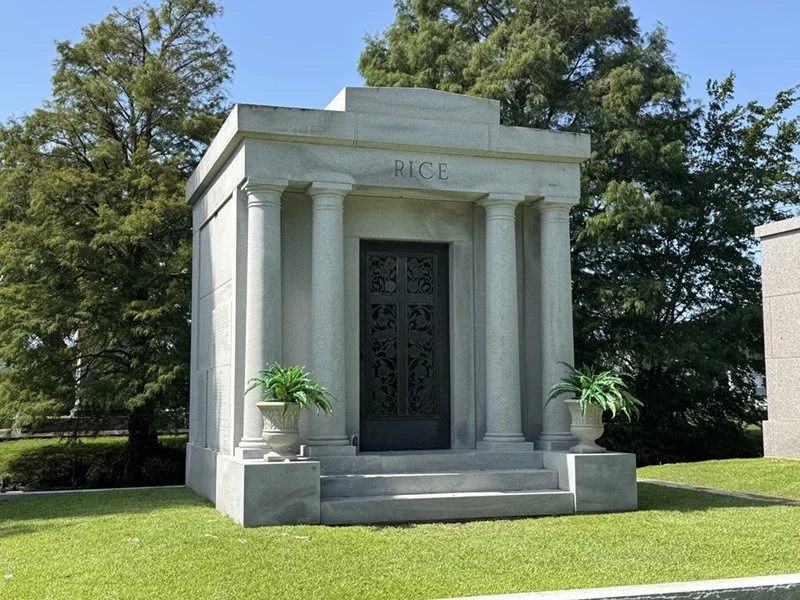
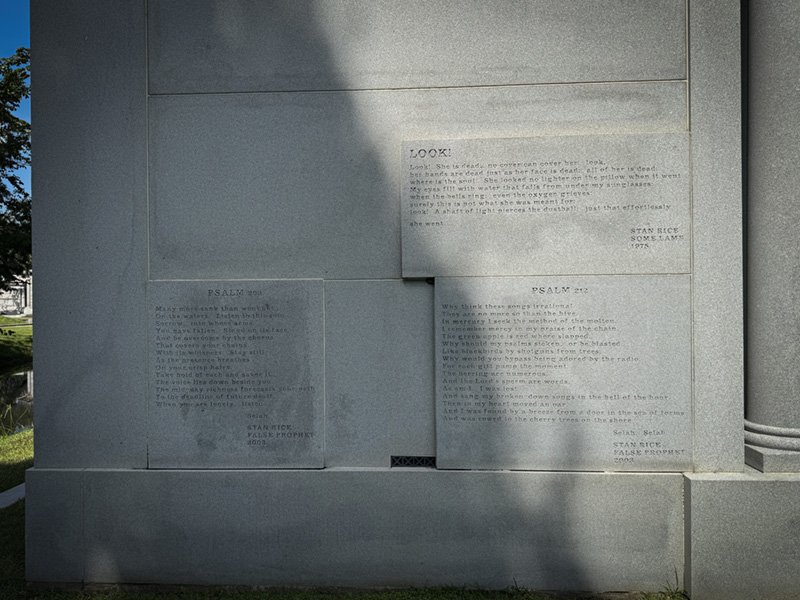
Rice died in 2021 and was buried in the family mausoleum at Metairie Cemetery with Stan and Michele. Stained glass fills one side of the structure, while panels bearing Stan’s poetry line the others. Standing there brought together the writer I discovered in the 1990s and the woman I came to understand differently years later. Each belonged to my experience of New Orleans.
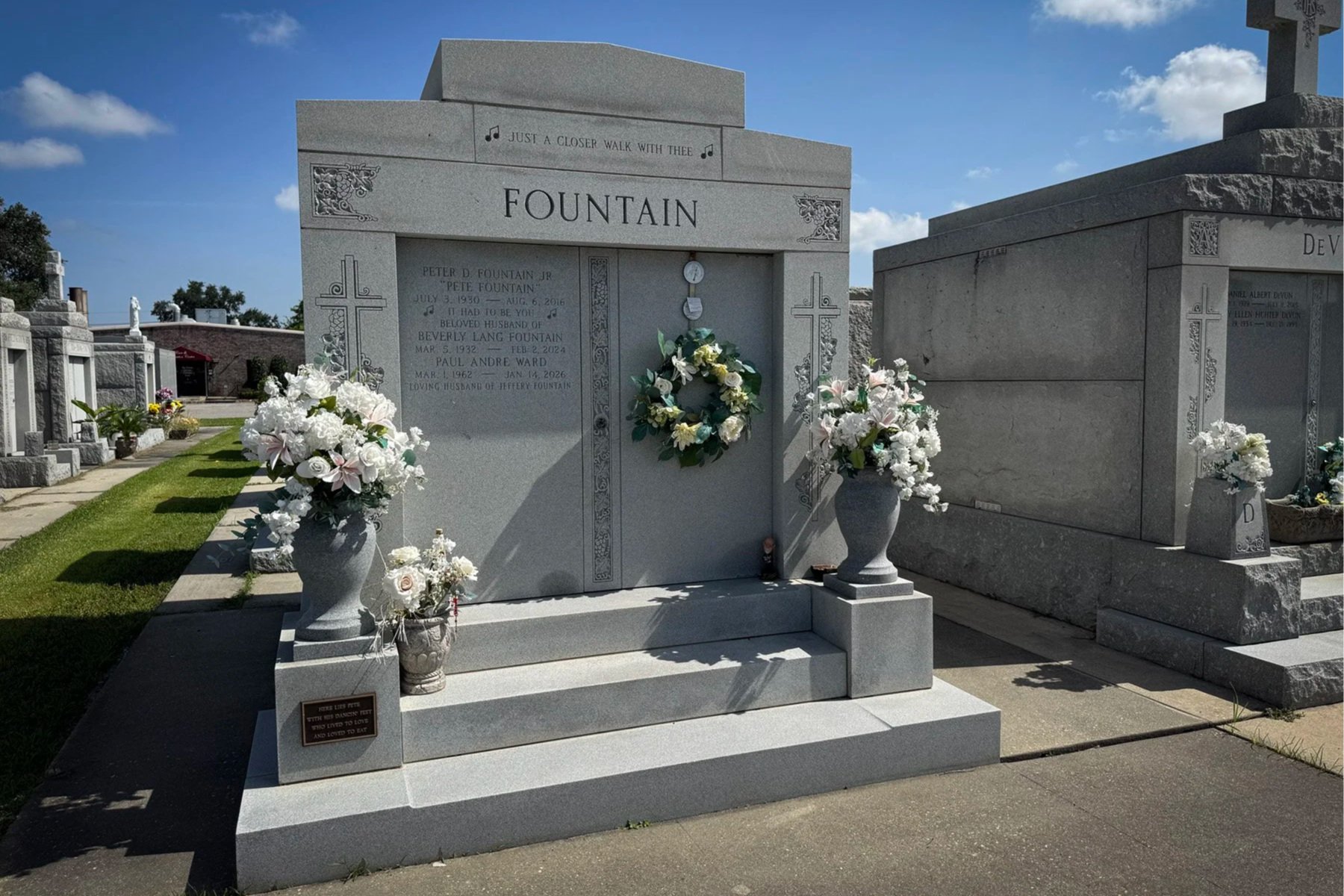
Pete Fountain’s family tomb carries a musical line from “Just a Closer Walk with Thee,” a fitting tribute to the clarinetist whose sound became part of New Orleans.
Pete Fountain
Growing up in New Orleans, you had to know Pete Fountain. From the 1970s through the 1990s, he seemed to be everywhere—on television, in local advertising, on record covers and anywhere the city needed a familiar face to represent its music.
My strongest memories of him belong to Mardi Gras. Pete Fountain and his Half-Fast Walking Club would set out early Mardi Gras morning, playing their way down St. Charles Avenue toward the French Quarter. My friend, artist Brad Thompson captured the tradition in a painting Fountain commissioned in 1993. I remember the painting almost as clearly as the procession itself: Fountain with his clarinet, surrounded by brightly costumed musicians, carrying Mardi Gras through the streets on foot.
He was also part of another place tied closely to my family. Fountain owned a home in Bay St. Louis one street over from my grandfather’s house. His waterfront estate stood on South Beach Boulevard, close enough that he was more than a familiar New Orleans figure from television and Mardi Gras. His home occupied the same landscape as many of my own family memories. Hurricane Katrina destroyed the property in 2005, along with decades of recordings, photographs and memorabilia. Fountain later built another home a few blocks inland.
Born Pierre Dewey LaFontaine Jr. in New Orleans in 1930, Fountain began playing clarinet as a child after respiratory problems led a doctor to recommend a wind instrument. By the early 1950s, he was performing with the Basin Street Six and later alongside Al Hirt at Pier 600. His national breakthrough came in 1957 when he joined The Lawrence Welk Show. Fountain’s warm tone and relaxed style made him one of the program’s most popular performers, although his improvisation did not always fit Welk’s tightly controlled arrangements.
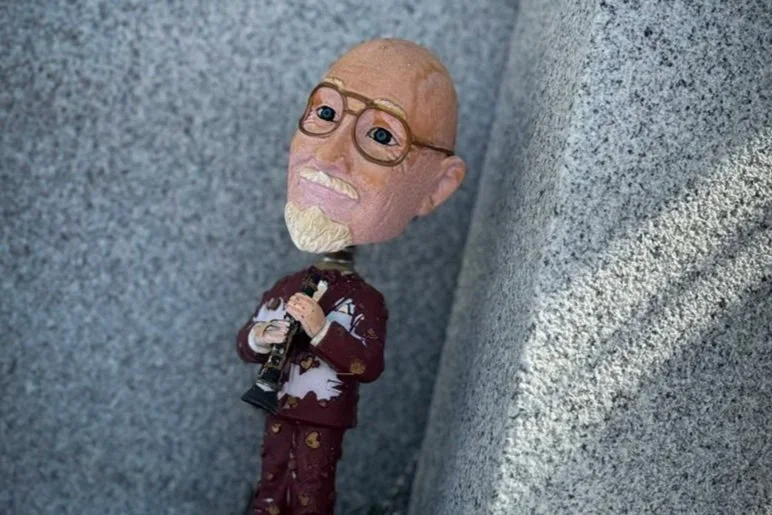
After returning home, Fountain opened his own club on Bourbon Street and built a career that carried New Orleans jazz far beyond the city. He recorded more than 100 albums, appeared 58 times on The Tonight Show, performed at the White House for four presidents and played for Pope John Paul II during the pope’s 1987 visit to New Orleans. Yet he remained unmistakably local. His music, humor and personality were woven into the public life of the city.
Fountain organized the Half-Fast Walking Club in 1960 as a Mardi Gras outing with friends and fellow musicians. What began as a playful early-morning walk became one of Mardi Gras Day’s most familiar traditions. Before the major parades reached St. Charles Avenue, Fountain and his group were already moving downtown, stopping along the way as music, costumes and crowds gathered around them.
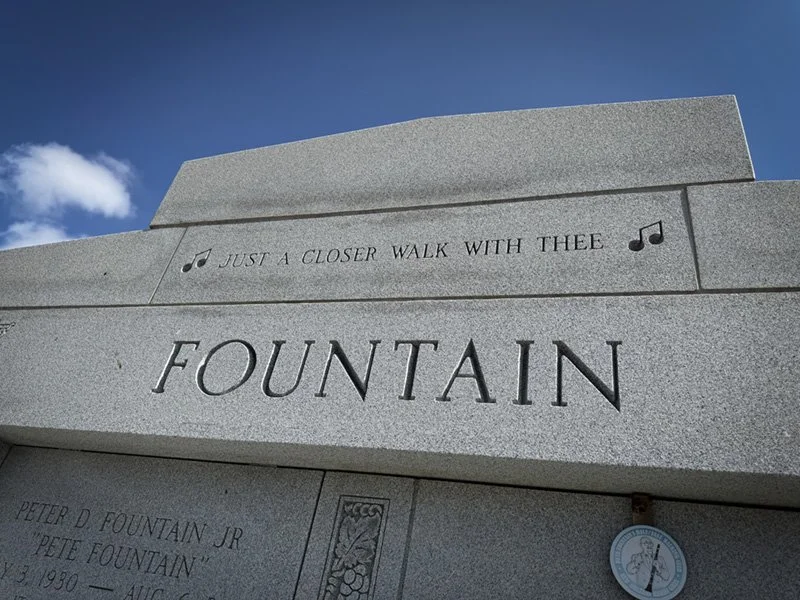
He died in 2016 and was buried in the Fountain family tomb at Metairie Cemetery. Musical notes stretch across the granite beside the title most closely associated with him: “Just a Closer Walk with Thee.” Fountain recorded the traditional hymn many times and performed it for Pope John Paul II, a moment he later called the pinnacle of his career.
Standing before the tomb, I thought about how completely Pete Fountain belonged to the places I knew. He was there on Mardi Gras morning, walking down St. Charles Avenue. He was there in Bay St. Louis, one street over from my grandfather’s house. His career carried him around the world, but the Pete Fountain I remember was always close to home.
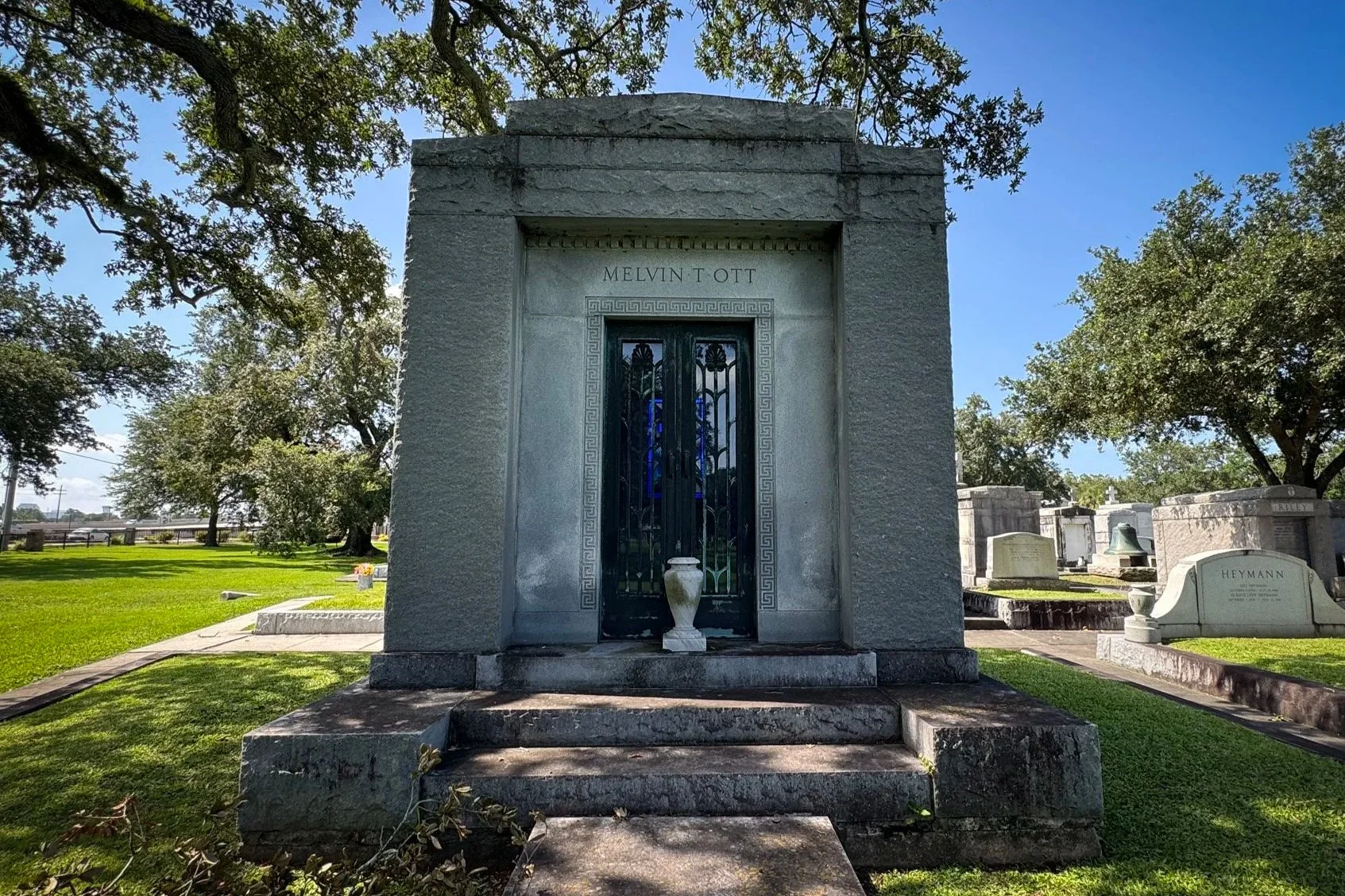
Mel Ott’s family mausoleum honors the Gretna native who spent 22 seasons with the New York Giants and became one of baseball’s greatest home-run hitters.
Mel Ott
My connection to Mel Ott begins with my maternal grandfather. He was an avid baseball fan who kept up with the who’s who of local sports, and Ott was one of the biggest names Louisiana ever produced.
Born in Gretna in 1909, Ott grew up playing sandlot baseball and developed into a gifted catcher despite standing only 5 feet 9 inches. By 16, he was playing for the Patterson Grays, a company team associated with a lumber operation near Morgan City.
The New Orleans Pelicans reportedly passed on him because of his size. Harry Williams, the lumber company’s owner, recognized his ability and recommended him to New York Giants manager John McGraw. When a postcard arrived instructing Ott to report to the Polo Grounds, the teenager initially thought someone was playing a joke on him.
Ott impressed McGraw during his tryout and signed with the Giants. Rather than send him through the minor leagues, McGraw kept the 17-year-old with the major-league club and began developing him as an outfielder. Ott remained with the Giants for his entire 22-season playing career.
His swing became one of the most recognizable in baseball. Ott lifted his right leg high as the pitch approached, then drove his compact frame forward with enough force to send the ball toward the Polo Grounds’ short right-field stands. The motion helped a player once considered too small become the National League’s leading home-run hitter.
Ott finished his career with 511 home runs, becoming the first National League player to reach 500. He led the league in home runs six times, recorded eight seasons with at least 30 and drove in 1,860 runs while maintaining a .304 career batting average. He helped the Giants win three National League pennants and hit .389 during their victory in the 1933 World Series.
His reputation extended beyond the numbers. Ott was respected by teammates, opponents and fans for his temperament and sportsmanship. Even rival Brooklyn Dodgers crowds were known to cheer him. He later became the Giants’ player-manager and remained with the organization until 1948.
The Baseball Hall of Fame inducted Ott in 1951 alongside Jimmie Foxx. At the time, they were two of only three major-league players to surpass 500 home runs. Ott’s National League record stood until 1966, when another Giants legend, Willie Mays, hit his 512th.
Ott returned to Louisiana after his years in New York. In November 1958, he was critically injured in an automobile accident in Bay St. Louis and died in a New Orleans hospital one week later. He was 49.
The Ott family mausoleum stands beneath a broad oak near the edge of Metairie Cemetery. Little about the structure announces the scale of the career behind the name carved across its stone. Photographing it connected the project to the baseball history my grandfather followed so closely—and to a Louisiana athlete he would have immediately known.
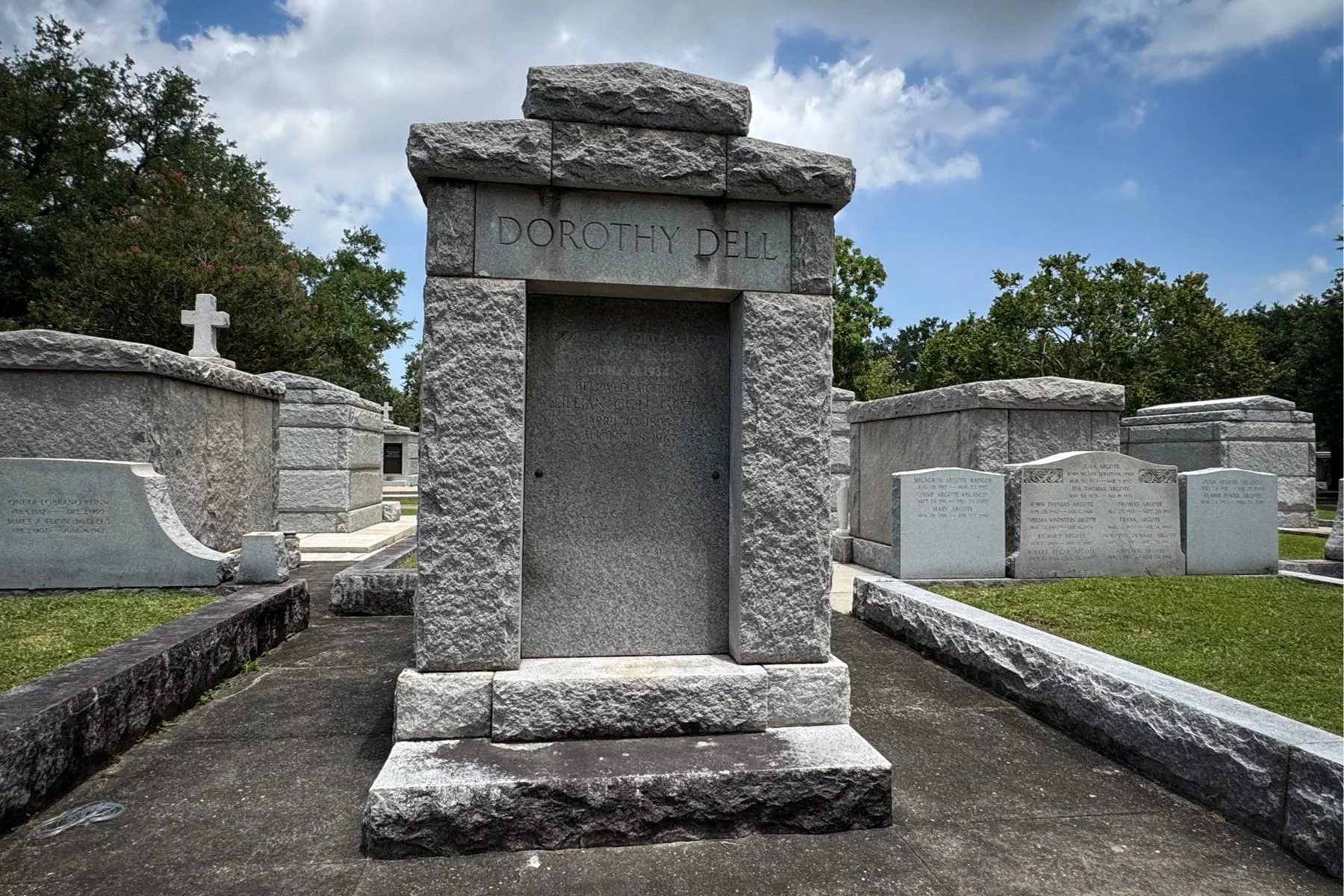
Dorothy Dell’s brief journey from New Orleans radio to the Ziegfeld Follies and Hollywood ended at 19, just as her film career was beginning.
Dorothy Dell
Dorothy Dell’s tomb was one of the most difficult on my list to find. It stands within a tightly arranged interior row, away from the cemetery’s broad avenues, and the location pin only brought me into the general area. A New Orleans teenager who had moved from local radio to the Ziegfeld Follies and Hollywood before dying at 19 was worth continuing the search.
Born Dorothy Dell Goff in Hattiesburg, Mississippi, in 1915, Dell moved to New Orleans as a child. She attended Sophie Wright High School, sang on local radio and became close friends with Mary Leta Dorothy Slaton, who later became famous as Dorothy Lamour.
After winning Miss New Orleans, Dell traveled to Galveston for the 1930 International Pageant of Pulchritude. At 15, she won the competition and was billed as “Miss Universe,” decades before the modern pageant adopted the title. The attention led to appearances in vaudeville and eventually took her to New York.
In 1931, Dell joined the Ziegfeld Follies and temporarily replaced featured singer Ruth Etting when she became ill. She appeared in another Broadway production and a Warner Bros. musical short before moving with her family to Hollywood in late 1933.
Paramount Pictures signed Dell to a long-term contract, and her film career advanced quickly. She made her feature debut in Wharf Angel, then appeared with Shirley Temple and Adolphe Menjou in Little Miss Marker. As nightclub singer Bangles Carson, Dell sang with Temple in the film that helped establish the child star. She completed a third feature, Shoot the Works, and was selected to appear opposite Gary Cooper and Temple in Now and Forever.
Dell was killed in an automobile accident in Altadena, California, on June 8, 1934, before production began. She was 19. The role intended for her went to Carole Lombard. Dell’s three completed feature films were all released that year, preserving only the beginning of the career Paramount had planned for her.
When I finally located the tomb, there was no difficulty identifying it. Dorothy Dell is carved prominently across the front of the substantial granite structure. The stone preserves the professional name she carried from New Orleans radio to Broadway and Hollywood during a career that lasted only a few years.
Marguerite Clark
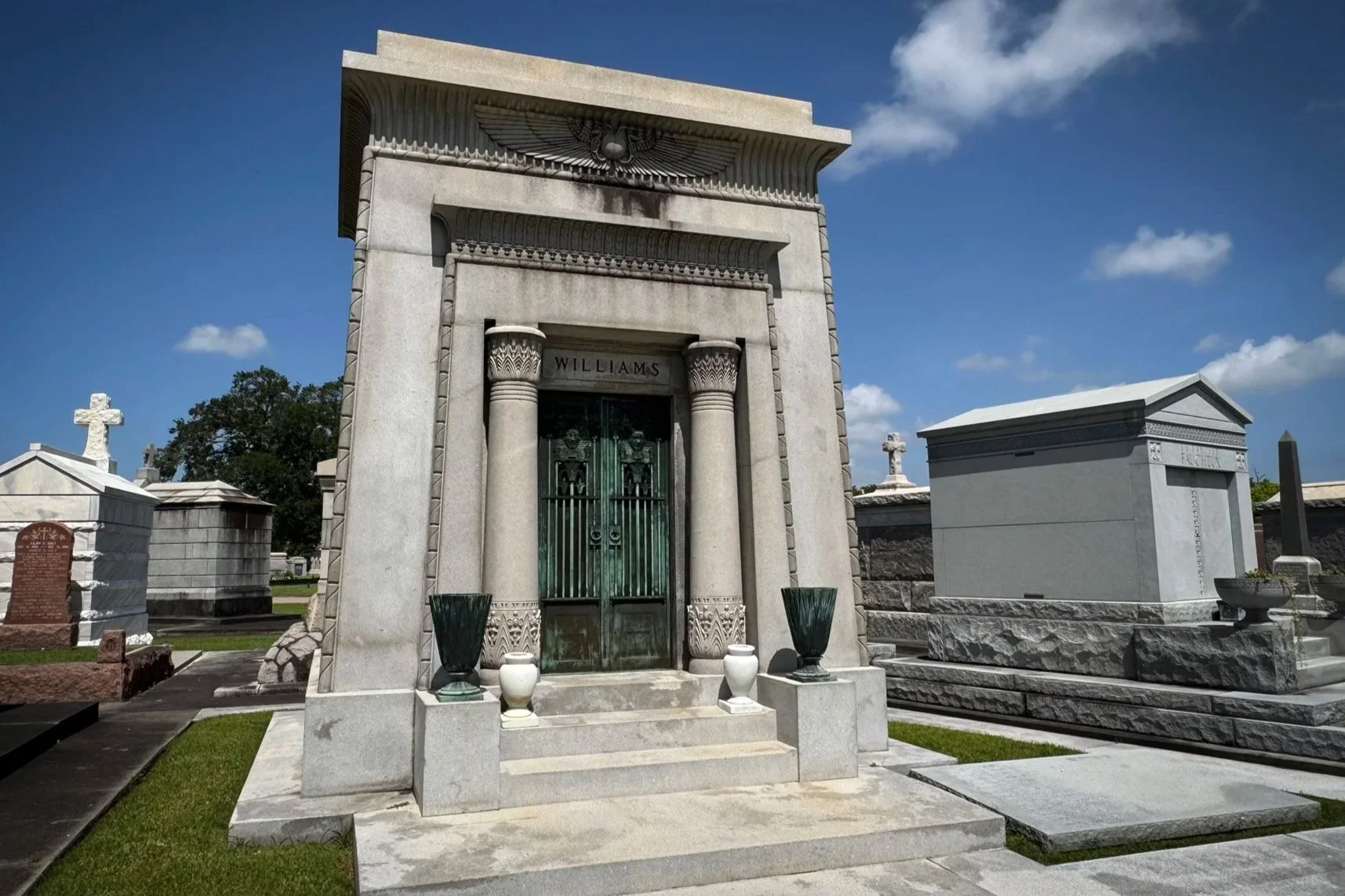
The Egyptian-inspired Williams family tomb led to Marguerite Clark, a Broadway star who became one of America’s most popular silent-film actresses.
The Williams family tomb was one I flagged during my exploratory visit to Metairie Cemetery. Its Egyptian design immediately stood apart, especially the copper pharaoh watching over its entrance. I photographed it before I knew anything about the family inside. Looking up the names afterward led me to Marguerite Clark, an almost-forgotten figure in New Orleans history who had once been one of the most popular actresses in America.
Born in Cincinnati in 1883, Clark lost both parents before she was a teenager and was raised by her older sister. She began performing professionally at 16 and made her Broadway debut the following year. Over the next decade, she built a successful stage career that included The Pied Piper, The Affairs of Anatol and Snow White and the Seven Dwarfs.
Clark entered motion pictures in 1914 at 31, already an established Broadway performer. Standing 4 feet 10 inches tall and known for her youthful appearance, she was well suited to the fairy tales and fantasy roles that had made her popular onstage. She made nearly 40 films in seven years, including Wildflower, The Prince and the Pauper, Uncle Tom’s Cabin and a 1916 adaptation of Snow White.
Her fame is difficult to appreciate today because most of her films have been lost. In a 1918 popularity poll, Clark finished second only to Mary Pickford and ahead of Douglas Fairbanks and Charlie Chaplin. Newspapers promoted Clark and Pickford as rivals, and film historian Daniel Blum later described her as the only actress who seriously threatened Pickford’s place as the leading woman of silent film.
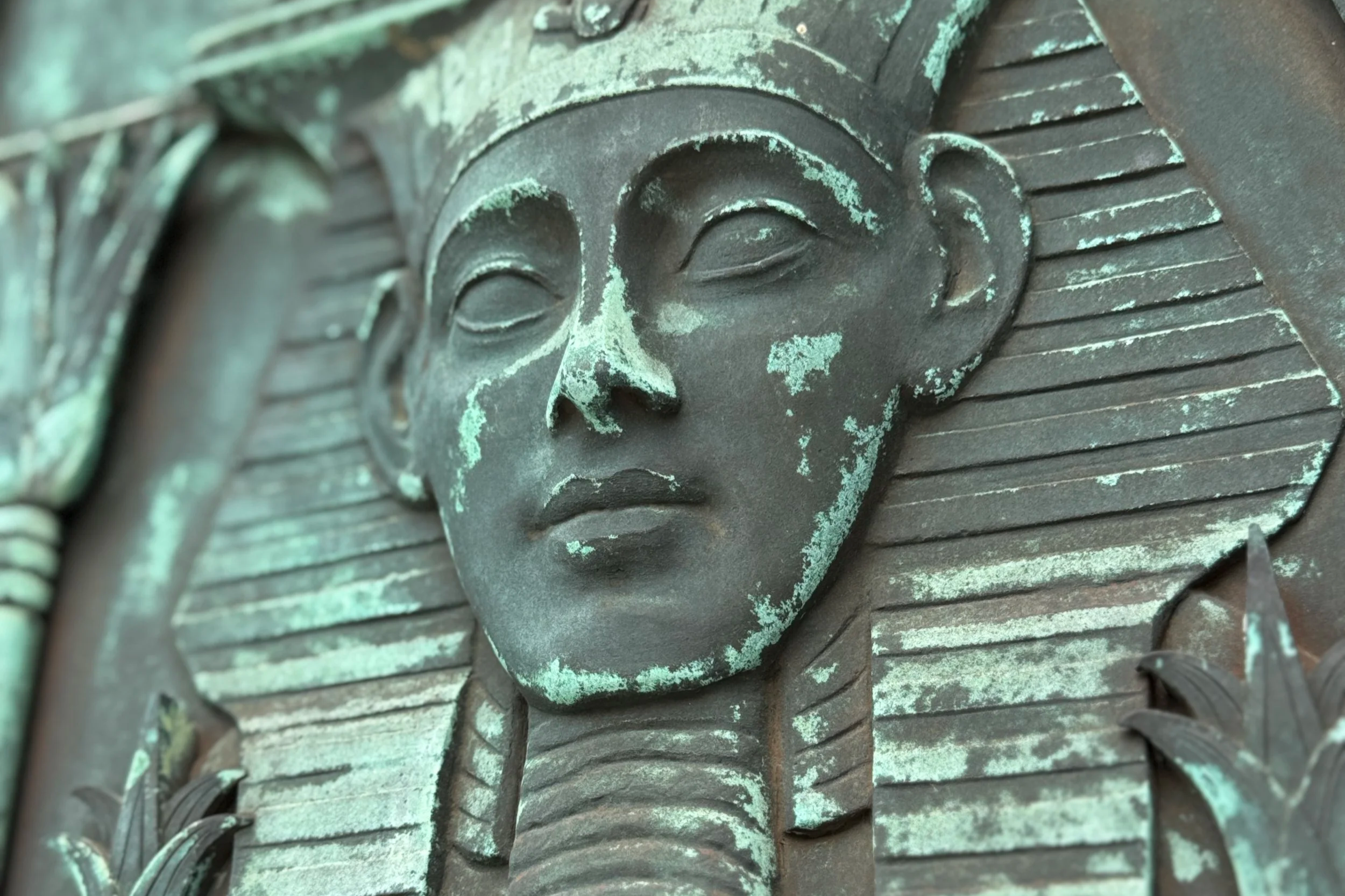
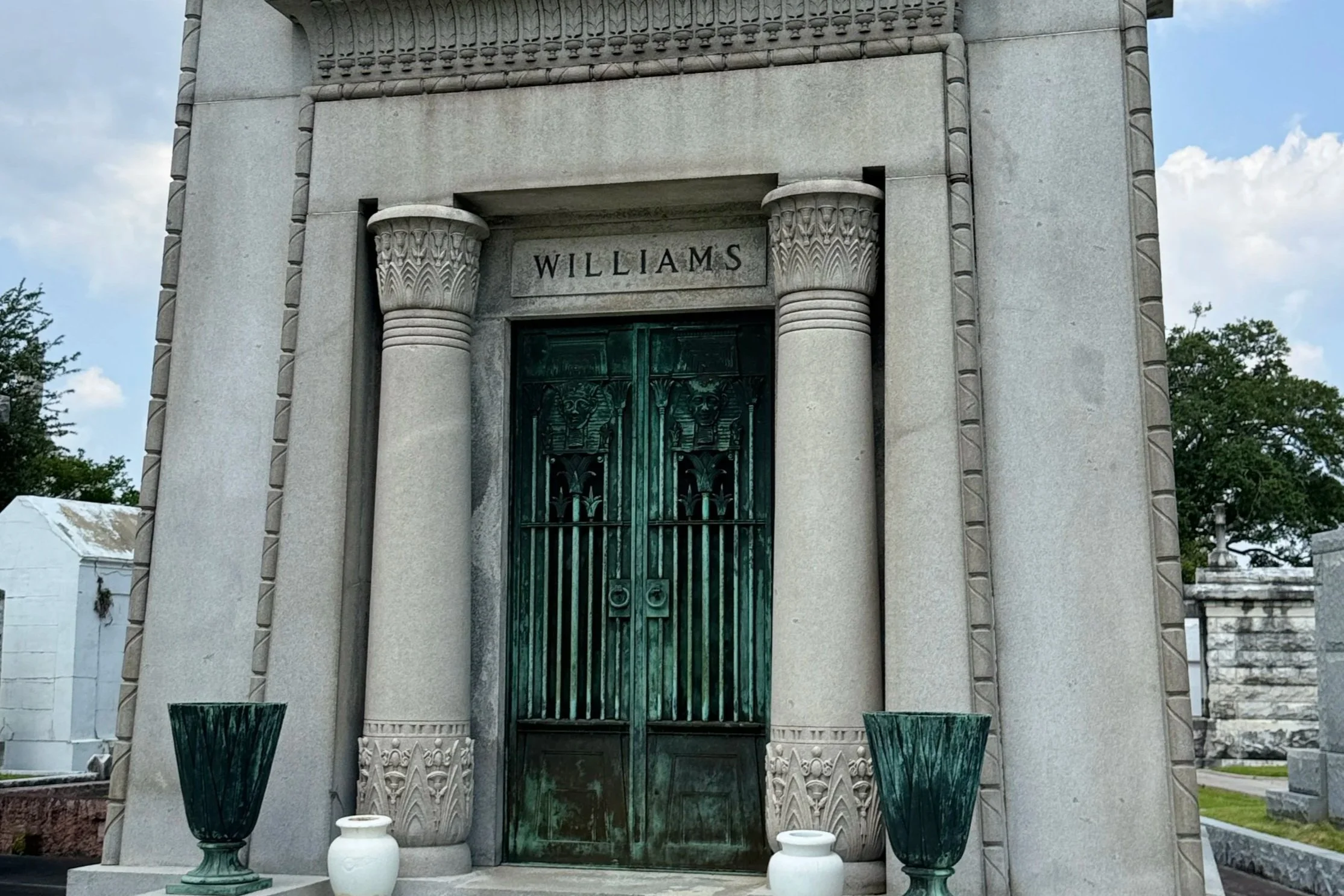
In 1918, Clark married Harry Palmerston Williams, a Louisiana businessman whose interests included lumber, banking and aviation. She later formed her own production company, but its first release, Scrambled Wives, became her final film. Clark retired from the screen in 1921 and settled with Williams in New Orleans. The couple rests in the Egyptian Revival Williams family tomb alongside Harry’s father, lumber magnate Frank B. Williams. Known as Louisiana’s “Cypress King,” his fortune and the monument it helped create will be explored explored in our companion feature about the fortunes behind some of Metairie Cemetery’s most impressive tombs.
Their St. Charles Avenue mansion remains part of the city as the Milton H. Latter Memorial Library. Clark and Williams became prominent members of New Orleans society, while his Wedell-Williams Air Service helped advance commercial and racing aviation in Louisiana. Williams died in a plane crash in 1936. Clark briefly assumed control of his aviation interests before selling them and returning to New York, where she died of pneumonia in 1940. Her cremated remains were brought back to New Orleans and placed with her husband in the Williams tomb.
The copper pharaoh drew me to the tomb, but Marguerite Clark gave me the story. Her former home still welcomes people on St. Charles Avenue, and her star remains on the Hollywood Walk of Fame, yet her name has largely disappeared from public memory. Researching the family behind that Egyptian façade recovered a woman who once stood alongside the most famous performers of the silent-film era—and later made New Orleans her home.
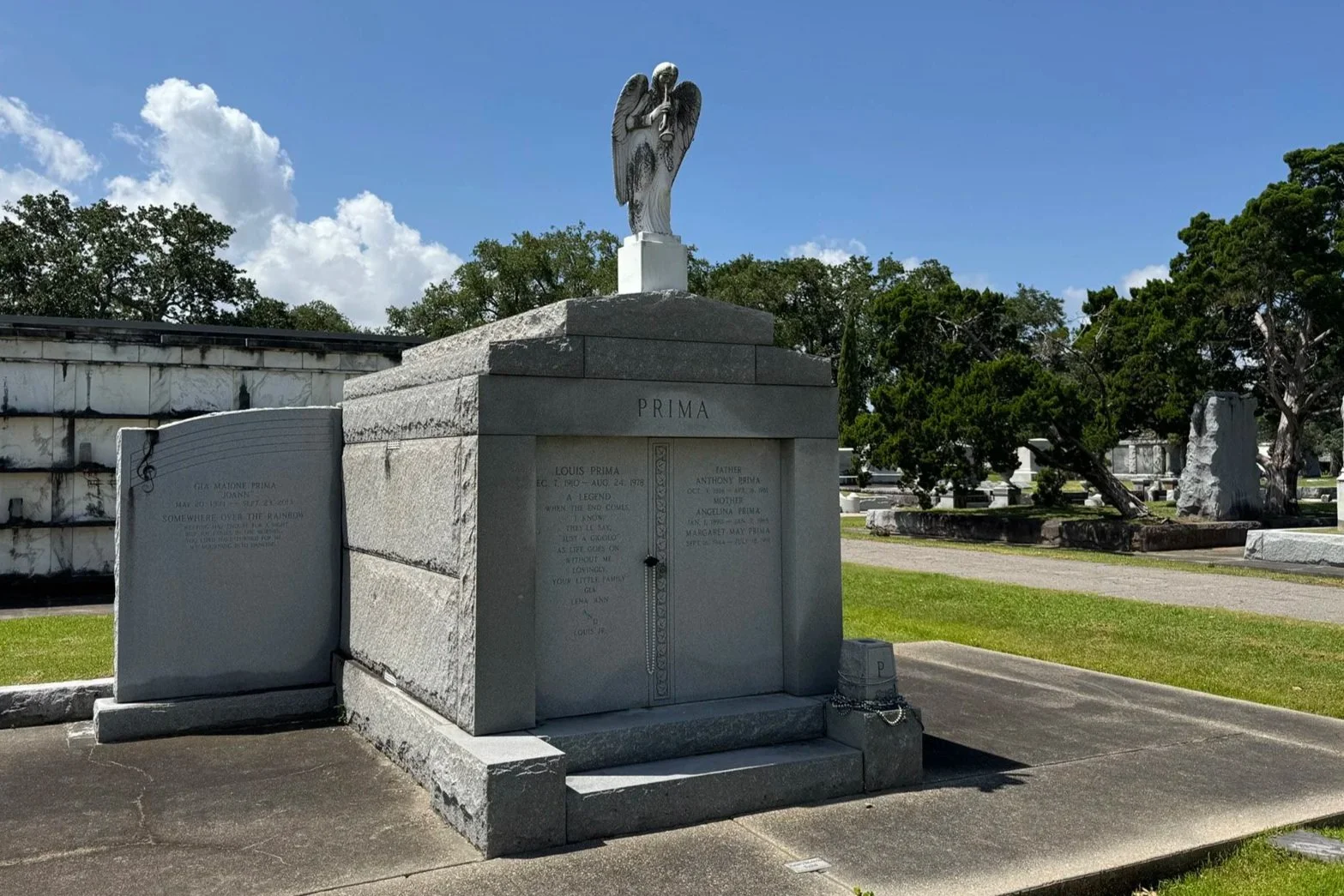
Louis Prima’s tomb brings together the New Orleans bandleader behind “Sing, Sing, Sing” and the unforgettable voice of King Louie in Disney’s The Jungle Book.
Louie Prima
My connection to Louis Prima begins with The Jungle Book, one of my favorite Disney films. Prima gave King Louie his voice, humor and boundless energy, turning “I Wan’na Be Like You” into one of the film’s defining moments. Long before I understood his place in New Orleans music, I knew the growl, the scat singing and the swinging call-and-response between King Louie and Baloo.
Born to Sicilian immigrants in New Orleans in 1910, Prima grew up on St. Peter Street in Tremé. He listened to jazz in the clubs surrounding the French Quarter, admired Louis Armstrong and began leading his own group at 14. By his early 20s, he was performing at the Saenger Theatre and in clubs operated by his older brother, Leon.
Bandleader Guy Lombardo heard Prima at the Shim Sham Club on Bourbon Street during Mardi Gras in 1934 and encouraged him to try New York. Prima soon became the house bandleader at the Famous Door on West 52nd Street, where his New Orleans Gang helped establish the club as a center of the city’s jazz scene. He later moved to Los Angeles, expanded into big-band swing and appeared in musical films.
Prima wrote and first recorded “Sing, Sing, Sing” in 1936. Benny Goodman’s later version became one of the defining recordings of the swing era, often overshadowing Prima’s role as its composer. His career moved easily across musical styles, from traditional New Orleans jazz and big-band swing to jump blues, lounge music and early rock ’n’ roll.
He found new success in Las Vegas during the 1950s. With singer Keely Smith and New Orleans saxophonist Sam Butera leading the Witnesses, Prima developed one of the city’s most popular lounge acts. Prima bounded across the stage, traded lines with the band and played against Smith’s famously composed expression. Their recording of “That Old Black Magic” earned them a Grammy at the first Grammy Awards in 1959. Their album The Wildest! was later inducted into the Grammy Hall of Fame.
Disney introduced Prima to another generation with The Jungle Book in 1967. The studio’s animators reportedly incorporated elements of his physical performance into King Louie, preserving more than his voice. The character moves with Prima’s timing and showmanship, making the sequence feel like an animated version of the nightclub act he had spent decades perfecting.
Prima died in 1978 after spending nearly three years in a coma following surgery for a brain tumor. His tomb was easy to recognize when I found it at Metairie Cemetery. Gabriel stands above the roof with a trumpet raised, and lines from “Just a Gigolo” appear across the doors. Yet the names surrounding his reveal a family memorial rather than a monument devoted solely to his fame.
Seeing the tomb connected the performer behind King Louie to a much larger career. The voice I first knew through one of my favorite Disney films belonged to a New Orleans musician who helped shape several eras of American popular music.
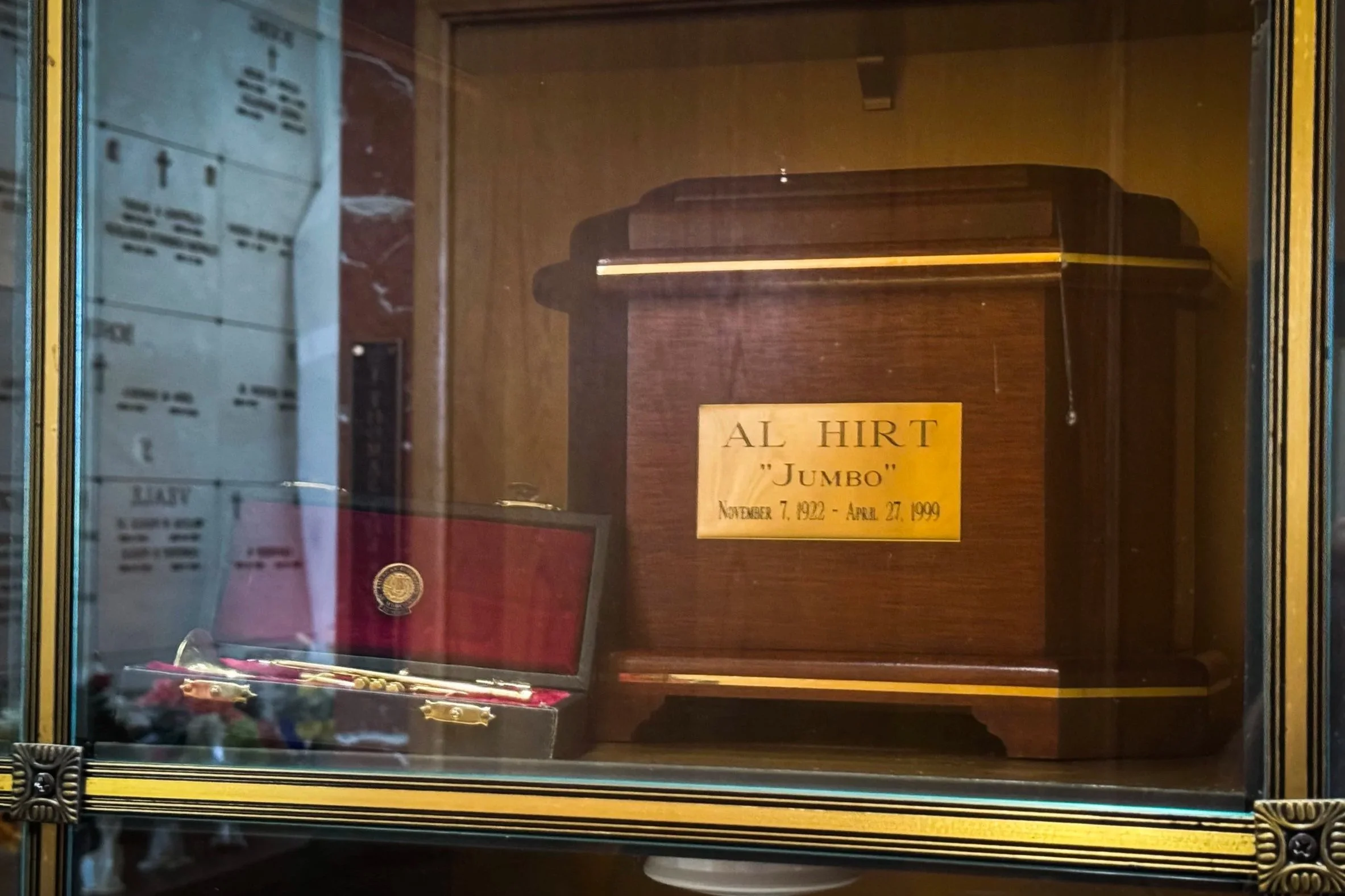
A miniature trumpet award displayed beside Al Hirt’s urn recalls the many honors received by the Grammy-winning musician New Orleans knew as “Jumbo.”
Al Hirt
Al Hirt was the last stop on my tour of Metairie Cemetery. By then, the Louisiana heat had taken its toll, and stepping into the enormous, air-conditioned All Saints Mausoleum brought immediate relief. Its carpeted hallways, polished surfaces and seemingly endless rows of identical niches felt removed from the oak-lined avenues and stone monuments I had spent the day photographing.
I followed the directions to the second floor and began searching the St. Thomas the Apostle corridor. The repeating hallways made it difficult to keep my bearings, and I eventually asked for help—the only time during the entire project that I needed someone to lead me to a grave. Hirt’s name appeared on a small niche set among hundreds of others.
That modest resting place stands in sharp contrast to the public presence of the man New Orleans knew as “Jumbo.” Al Hirt was a musician, nightclub owner and television personality whose name became part of the city’s identity. Everything about him seemed large: the man, the sound of his trumpet and the place he occupied in New Orleans culture.
Alois Maxwell Hirt was born in New Orleans in 1922, the son of a police officer. His father bought him his first trumpet from a pawnshop when he was 6, and that same year Hirt performed at the Saenger Theatre with the Junior Police Band. He attended Jesuit High School and earned a scholarship to the Cincinnati Conservatory of Music, where he trained as a classical trumpeter.
Hirt served in the Army Air Forces during World War II and spent several years touring with big bands before returning home. In New Orleans, he performed with Pete Fountain at Pier 600 on Bourbon Street and built a following around the power, speed and clarity of his playing. He moved between traditional jazz, classical technique and popular music while retaining the exuberance audiences associated with him.
During the 1960s, Hirt became one of the country’s most successful instrumental recording artists. His version of Allen Toussaint’s “Java” reached No. 4 on the Billboard Hot 100 and earned the Grammy Award for best pop instrumental performance. The accompanying album, Honey in the Horn, received an album of the year nomination. Hirt later recorded the rapid-fire theme for television’s The Green Hornet, another performance that displayed the technical force behind his showmanship.
Hirt carried that national success back to Bourbon Street, where his nightclub operated for more than two decades. He became a part-owner of the New Orleans Saints and performed during the halftime show of the first Super Bowl in 1967. When Pope John Paul II visited New Orleans in 1987, Hirt played “Ave Maria,” a performance he considered one of the greatest honors of his career.
Hirt died in 1999 at 76. After a day spent searching for elaborate tombs and towering monuments, the tour ended before a small niche along a quiet corridor. The memorial may be understated, but the name Al Hirt still carries its own weight in New Orleans.

Where to go next
Save Our Cemeteries helps protect the tombs, monuments and burial grounds that preserve generations of New Orleans history. Its guided Metairie Cemetery tours support restoration, education and preservation work throughout the city.
Visit Save Our Cemeteries to learn more about its preservation work, support the organization or book a guided tour.
Find the graves
Use the GPS coordinates below to locate the voices featured in this story.
Anne Rice — Section 129
Pete Fountain — Section 214
Mel Ott — Section 146
Dorothy Dell — Section 148
Marguerite Clark — Section 97, Williams family tomb
Louis Prima — Section 88
Al Hirt — All Saints Mausoleum
Second floor, St. Thomas the Apostle corridor
Next week, we return to Metairie Cemetery for the stories of Al Copeland, Tom Benson and five other builders whose ambitions helped reshape New Orleans.