Behind six of Metairie Cemetery’s most recognizable tombs lies the story of how fortunes were made in turn-of-the-century New Orleans.
Beneath Metairie Cemetery’s live oaks, a search for seven familiar names opens a path through the city’s music, literature, film and sports history.
The fortunes that shaped a city
Behind six of Metairie Cemetery’s most recognizable tombs lies the story of how fortunes were made in turn-of-the-century New Orleans.
Metairie Cemetery was created during an era when New Orleans was growing through industry, transportation and its connections to the wider world. The wealth generated during those years remains visible in the elaborate tombs and monuments built by some of the city’s most successful families.
Their size and ornamentation first caught my attention, but each one raised a larger question: How was this wealth accumulated?
The answers lead beyond the cemetery and into the industries that powered New Orleans and south Louisiana at the turn of the 20th century. These six fortunes grew from cypress lumber, real estate, rail transportation, maritime commerce and the tropical-fruit trade. Together, their monuments preserve more than family names. They reveal the economic forces that helped shape a city.
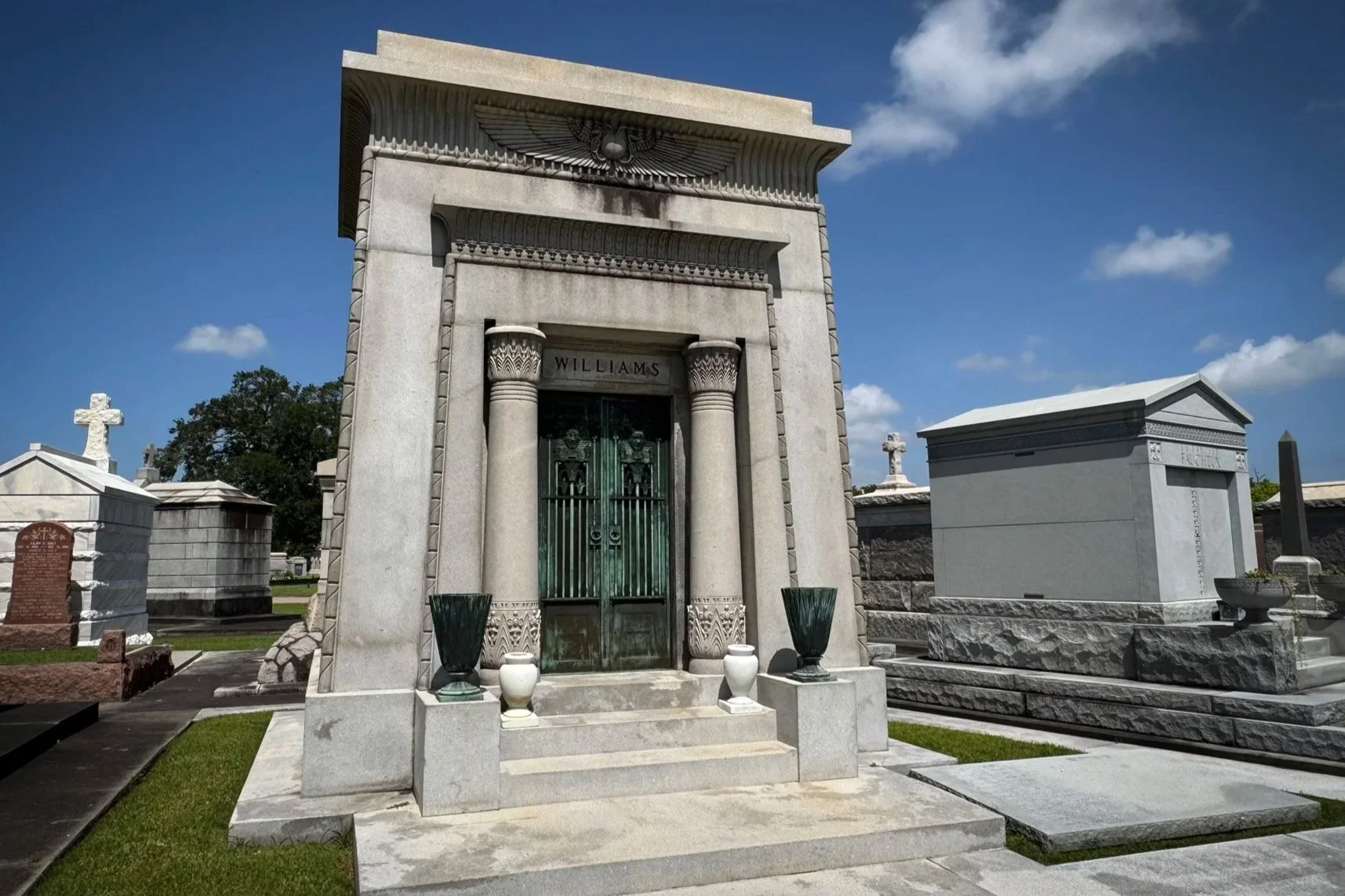
The Egyptian-inspired Williams family tomb led to Marguerite Clark, a Broadway star who became one of America’s most popular silent-film actresses.
Frank B. Williams and the cypress empire
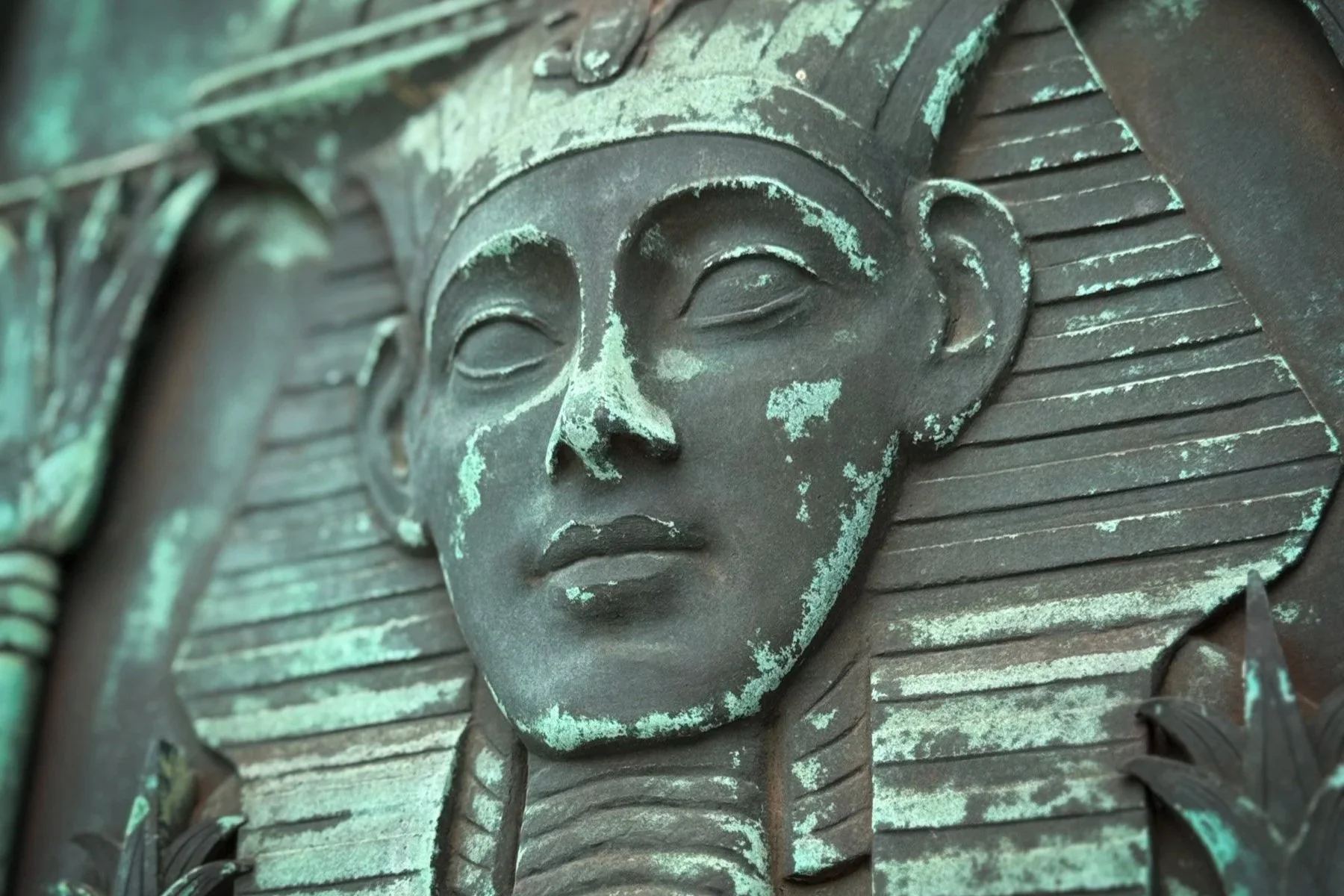
The Egyptian Revival Williams tomb first appeared in the POP nakaro feature The voices that shaped a city as the final resting place of silent-film star Marguerite Clark. The shared family tomb also holds Clark’s husband, Harry Palmerston Williams, and his parents, Frank B. and Emily Seyburn Williams. Its imposing bronze doors and Egyptian ornamentation provide the first clues to the fortune behind it.
Frank Williams came to Louisiana through the railroad industry. When construction on a line west of New Orleans stopped near Patterson, he used the remaining timber and equipment to repair bridges for nearby sugar planters. The work introduced him to the commercial potential of the surrounding cypress forests.
Williams began acquiring swampland and developed the F.B. Williams Cypress Lumber Company into one of the country’s largest lumber operations. Drawing upon his railroad experience, he found more efficient ways to harvest, transport and mill timber on an industrial scale. The success earned him the name “Cypress King,” while the family’s holdings expanded into land, sugar, banking and other investments.
The resulting wealth reached well beyond the Patterson mill. In 1912, Frank and Emily purchased an Italianate mansion at 5120 St. Charles Avenue as the family’s New Orleans home. The house later became the Milton H. Latter Memorial Library, giving the Williams fortune a familiar place in the city’s present-day landscape.
The Egyptian tomb preserves another part of that legacy. Its architecture reflects wealth accumulated from one of Louisiana’s most abundant natural resources—and an industry that transformed both the regional economy and the cypress forests from which it grew.
Pete Fountain’s family tomb carries a musical line from “Just a Closer Walk with Thee,” a fitting tribute to the clarinetist whose sound became part of New Orleans.
Daniel A. Moriarty and the rise of real estate
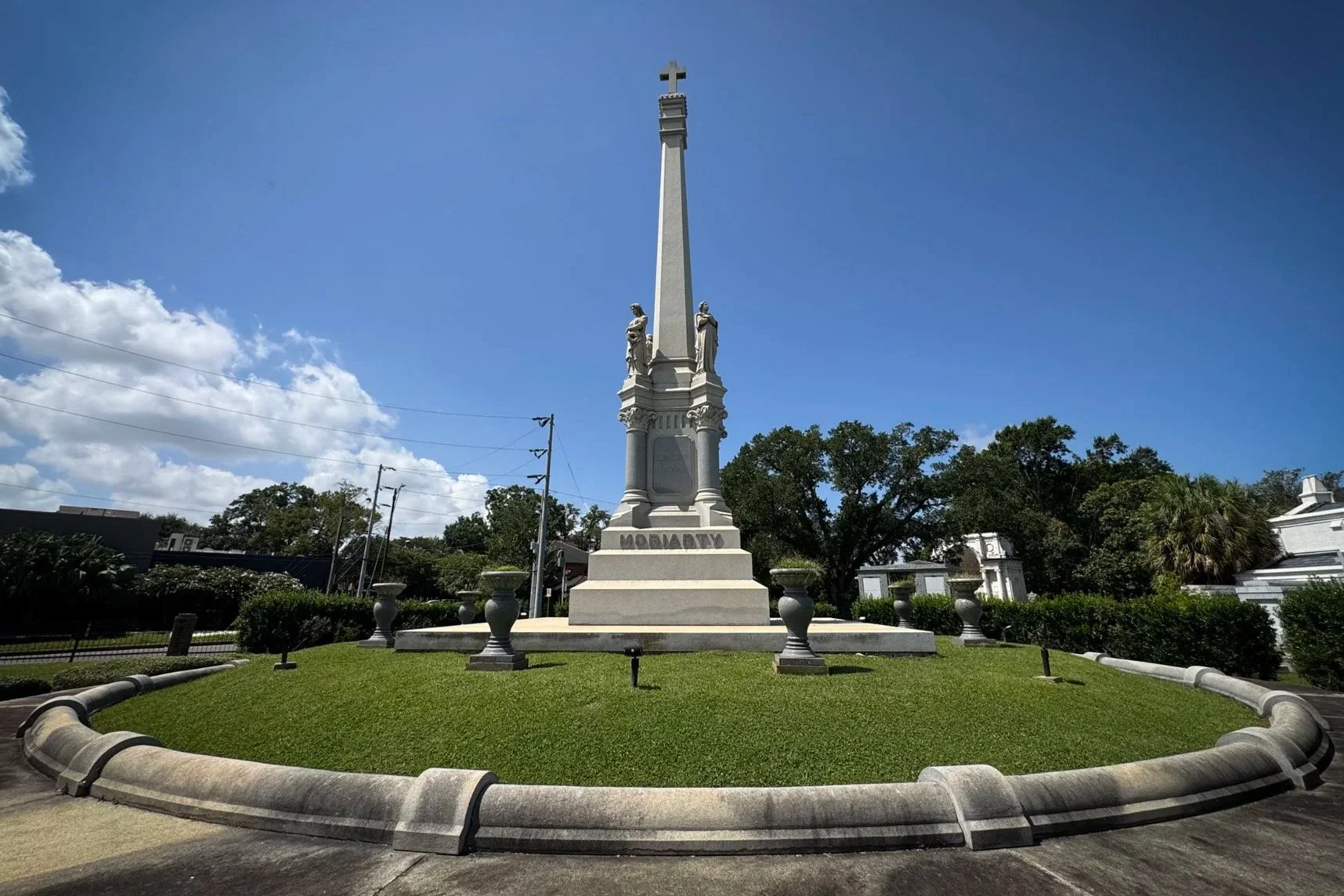
Few monuments at Metairie Cemetery announce their presence as forcefully as the one Daniel A. Moriarty erected for his wife, Mary Farrell Moriarty. Rising above the surrounding tombs, the granite column is encircled by statues representing faith, hope, charity and memory. At approximately 80 feet, it remains the cemetery’s tallest monument and one of its most recognizable landmarks.
Moriarty arrived in New Orleans as an Irish immigrant with little money. He and Mary established a successful business before investing their earnings in real estate as the city expanded during the second half of the 19th century. Those investments produced the fortune that eventually placed the couple among the wealthy families whose monuments filled the former Metairie Race Course.
Mary died in 1887, and Moriarty used part of that wealth to create an enduring memorial to her. Cemetery lore holds that established New Orleans society had refused to accept the couple and that Moriarty deliberately built the monument to tower over the families who had looked down upon them. The story is difficult to document, but it has become inseparable from the structure itself.
Whether or not the monument was intended as a final act of defiance, its scale makes the family’s ascent visible. The immigrant who arrived with little accumulated his wealth through commerce and property in a rapidly growing New Orleans—and ensured that the Moriarty name would rise above the cemetery’s most elaborate tombs.
Mel Ott’s family mausoleum honors the Gretna native who spent 22 seasons with the New York Giants and became one of baseball’s greatest home-run hitters.
Joseph A. Walker and the streetcar city
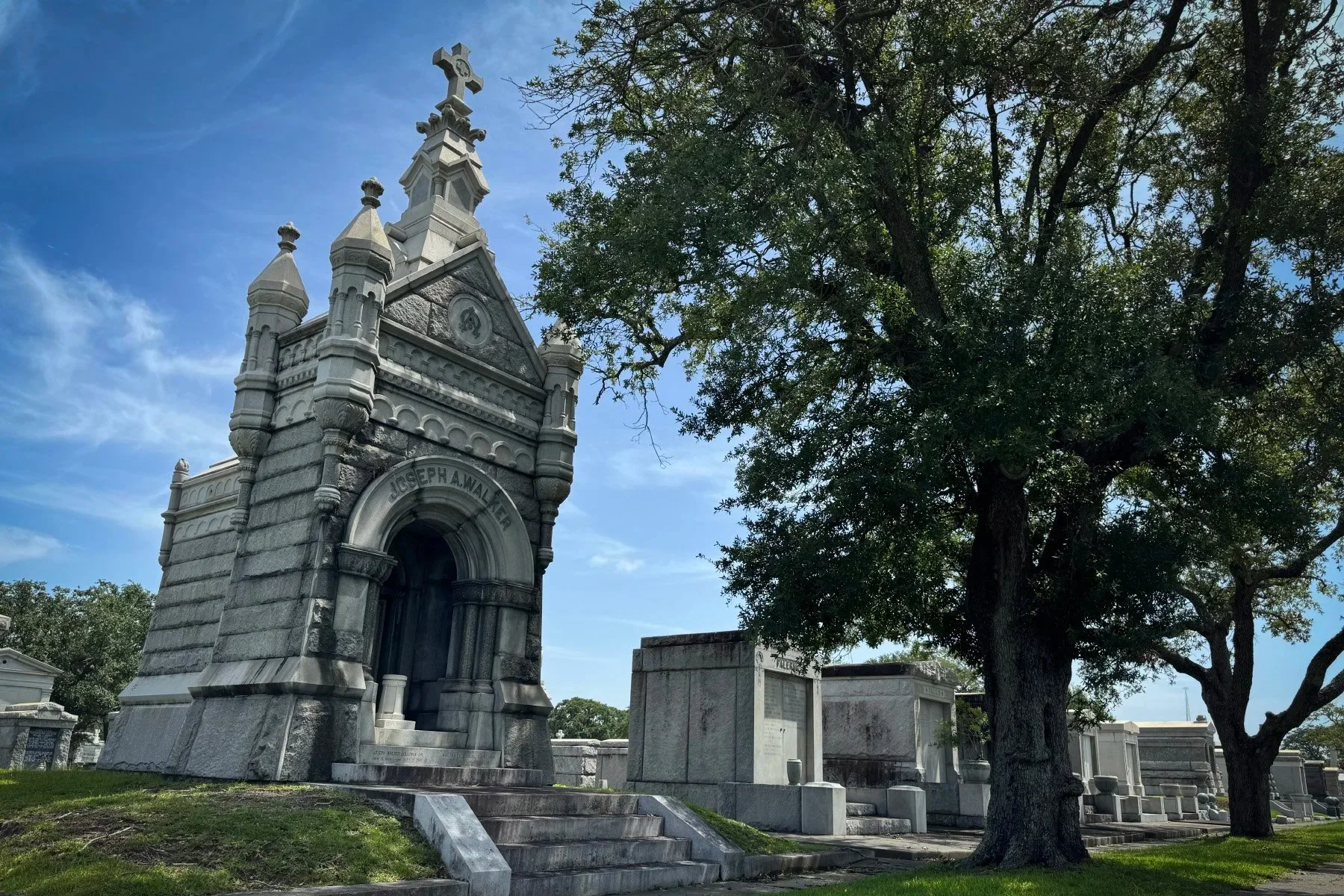
Joseph A. Walker’s Romanesque Revival mausoleum reflects a fortune built through two businesses closely tied to the growth of New Orleans: entertainment and transportation. Its arched entrance, carved stone and fortresslike profile make it one of the cemetery’s most commanding family tombs.
Walker first became prominent as proprietor of the Crescent Billiard Hall at Canal Street and St. Charles Avenue. More than a place to play billiards, the elaborate hall operated as a major social and sporting destination in the heart of the city’s commercial district.
His interests later extended to the New Orleans City and Lake Railroad, where he served as president. The company connected downtown New Orleans with Lake Pontchartrain, carrying passengers toward the resorts, restaurants and recreational attractions developing along the lakefront.
Walker’s fortune grew with a city expanding outward. His businesses served both the crowds gathering at its center and the transportation network carrying residents beyond it. The mausoleum he left behind preserves the wealth generated as entertainment, streetcars and urban growth began reshaping New Orleans.
Dorothy Dell’s brief journey from New Orleans radio to the Ziegfeld Follies and Hollywood ended at 19, just as her film career was beginning.
John Henry Menge and the working port
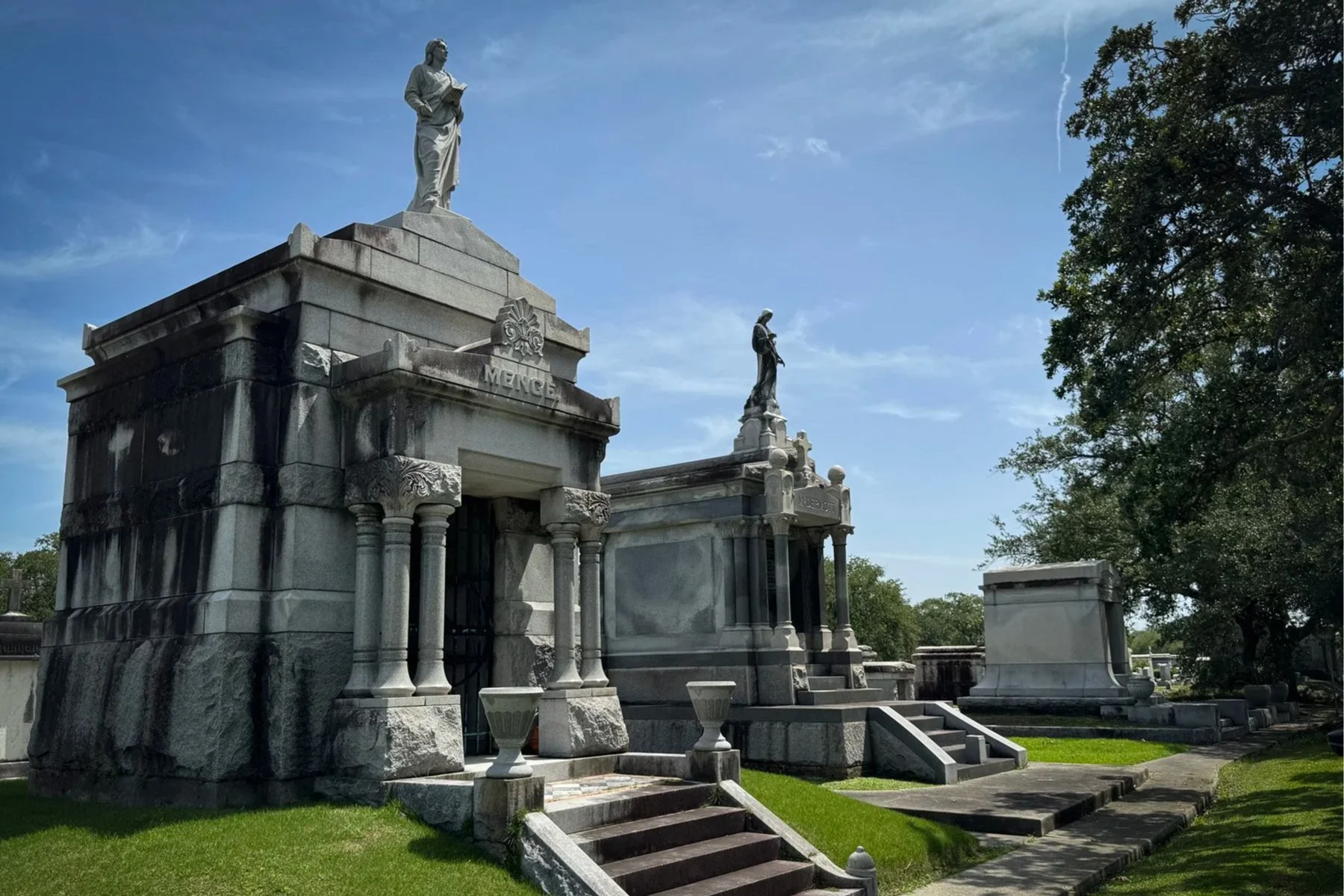
John Henry Menge’s family mausoleum reflects a fortune built along the New Orleans waterfront. Its pale stone facade, classical columns and elevated entrance give the tomb a formal presence, but the business behind it served the practical needs of a working port.
Menge entered the wholesale grocery trade before establishing J.H. Menge & Co. in 1878. The company became a ship chandlery, supplying vessels with the food, equipment and other provisions needed before leaving port. As maritime traffic increased, so did the demand for businesses capable of keeping those ships stocked and moving.
His interests eventually reached beyond the chandlery into insurance, rail transportation and the development of the city’s first electric-light plant. Menge’s fortune therefore grew alongside several of the systems modernizing New Orleans during the late 19th century.
The family mausoleum represents wealth accumulated through the daily machinery of commerce. Every ship entering or leaving the port required a network of suppliers behind it, and Menge built his business by becoming part of that essential infrastructure.
Louis Prima’s tomb brings together the New Orleans bandleader behind “Sing, Sing, Sing” and the unforgettable voice of King Louie in Disney’s The Jungle Book.
Salvatore Oteri and the tropical-fruit trade
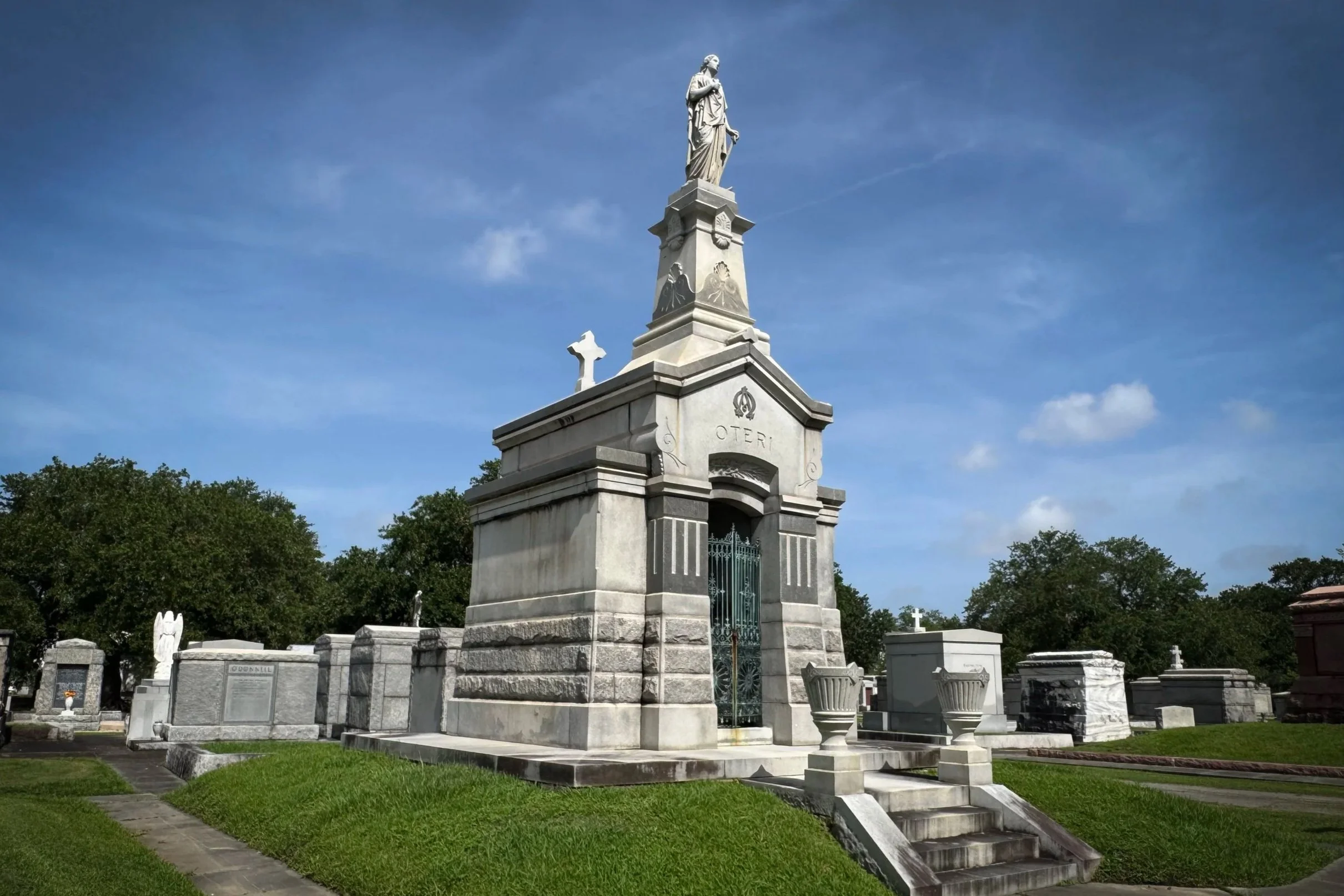
The Oteri family mausoleum, with its classical facade and the family name carved prominently above the entrance, reflects a fortune tied directly to the Port of New Orleans. Salvatore Oteri built that wealth by helping transform tropical fruit from a seasonal luxury into a major American trade.
Oteri immigrated from Sicily and began selling fruit in New Orleans. As demand grew, he expanded beyond local distribution by acquiring plantations in Central America and establishing a steamship line to carry bananas and other tropical produce across the Gulf of Mexico. By 1891, his operation included six vessels moving between New Orleans and ports in Honduras and Belize.
The business required control of nearly every stage of the journey. Fruit had to be cultivated, loaded, transported and sold quickly enough to reach customers before it spoiled. Oteri accumulated his fortune by building the network needed to make that movement faster and more reliable.
In 1899, he sold his shipping line and Central American plantations to the United Fruit Company. His career captures the expanding reach of turn-of-the-century New Orleans: a port where an immigrant fruit seller could build an international enterprise connecting Central American plantations with markets across the United States.
Salvatore Pizzati and a fortune shared
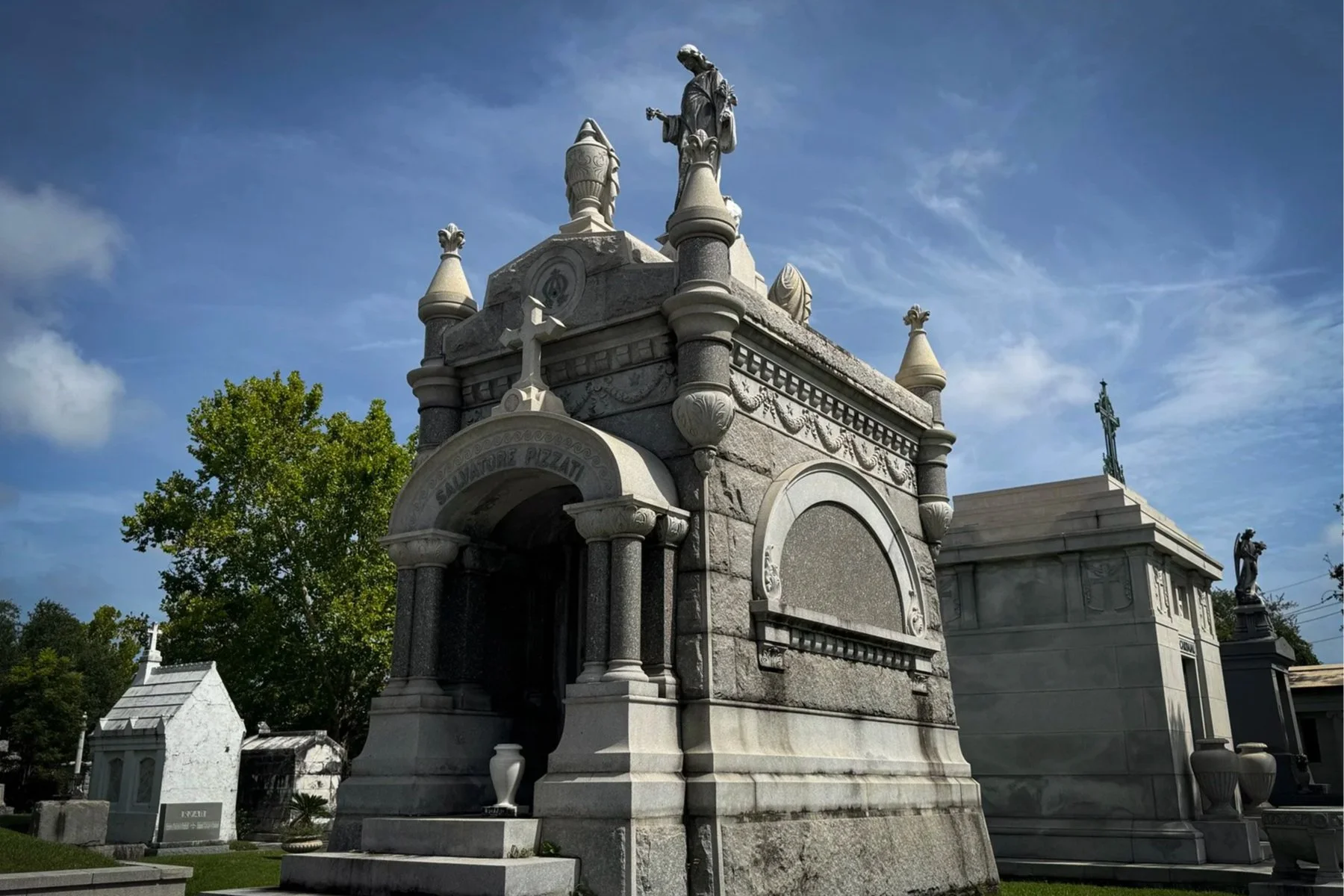
Salvatore Pizzati’s ornate mausoleum reflects both the wealth generated by New Orleans’ tropical-fruit trade and the public legacy he created with it. Turrets, carved columns, religious sculpture and elaborate stonework give the tomb the appearance of a small chapel.
Like Salvatore Oteri, Pizzati was a Sicilian immigrant who found opportunity in the city’s growing fruit industry. He built S. Pizzati & Co. into a successful importing business, bringing bananas and other tropical produce through the Port of New Orleans for distribution to markets across the country.
Pizzati used part of his fortune to support the city’s Italian immigrant community, contributing to schools, orphanages and other charitable causes. His most visible gift remains the original Pizzati Gate at City Park, where the family name still marks an entrance to one of New Orleans’ most familiar public spaces.
The mausoleum brings the story back to the monuments that inspired this search. Its scale records the success of an immigrant entrepreneur, but Pizzati’s legacy extends beyond the cemetery. The same trade that financed his family tomb also allowed him to invest in the community where his fortune was made.

Where to go next
Save Our Cemeteries helps protect the tombs, monuments and burial grounds that preserve generations of New Orleans history. Its guided Metairie Cemetery tours support restoration, education and preservation work throughout the city.
Visit Save Our Cemeteries to learn more about its preservation work, support the organization or book a guided tour.
Find the graves
Use the GPS coordinates below to locate the voices featured in this story.
Frank B. Williams — Section 97, Williams family tomb
Daniel A. Moriarty — Moriarty Monument
Joseph A. Walker — Section 124, Walker family mausoleum
John Henry Menge — Section 113, Menge family tomb
Salvatore Oteri — Section 118, Oteri family mausoleum
Salvatore Pizzati — Section B, Pizzati Mausoleum