Remembering Mitch Byrd
Remembering Mississippi comic book artist Mitch Byrd through Cat & Mouse, the series that first made me a fan.
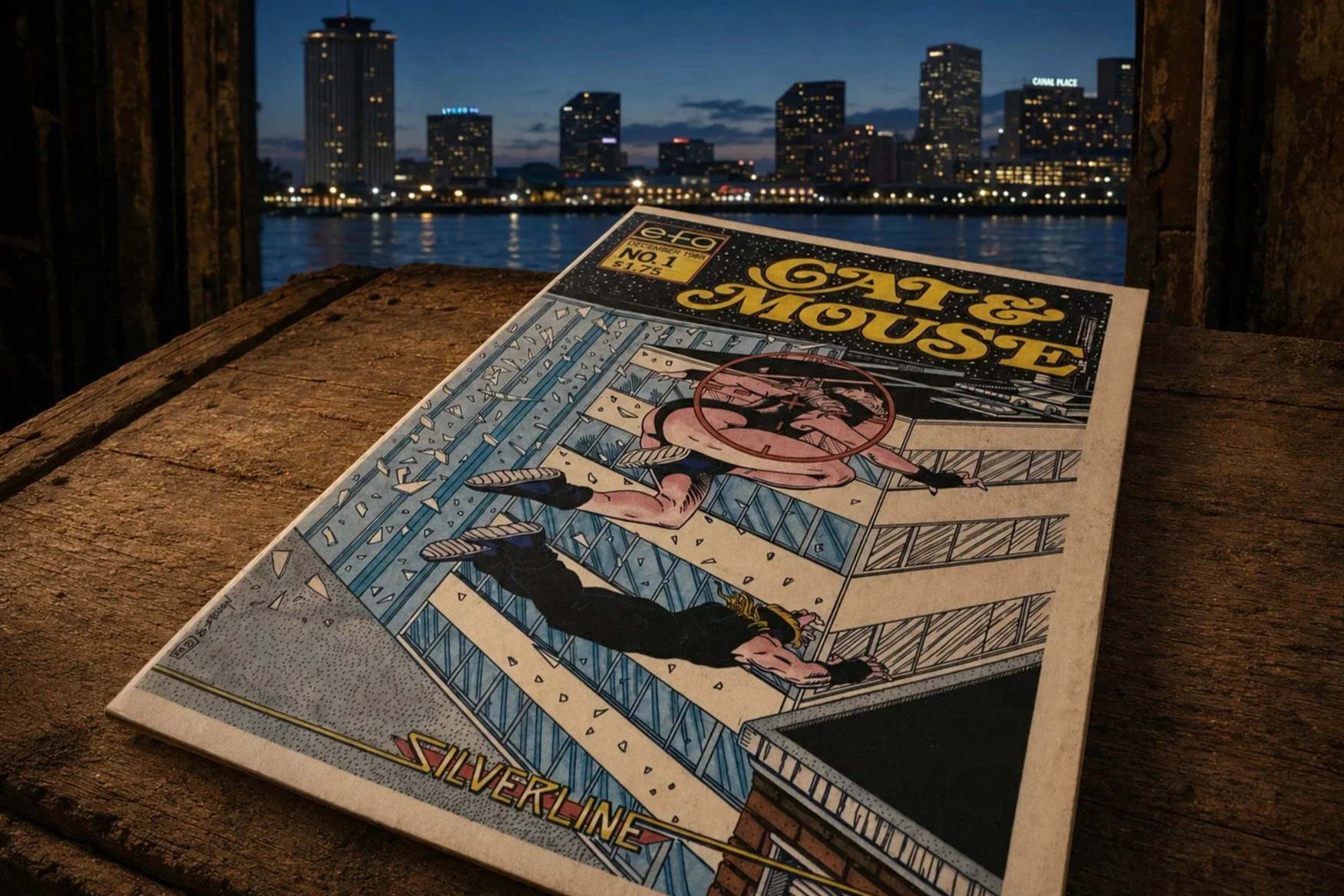
Set in New Orleans, Cat & Mouse brought Mitch Byrd’s Gulf Coast heroes close to home.
A rescue from the long boxes
Last weekend, I stopped at Southeast Cards & Comics in Baton Rouge during a 50% off sale. After working my way through the long boxes, I spotted a nice copy of Cat & Mouse No. 1 that seemed to need rescuing from the back-issue bins. I already owned the issue—and the complete 18-issue run—but this copy was in good shape and the price was right. Why not? I had enjoyed the series in high school, when Teenage Mutant Ninja Turtles, books from First Comics and other titles were opening my collection beyond Marvel and DC.
With Cat & Mouse and a few Batman issues in my stack, I spotted Claude Parish thumbing through some Superman books and walked over to talk with him. Claude is a local artist and longtime presence in Louisiana comics circles whose knowledge of the medium runs deep. He noticed Cat & Mouse in my stack and acknowledged it, but we did not discuss the series or Mitch Byrd.
I did not think he had paid much attention to it, really…
This morning, Claude sent me the news that Byrd had died at 63, along with an invitation to a memorial next week. I guess he had been paying closer attention than I realized. An artist I had not considered in years had resurfaced in my stack only the week before I learned of his death. What began as an extra copy for my collection led me to pull out the full run and put on record what the series meant to me. Since I knew Byrd primarily through his pages, that is where this remembrance should begin.
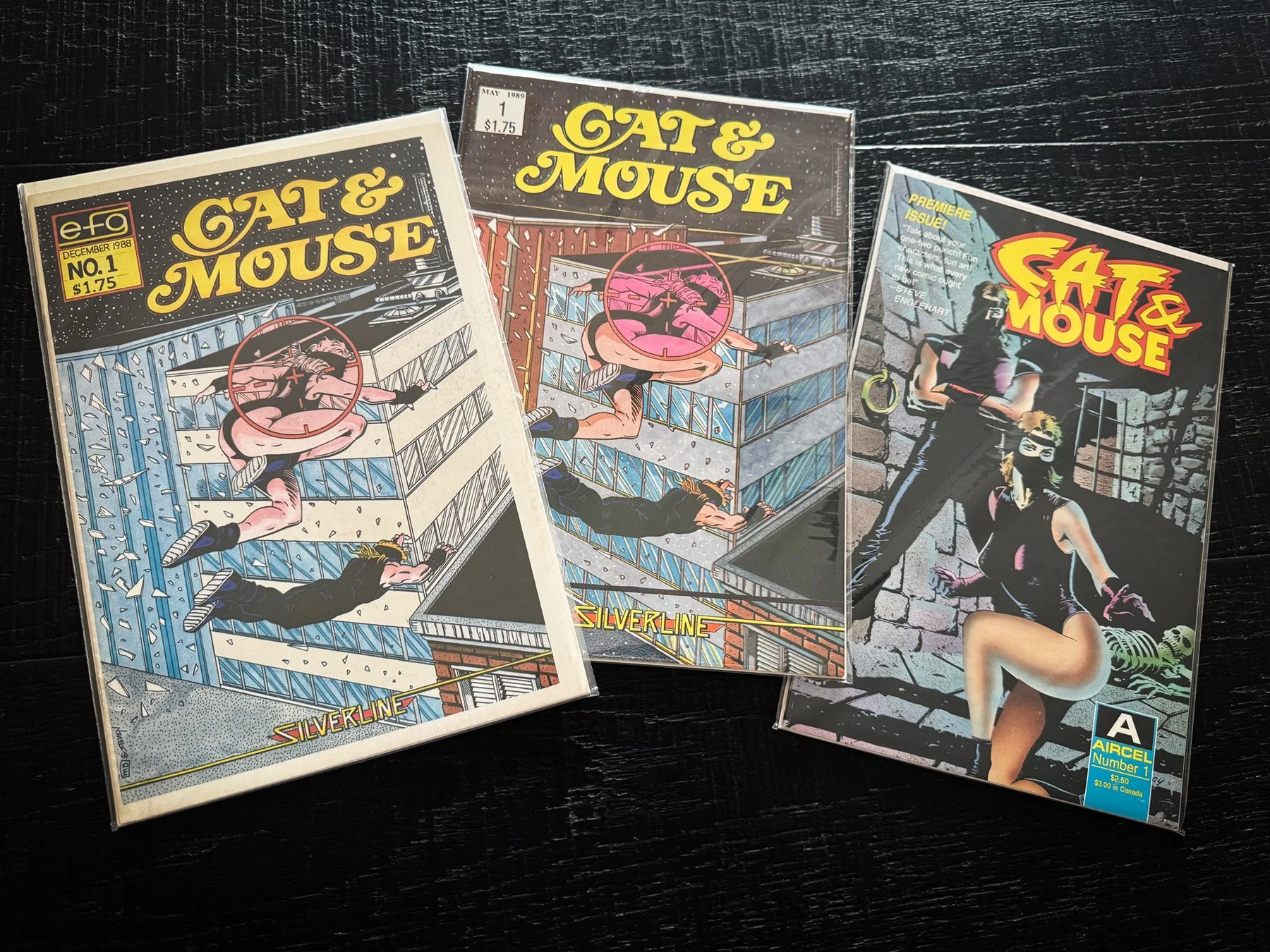
Three versions of Cat & Mouse No. 1 trace the comic from its EFGraphics promotional edition through its 1989 release and Aircel’s 1990 national relaunch.
From Hattiesburg to comic shops
Part of the appeal of Cat & Mouse was how close its creation felt to home. Byrd met writer Roland Mann and artist Steven Butler at the University of Southern Mississippi in Hattiesburg, where they developed the series while still in college. The team attempted to publish the comic themselves and secured orders for 4,400 copies, but they could not raise the approximately $2,500 needed to print them. Hub City Comics owner Terry Wagers connected them with EFGraphics, which published the first version in 1989.
When EFGraphics folded, the creators continued producing pages and submitted the series elsewhere. Malibu Comics picked it up for its Aircel imprint and launched an 18-issue run in March 1990. Around 1991, I began seeing Byrd, Mann and Butler at local comic shows and CoastCon. Their careers were expanding, but Gulf Coast readers could still encounter them at regional conventions and follow their progress into the larger industry.
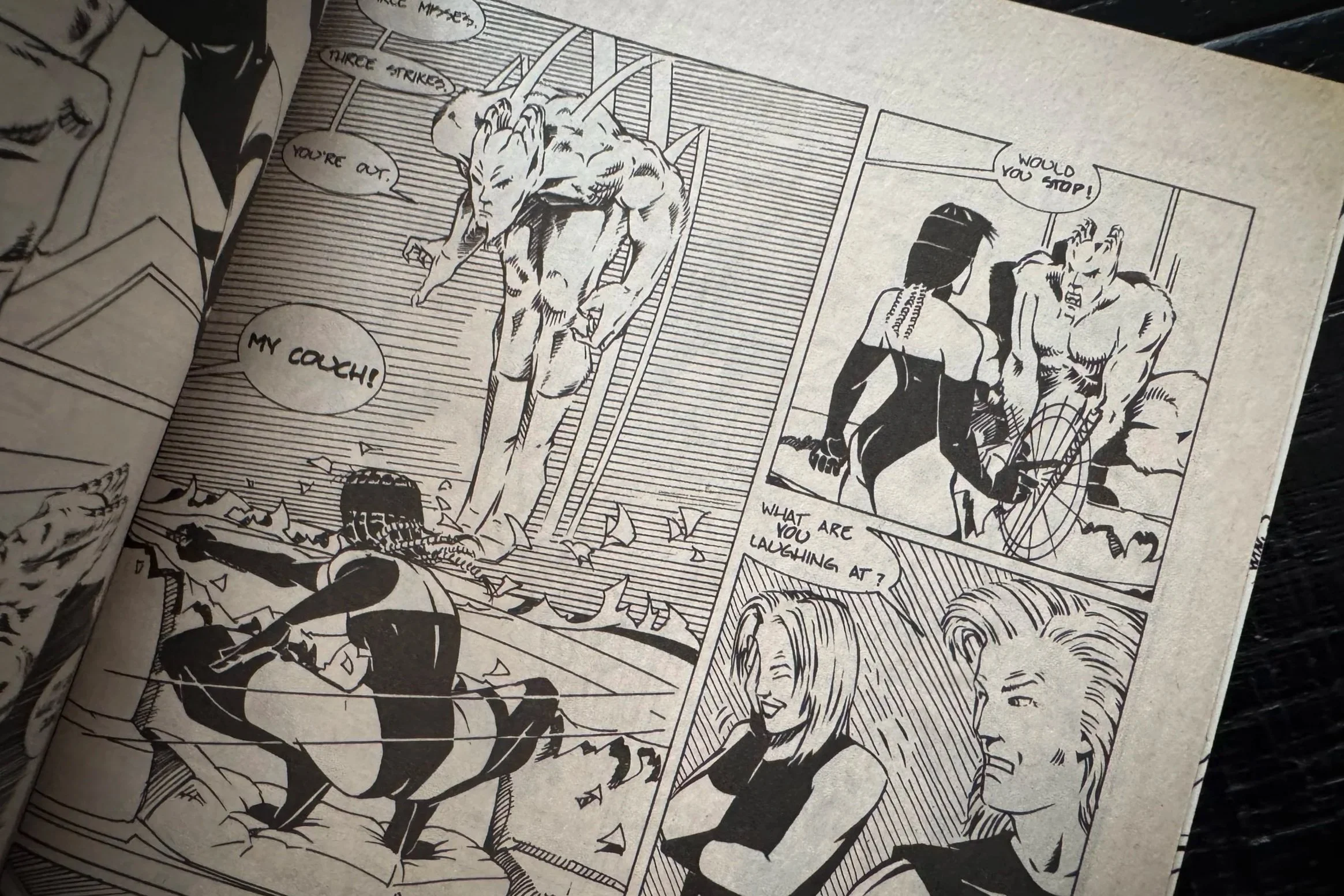
Mitch Byrd’s Demon brought a supernatural thread into Cat & Mouse as the series expanded beyond its war between the Mafia and Yakuza.
Caught between two sides
Cat & Mouse followed Jerry O’Neil and Mandy Paige, two martial artists operating as the costumed Cat and Mouse. Jerry also worked as a New Orleans police officer, while he and Mandy secretly served the Yakuza as thieves. After the Mafia framed them for the murder of a police officer—and their Yakuza handlers failed to warn them—the pair broke away and began working independently. Clearing their names meant staying ahead of the police while fighting both criminal organizations. Tooth and Nail, assassins dispatched by the Yakuza, became their most persistent enemies as they eliminated police officers connected to the Mafia. Kunoichi, the woman who trained Cat and Mouse, returned to warn them about Tooth and Nail and assumed a larger role as the conflict escalated.
The series also introduced Keith Greyson, a veterinarian transformed by an explosion into the horned and tailed Demon. His origin unfolded alongside the opening story, and he remained part of the supporting cast as he investigated murders committed in his name and the cult of Abaddon, whose members believed he was the demon they worshipped. Skull and Crossbones emerged as two new recruits, while Champion entered the story near the end of the run.
Relationships, injuries and divided loyalties carried from one issue to the next. Jerry returned to the police force while searching for evidence that could clear him, but his injuries eventually left him hospitalized with failing kidneys. Mandy’s efforts to save him brought her into an uneasy alliance with Kunoichi and gave the closing issues greater personal urgency. Across 18 issues, Cat & Mouse combined martial arts, superhero action, police drama and organized crime within its New Orleans setting.
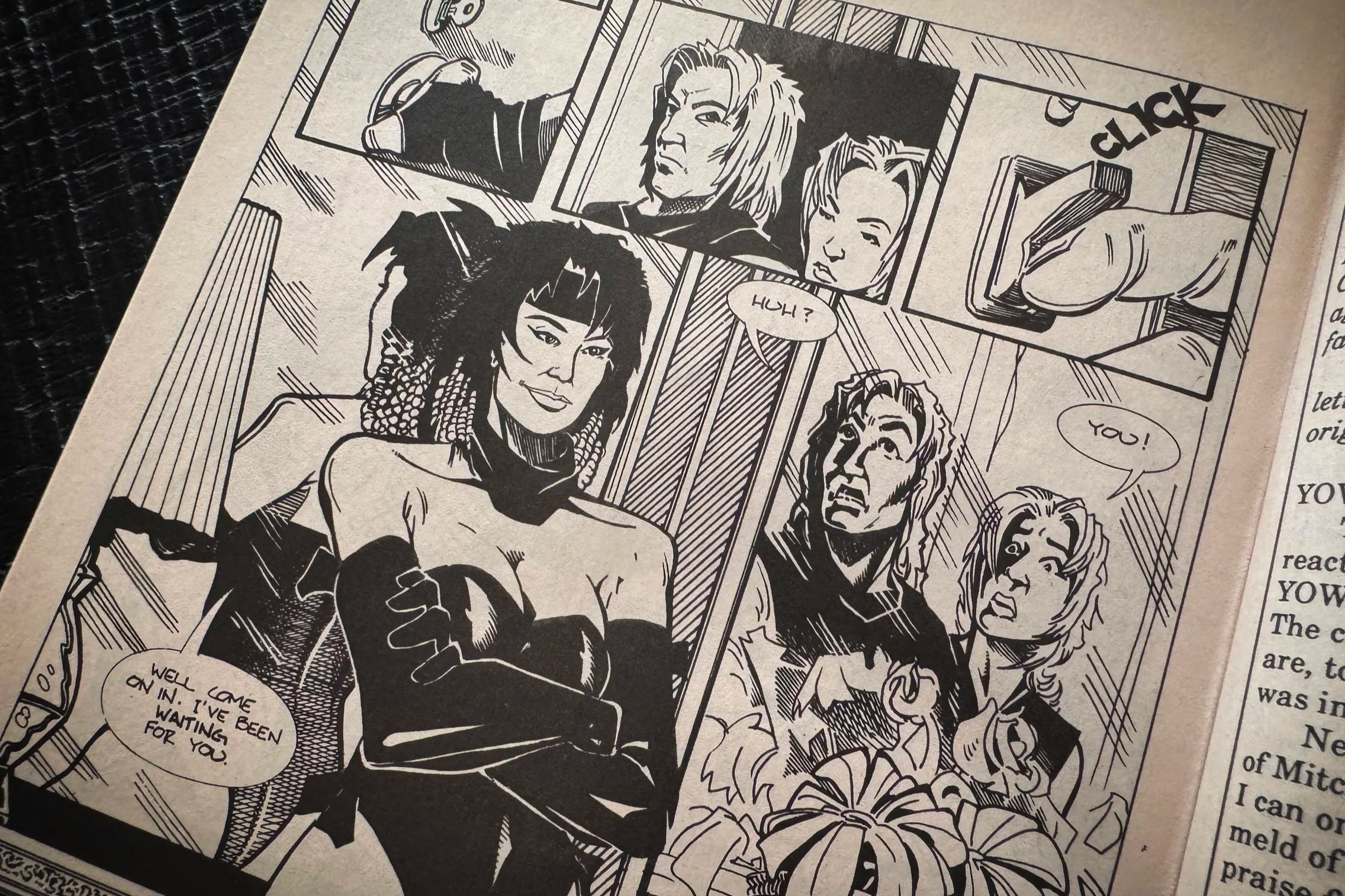
Kunoichi’s unexpected return brought Jerry and Mandy face to face with their former Yakuza trainer—and a warning about Tooth and Nail.
Byrd’s 17 issues
With its competing factions and expanding cast, Cat & Mouse required an artist who could keep the action and shifting alliances clear. Byrd did more than illustrate the series. He helped co-plot the opening story with Mann and Butler, then penciled 17 of the 18 issues that followed. His long run gave the book visual continuity as more characters entered the story. Byrd gave Jerry and Mandy distinct body language, separated Tooth and Nail from the martial artists around them and made Demon’s horned, tailed form impossible to confuse with the series’ costumed characters. Even crowded confrontations remained readable.
Byrd’s athletic figures suited the fights, chases and close physical combat. He used full-body movement to distinguish how characters carried themselves, whether they were attacking, retreating or simply entering a room. The quieter scenes drew on a different part of his range. As police work, personal relationships and Jerry’s hospitalization occupied more of the story, Byrd relied on posture and facial expressions to carry the exchanges without stalling the book’s visual rhythm.
The black-and-white format placed additional weight on his pencils. Different inkers contributed throughout the run, including Butler and Ken Branch, but Byrd’s figure work and page construction held the series together. He also began contributing regular covers with No. 5. Issue No. 13 was the only installment he did not pencil, and he returned with No. 14 to carry the series through Jerry’s medical crisis, the final confrontations with Tooth and Nail and the unresolved threads surrounding Demon and Champion. Those 17 issues show an artist developing the skills he would soon bring to DC and Marvel while drawing martial arts, crime, supernatural characters and personal drama within one continuing story.
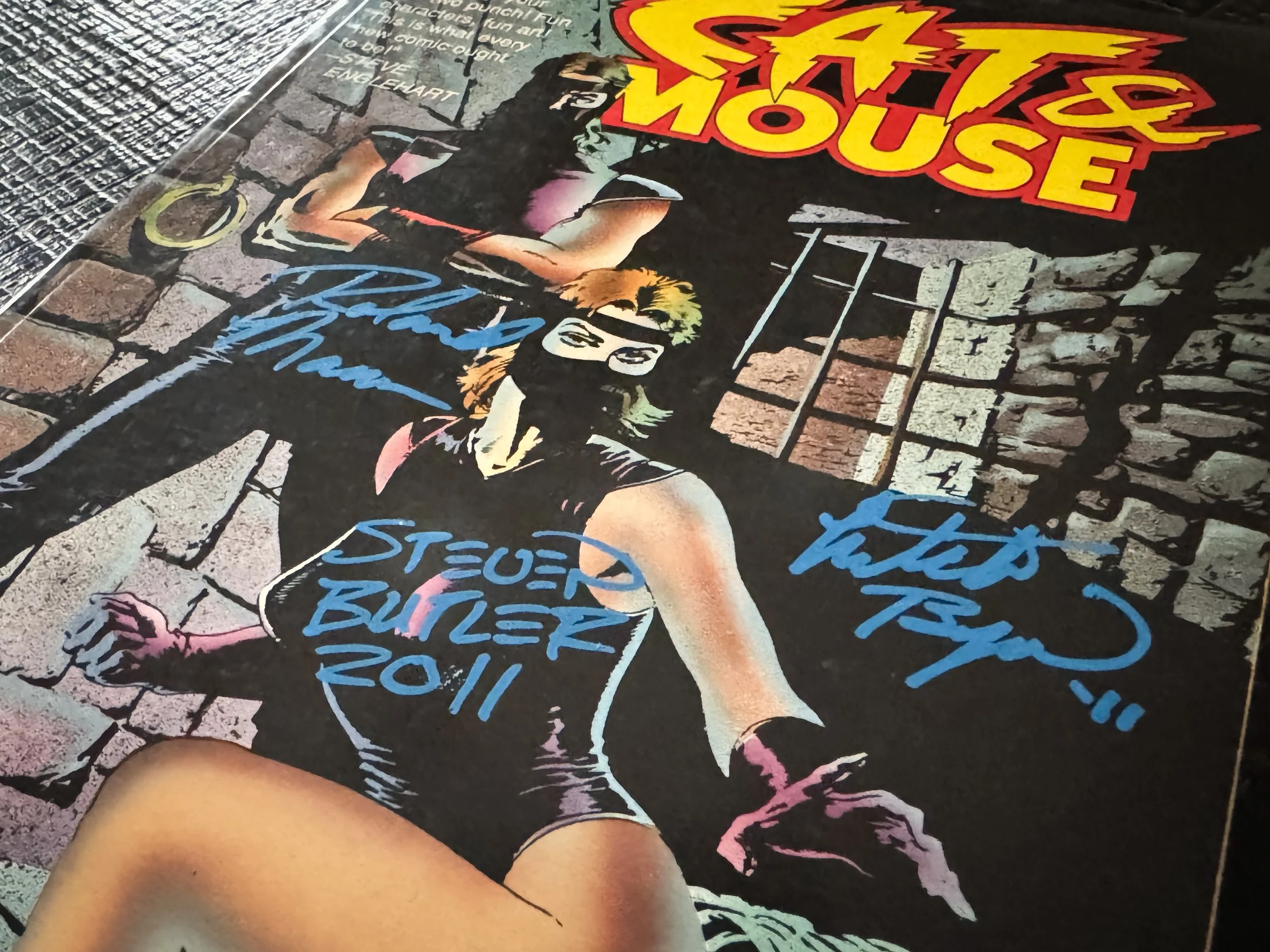
Signed by Roland Mann, Steven Butler and Mitch Byrd, Aircel’s Cat & Mouse No. 1 reunites the Hattiesburg creative team whose careers soon reached Marvel and DC.
Reaching a larger audience
Steven Butler began drawing Silver Sable and the Wild Pack for Marvel, while Roland Mann joined Malibu’s editorial staff and later became a Marvel editor. Byrd moved into DC’s Green Lantern family of titles, penciling several issues of Darkstars before becoming one of the principal artists associated with Guy Gardner: Warrior. He penciled the pivotal No. 17, in which Guy adopted the Warrior name, and continued drawing the character through much of his transformation. Guy lost his yellow power ring and eventually discovered his Vuldarian heritage, which allowed him to reshape parts of his body into armor and weapons. Byrd’s muscular figures, physical action and imaginative anatomy suited the new direction.
His DC work also included Green Lantern-related stories and chapters in Starman Annual No. 2. For Dark Horse, Byrd penciled the complete interior of the 1996 one-shot Predator: Strange Roux, which brought the alien hunter into Louisiana’s Bayou Lafourche. He also produced interior art, covers and illustrations for projects involving Generation X, The Punisher, Lady Death, Shi and Starship Troopers. Working primarily as a penciler, Byrd constructed the figures, settings, action and visual storytelling before the pages moved to an inker.
Byrd continued living in Biloxi and remained active in the Gulf Coast comics community through local shops and conventions. Many readers encountered his work through Guy Gardner’s transformation into Warrior or his later fantasy and science-fiction assignments. For me, his career will always begin with Cat & Mouse.
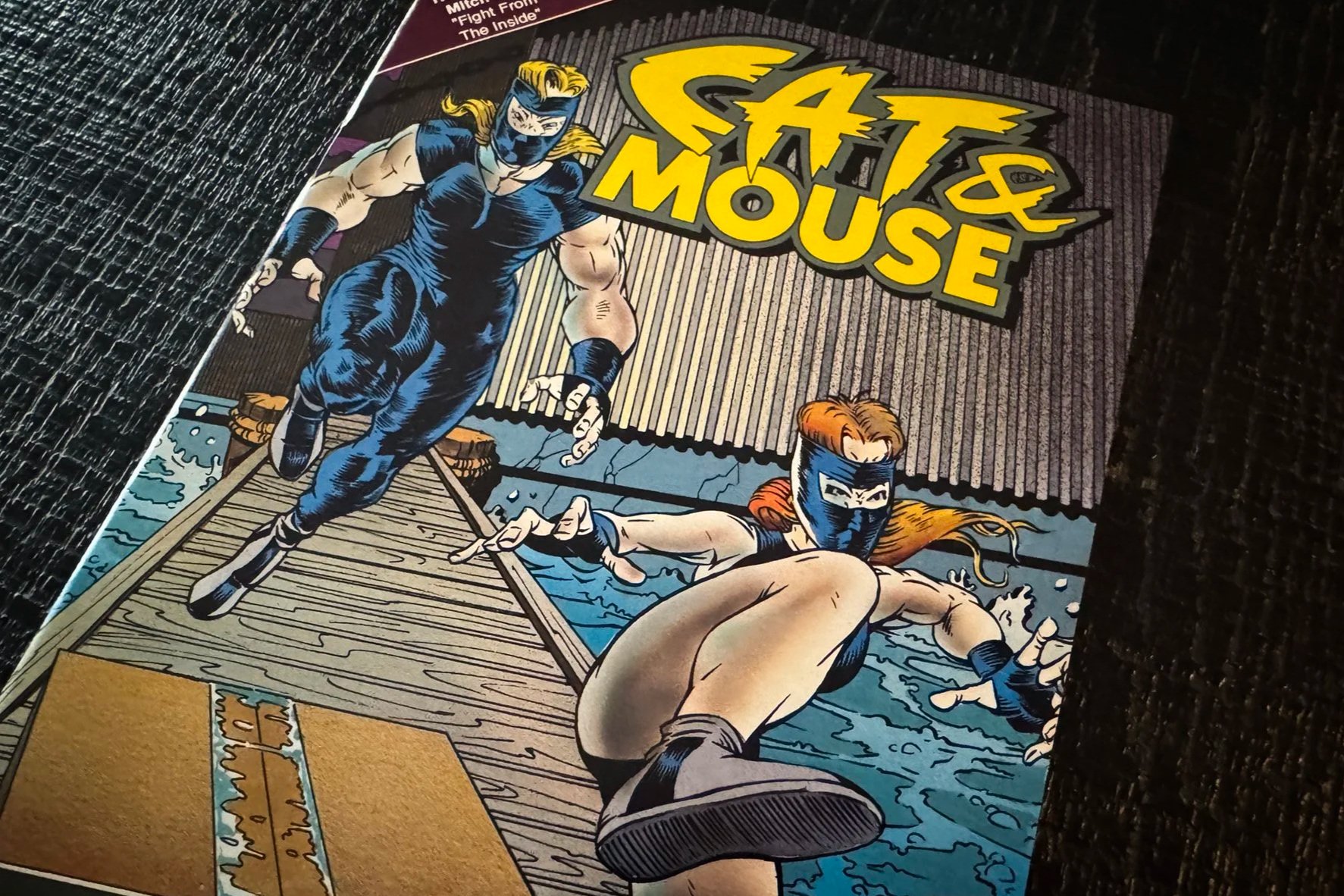
Mitch Byrd’s cover for Cat & Mouse No. 8 captures the physical energy that first made me a fan—and kept the series in my collection for more than 30 years.
Remembering the artist
I did not know Mitch Byrd well enough to write about his private life or the person he was among family and close friends. At next week’s memorial, I will leave those stories to the people who shared that part of his life. What I can offer is the perspective of a reader. Byrd’s work reached me in high school, made me a fan and remained in my collection for more than three decades. Finding another copy of Cat & Mouse No. 1 last weekend brought his name back into view shortly before Claude shared the news of his death.
That coincidence led me back to the complete run, but the pages gave me a reason to stay. They preserve the beginning of a Mississippi artist’s career and the work that helped introduce me to a wider world of comics. To Byrd’s family, friends and collaborators, please accept my condolences. Thank you, Mitch, for Cat & Mouse and all the pages that followed. Rest in peace.
Where to go next
Mitch Byrd’s career reached well beyond Cat & Mouse, with work spanning independent comics, DC and Marvel superheroes, horror, science fiction and licensed properties. For readers interested in following his development from the Gulf Coast to the larger comics industry, this is the roadmap.
Cat & Mouse
Cat & Mouse No. 1 — The original color edition published by EFGraphics in 1989
Cat & Mouse Nos. 1–18 — The complete black-and-white Aircel series published from 1990–1991; Byrd penciled 17 issues
The Cat & Mouse Collection — Trade paperback collecting Nos. 1–4
Cat & Mouse: Wearin’ ’n Tearin’ — Trade paperback collecting Nos. 5–8
DC Comics
Guy Gardner: Warrior No. 17 — Byrd pencils the pivotal issue in which Guy Gardner adopts the Warrior name
Guy Gardner: Warrior — Byrd’s principal mainstream showcase, following Guy’s transformation from a former Green Lantern into a Vuldarian warrior capable of turning his body into weapons and armor
Darkstars — Byrd contributes to DC’s cosmic series about an intergalactic peacekeeping force
Starman Annual No. 2 — Byrd joins several artists in illustrating a story structured across different periods in Starman history
Beyond DC
Predator: Strange Roux — A 1996 Dark Horse one-shot penciled entirely by Byrd and set in Louisiana’s Bayou Lafourche
RoboCop: Roulette Nos. 1–4 — Four-issue Dark Horse miniseries featuring Byrd’s interior work
Starship Troopers — Byrd brings his muscular action and science-fiction storytelling to the comic-book adaptation
Generation X, The Punisher, Lady Death and Shi — Additional examples of Byrd’s work across superhero, fantasy and independent publishing
Byrd’s art books
The Art of Mitch Byrd, Volume 1 — A 2001 collection devoted to Byrd’s illustration work
Scribbles & Sketches, Volume 1 — A 2008 hardcover collecting more of Byrd’s drawings and studie