Nothing tops Frostop
As Frostop celebrates its 100th anniversary, its story extends far beyond the famous root beer. For my family, the brand became part of three generations of memories connected by one familiar name.
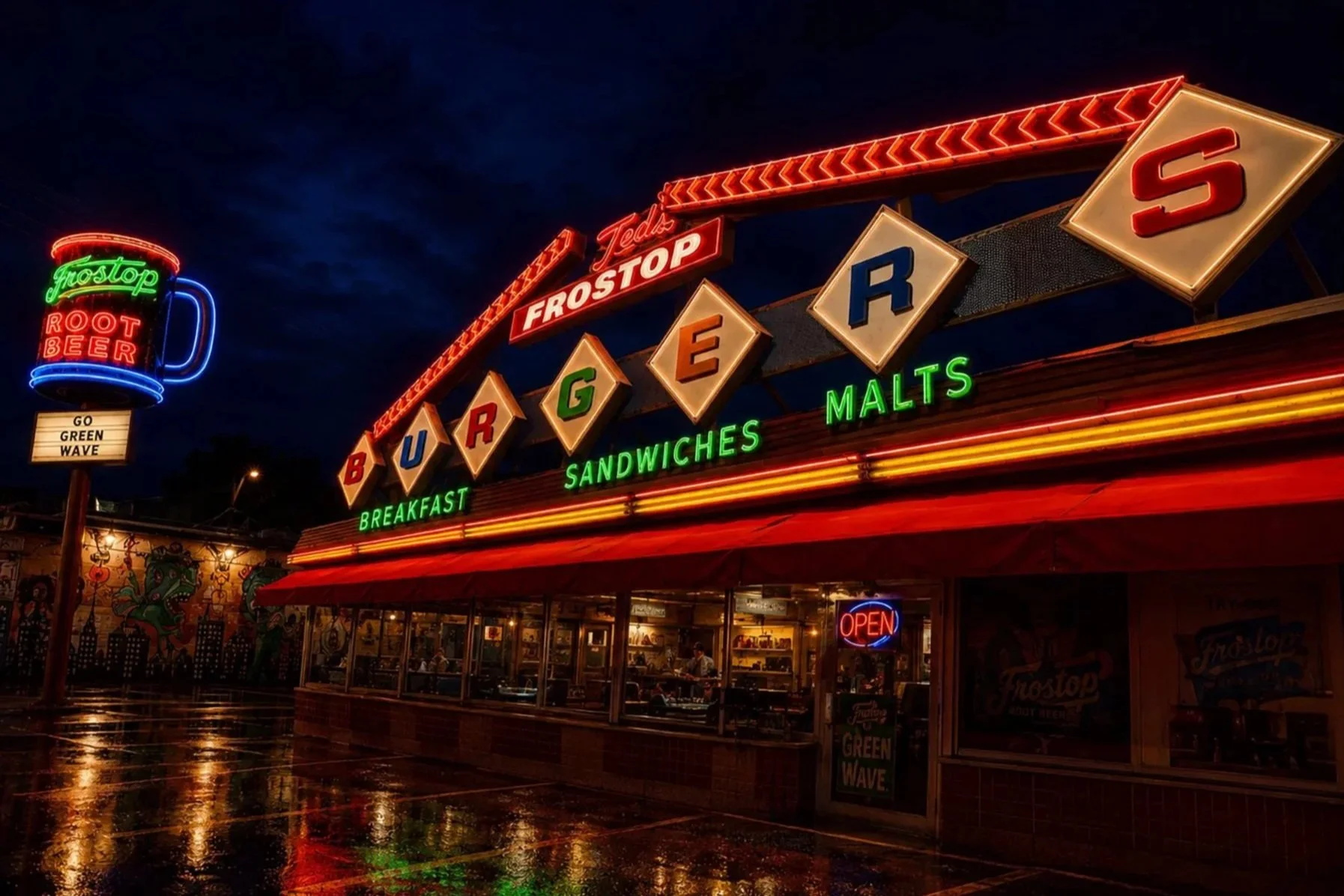
Neon reflections, frozen mugs and a century of memories. Ted's Frostop on South Claiborne Avenue remains one of the last places where Frostop's story continues to unfold in New Orleans.
A seat at the table
The giant root beer mug has watched over the corner of South Claiborne Avenue and Calhoun Street for generations. Across the street, Tulane University keeps the neighborhood in constant motion as students hurry between classes, baseball fans make their way to Turchin Stadium and traffic flows steadily through one of Uptown's busiest intersections. Just beyond the sidewalk, however, Ted's Frostop moves at a different pace. The table, the familiar menu and the frosted mugs of root beer have welcomed New Orleanians since 1955, preserving a small piece of an America that has largely disappeared.
When I invited my parents, Paul and Lynda San Fillippo, to lunch there, I wasn’t looking for a restaurant review. With Frostop celebrating its 100th anniversary, I wanted to hear what they remembered about the brand and learn more about its place in American culture. My mother knew Frostop from family outings during the 1950s. My father grew up with the brand in Mid-City, then encountered it again decades later through his work as an independent food manufacturer’s representative. Ted’s, one of the last surviving Frostop drive-ins, felt like the perfect place to begin the conversation.
As our lunch arrived, I turned to my mother.
"What do you remember about Frostop?"
She smiled before answering.
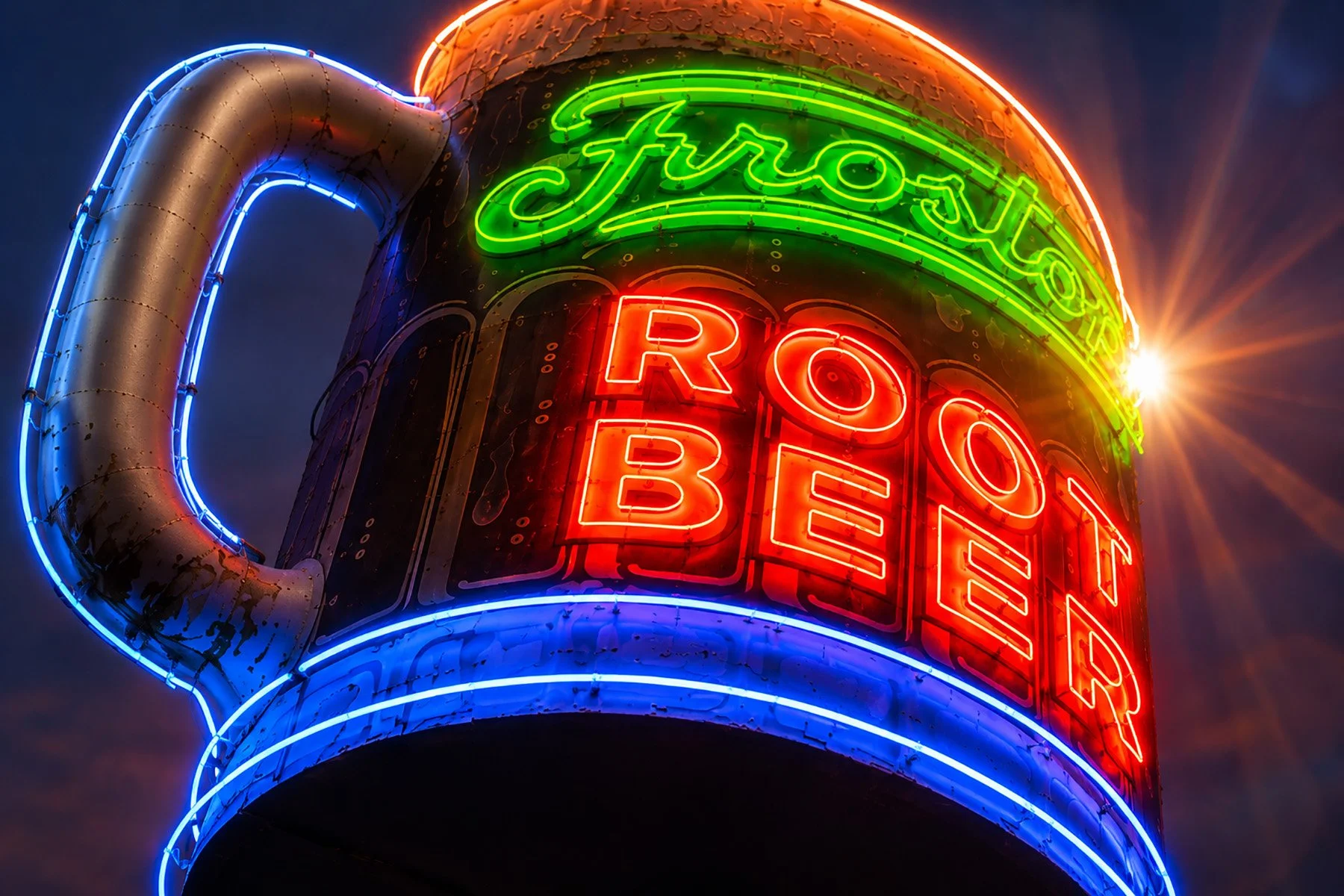
For generations, the giant neon root beer mug has welcomed families to Ted's Frostop, becoming one of New Orleans' most recognizable roadside landmarks and a symbol of a century-old American tradition.
A monthly tradition
"We really didn’t eat out very much,” my mother, Lynda, recalled. "Most families didn't back then. My daddy had meetings one night every month, and whenever he went, Mama would take us to Frostop. We always looked forward to it because it was our night.
"I remember pulling into the parking lot and seeing all the cars. The carhops were everywhere, running from one car to another. It seemed so busy, and as a little girl I thought it was exciting just watching everything happening around us.
"I always ordered a Lot-O-Burger. At least that's what I remember," she laughed. "It seemed enormous back then. And I'll never forget those frosted mugs. They were so cold you could barely hold them.
"It wasn't because we were eating hamburgers. It was because we were together."
My mother's memories weren't unique. During the middle decades of the twentieth century, families across America gathered at drive-ins much like Frostop, turning an evening out into an occasion and creating traditions that lasted long after the meals themselves had been forgotten. Those experiences helped transform a regional root beer stand into one of the country's most recognizable drive-in restaurants.
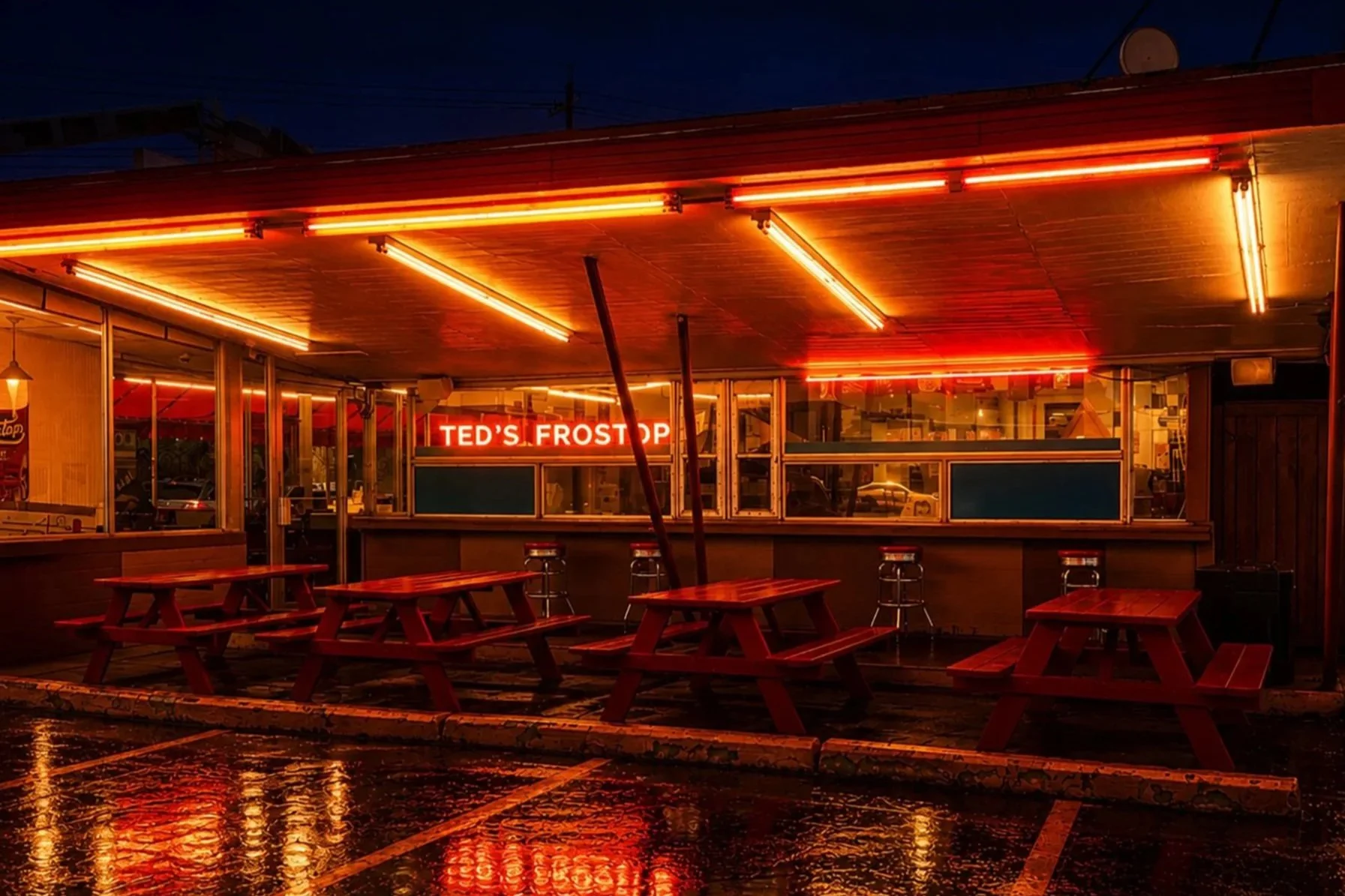
Ted's Frostop has welcomed generations of New Orleanians since 1955. While thousands of Frostop drive-ins have come and gone, this Uptown landmark continues serving the traditions that helped define the brand.
An American original
Frostop traces its roots to Springfield, Ohio, where L. S. Harvey introduced his cold-brewed root beer in 1926. The timing proved ideal. As automobiles became central to American life and suburban communities expanded after World War II, Frostop grew alongside them. Independently owned restaurants spread from town to town, eventually numbering more than 350 locations across the United States. Their signature root beer, served in heavy frosted mugs, became the centerpiece of an experience that was as much about gathering with family and friends as it was about the food itself.
Among the chain's most recognizable menu items was the Lot-O-Burger, a hearty sandwich that became synonymous with the Frostop name. In New Orleans, that tradition found a lasting home when Ted Sternberg acquired the Uptown Frostop franchise in 1955. The restaurant became known simply as Ted's Frostop, welcoming generations of New Orleanians while many other drive-ins gradually disappeared from the American landscape. Following Hurricane Katrina, owner Peter Moss restored both the restaurant and its iconic root beer mug, preserving one of the city's enduring roadside landmarks while introducing a new generation to a familiar name.
Frostop’s story eventually moved beyond the drive-in. Bottled root beer carries the original 1926 recipe into grocery stores across the country, reconnecting longtime customers with a familiar favorite while introducing the brand to a new generation.
For my family, that next chapter would begin with a phone call.
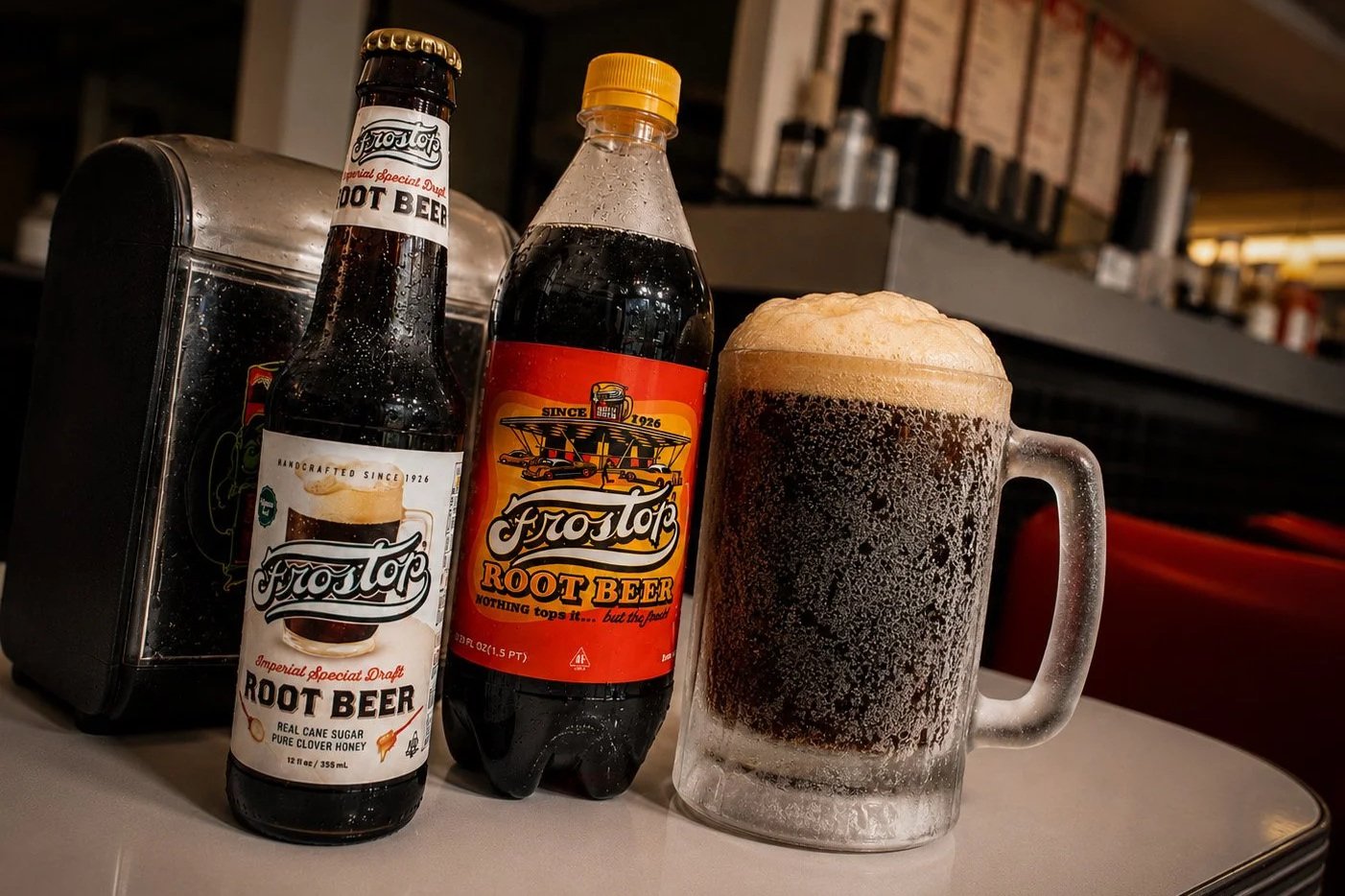
From the drive-in to the grocery aisle, bottled Frostop Root Beer carried a century-old brand into a new generation of homes. Today, the brand continues to reach Louisiana and Mississippi through relationships built over decades.
Bringing Frostop home
Decades after Frostop became part of my father Paul’s childhood in Mid-City, the brand returned to his life through his work. He had built a career as an independent manufacturer’s representative, and Frostop offered the chance to turn a familiar New Orleans favorite into a new business opportunity.
The Frostop brand and its bottled beverage business were then operated by C-B Beverage Corporation in Ohio. My father first met the company’s owner, Dan Meyer, at a food show.
“I met Dan Meyer there,” he recalled. “We talked for a while, but nothing ever came from it.”
The opportunity resurfaced because of a simple question from my mother.
“She said, ‘Have you ever called Dan?’”
He hadn’t.
So he made the call.
That conversation opened the door for my father to represent Frostop.
“Dan first set his sights on Rouses,” my father said. “They became one of the first supermarket retailers to bring in Frostop. From there, distribution grew through Associated Grocers and Associated Wholesale Grocers, reaching leading independent retailers from A to Z, quite literally: Acquistapace’s though Zuppardo’s.”
The relationship continued when Brian Lee and two partners purchased the brand in 2012. Today, my father’s work spans Louisiana, Mississippi, Florida, Alabama and beyond, bringing Frostop Root Beer, Diet Root Beer, Red Birch Beer, Kansas City Sarsaparilla and the brand’s flavored creme sodas to retailers throughout the South.
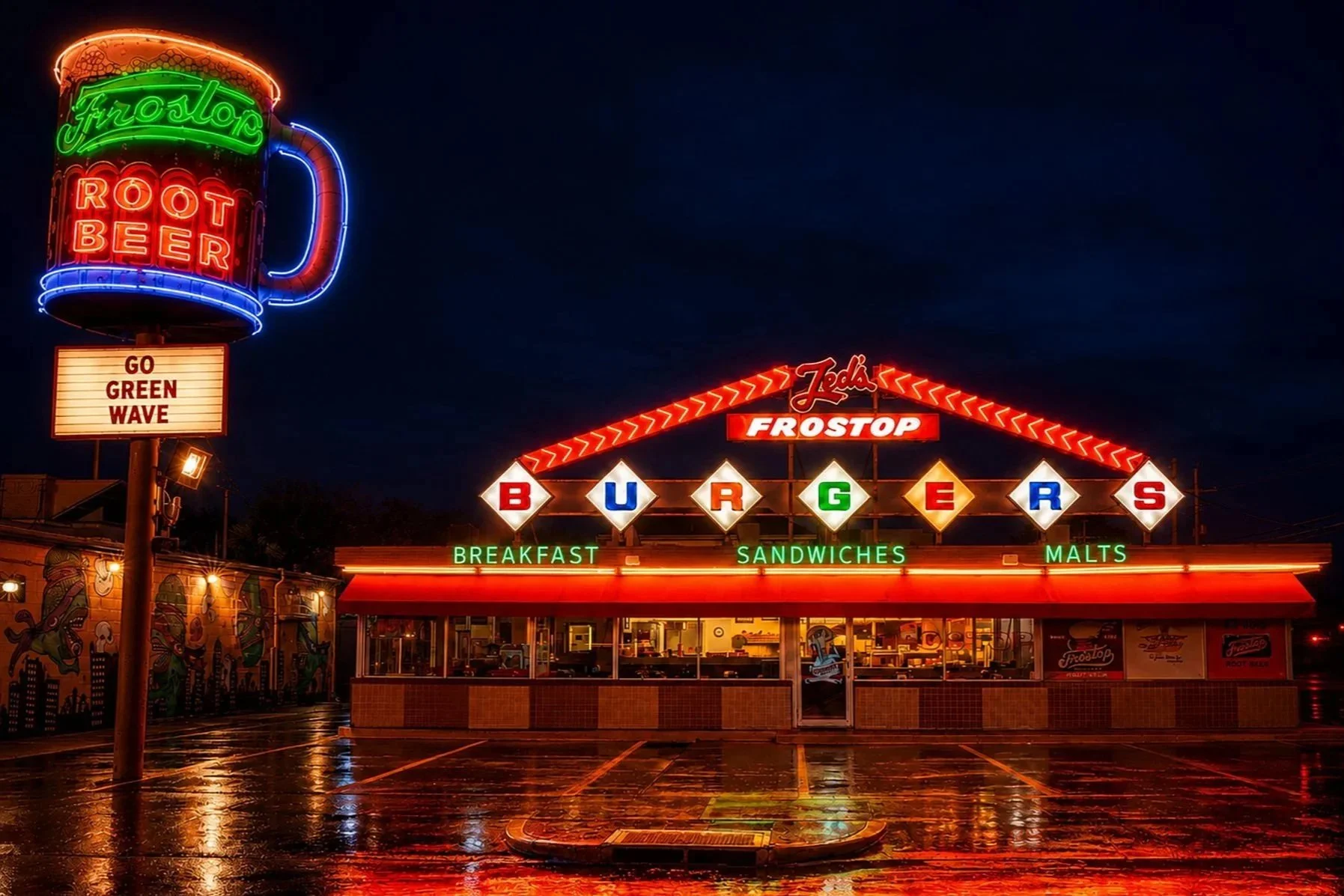
A century after Frostop's beginnings, Ted's Frostop continues to light up South Claiborne Avenue, serving as one of the last surviving drive-ins and a living reminder of the brand's enduring place in American culture.
Frostop at 100
When I invited my parents to Ted's Frostop, I expected to learn more about a root beer celebrating its 100th anniversary. Instead, I uncovered the story of a brand that has traveled alongside my own family for generations.
Both of my parents grew up with Frostop. For my mother, it meant once-a-month evenings that became cherished family traditions. My father knew the same brand from growing up in Mid-City, then decades later found himself representing Frostop throughout Louisiana and Mississippi. Few people have the opportunity to experience a brand as both a customer and a steward, helping carry it into its next chapter.
That may explain why Frostop has endured for a century. Brands don't survive simply because they make a good product. They survive because they become part of people's routines, their celebrations and their memories. Over time, those shared experiences become something larger than advertising or a logo. They become part of a community's story.
Listening to my parents, I realized that Frostop's history isn't confined to Springfield, Ohio, or even to Ted's on South Claiborne Avenue. It lives in the families who made it part of their lives, in the retailers who continued believing in the brand and in the conversations that still begin with a simple phrase:
"Do you remember Frostop?"
A hundred years after the first mug of Frostop Root Beer was served, that question still has the power to start a story.