For more than forty years, Pontchartrain Beach has survived through memories, artwork, books, journalism and Mardi Gras. This summer, one question sent me looking for something more tangible: How much of New Orleans' favorite amusement park can still be found today?
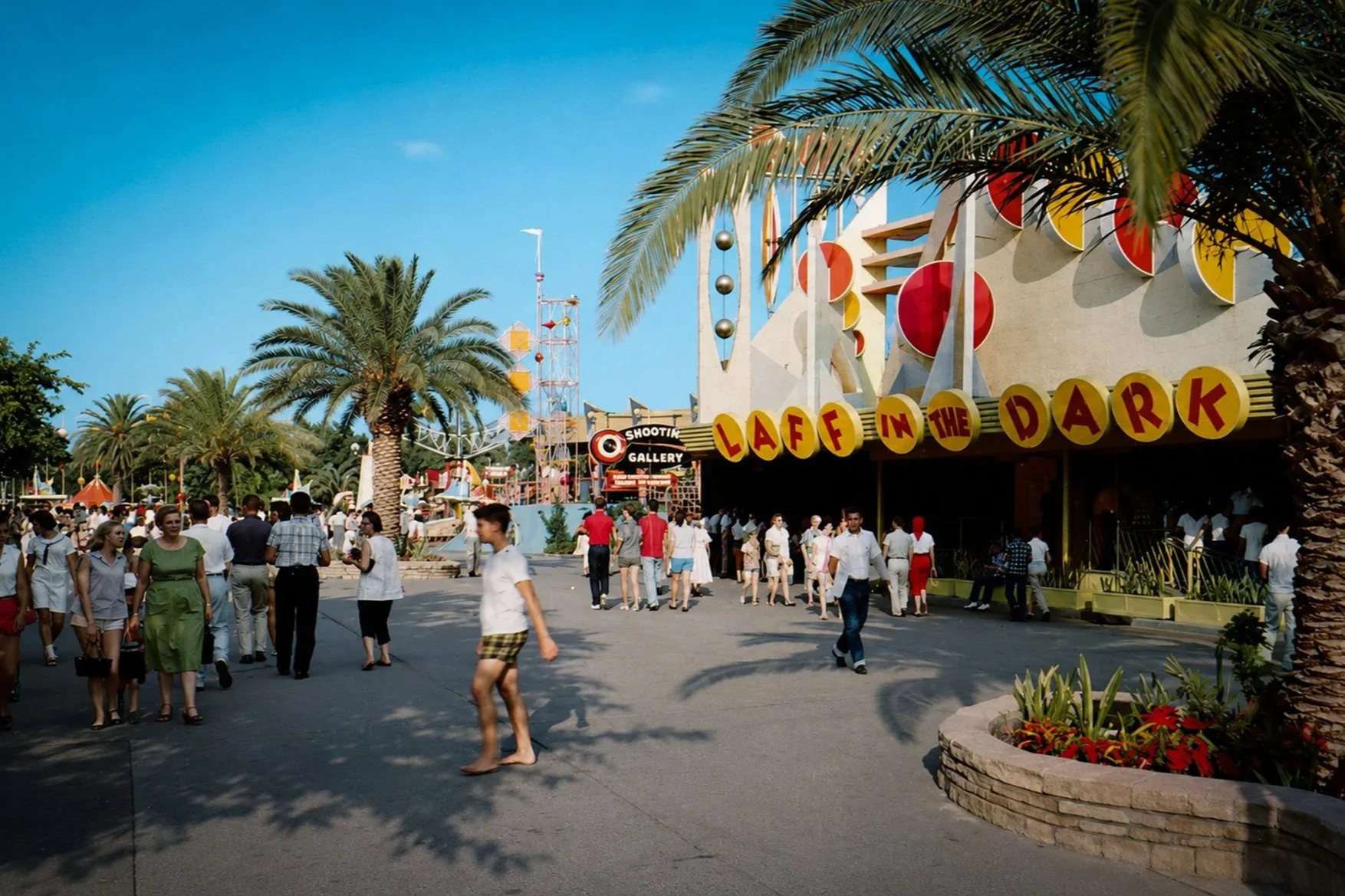
Visitors stroll through the heart of Pontchartrain Beach as the colorful façade of Laff in the Dark welcomed generations of families. More than a funhouse, it became one of the park's most recognizable landmarks and a defining image of summer in New Orleans.
A POP Archaeology investigation
Summer has a way of bringing certain places back into focus.
For generations of New Orleanians, that place was Pontchartrain Beach. Long before theme parks became destinations requiring months of planning and expensive vacations, families could spend an afternoon at the end of Elysian Fields Avenue swimming in Lake Pontchartrain, riding roller coasters, eating hamburgers, dancing to live music and creating the kind of memories that follow us through life.
Every generation experienced a slightly different Pontchartrain Beach. My parents remember a real beach along the lakefront, nationally known entertainers such as Elvis Presley before he became a legend and a park that continued growing throughout the 1950s and 1960s. By the time I came along, my Pontchartrain Beach was the Spook House, the Sky Ride, Bali Ha'i, the paper eaters and, towering above everything else, the Zephyr.
One memory has never faded.
On the Saturday night of Labor Day weekend in 1983, the final weekend Pontchartrain Beach welcomed regular visitors, I stood beside my Uncle Johnny waiting in line to ride the Zephyr. It would be my first and last ride. At eight years old, I couldn't have appreciated what that evening would eventually mean. I just wanted the chance to ride the biggest roller coaster I'd ever seen, and that year I was finally tall enough and brave enough to do it.
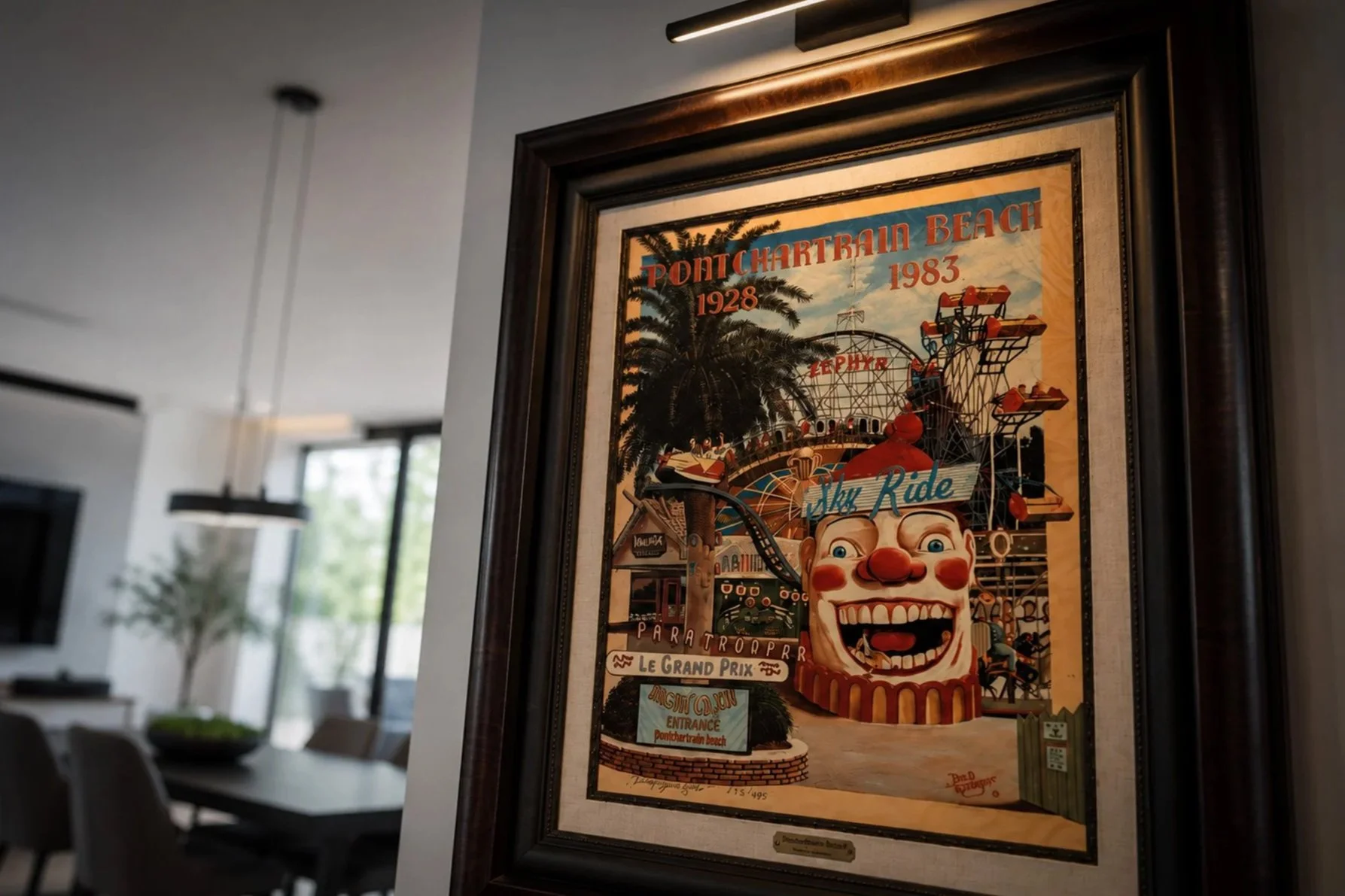
Brad Thompson's Pontchartrain Beach transforms decades of memories into a single vibrant scene, bringing together many of the park's most recognizable landmarks in one unforgettable tribute. The painting has become a daily reminder that some places never really leave us.
Some places never really leave you
Pontchartrain Beach never disappeared from my life. It simply found new ways to stay with me.
One of those reminders hangs in my dining room. Local artist Brad Thompson's Pontchartrain Beach has become one of the most recognizable visual tributes to the park. Known for his paintings celebrating New Orleans, Louisiana and the Gulf Coast, Brad has the ability to capture not just what a place looked like, but what it felt like to experience it. His work is filled with warmth, nostalgia and the kind of small details that invite you to stop and look a little longer.
Brad also became one of my earliest marketing and communications clients, and what began as a professional relationship eventually became one of those rare friendships that continues long after the original project ends. After my business partner and I completed one of Brad's early websites, he thanked us in the most generous way by inviting us to choose any painting from his collection. The choice was easy, Pontchartrain Beach. Years later, when our business partnership ended and we were dividing assets, the painting came home with me.
Brad's Pontchartrain Beach isn't a literal snapshot in time. Like memory itself, it brings together landmarks from the park into a single scene. The Zephyr races across the skyline, the Sky Ride glides overhead, Bali Ha'i welcomes visitors and the giant clown watches over the midway. It isn't intended to document a single afternoon at the park. Instead, it captures the way generations of New Orleanians collectively remember Pontchartrain Beach, blending memories on one vibrant canvas.
Over the years, I've walked past that painting hundreds of times, often pausing to study another familiar detail. Eventually, I stopped asking what the landmarks represented and started wondering how many of them still existed outside the frame. If Brad's painting could preserve the spirit of Pontchartrain Beach, perhaps some of the real places had survived as well.
That simple question lingered.
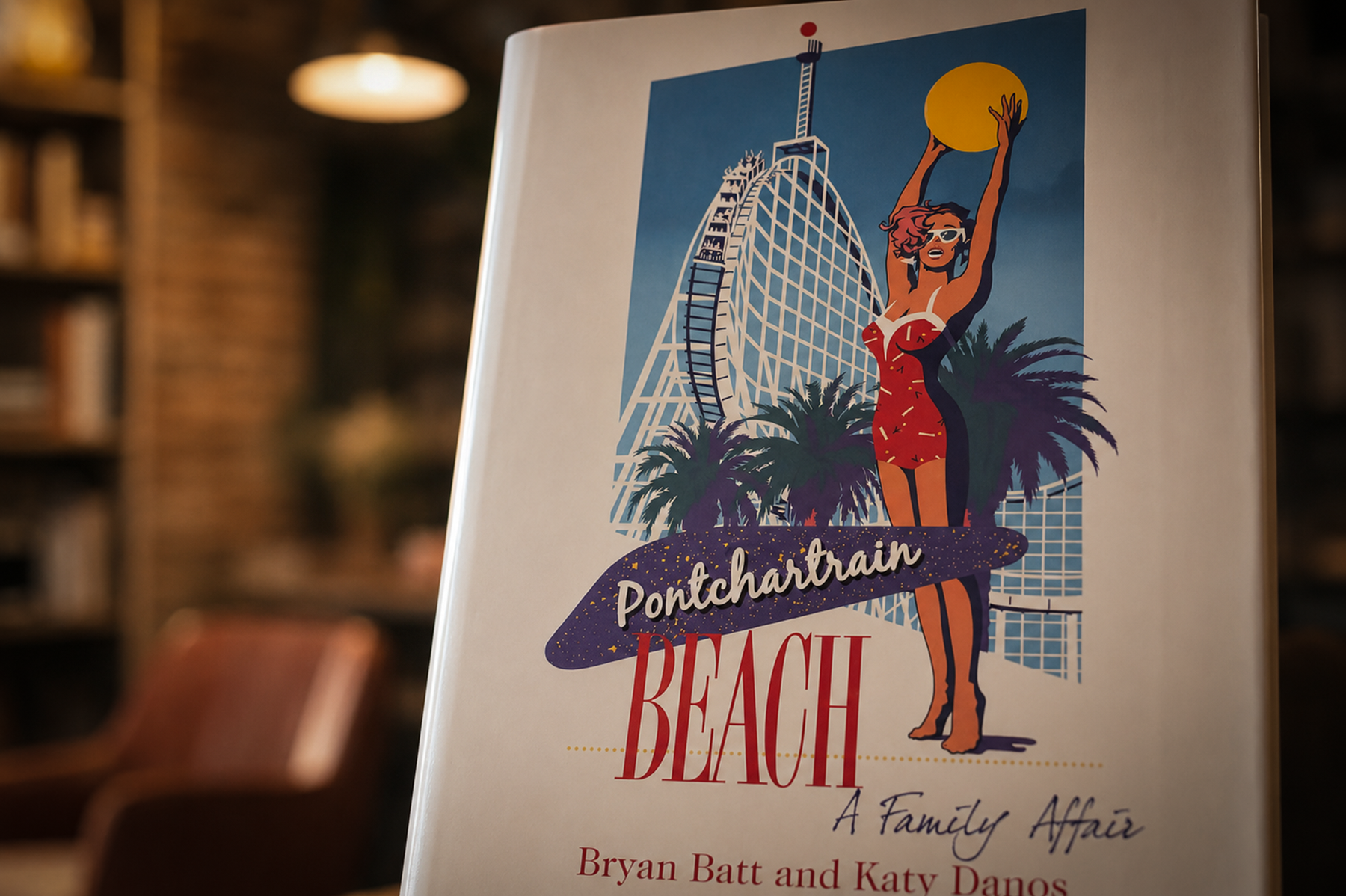
Pontchartrain Beach: A Family Affair by Bryan Batt and Katy Danos has become the definitive history of the park, preserving the Batt family's story through photographs, firsthand recollections and decades of memories that might otherwise have been lost.
Keeping the story alive
The same question followed me to my bookshelf.
Pontchartrain Beach: A Family Affair by Bryan Batt and Katy Danos has become the definitive history in my collection, preserving the story of the family who built one of New Orleans' most beloved destinations. If you've ever loved Pontchartrain Beach—or simply want to understand why it occupies such a special place in the city's history—I can't recommend it highly enough. The book preserves family photographs, firsthand stories and details that only the Batt family could tell, making it an essential companion for anyone interested in the park.
The conversation continued in another unexpected place during my years with St. Tammany Health System, where I had the opportunity to work alongside former Times-Picayune and The Advocate journalist Mike Scott. Mike has spent years documenting New Orleans history, and our conversations regularly drifted toward forgotten landmarks, neighborhood stories and places that disappeared while leaving an outsized mark on the city. Pontchartrain Beach became one of those recurring conversations, eventually leading to a mutual search for one of the elusive Bali Ha'i tiki mugs. He already had an impressive tiki collection, so I was rooting for him to find his first.
Mike has also done extensive research documenting what became of many of Pontchartrain Beach's rides after the park closed. If you'd like to continue the journey beyond the New Orleans area, his article, Where Y'at? Pontchartrain Beach: Here's Your Completed Guide Map to the Beloved New Orleans Park, is an outstanding companion to this story.
Pontchartrain Beach even returns every Carnival season. In 2013, the Krewe of Endymion unveiled Pontchartrain Beach, Then and Now, one of the largest and most ambitious parade floats ever built. More than thirty years after the park closed, New Orleans was still celebrating the Beach, proving it had become something larger than an amusement park. It had become part of the city's cultural identity, preserved through art, books, journalism and community traditions long after the midway fell silent.
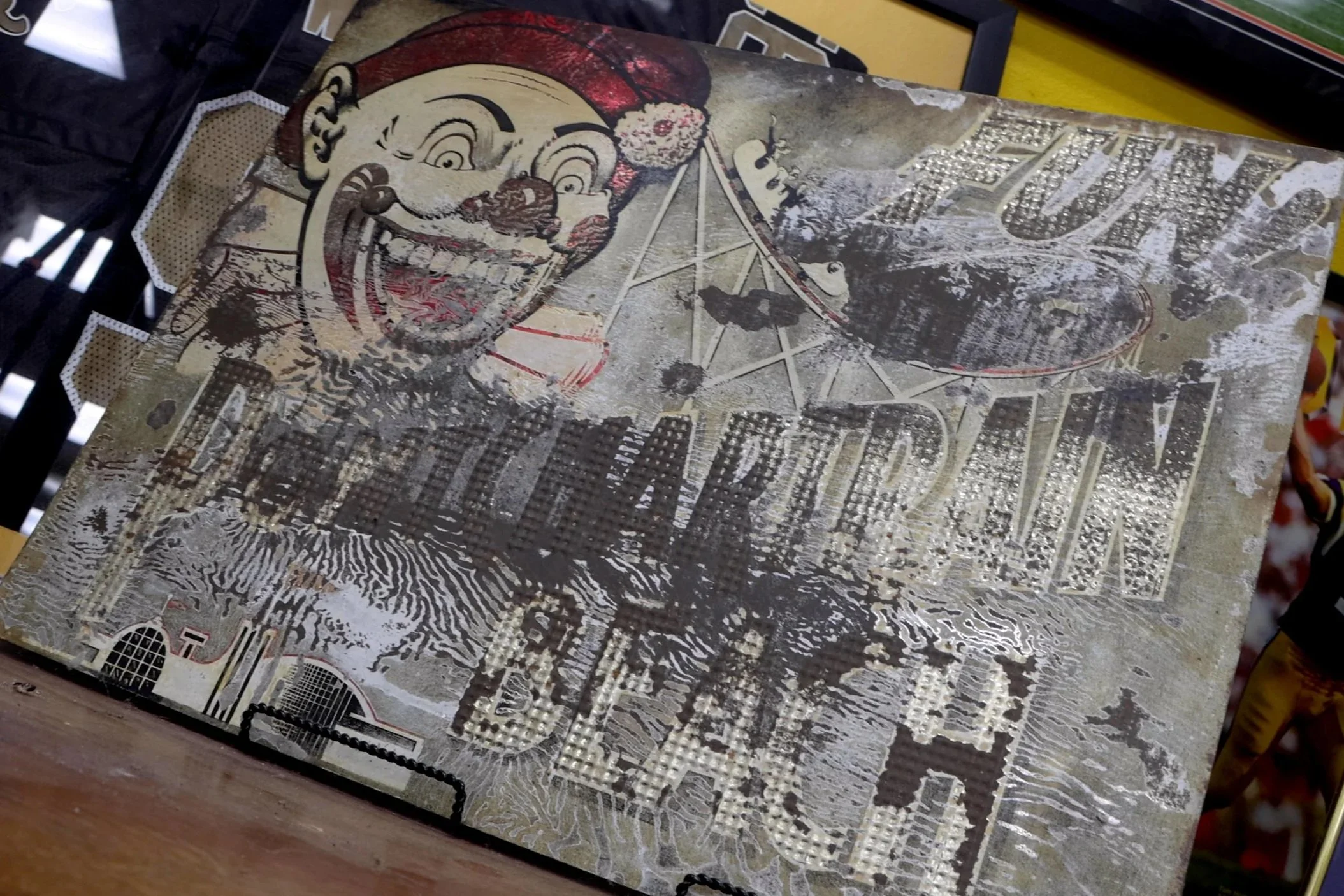
One of Pontchartrain Beach's classic advertising signs serves as a reminder that, although the midway disappeared after 1983, the park's familiar images never completely vanished. For many New Orleanians, they were the first clues that the search could still continue.
A different question
Over the years, Pontchartrain Beach never really disappeared from my life. Brad Thompson preserved it through art. Bryan Batt and Katy Danos preserved it through the remarkable story of the family that built it. Mike Scott documented where many of the rides ultimately found new homes after the park closed, while Endymion reminded an entirely new generation what the park once meant by recreating it as one of Carnival's most memorable parade themes. Each contributed something different, but together they accomplished the same thing—they kept Pontchartrain Beach alive long after the midway fell silent.
As I looked at Brad's painting, thumbed through Pontchartrain Beach: A Family Affair or found myself talking with Mike about forgotten landmarks and the elusive Bali Ha'i tiki mug, I realized they all answered essentially the same question: What was Pontchartrain Beach? That wasn't the question I found myself asking anymore. I wanted to know what remained. If the stories, artwork and memories had survived for more than forty years, surely something physical had survived as well.
That's what POP Archaeology means to me. It isn't archaeology in the traditional sense. It's following the physical evidence left behind by the places, people and experiences that shaped popular culture. Sometimes those clues take the form of a landmark. Sometimes they're hidden in plain sight, passed by every day without anyone recognizing what they once were.
Pontchartrain Beach seemed like the perfect place to begin because I already knew a few pieces of the puzzle.
For years, those clues remained just that—stories. Then one warm summer morning, I decided to stop wondering, get in the car and see how much of Pontchartrain Beach I could still find for myself.